
All on 4 Dental Implants Problems: A Surgeon’s Perspective on Biological and Mechanical Success (2026)
- Dr Samintharaj Kumar

- 19 hours ago
- 11 min read
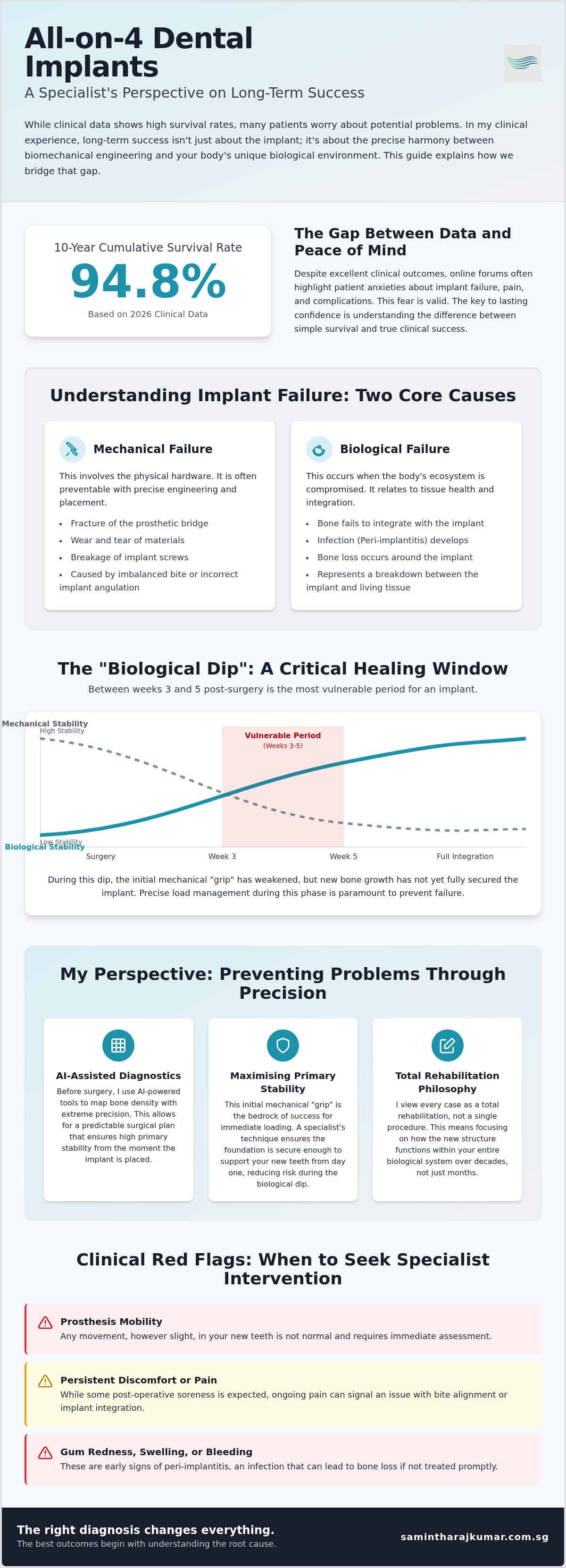
What if the long-term success of your full-arch restoration has less to do with the implants themselves and more to do with the precise biological environment they inhabit? While the 2026 clinical data shows a 10-year cumulative survival rate of 94.8 per cent, I've found that many patients remain anxious about all on 4 dental implants problems they've encountered in online forums. It's a completely valid concern. You're making a significant emotional and financial investment in your future. The fear of a mechanical failure or surgical pain can be overwhelming when you're seeking a permanent solution.
I agree that the sheer volume of conflicting advice makes it difficult to feel secure in your decision. That's why I want to offer a specialist-led exploration of how we bridge the gap between simple survival and true clinical success. You'll learn to distinguish between preventable complications and inevitable biological risks, alongside the specific criteria I use to ensure long-term stability. From my perspective as a surgeon and founder, understanding the engineering behind your smile is the first step toward lasting peace of mind.
Table of Contents
Navigating the Complexity of All-on-4: Why Complications Occur
The Biological Science of Implant Failure: Peri-implantitis and Bone Health
Identifying the Warning Signs: When to Seek Specialist Intervention
My Perspective: Preventing Problems Through Biocompatibility and Precision
Total Rehabilitation: Why the Right Diagnosis is the Ultimate Preventive Measure
Navigating the Complexity of All-on-4: Why Complications Occur
I often describe the All-on-4 protocol as a masterpiece of biomechanical engineering rather than a simple dental procedure. It's designed to provide a full arch of teeth using just four strategically tilted implants, a feat that requires a deep understanding of physics and anatomy. However, when we move away from standard dental solutions toward these complex rehabilitations, the margin for error narrows significantly. In my clinical experience, the most persistent all on 4 dental implants problems arise when there's a disconnect between the surgical placement and the mechanical demands of the patient's unique bite.
Standard solutions often fail in complex cases because they don't account for the living, shifting nature of the jawbone. From a biological perspective, we aren't just placing screws; we're asking the body to accept a foreign object into its ecosystem. If the engineering doesn't respect the biology, the system will eventually break down. This is why I treat every case as a total rehabilitation, focusing on how the new structure will function over decades, not just the first few months.
Mechanical vs. Biological Failure
It's vital to differentiate between mechanical and biological failure. Mechanical failure involves the fracture of the prosthetic bridge or the wear of materials, often caused by an imbalanced bite or poor implant angulation. Biological failure occurs when the bone fails to integrate with the implant or when infection sets in. As a clinician, I view the Implant-supported overdenture as a sophisticated system where the angle of placement determines how force is distributed across the jaw. If these angles are imprecise, the resulting stress can lead to rapid bone loss or hardware breakage.
The Role of Primary Stability
The bedrock of success is primary stability. This is the mechanical "grip" the implant achieves within the bone at the moment of surgery. Without high primary stability, the science of immediate loading, where you receive your teeth in a single day, becomes significantly more risky. At Nuffield Dental, I use AI-assisted diagnostics to map bone density with extreme precision before the first incision is made. This foresight allows us to navigate the unique challenges of All-on-4 dental implants, ensuring the foundation is secure enough to support your new smile. Achieving this level of predictability requires a specialist's touch, as every millimetre of placement affects the long-term viability of the restoration.
The Biological Science of Implant Failure: Peri-implantitis and Bone Health
From a biological perspective, the oral cavity is a complex, living ecosystem. When we introduce titanium or ceramic posts, we are asking the body to accept a foreign body into its delicate balance. Success is never just about surgical placement. It's about the host's cellular response. Most all on 4 dental implants problems that patients experience aren't failures of the hardware. Instead, they represent a breakdown in the relationship between the implant surface and the surrounding tissue.
In my clinical experience, the most critical phase for any patient is what we call the "Biological Dip." This occurs between weeks three and five post-surgery. During this window, the initial mechanical stability-the physical grip of the bone-begins to decrease as the bone remodels. However, the biological stability-the new bone growth-hasn't yet reached its peak. It's a vulnerable period where the entire system is at its weakest. If the mechanical load isn't perfectly balanced during this time, the risk of failure increases significantly.
The Threat of Peri-implantitis
Peri-implantitis is the silent threat to your oral rehabilitation. It is an inflammatory condition where bacteria accumulate around the implant collar, triggering bone resorption. Unlike natural teeth, implants lack a periodontal ligament. This makes them more susceptible to rapid bone loss if infection takes hold. Patients often ignore early symptoms like minor gum redness or bleeding. These are clinical red flags that require attention to avoid the potential risks of dental implants. Maintaining a sterile surgical environment and rigorous post-operative hygiene are your best defences.
Bone Density and Osseointegration
Osseointegration is the miraculous process where bone cells fuse to the implant surface. This isn't a guaranteed outcome. It depends heavily on systemic health. I've found that factors like Vitamin D levels and blood circulation play a massive role in how the body responds. Our teeth in a day procedure explained protocols are specifically designed to manage these biological timelines. By achieving high primary stability, we can bridge the gap during the healing phase. However, the long-term prevention of all on 4 dental implants problems relies on a healthy host environment. Understanding the root cause of your bone health is essential for a lasting smile. A comprehensive diagnostic assessment can provide the clarity you need before beginning your journey.
Identifying the Warning Signs: When to Seek Specialist Intervention
Distinguishing between the expected discomfort of healing and the early indicators of all on 4 dental implants problems is essential for any patient. In my clinical experience, the first 72 hours typically involve manageable swelling and soreness. However, if you experience throbbing pain that escalates after the first week, it's rarely a part of the normal recovery trajectory. This often signals a lack of integration or a burgeoning infection that requires immediate clinical review.
One of the most critical red flags is any perceived movement in the prosthesis. A well-engineered bridge should feel as stable as natural teeth. Mobility is a "never event" in implantology; it suggests that the implants haven't achieved the necessary primary stability or that the biological bond is failing. From a biological perspective, even microscopic movement can prevent bone cells from adhering to the implant surface, leading to fibrous encapsulation instead of true osseointegration. A systematic review of All-on-4 complications highlights that while survival rates are high, early intervention is the only way to salvage a restoration facing these challenges.
Clinical Red Flags in the First Month
Monitoring the "biological dip" I mentioned previously is a cornerstone of my post-operative programme. During weeks three to five, you must be vigilant for unexpected haemorrhage or gum recession that exposes the silver threads of the implant. While some gum maturation is normal, visible threads often indicate that the underlying bone is receding. I prioritise a strict follow-up schedule during this window to ensure that the living tissue is accepting the hardware without chronic inflammation. Early detection allows us to adjust the mechanical load before a minor issue becomes a systemic failure.
Long-term Mechanical Complications
Mechanical issues often manifest months or years later. You might notice speech changes, such as a subtle "whistling" sound, which often indicates a design flaw in the bridge's contours or a misalignment in the bite. If the bridge is too bulky, it becomes difficult to clean underneath, creating a reservoir for bacteria. Over time, excessive occlusal forces-the pressure from your bite-can lead to broken screws or fractured acrylic. Ensuring the bridge is designed with precision not only prevents these technical failures but also plays a vital role in preventing facial collapse with dental implants. A balanced bite is the ultimate guardian of your long-term aesthetic stability. The right diagnosis changes everything when it comes to preserving your investment.
My Perspective: Preventing Problems Through Biocompatibility and Precision
As a clinician and founder, my philosophy has always been that the most successful medical interventions are those that achieve biological harmony. When we discuss all on 4 dental implants problems, the conversation often focuses on what went wrong after the surgery. However, I believe the most effective solutions are those integrated into the planning phase. Most complications are not random. They are the result of materials or placements that the body's ecosystem simply cannot tolerate over the long term.
I frequently advocate for ceramic dental implants for patients with heightened sensitivities. While titanium is the industry standard, it is not universally ideal. Some individuals experience low-grade chronic inflammation or gum irritation that eventually leads to bone loss. By choosing Zirconia, we significantly reduce the inflammatory response of the soft tissue. This material is inherently more compatible with human biology, allowing the gums to heal more tightly around the implant collar.
The Zirconia Advantage
From a biological perspective, the body prefers materials that do not conduct heat or electricity. Ceramic is non-metallic, which eliminates the risk of metal allergies and the subtle galvanic currents that can occur when different metals are present in the mouth. Beyond health, the aesthetic benefits in the "smile zone" are profound. Ceramic's natural opacity prevents the greyish tint often seen through the gums with titanium posts. This ensures your restoration looks like a vibrant part of your face rather than an artificial addition, avoiding the "denture-like" look that many patients fear.
Precision Through Technology
Meticulous planning is the best insurance against all on 4 dental implants problems. At Nuffield Dental, we use 3D surgical guides to eliminate the guesswork. These guides ensure that each implant is placed exactly where our AI-assisted diagnostics predicted the highest bone density and the least mechanical stress. This technology allows us to simulate the forces of your bite before we even begin the procedure. It is this level of foresight that prevents technical failures and ensures a truly holistic rehabilitation. If you are concerned about material sensitivity, our specialist-led consultation can help determine the most biocompatible path for your smile.
Total Rehabilitation: Why the Right Diagnosis is the Ultimate Preventive Measure
Achieving clinical excellence in full-arch restoration requires a shift in perspective. We must move away from viewing the procedure as a series of isolated dental tasks and instead embrace it as a total rehabilitation of the human masticatory system. In my clinical experience, the most challenging all on 4 dental implants problems are rarely the result of a single error. They are usually the cumulative effect of overlooked details during the diagnostic phase. When we treat the mouth as a whole system, we account for the interplay between bone density, muscular force, and biological harmony.
A successful restoration does more than just replace missing teeth. It restores systemic health by improving nutritional intake and reducing chronic oral inflammation. From a biological perspective, a healthy mouth is a gateway to overall longevity. My approach focuses on identifying potential risks before the first incision is made, ensuring that the engineering of your new smile supports your body's natural functions for decades to come.
Choosing Your Surgical Team
The complexity of these cases demands a level of expertise that goes beyond general dentistry. When selecting a team for your journey, consider the following clinical benchmarks:
Specialist Training: Ensure your surgeon has specific credentials in oral surgery and complex implantology protocols.
In-house Laboratory: At Nuffield Dental, our in-house lab allows for immediate prosthetic adjustments, ensuring the mechanical precision that prevents bridge fractures.
AI-assisted Diagnostics: Utilising advanced imaging helps us predict how your jaw will respond to the mechanical load of the implants.
Preparing your mindset for this transformative journey is just as important as the clinical preparation. You aren't just buying a product; you're partnering with a team to rebuild a vital part of your anatomy.
The Legacy of Health
As a clinician and founder, I view every successful rehabilitation as a contribution to the future of healthcare in Southeast Asia. My commitment to innovation and ethical scale is driven by the belief that modern dental medicine should restore lives, not just smiles. By adhering to international protocols and prioritising biocompatibility, we create a legacy of health that extends far beyond the dental chair.
Your health is a lifelong investment, and the foundation we build together today dictates your quality of life for years to come. Reflecting on the science and the precision required, it becomes clear that shortcuts have no place in specialist care. The best outcomes begin with understanding the root cause.
Securing the Future of Your Restoration
Navigating potential all on 4 dental implants problems requires more than just technical skill; it demands a deep respect for the biological and mechanical forces at play. In my clinical experience, the most enduring successes are those where we prioritise biocompatible materials and AI-assisted diagnostics from the very first consultation. As a clinician and founder, I've dedicated my career to refining these protocols, ensuring that every rehabilitation I lead is built on a foundation of specialist expertise in All-on-4 and Zygomatic systems.
True restoration is about more than hardware. It's about returning to a life of confidence and functional excellence. By choosing a team that values biological dentistry and meticulous planning, you aren't just fixing a problem; you're investing in a legacy of health. I believe that your journey toward a permanent smile should be defined by security, comfort, and the highest global standards of care.
The best outcomes begin with understanding the root cause. Explore the future of total oral rehabilitation with Dr Samintharaj Kumar.
I look forward to helping you reclaim the smile you deserve with absolute confidence.
Frequently Asked Questions
Is it normal for All-on-4 implants to feel bulky or heavy at first?
It is common for your new prosthesis to feel slightly bulky or heavy during the initial weeks. Your brain and tongue require time to adapt to the redefined contours and dimensions of your dental arch. In my clinical experience, this sensation typically subsides as the soft tissues settle and you become accustomed to the restoration. If the bulkiness affects your bite or comfort after a month, we can perform precision adjustments.
How do I know if my dental implant is infected or just healing?
Healing discomfort usually involves mild soreness that peaks within 72 hours and gradually fades. Infection, or peri-implantitis, presents with escalating throbbing pain, persistent gum redness, or a bad taste in the mouth. If you notice pus or fever, these are urgent clinical red flags. Early intervention is vital to prevent all on 4 dental implants problems from compromising the underlying bone structure and your systemic health.
Can smoking cause my All-on-4 implants to fail even years later?
Smoking remains a significant risk factor for late-stage implant failure because it restricts blood flow to the gingival tissues and jawbone. This chronic oxygen deprivation slows the body's immune response to bacteria, making you more susceptible to infection. Even years after a successful procedure, tobacco use can undermine the biological stability of the bone. I always encourage patients to consider the long-term health of their investment when making lifestyle choices.
Why has my speech changed after getting All-on-4 implants?
Speech changes, such as a subtle lisp or whistling, often occur because the tongue's interaction with the palate or teeth has been altered. This is frequently a result of the bridge thickness or the placement of the incisal edges. While most patients adapt within a few weeks, persistent issues may indicate a design flaw. My approach involves using precise digital workflows to ensure the prosthetic contours mimic your natural anatomy as closely as possible.
What should I do if my All-on-4 bridge feels loose or moves?
If you perceive any movement in your bridge, you must contact your specialist immediately. A well-integrated prosthesis should feel as immobile as natural teeth. Looseness could indicate a mechanical issue, such as a loosened prosthetic screw, or a more serious biological failure where the implants haven't integrated with the bone. Ignoring this can lead to excessive stress on the remaining implants, potentially causing a total system failure.
Are ceramic implants better than titanium for preventing All-on-4 problems?
Ceramic implants offer distinct advantages in terms of biocompatibility and soft tissue health. Because Zirconia is non-metallic, it reduces the risk of gum irritation and bacterial accumulation around the implant collar. This material is particularly beneficial for sensitive patients or those prioritising aesthetics in the smile zone. While both materials have high survival rates, ceramic options can help mitigate certain all on 4 dental implants problems related to metal sensitivities or chronic inflammation.
How often do I need a professional cleaning for my All-on-4 prosthesis?
I recommend a professional maintenance appointment at least every six months. During these visits, we may remove the bridge to clean the abutments and inspect the health of the surrounding gum tissue. Some patients with a history of periodontal disease may require more frequent cleanings to prevent plaque buildup. Consistent maintenance is the most effective way to ensure the 94.8 per cent 10-year survival rate observed in modern clinical studies.
Can a failed All-on-4 implant be replaced or fixed?
A failed implant can often be replaced, but the underlying cause of the failure must be addressed first. Whether the issue was poor primary stability or an infection, we must restore the bone health before attempting a new placement. In complex cases, I may use Zygomatic protocols or advanced bone grafting to provide a secure foundation. The right diagnosis is essential for turning a failure into a successful long-term rehabilitation.


Comments