
Am I a Candidate for Teeth in a Day? A Surgeon’s Perspective on Total Rehabilitation
- Dr Samintharaj Kumar

- 11 minutes ago
- 12 min read
You may have been told that severe bone loss makes you ineligible for dental implants, but in the modern era of surgical rehabilitation, a "no" is often just a "not with traditional methods." It's exhausting to live with the embarrassment of missing teeth or the daily struggle of a limited diet, especially when you fear your anatomy might fail you. I understand the anxiety that comes with seeking a permanent solution only to worry about being turned away. When comparing teeth in a day vs traditional implants, the choice isn't just about speed; it's about matching the right biological environment with the most advanced surgical protocols available today.
In this guide, I'll share the clinical, biological, and lifestyle criteria I use to determine if you're a candidate for immediate-load dental implants. You'll discover how AI-assisted diagnostics and specialized zygomatic systems allow us to treat even the most complex cases of bone resorption. My goal is to provide you with a clear path toward restoration, ensuring you feel confident that a renewed quality of life is well within your reach.
Table of Contents
Understanding the Teeth in a Day Protocol vs. Traditional Implants
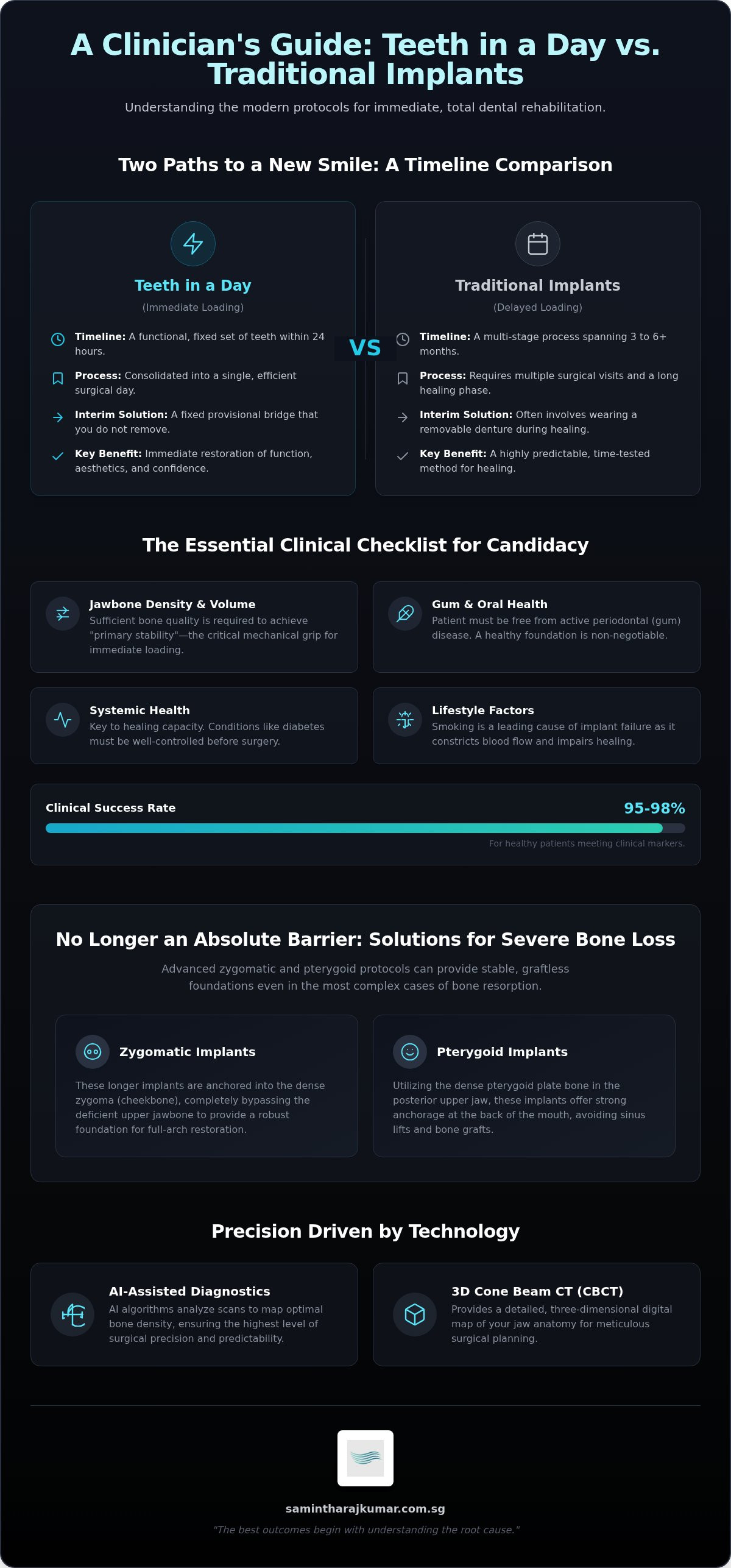
When we evaluate teeth in a day vs traditional implants, we are looking at a fundamental shift in how we manage the biological timeline of healing. Traditionally, implantology followed a rigid, multi-stage process where the Dental implant was placed and then left submerged under the gum for up to six months. Only after this period of quiet osseointegration would the final teeth be attached. In my practice, the "Teeth in a Day" protocol allows me to provide a functional, fixed set of teeth within 24 hours of surgery. This isn't just about speed; it's a total rehabilitation philosophy. By utilizing AI-assisted precision planning, I can identify the optimal bone density for immediate loading, ensuring we don't compromise biological safety for the sake of efficiency.
I view this procedure as a cornerstone of modern dentistry because it addresses the emotional trauma of tooth loss as effectively as the physical void. Walking out of the clinic with a functional smile has a profound psychological impact. It replaces the fear of embarrassment with a sense of renewal and immediate functional excellence. By using these advanced protocols, I can bypass the months of wearing uncomfortable, removable dentures that often accompany traditional methods, allowing you to regain your confidence and chewing ability almost instantly.
The Science of Immediate Loading
The success of immediate loading hinges on a concept called primary stability. This is the mechanical "anchor" effect achieved during the initial insertion. If the implant reaches a specific torque value, it is stable enough to support a load. Contrary to the myth that fast treatment increases failure, we use a fixed provisional bridge to "splint" the implants together. This rigid connection prevents micro-movements that could disrupt the bone-to-implant bond. It's a sophisticated engineering solution that protects the healing sites while providing you with an immediate, fixed aesthetic result.
Procedure Timelines and Efficiency
Efficiency is a hallmark of this approach. While traditional methods require multiple surgical interventions and months of waiting for bone grafts to mature, this protocol consolidates the journey. You transition from a state of dental instability to a fixed, permanent-feeling result in a single day. This reduces the number of appointments and minimizes the cumulative recovery time. For a deeper look at the technical steps I take during surgery, you can read more about the Teeth in a Day procedure explained.
The Essential Clinical Checklist for Candidacy
Evaluating your suitability for full-mouth rehabilitation requires a meticulous look at both your oral environment and your systemic health. While the debate of teeth in a day vs traditional implants often focuses on the timeline, the biological foundation is what dictates success. I look for adequate jawbone volume and density to achieve primary stability, which is the mechanical grip needed to support a load immediately. Equally critical is the absence of active periodontal disease. We cannot build a lasting restoration on a foundation of inflammation; therefore, any existing gum disease must be managed before we proceed with surgery.
In healthy patients, the success rate for immediate-load procedures is between 95% and 98% as of June 2026, provided these clinical markers are met. This high predictability is the result of a rigorous screening process that balances your desire for a new smile with the biological realities of your body's healing capacity. I view this checklist not as a barrier, but as a roadmap to ensure your investment in your health remains secure for decades.
Biological Readiness and Healing Capacity
I pay close attention to your body’s ability to integrate materials like titanium or biocompatible ceramic dental implants. Systemic factors, such as uncontrolled diabetes or autoimmune conditions, can slow the healing process and increase risks. However, a "no" today doesn't mean a "no" forever. By working with your physician to stabilize blood sugar levels, we can often move a patient into the candidacy category. Smoking remains a significant challenge; it constricts blood flow to the gums and is a leading cause of implant failure. It's helpful to review the FDA on dental implant safety to understand how these lifestyle risks impact long-term outcomes.
Structural Requirements of the Jaw
Precision is non-negotiable in my surgical suite. I use 3D CT scans and AI-assisted planning to map your bone architecture with sub-millimeter accuracy. This allows me to identify areas of high-density bone that might be invisible on traditional X-rays. For patients with moderate bone loss, we employ the "All-on-4" geometry, where we tilt the posterior implants. This strategic angling maximizes contact with existing bone and often eliminates the need for complex grafting. If you have failing dentition, where remaining teeth are loose or painful, you may actually be an ideal candidate for a full-arch replacement rather than continuing a cycle of patchwork repairs. If you're ready to explore your options, a comprehensive oral examination is the first step toward determining which path serves your long-term well-being best.
Advanced Candidacy: What if You Lack Bone Density?
One of the most disheartening experiences for a patient is being told they aren't a candidate for dental restoration due to "insufficient bone." This is a common misconception that stems from a traditional view of implantology. When comparing teeth in a day vs traditional implants, the conversation often stops at bone grafting; however, for a specialist, bone density is rarely a binary "yes or no" situation. I often see patients who have been rejected elsewhere because their jawbone has atrophied significantly over time. In my clinical experience, we can almost always find a solution by looking beyond the alveolar ridge to the denser, more stable structures of the facial skeleton.
By utilizing the zygomatic and pterygoid bones, I can bypass the need for lengthy, unpredictable bone grafting procedures that might otherwise take six to nine months to heal. This approach allows for immediate loading, meaning you don't have to wait for a graft to mature before receiving your new smile. It’s a sophisticated method of total rehabilitation that prioritizes your time and emotional well-being without compromising on structural integrity. When evaluating teeth in a day vs traditional implants for those with bone loss, I focus on the available cortical bone to ensure a secure, lifelong foundation.
Zygomatic Implants: The Specialist’s Solution
For cases of severe maxillary atrophy, Zygomatic Dental Implants are the gold standard. Instead of anchoring the implant into the thin ridge of the jaw, I anchor it into the zygoma, or cheekbone. The cheekbone is exceptionally dense and provides the primary stability required for immediate loading. This protocol is ideal for those who have worn dentures for many years or have suffered from aggressive periodontal disease. It changes the narrative for patients previously told they were ineligible, offering them the chance to wake up with fixed teeth. Understanding the preparation for such procedures is vital; you can find more detail in the Mayo Clinic on dental implant surgery, which outlines the comprehensive nature of these advanced interventions.
Navigating Complex Anatomy
Another advanced technique I utilize involves the pterygoid bone, located at the very back of the upper jaw. By engaging this dense cortical bone, I can provide maximum posterior support for a full-arch bridge. This is particularly useful when we need to navigate around the sinus cavity without performing invasive grafts. While some cases still benefit from Sinus lift surgery for dental implants, my goal is always to find the most direct and efficient path to stability. By using AI-assisted planning to map these complex anatomical structures, I can ensure a level of precision that makes immediate restoration possible for almost everyone, regardless of their starting point.
Lifestyle and Psychological Readiness for Total Rehabilitation
Candidacy for total oral rehabilitation isn't solely determined by the quality of your jawbone or the precision of my surgical planning. It's also defined by your readiness to embrace a new lifestyle and your commitment to the healing process. When we weigh the merits of teeth in a day vs traditional implants, the most significant lifestyle difference is the immediate functional shift. While traditional methods leave you waiting months for a final result, immediate loading provides a set of teeth within 24 hours. However, this speed comes with the responsibility of protecting the implants during the critical osseointegration phase.
Success requires a deep understanding of the "soft food" phase. For the first few months, your new implants are in a delicate state of bonding with your bone. Even though they feel stable and look beautiful, they're not yet ready for the mechanical stress of tough or crunchy foods. Managing these expectations is vital; the prosthesis you receive on the day of surgery is a high-quality provisional bridge designed to guide your healing. It's the bridge to your final, permanent restoration, and treating it with care is a prerequisite for long-term success. Mental readiness is just as vital as physical health because you must be prepared for this transition period.
Post-Surgical Commitment
The first 8 to 12 weeks after your procedure are the most important for protecting your clinical investment. During this time, I insist on regular follow-up appointments to monitor the health of your gum tissue and the stability of the implants. You'll also go through a period of neuromuscular adaptation. Learning to speak and chew with a new dental prosthesis takes time and patience. It's a transformative experience, but it requires a willingness to navigate these minor adjustments as your brain and mouth learn to work together in harmony. Long-term maintenance, including professional hygiene visits, ensures your restoration remains a legacy of health.
My Perspective on Patient Partnership
I don't view surgery as a one-sided event; I see it as a collaborative journey between surgeon and patient. My role is to provide the technical excellence and clinical authority needed for a complex procedure, while your role is to maintain the hygiene and nutrition protocols that sustain it. I understand that deep-seated dental anxiety can make this journey feel daunting. That's why I prioritize empathy and clear communication, ensuring you feel supported at every stage. We're not just restoring teeth; we're rebuilding your confidence and long-term quality of life. If you're ready to begin this partnership, I invite you to schedule a consultation for total rehabilitation to discuss your specific needs and goals.
The Consultation: How I Determine Your Path Forward
The journey toward a restored quality of life begins with a consultation that is far more than a simple visual check. It's a meticulous discovery phase where I employ a sophisticated diagnostic philosophy to map out your unique oral landscape. When we analyze the suitability of teeth in a day vs traditional implants for your specific case, we're looking at a convergence of your aesthetic desires and your anatomical reality. My goal during this first encounter is to move beyond the surface and understand the deep-seated structural and biological factors that will ensure your rehabilitation is not only immediate but enduring.
I believe that a successful outcome is rooted in the precision of the initial assessment. During our time together, I don't just look at your teeth; I evaluate the harmony of your facial structure, the health of your supporting tissues, and the way your systemic health influences your healing capacity. This comprehensive approach ensures that the treatment plan we create is tailored specifically to your lifestyle and long-term well-being, providing a clear and logical path toward functional excellence.
Precision Planning with Advanced Technology
I integrate the latest AI-assisted diagnostic tools available in my Singapore clinics for 2026 to eliminate the guesswork often associated with complex surgery. By utilizing 3D cone-beam computed tomography (CBCT) and digital impressions, I create a precise virtual model of your jaw. This allows me to use AI algorithms to simulate bone density and stress distribution, identifying the highest density bone for implant placement before we even begin the procedure. We then translate this digital plan into the physical world using 3D-printed surgical guides, which provide a level of predictability that traditional methods cannot match. This level of detail is a standard part of my approach to All-on-4 dental implants and other full-arch protocols.
Your Journey to Total Rehabilitation
Your first visit to Nuffield Dental is designed to be a calm, rhythmic experience that mirrors the precision of the surgery itself. We'll have a transparent discussion about your options, including the choice between titanium and ceramic dental implants for those prioritizing advanced biocompatibility. I believe in total transparency regarding surgical fees and rehabilitation timelines because trust is the foundation of our partnership. We'll also discuss whether your case requires specialized Zygomatic or Pterygoid systems to bypass bone loss issues.
The path from an initial scan to a same-day transformation is a logical progression of steps, each designed to maximize your comfort and long-term success. I take personal accountability for every aspect of your care, from the initial diagnostic simulation to the final placement of your restoration. The right diagnosis doesn't just inform the surgery; it changes your entire experience of medicine, replacing anxiety with the quiet confidence that you're in expert hands.
Your Journey Toward Functional Excellence
Choosing between teeth in a day vs traditional implants is a deeply personal decision that involves balancing clinical necessity with your desire for emotional renewal. As the founder of Nuffield Dental Holdings, I've spent years perfecting the All-on-4 and Zygomatic protocols to ensure that even patients with severe bone loss have a path forward. We've seen how AI-assisted diagnostics and a commitment to patient partnership turn complex surgical challenges into predictable, life-changing outcomes. My mission is to provide you with a foundation that is as structurally sound as it is aesthetically beautiful.
The best outcomes begin with understanding the root cause. Explore your candidacy for total rehabilitation.
I believe that every patient deserves a chance to regain their confidence and the simple joy of a shared meal. This process is about more than just surgery; it's about restoring your quality of life through meticulous planning and compassionate care. I'm here to support you at every stage of this transformative journey, ensuring you feel secure in the hands of a dedicated specialist who values your long-term well-being.
Frequently Asked Questions
Can I get Teeth in a Day if I have gum disease?
Active gum disease must be fully treated and stabilized before you can proceed with surgery. We cannot place implants into an infected environment, as this significantly increases the risk of failure. Once your periodontal health is managed, we can move forward with a plan for total rehabilitation that provides a clean, healthy foundation for your new smile.
Is there an age limit for same-day dental implants?
There is no upper age limit for this procedure, provided your systemic health is stable. I focus on your biological capacity to heal rather than the years on your birth certificate. Many of my patients in their later years find that restoring their ability to chew and speak clearly provides a profound improvement in their overall quality of life.
How painful is the Teeth in a Day procedure?
Most patients are surprised by how little discomfort they actually experience. We use advanced local anesthesia or IV sedation to ensure you remain completely comfortable throughout the surgery. Post-operative tenderness is typically mild and can be managed effectively with standard over-the-counter medication or prescribed care during the first few days of recovery.
What happens if I do not have enough bone for regular implants?
If you lack sufficient bone density in the jaw, you may still be an ideal candidate for Zygomatic or Pterygoid implants. These specialized systems allow me to anchor the restoration into the denser bones of the facial skeleton, such as the cheekbones. This advanced approach often eliminates the need for the lengthy and unpredictable bone grafting procedures required by traditional methods.
How long do same-day dental implants last?
These implants are designed to be a permanent, lifelong solution when supported by diligent oral hygiene. When comparing teeth in a day vs traditional implants, both protocols show high long-term success rates of approximately 95% over a 10-year period as of June 2026. Your commitment to regular professional maintenance is the most important factor in ensuring the longevity of your restoration.
Can I drive myself home after the surgery?
You'll need to arrange for a responsible adult to drive you home and stay with you for a few hours. Because we utilize sedation to ensure your comfort and lower your anxiety, your coordination and judgment will be temporarily affected. We prioritize your safety and recommend resting quietly for the remainder of the day to allow the sedative effects to subside.
What is the difference between All-on-4 and Teeth in a Day?
Teeth in a Day is the clinical outcome of receiving a fixed bridge on the same day as your surgery, while All-on-4 is a specific surgical protocol used to achieve that result. When evaluating teeth in a day vs traditional implants, the primary difference lies in the immediate loading of the prosthesis, which prevents the need for months of wearing removable dentures.
Will my new teeth look natural?
Your new teeth are custom-crafted to match your unique facial proportions and aesthetic goals. We use high-grade materials that replicate the translucency and light-reflecting properties of natural enamel. By utilizing digital impressions and AI-assisted planning, I ensure your restoration provides functional excellence while remaining virtually indistinguishable from a healthy, natural smile.


Comments