
Benefits of Ceramic vs Titanium Implants: A Specialist’s Perspective on Biological Harmony
- Dr Samintharaj Kumar

- Jul 3
- 11 min read
What if the most durable material for your dental restoration isn't necessarily the most compatible with your body's unique biology? In my clinical experience, many patients feel caught between the proven track record of traditional materials and the appeal of modern, metal-free alternatives. When we discuss the benefits of ceramic vs titanium implants, we're really talking about finding a lifelong harmony between technology and your own tissue. It's natural to feel some anxiety about metal sensitivity or the fear that a grey shadow might one day appear beneath your gum line. You deserve a solution that offers both structural integrity and total peace of mind.
My promise is to help you discover the clinical and biological differences between zirconia and titanium so you can choose the foundation that best supports your long-term health. From a biological perspective, the right choice depends on your specific immune profile, bone density, and aesthetic goals. In the following sections, we'll explore the latest success rates, the science of osseointegration, and how modern innovations are making metal-free smiles a reality for more patients than ever before. By understanding the core differences in how these materials interact with your living bone, you can move forward with confidence in your restorative journey.
Table of Contents
The Evolution of Dental Implantology: From Titanium to Ceramic
In my clinical experience, the foundation of a successful restoration begins with a deep understanding of material science. We aren't just replacing missing teeth; we're integrating artificial components into a living, biological system. Central to this integration is osseointegration. This is the biological process where bone fuses directly to an artificial surface, creating a permanent bond that supports functional load. For decades, the narrative of The Evolution of Dental Implantology has been dominated by titanium, which became the gold standard after Per-Ingvar Brånemark's discovery in the mid-20th century. Understanding the benefits of ceramic vs titanium implants is essential for any patient considering permanent tooth replacement, as it dictates how your body will interact with your new smile for decades to come.
To better understand how these materials compare in a modern clinical setting, watch this helpful video:
Titanium: The Established Foundation
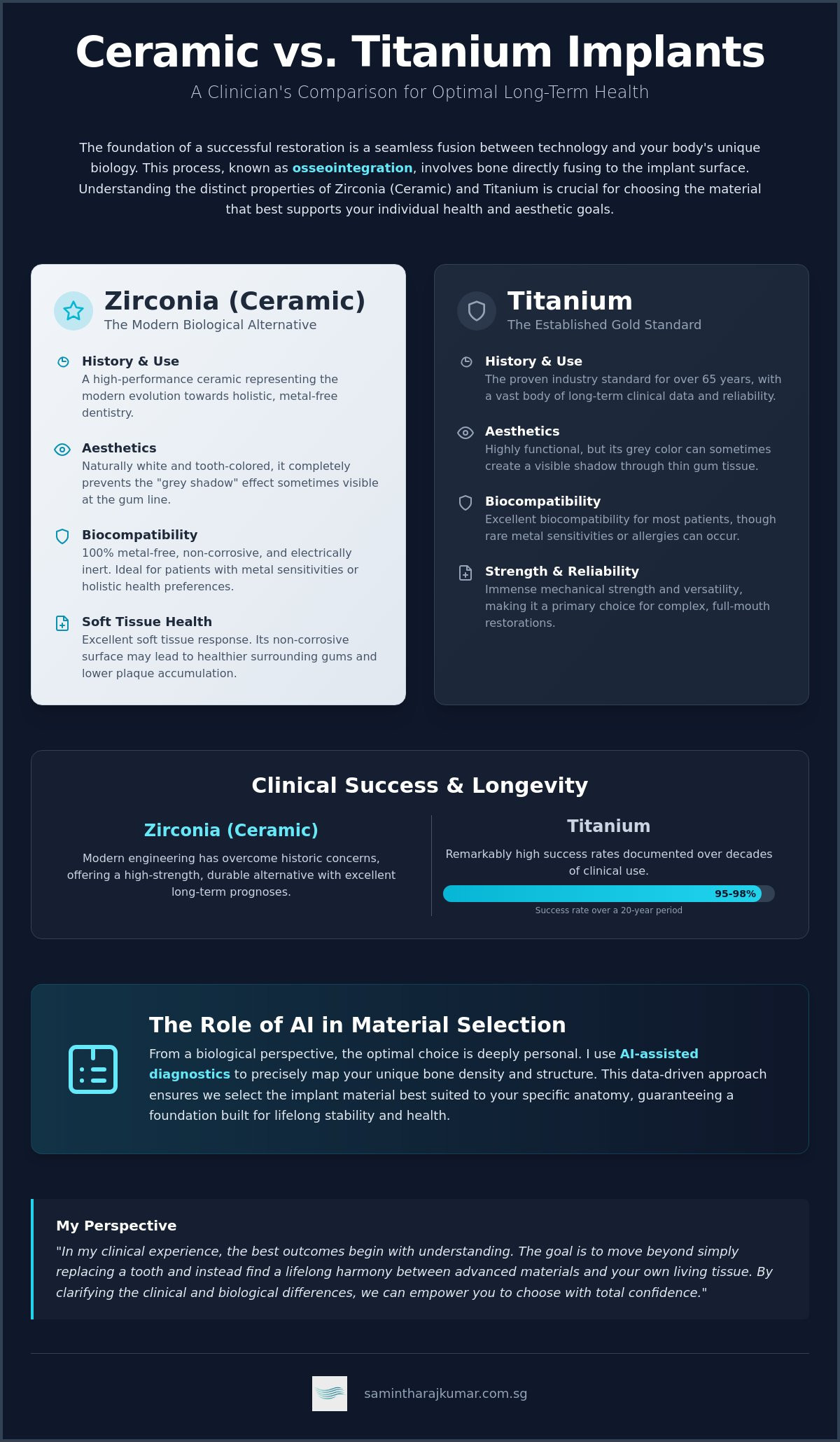
Medical-grade titanium has served us exceptionally well for over 65 years. Its success rates are remarkably high, typically ranging between 95% and 98% over two decades of use. I often rely on its immense mechanical strength for complex full-mouth rehabilitations where structural integrity is paramount. For many patients seeking a dental implant singapore, titanium remains a primary choice because of its versatility and long-term documented reliability. It's a material that has stood the test of time, providing a predictable outcome for millions worldwide. Its ability to withstand the forces of mastication in the posterior regions of the mouth makes it a formidable tool in any specialist's arsenal.
Ceramic (Zirconia): The Modern Biological Alternative
As a clinician and founder, I've observed a significant shift in patient priorities toward more holistic solutions. The emergence of zirconia, or zirconium dioxide, represents a high-performance ceramic response to the growing demand for metal-free dentistry. While titanium is highly biocompatible, a small percentage of the population may experience sensitivities. Beyond rare allergies, there's a broader movement toward biological dentistry, where patients seek materials that align with a holistic view of well-being. Evaluating the benefits of ceramic vs titanium implants allows us to tailor the treatment to your body's specific needs, especially if you have concerns about metal in your system. Zirconia offers a unique combination of strength and aesthetic harmony that was once thought impossible for ceramics. It represents the next step in our pursuit of total oral health.
Evaluating the Benefits of Ceramic vs Titanium Implants
A comparative analysis of modern restorative materials must look beyond the surface to the cellular level. To understand the benefits of ceramic vs titanium implants, we must examine how each material influences the living environment of the mouth. Zirconia is a non-corrosive, non-conductive material that offers a distinct biological profile for patients seeking a holistic approach. From a biological perspective, the material we select serves as the foundation for both mechanical stability and long-term soft tissue health. The choice is never merely about filling a gap; it's about ensuring the restoration thrives within your unique physiology.
Biocompatibility and Immune Response
Biocompatibility is the cornerstone of my treatment philosophy. In my clinical experience, biocompatibility testing for dental materials allows us to tailor restorations to a patient’s specific immune profile. While titanium has decades of evidence, it can occasionally lead to oral galvanism; this is a rare condition where different metals in the mouth create low-level electrical currents. Zirconia is chemically inert and non-metallic, meaning it does not react to other restorations. Because it is non-conductive, zirconia typically attracts less plaque and biofilm than titanium. This reduced bacterial adhesion is a critical factor in preventing inflammation around the implant site. For those interested in the regulatory side of safety, the FDA guidance on dental implants provides a comprehensive look at how these materials are evaluated for long-term patient use.
Aesthetics and the "Gray Line" Phenomenon
Achieving a natural-looking smile requires more than just a white crown; it requires a foundation that mimics the natural tooth root. Titanium can sometimes cause a "gray line" phenomenon, where the dark metal shines through thin gum tissue or becomes visible if the gums recede over time. This is particularly problematic in the aesthetic zone, where the front teeth are most visible. Zirconia implants are manufactured with a white, tooth-like hue that blends seamlessly with the surrounding tissue. This material choice ensures that even if minor gum recession occurs, the restoration remains indistinguishable from a natural tooth. As a clinician and founder, I believe that high-end aesthetics should never be a compromise. If you are beginning your journey toward restoration, the best outcomes begin with understanding which material best suits your lifestyle and biological needs.
Clinical Challenges and Longevity Considerations
From a biological perspective, longevity is a product of both material selection and surgical precision. While we often focus on the physical durability of the screw itself, the true success of a restoration lies in how it interacts with the body's natural defence mechanisms over decades. In my clinical experience, patients often worry about the "brittleness" of ceramics. However, modern zirconia is engineered for high fracture toughness, specifically utilising Yttria-stabilised formulations that resist cracking under pressure. When evaluating the benefits of ceramic vs titanium implants, we must look at how these materials withstand the daily forces of chewing while maintaining the health of the bone and gum. A comprehensive clinical overview of dental implants highlights that while both materials are robust, their mechanical behaviours differ significantly under stress.
Mechanical Strength and Design Flexibility
Titanium has long held an advantage in design flexibility. Its ductile nature allows for sophisticated two-piece systems where the implant and the abutment are separate components. This is particularly useful in complex cases like all-on-4 dental implants, where we may need to tilt implants to bypass anatomical structures like sinuses or nerves. Historically, zirconia was limited to one-piece designs, which made the final crown placement more challenging if the angle wasn't perfect. Today, we've seen a shift toward robust two-piece zirconia systems. These allow for easier restoration and maintenance; they bridge the gap between biological benefits and mechanical versatility. As a clinician and founder, I've found that having this flexibility is essential for achieving a perfect bite alignment.
Soft Tissue Integration and Health
The long-term health of an implant often depends on the "biological seal" created by the gums. I've observed that soft tissue integration with zirconia is exceptionally high. Gums don't just sit next to the ceramic; they tend to attach to it with a level of vascularisation that mimics natural tooth roots. This healthy blood flow around the implant margin is vital for preventing peri-implantitis, a form of gum disease that can lead to implant failure. By maintaining a tight, healthy seal, we are also preventing facial collapse with dental implants, as the underlying bone remains stimulated and protected. When considering the benefits of ceramic vs titanium implants, the superior soft tissue response of zirconia often makes it the preferred choice for patients with thin gingival biotypes. The right material selection ensures your restoration isn't just a functional tool, but a healthy extension of your body.
The Role of AI and Advanced Diagnostics in Selection
As a clinician and founder, I believe technology must guide our material choices. In my clinical experience, the most successful outcomes occur when we marry biological insight with high-precision data. We no longer rely solely on traditional x-rays to decide between materials. Instead, we use AI-assisted diagnostics to map bone density and identify specific stress points within the jaw. This level of detail is crucial when evaluating the benefits of ceramic vs titanium implants, as the two materials respond differently to mechanical load. By customising the implant choice based on your unique biting forces, we ensure the foundation is as resilient as it is beautiful.
This technological precision is particularly vital during the teeth in a day procedure explained through the lens of material science. When we provide immediate loading, the material's interaction with the bone must be instantaneous and predictable. AI helps us simulate these forces before we even begin the surgery. If the software indicates a patient has high occlusal stress but requires the aesthetic benefits of ceramic, we can select specific zirconia formulations that provide the necessary fracture toughness without sacrificing the metal-free profile.
Digital Smile Design (DSD) and Material Choice
Digital Smile Design allows us to visualise the final outcome before the first incision is made. It's a collaborative process where we account for gum thickness and the translucency of the final restoration. For example, if a patient has thin gingival tissue, the AI-guided plan might favour ceramic to prevent the dark metal shadow discussed earlier. We ensure the prosthesis matches the biological foundation perfectly, creating a result that feels like a natural part of your anatomy rather than an addition to it. This forward-thinking approach removes the guesswork from complex rehabilitations.
Biological Testing for Metal Sensitivity
From a biological perspective, systemic health is just as important as local bone density. For patients with a history of allergies or autoimmune concerns, I often recommend MELISA testing. This specialised blood test helps us identify titanium sensitivities with high accuracy. When these protocols indicate a reaction, I recommend ceramic as the only viable biological option. Personalising the surgical plan to your systemic health profile is the only way to guarantee a lifetime of comfort. If you're ready to explore how advanced diagnostics can secure your smile, the best outcomes begin with understanding the root cause.
My Perspective: Why the Best Outcomes Begin with Understanding
In my clinical experience, there's no "one size fits all" approach in oral surgery. Every patient brings a unique biological history and a distinct set of lifestyle expectations to the chair. Reflecting on the hundreds of rehabilitations I've performed, the most successful cases are those where the material selection respects the patient's systemic health. Choosing the right biological foundation is transformative; it's the difference between a restoration that simply fills a gap and one that supports lifelong vitality. We must look at the body as a whole, integrated system where every material we introduce plays a role in your overall well-being.
A Founder’s Philosophy on Total Rehabilitation
As a clinician and founder, I've dedicated my career to building a legacy of excellence through meticulous material selection and institutional growth. I often prioritise ceramic implants for patients who have high aesthetic requirements or a preference for holistic wellness. From a biological perspective, the dental industry is steadily moving toward 100% biocompatible solutions that mirror the natural properties of human teeth. While titanium remains a robust tool in our surgical arsenal, the benefits of ceramic vs titanium implants become clear when we consider the long-term immune response and the health of the surrounding gingival tissue. My philosophy is rooted in the belief that every patient deserves a premium level of care that integrates specialist expertise with the most advanced, tissue-friendly innovations available today.
Your Journey Toward Restoration
Your path to a renewed smile begins with a specialist consultation where we look far beyond your dental x-rays. We explore your health history, immune profile, and the specific functional demands of your bite. This is a time for reflection and planning, ensuring that the foundation we build is suited for your specific anatomy. We ensure comfort and precision at every stage of the process, answering every question with clinical depth and compassionate clarity. I believe that a patient who understands the "why" behind their treatment is a patient who can move forward with total peace of mind. Trust isn't just about surgical skill; it's about the personal accountability I take for your long-term comfort and the legacy of your smile.
Ultimately, the benefits of ceramic vs titanium implants are felt in the years of quiet confidence that follow your final restoration. A successful procedure should feel like a natural extension of your anatomy, allowing you to speak, laugh, and eat without a second thought. This sense of emotional renewal and functional excellence is the true measure of our success as healers. We don't just restore teeth; we restore the freedom to live without biological compromise. The right diagnosis changes everything, and the best outcomes begin with understanding the root cause.
Securing Your Biological Legacy
Choosing the right material for your restoration is a decision that impacts your daily life and systemic health for decades. We've explored how advanced AI diagnostics and a meticulous understanding of material science allow us to tailor solutions to your unique physiology. Whether you value the established mechanical track record of titanium or the superior soft tissue integration of zirconia, the goal is always a foundation that supports your body's natural harmony. Understanding the benefits of ceramic vs titanium implants empowers you to make a choice rooted in science rather than marketing claims.
As the founder of Nuffield Dental and a specialist in complex implantology, I'm committed to upholding global clinical standards in every procedure we perform. My philosophy is built on the belief that a successful restoration should be indistinguishable from nature, both in how it looks and how it functions within your body. By integrating visionary technology with a patient-centred approach, we can achieve outcomes that truly transform your quality of life. The best outcomes begin with understanding the root cause. Explore our approach to specialist dental implants. You deserve a smile that is as resilient as it is beautiful, crafted with the precision and care that your long-term well-being demands.
Frequently Asked Questions
Are ceramic dental implants as strong as titanium?
Ceramic implants are exceptionally strong but possess different mechanical properties than titanium. While titanium is more ductile and slightly more resistant to sudden impact, modern zirconia is engineered with high fracture toughness to prevent cracking. In my clinical experience, both materials are more than capable of withstanding the daily stresses of mastication when placed with surgical precision.
Can I be allergic to titanium dental implants?
Yes, it's possible to have a titanium sensitivity, though it affects a small percentage of the population. Research suggests that the prevalence of titanium allergies is approximately 0.6%. For these patients, the benefits of ceramic vs titanium implants are clear; zirconia provides a completely inert alternative that avoids the risk of an adverse immune response or chronic inflammation.
How much more do ceramic implants cost compared to titanium?
Ceramic implants generally involve a higher investment than traditional titanium options. This premium reflects the complex manufacturing process required to create high-strength zirconia and the specialised clinical expertise needed for its placement. While I don't focus on cost over quality, patients should expect a difference due to the material's advanced biological properties and aesthetic advantages.
Do ceramic implants last as long as titanium ones?
Titanium has a longer documented history, but zirconia is showing excellent long-term results. Titanium success rates sit at 95% to 98% over 20 years. Recent studies on zirconia have shown survival rates as high as 98.69% after 15 years. As a clinician and founder, I view both as reliable, lifelong solutions when maintained with proper oral hygiene.
Are ceramic implants truly metal-free?
Ceramic implants are considered truly metal-free in their clinical application. Although zirconium is a metal on the periodic table, zirconium dioxide is a ceramic. This chemical transition changes its structure, making it non-conductive and non-corrosive. It won't trigger the same electrical or chemical reactions in the mouth that metallic alloys might.
Which material is better for preventing gum recession?
Zirconia is often superior for maintaining healthy gum margins and preventing the appearance of recession. Its surface attracts less bacterial plaque, which lowers the risk of the inflammation that leads to tissue loss. From a biological perspective, the white hue of ceramic also ensures that if the gums do thin slightly with age, no dark metal shadow will ever be visible.
Can ceramic implants be used for All-on-4 procedures?
Ceramic implants can be used for full-arch rehabilitations, though titanium remains the traditional choice for All-on-4 protocols. Titanium's two-piece design offers more flexibility when we need to angle implants in limited bone. However, as we move toward more biological dentistry, modern two-piece zirconia systems are increasingly used for those seeking a completely metal-free full-mouth restoration.
How do I know if I have a titanium allergy before surgery?
The most reliable way to identify a sensitivity is through specialised biological testing. I often recommend the MELISA test, which is a scientifically validated blood test designed to detect metal allergies. Identifying a sensitivity before surgery allows us to customise your treatment plan and select the material that best supports your long-term systemic health.


Comments