
Can You Use an Electric Toothbrush on Implants? A Surgeon’s Perspective
- Dr Samintharaj Kumar

- May 22
- 12 min read
I often meet patients who treat their new dental implants with a fragile caution, fearing that a single vibration might compromise the entire restoration. You might wonder, can you use an electric toothbrush on implants without risking the integrity of the screw or the surrounding bone? In my clinical experience, the concern that sonic or oscillating movements might "loosen" an implant is a persistent myth that often prevents patients from achieving the highest standard of oral hygiene. The reality is that the right technology is often your strongest ally in maintaining a healthy biological environment.
It's natural to feel anxious about protecting such a significant investment in your health and confidence. I understand the confusion that arises from conflicting post-operative advice, especially when you're navigating the critical healing phase. In this article, I'll share the clinical guidelines I've established to help you transition safely from manual to electric care. We'll explore the specific timeline for osseointegration, the technology behind modern pressure sensors, and how the right tools can remove up to 100% more plaque to ensure your smile remains stable for a lifetime. My goal is to replace your hesitation with a clear, evidence-based routine for long-term success.
Key Takeaways
Learn why the answer to can you use an electric toothbrush on implants is a resounding yes, provided you follow a specific clinical timeline for healing.
Discover why the biological bond of osseointegration is more than capable of withstanding the vibrations of modern sonic technology without risking mechanical failure.
Identify the critical features your toothbrush needs, such as pressure sensors and sensitive brush heads, to safeguard the delicate soft tissue around your restoration.
Explore how to supplement your brushing with specialised interdental tools and water flossers to maintain complex cases like ceramic or Zygomatic implants.
Establish a professional-grade hygiene routine that prevents inflammation and secures the long-term functional excellence and stability of your smile.
Table of Contents
Can You Use an Electric Toothbrush on Dental Implants?
In my clinical experience, the most common question I receive following a successful procedure is whether a patient's daily hygiene routine needs a radical overhaul. The short answer is that can you use an electric toothbrush on implants with complete confidence, provided the timing is managed with surgical precision. While a Dental implant is designed to be a permanent structural replacement, its longevity depends entirely on the health of the surrounding biological tissues. Plaque control isn't just a recommendation; it's the single most critical factor in preventing peri-implantitis and ensuring the stability of your restoration for decades to come.
To better understand how these devices interact with your dental work, watch this helpful video:
The Crucial Post-Surgical Timeline
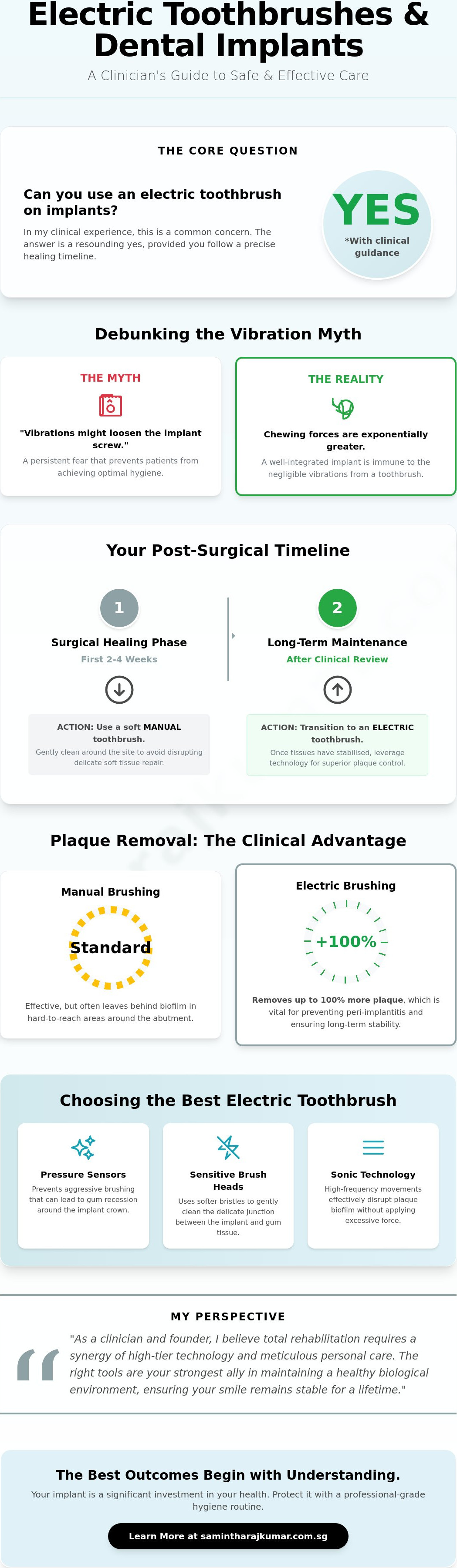
I divide the recovery journey into two distinct phases: the surgical healing phase and the long-term maintenance phase. During the first two to four weeks post-surgery, the soft tissues are in a state of delicate repair. I always recommend using a soft manual toothbrush during this window to avoid disrupting the site. We look for specific clinical signs that your tissue is ready for electric oscillation, such as the complete closure of the gingival margins and a lack of sensitivity during palpation. Once I have reviewed the site, typically following suture removal, and confirmed that the gingival architecture has stabilised, we can discuss transitioning to electric technology.
Manual vs. Electric: What the Science Suggests
When patients ask me can you use an electric toothbrush on implants, I explain that these devices are often superior for managing the hard-to-reach areas around the abutment. Science suggests that electric brushes remove up to 100% more plaque and biofilm compared to manual alternatives. This is vital because implants lack the natural ligament protection of real teeth, making them more susceptible to bacterial invasion if hygiene is neglected. Modern electric brushes equipped with pressure sensors are particularly beneficial. They prevent aggressive brushing habits that can lead to gum recession around the implant crown. As a clinician and founder, I believe total rehabilitation requires a synergy of high-tier technology and meticulous personal care. The best outcomes begin with understanding the root cause of oral health challenges.
Biological Stability: Debunking the Vibration Myth
A common concern I encounter during follow-up consultations is the fear that the high-frequency vibrations of a modern toothbrush might somehow "shake" an implant loose. Patients often ask, can you use an electric toothbrush on implants without compromising the internal screw or the bone-to-metal bond? To address this, we must look at the mechanical reality of oral function. The micro-vibrations produced by a sonic or oscillating brush are negligible when compared to the significant loading forces of daily mastication. Chewing a standard meal exerts far greater pressure on the restoration than a toothbrush ever could. From a biological perspective, these gentle mechanical stimulations may even be beneficial, as they can support the maintenance of bone density around the site.
Understanding Osseointegration
The reason an implant remains secure isn't due to simple friction; it's the result of a sophisticated process called osseointegration. During the healing phase, specialised bone cells known as osteoblasts grow directly into the microscopic pores of the implant surface. This creates a structural bond that is often stronger than the natural periodontal ligaments holding your original teeth in place. Once this integration is complete, the unit is effectively part of your jawbone. In my clinical experience, a well-integrated implant is entirely immune to the low-frequency vibrations of hygiene tools. Achieving this level of permanence requires absolute surgical precision during the initial placement to ensure primary stability is never compromised.
The Risk of Peri-Implantitis
While patients worry about vibrations, the true threat to longevity is biofilm accumulation. Bacteria at the gum line can lead to peri-implantitis, a form of inflammatory disease that causes bone loss and, eventually, implant failure. Electric brushes are superior here because they are designed to reach the "sulcus", the small gap between the crown and the gum tissue, more effectively than manual strokes. Adhering to comprehensive implant maintenance protocols is the only way to safeguard your investment against infection. For those seeking a dental implant in Singapore, understanding that hygiene technology supports biology is a vital step toward total oral rehabilitation.
As a clinician and founder, I believe that empowering patients with the right tools is as important as the surgery itself. If you're uncertain about your current hygiene routine, a professional assessment can provide the clarity you need. The best outcomes begin with understanding the root cause of any oral health concerns.
Choosing the Best Electric Toothbrush for Implants
Once you understand that the answer to can you use an electric toothbrush on implants is a definitive yes, the next step is selecting a device that aligns with your specific clinical needs. Not all technology is created equal. I often tell my patients that the brush they choose is an extension of the surgical care they received in the clinic. In my clinical experience, the right tool doesn't just clean; it preserves the delicate architecture of the gum tissue that surrounds your restoration.
I recommend looking for "Sensitive" or "Extra Soft" brush head attachments. These are specifically designed to protect the soft tissue seal around the implant crown. A pressure sensor is also a non-negotiable feature. It provides immediate haptic or visual feedback if you apply too much force, which is vital for preventing gum recession. While both Sonic and Oscillating-Rotating technologies are effective, Sonic models are often perceived as gentler on the smooth surfaces of ceramic restorations. Regardless of the mechanism, a built-in timer is essential to ensure you meet the two-minute clinical standard for biofilm removal every single time.
Essential Features for Implant Care
I advocate for brushes with multiple speed settings to allow for customised comfort. This is particularly useful as you transition from manual brushing and grow accustomed to the sensation of mechanical oscillation. It's vital to use non-abrasive brush heads to avoid microscopic scratching on ceramic dental implants. Even small scratches can harbour bacteria and compromise the aesthetic finish of the crown. For patients with complex All-on-4 dental implants, AI-assisted apps have become a transformative innovation. These tools track cleaning efficiency in real-time, ensuring that the interface between the prosthetic bridge and the gingiva is thoroughly debrided.
Maintenance of Your Tools
The success of your hygiene routine depends on the cleanliness of the tools themselves. From a biological perspective, a worn brush head is a reservoir for pathogens. I recommend replacing brush heads every three months, or immediately if the bristles begin to splay. You should also clean the toothbrush handle regularly to prevent cross-contamination within the oral cavity. I must emphasise that sharing brush heads is a significant clinical risk. Each individual's oral microbiome is unique, and maintaining that boundary is essential for the long-term health of your implants. As a clinician and founder, I believe that meticulous tool maintenance reflects a commitment to your overall well-being. The best outcomes begin with understanding the root cause of potential hygiene failures.
My Perspective: The Intersection of Innovation and Biology
As a clinician and founder, I have always viewed dental implants as far more than a restorative procedure. They represent a lifelong commitment to systemic health and functional excellence. When patients ask me, can you use an electric toothbrush on implants, I see it as an opportunity to discuss the synergy between surgical innovation and patient-led biological care. My approach is rooted in the belief that the tools you use at home should match the precision of the diagnostics we use in the clinic. I personally guide my patients through the transition from surgery to daily maintenance, ensuring they feel confident in their ability to protect their investment.
In my clinical experience, the long-term success of a restoration is predicated on proactive monitoring. We utilise AI-assisted diagnostics to track subtle changes in bone density and tissue attachment that the human eye might miss. This technology allows us to intervene early, ensuring that your daily hygiene routine is actually performing as intended. Ultimately, the answer to can you use an electric toothbrush on implants is shaped by the quality of the surgical placement and the materials selected at the outset.
The Ceramic Advantage
From a biological perspective, I frequently advocate for ceramic dental implants. Zirconia is inherently more biocompatible than traditional titanium and possesses a unique surface energy that naturally attracts less plaque. This reduced bacterial affinity is a significant advantage in preventing inflammatory responses. When you combine the material benefits of zirconia with a gentle electric brushing routine, you maintain not only the health of the site but the aesthetic brilliance of the crown itself. I believe the future of biological dentistry lies in this intersection of high-performance materials and meticulous, patient-led care.
The Founder’s Philosophy on Aftercare
At Dr Samintharaj Kumar, we don't just place implants. Our mission is total oral rehabilitation, which necessitates a robust framework for aftercare that extends far beyond the operating theatre. A critical component of this journey is the annual checkup for dental implants. These sessions are not merely administrative; they are essential clinical milestones where we verify your cleaning technique and the health of the underlying bone structure. The best outcomes begin with understanding the root cause of oral health challenges. My goal is to empower you with the knowledge to protect your legacy of health and functional excellence.
The right diagnosis changes everything. If you are ready to begin your journey toward a restored smile, I invite you to explore our approach to dental implants.
Comprehensive Care Beyond the Toothbrush
While establishing that can you use an electric toothbrush on implants is a vital milestone, I must emphasise that brushing alone is rarely sufficient for complex restorations. For patients with Zygomatic implants or full-arch bridges, the architectural complexity requires a more nuanced approach. In my clinical experience, the interface where the restoration meets the gingiva is a high-risk zone for bacterial colonisation. Total oral rehabilitation is a multifaceted commitment that involves both mechanical cleaning and the support of your body's natural biological processes. If you are still wondering can you use an electric toothbrush on implants effectively, remember that it is the foundation of a broader specialised hygiene programme.
From a biological perspective, the longevity of your implants is also influenced by systemic health. Proper nutrition, particularly adequate Vitamin D and Calcium levels, ensures that the bone remains dense and resilient around the implant site. Meticulous hygiene is not just about aesthetics. It's about preserving your systemic well-being and ensuring a high quality of life for the years ahead. A healthy body provides the stable foundation necessary for a healthy smile.
Interdental Cleaning and Water Flossing
I often recommend specialised interdental brushes to my patients. It's critical to use non-metal coated brushes; metal wires can cause galvanic reactions or microscopic scratches on titanium or ceramic surfaces. When I suggest a water flosser, it is usually as a supplement to, rather than a replacement for, your electric toothbrush. These devices are particularly effective for flushing out debris from beneath the prosthetic bridge in All-on-4 restorations, where traditional floss may be difficult to navigate.
Professional Maintenance Standards
Specialist-led maintenance is fundamentally different from the general scaling performed in a standard dental practice. We use specific protocols designed to protect the integrity of the implant-abutment connection. This often includes glycine air-polishing, a gentle technology that removes biofilm without abrading the delicate implant surfaces. As a clinician and founder, I believe that the synergy of home care and professional oversight is the only way to achieve lasting success. The best outcomes begin with understanding the root cause of any hygiene challenges. The right diagnosis and aftercare change everything.
Securing the Future of Your Restoration
Maintaining the biological stability of your smile is a collaborative effort between surgical excellence and your daily commitment to hygiene. We've addressed the fundamental question: can you use an electric toothbrush on implants without fear of mechanical failure? In my clinical experience, the answer is a definitive yes, provided you respect the initial healing timeline and select a device equipped with pressure sensors to protect the soft tissue. By integrating sonic technology with meticulous interdental care, you aren't just cleaning teeth; you're preserving a legacy of oral health.
As a clinician and founder, I believe that high-tier diagnostics and biological protocols are the cornerstones of long-term success. Whether you've received ceramic dental implants or complex Zygomatic restorations, my philosophy remains focused on total oral rehabilitation. The right technology, used correctly, ensures your restoration remains a functional and aesthetic asset for a lifetime. The best outcomes begin with understanding the root cause. Explore our approach to Total Oral Rehabilitation.
Your journey toward lasting confidence is a path we walk together. With the right tools and professional guidance, your new smile will serve you faithfully for decades to come.
Frequently Asked Questions
How soon after dental implant surgery can I use an electric toothbrush?
In my clinical experience, you should wait at least two to four weeks before using an electric brush on the surgical site. During the initial healing phase, the soft tissues are extremely delicate and require the gentle touch of a soft manual brush. I only recommend transitioning once the gingival margins have fully closed and any sutures have been removed during a follow-up consultation.
Can the vibration of a sonic toothbrush loosen the implant screw?
No, the high-frequency vibrations of a modern toothbrush cannot loosen a dental implant screw. From a biological perspective, once osseointegration has occurred, the implant is structurally fused to your jawbone. The mechanical force exerted by daily chewing is significantly higher than the micro-vibrations of even the most powerful sonic toothbrush, making the device perfectly safe for daily use.
What is the best type of brush head for dental implants?
The best brush head for dental implants is one labelled "Sensitive" or "Extra-Soft" with rounded nylon bristles. These heads are designed to clean the interface between the crown and the gum line without causing micro-abrasions to the prosthetic material. Using a head that is too firm can lead to gum recession, which compromises the aesthetic and functional longevity of your restoration.
Do I still need to floss if I use a high-end electric toothbrush?
Yes, flossing remains a non-negotiable part of your hygiene routine even with a premium electric brush. While you might ask, can you use an electric toothbrush on implants to replace flossing, the brush cannot reach the tight interproximal spaces where bacteria thrive. I recommend using non-metal coated interdental brushes or a water flosser to ensure these hidden areas remain free from biofilm.
Are ceramic implants more sensitive to electric brushing than titanium?
Ceramic implants are not more sensitive to electric brushing; in fact, they often respond better to it. As a clinician and founder, I prefer ceramic dental implants because their smooth zirconia surface is naturally more resistant to plaque accumulation. A gentle electric routine helps maintain this biocompatible advantage without risking the metallic "grey line" often associated with traditional titanium options.
Can I use an electric toothbrush on a temporary crown during the healing phase?
I advise against using an electric toothbrush on temporary crowns during the early healing phase. Temporary restorations are often held in place with weaker provisional cement and are more susceptible to being dislodged by mechanical oscillation. Stick to a manual brush with very light pressure until your permanent, high-strength crown is securely fitted and the site has matured.
What should I do if my gums bleed when using an electric brush around an implant?
If your gums bleed around an implant, it is often an early sign of inflammation known as peri-implant mucositis. This isn't a reason to stop cleaning; rather, it suggests that biofilm is accumulating at the gum line. You should continue gentle cleaning but schedule a professional assessment immediately to ensure the inflammation doesn't progress to bone loss or implant failure.
How often should I see a specialist for professional implant cleaning?
You should see a specialist for professional implant maintenance at least every six months. These sessions are distinct from general cleanings, as we use specialised protocols like glycine air-polishing to decontaminate the implant surface safely. Regular monitoring allows us to use AI-assisted diagnostics to verify the health of the bone and ensure the answer to can you use an electric toothbrush on implants remains a confident yes for your specific case.


Comments