
Ceramic Implant Aftercare Instructions: A Surgeon’s Perspective on Biological Healing (2026)
- Dr Samintharaj Kumar

- 1 day ago
- 12 min read
The success of your dental restoration isn't decided in the operating theatre, but in the quiet, biological moments that follow. In my clinical experience, the first few weeks are a delicate partnership between surgical precision and your body's natural healing response. I understand that the period immediately following surgery can feel overwhelming. You've chosen a premium, biocompatible solution, yet the fear of infection or the confusion of conflicting hygiene advice often creates unnecessary stress.
From a biological perspective, your ceramic implant requires a specific environment to achieve seamless osseointegration. I've designed this guide to provide definitive ceramic implant aftercare instructions that remove the guesswork from your recovery. We'll walk through the critical phases of soft tissue attachment and inflammatory management. By the end of this article, you'll have the clarity and confidence needed to ensure your new smile remains a masterpiece of functional excellence for decades to come.
Table of Contents
Why the Post-Operative Phase is Critical for Ceramic Dental Implants
The Science of Biological Integration: How Zirconia Heals Differently
Your Day-by-Day Aftercare Protocol: Ensuring Successful Osseointegration
Beyond the Clinic: Lifestyle and Dietary Considerations for Long-Term Success
My Perspective: The Philosophy of Total Oral Rehabilitation and Biological Health
Why the Post-Operative Phase is Critical for Ceramic Dental Implants
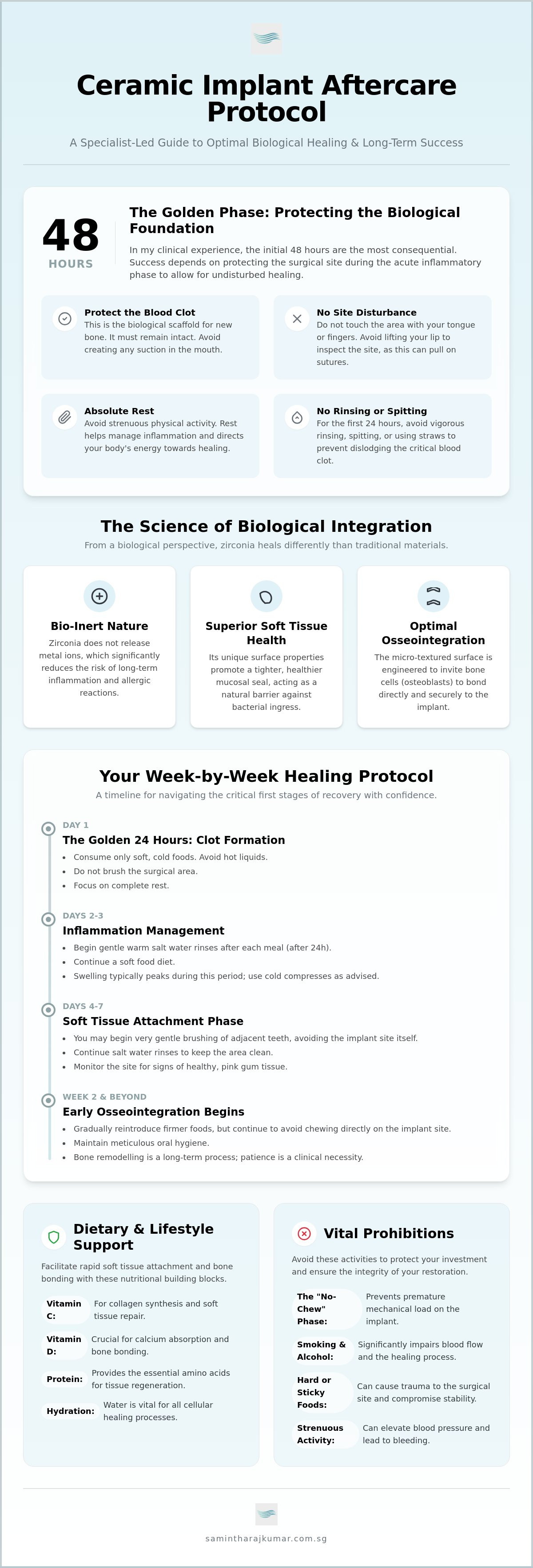
The moment I finish a surgical procedure, the baton passes from my surgical hands to your body's innate healing mechanisms. In my clinical experience, the initial 48 hours following the placement of a ceramic implant are the most consequential. While the surgical placement is a feat of precision, the success of the restoration depends on how well we protect the surgical site during the acute inflammatory phase. This is where the body begins the complex task of cellular signalling and tissue repair.
To visualise the meticulous nature of maintaining these restorations, watch this helpful video:
Failure to respect this timeline can lead to clinical complications such as peri-implantitis or, in the worst cases, early implant failure. Meticulous adherence to ceramic implant aftercare instructions is not just a suggestion; it is a clinical necessity for securing the longevity of your restoration. From a biological perspective, we are asking the jawbone to accept a new structural entity, and that requires an environment free from unnecessary trauma.
The Vulnerability of the Surgical Site
Protecting the initial blood clot is my primary concern during the first day. This clot acts as a biological scaffold for bone-forming cells. If it's disrupted by vigorous rinsing or mechanical pressure within the first 24 hours, the foundation for bone growth is lost. I insist on a strict 'no-disturbance' policy for the wound site. This means no poking the area with your tongue and no lifting the lip to inspect the work. Even minor tension on the soft tissues can pull on sutures and compromise the site's integrity before it has a chance to stabilise.
Biological Integrity vs. Mechanical Stability
We choose ceramic implants, specifically zirconia, for their exceptional biocompatibility and aesthetic superiority. However, zirconia interacts with the body differently than metal. It is highly conducive to soft tissue health, but early inflammation can interfere with the zirconia-bone interface. We need the process of osseointegration to occur without the interference of bacterial ingress or premature mechanical load.
Following international protocols for oral surgery recovery ensures we are working with, rather than against, your biology. As a clinician and founder, I believe total oral rehabilitation is only possible when we prioritise this delicate integration phase. It's about building a legacy of health that starts with these first few days. The right care today ensures the functional excellence you expect tomorrow.
The Science of Biological Integration: How Zirconia Heals Differently
From a biological perspective, the success of a ceramic implant is not merely a matter of mechanical stability; it is about the intricate dance between the zirconia surface and your living tissue. Most traditional guides treat all implants as identical hardware, yet the way your body responds to ceramic is markedly different from its reaction to metal. Zirconia is fundamentally bio-inert. It doesn't release metal ions or provoke the subtle, chronic inflammatory response sometimes associated with titanium alloys. This unique property is exactly why your ceramic implant aftercare instructions must prioritise the delicate stability of both bone and soft tissue from the very first hour.
Zirconia and Osseointegration
Osseointegration is the process where your bone cells, or osteoblasts, bond directly to the implant surface. Modern zirconia implants feature a micro-textured surface specifically designed to invite this cellular growth. Scientific research into the biological healing of zirconia implants indicates that they achieve a level of bone integration comparable to the gold standard of titanium, but with a cleaner biological profile. However, bone remodelling is a slow, physiological journey. It takes months for the bone to reach peak maturity around the implant. Patience is a clinical necessity. We aren't just installing a replacement part; we are integrating a new structural component into your jaw's anatomy.
The 'Pink Aesthetic' and Soft Tissue Health
One of the most significant advantages I see in my practice is how ceramic interacts with the gingiva. Because zirconia is tooth-coloured and highly biocompatible, it promotes a superior 'mucosal seal' compared to metal alternatives. This seal acts as a biological gasket, protecting the underlying bone from bacterial ingress. In my clinical experience, the longevity of an implant depends as much on this soft tissue attachment as it does on the bone itself.
When we successfully preserve this attachment, we maintain the natural 'pink aesthetic' of the gums. This isn't just about a beautiful smile; it's about structural support. I often explain to my patients how dental structure affects face shape, as a robust implant foundation helps maintain the youthful contours of the lower face. As a clinician and founder, I view this as a form of structural rejuvenation. The best outcomes begin with understanding the root cause of tissue health. If you're ready to prioritise your long-term well-being, exploring our approach to biological dentistry provides the foundation for a truly restorative journey.
Your Day-by-Day Aftercare Protocol: Ensuring Successful Osseointegration
Recovery is a structured journey. In my clinical experience, patients who view these steps as a vital part of the surgery itself achieve the most stable outcomes. These ceramic implant aftercare instructions are designed to guide you through the physiological shifts your body undergoes as it accepts the zirconia. We aren't just waiting for time to pass; we are actively managing the biological environment to optimise healing.
Immediate Post-Operative Care (24-48 Hours)
The first day is what I call the 'Golden 24 Hours'. Your primary objective is to protect the surgical site and encourage clot stabilisation. Bite firmly on the provided gauze for 30 to 60 minutes post-surgery. If you've undergone a complex teeth in a day procedure, your protocol may be slightly more intensive due to the immediate loading of the prosthesis. Rest is not optional during this window; it's a clinical requirement.
Apply cold compresses to the outside of your face in 20-minute intervals to manage initial swelling. You must strictly avoid spitting, using straws, or smoking. These actions create negative pressure in the mouth, which can dislodge the blood clot and lead to a painful dry socket. Keeping your head elevated, even while sleeping, will further reduce pressure and discomfort at the site.
Hygiene and Rinsing Protocols
Cleanliness is paramount, but mechanical disruption is the enemy of early healing. During the first 24 hours, don't rinse at all. From the second day, start gentle rinses with warm salt water four to five times daily. Eventually, you'll transition to a prescribed antimicrobial rinse to keep the site sterile. This helps maintain the mucosal seal we discussed earlier, preventing bacteria from reaching the bone.
When brushing, focus on the adjacent teeth but stay clear of the implant site itself. For those asking about more advanced tools, I typically advise waiting until the soft tissue has fully matured before returning to an electric toothbrush. Following these ceramic implant aftercare instructions ensures that the surface remains undisturbed while the deeper tissues bond.
By the second week, the initial inflammation subsides. This is the transition to soft-tissue maturation. While the surface looks healed, the deep bone remodelling is just beginning. According to the Mayo Clinic’s overview of dental implant surgery and recovery, the entire process can take several months. During this silent phase, avoid testing the implant's strength. Successful osseointegration is a marathon, not a sprint. The best outcomes begin with understanding that the most important healing happens beneath the surface.
Beyond the Clinic: Lifestyle and Dietary Considerations for Long-Term Success
Biological healing is not confined to the surgical site; it is a systemic endeavour. While my role involves the precise placement of the zirconia, your role is to provide the nutritional and physiological environment for that implant to thrive. In my clinical experience, the most successful restorations are those supported by a patient’s commitment to systemic health. Following these ceramic implant aftercare instructions beyond the bathroom mirror is what separates a functional result from a life-changing one.
From a biological perspective, the 'no-chew' phase is non-negotiable. Mechanical load during the early stages of osseointegration can cause micro-movements, leading to fibrous tissue formation instead of bone bonding. This is why I advocate for a phased approach to nutrition that prioritises tissue repair without compromising the stability of the implant.
The Progressive Dietary Timeline
I advise my patients to view their diet as a form of liquid and soft-tissue therapy during the first month. We want to flood the body with vitamins C and D, as well as high-quality proteins, which are the fundamental building blocks of collagen and bone matrix.
Stage 1 (First 72 Hours): Stick to a strictly liquid diet. High-quality protein shakes and blended, room-temperature soups are ideal. Avoid using straws, as the suction can disturb the surgical site.
Stage 2 (Days 4 to 14): Transition to soft proteins like flaky fish, scrambled eggs, and well-cooked vegetables. It's critical to avoid seeds, small grains, or spicy foods that could irritate the healing tissues.
Stage 3 (Weeks 2 to 6): Gradually reintroduce textures, but remain in the 'safe zone'. Avoid anything crunchy, chewy, or hard. Think of this as protecting your biological investment.
Physical Activity and Systemic Health
Many of my patients are active individuals eager to return to their fitness routines. However, I advise against strenuous exercise for at least five to seven days. An elevated heart rate increases blood pressure, which can lead to secondary bleeding or throbbing at the implant site. Rest is a clinical requirement, not a luxury. Similarly, prioritising sleep and hydration provides your body with the resources it needs for cellular repair.
This holistic approach is even more vital for patients who have undergone auxiliary procedures like sinus lift surgery. Managing systemic stress and avoiding activities that create sinus pressure are essential for protecting the new bone foundation. As a clinician and founder, I view your recovery as a comprehensive restoration of your quality of life. If you have questions about your specific recovery path, contact my team at Nuffield Dental for personalised guidance.
My Perspective: The Philosophy of Total Oral Rehabilitation and Biological Health
From a biological perspective, my transition toward ceramic solutions was not merely a shift in material choice; it was a fundamental evolution in my philosophy of care. As the founder of Nuffield Dental, I, Dr Samintharaj Kumar, have always believed that our interventions should mirror the body's natural intelligence as closely as possible. While my clinical background includes extensive work with complex zygomatic protocols and traditional titanium systems, metal-free zirconia represents the pinnacle of biocompatible innovation. It allows us to achieve a form of structural rejuvenation that feels and functions like natural anatomy. This article has detailed the ceramic implant aftercare instructions necessary for success, but those steps are only effective because we start with a material that the body truly welcomes.
In my clinical experience, the future of dentistry lies at the intersection of biological materials and AI-assisted diagnostics. At Nuffield Dental, we use these advanced tools to map bone density and soft tissue health with unprecedented precision. This technology allows me to customise the surgical journey for every patient, ensuring that the biological bond we seek is supported by data-driven insights. It is a meticulous approach that prioritises your long-term well-being over immediate, short-term fixes.
A Vision for Biological Dentistry
I view metal-free options as the gold standard for full mouth rehabilitation. By removing the risk of metal sensitivities and chronic inflammation, we create a stable environment where the body can heal without distraction. Whether I am performing a single ceramic implant placement or managing full-arch zygomatic protocols, I adhere to rigorous international standards to ensure our clinical excellence remains at the global forefront. I spend a significant portion of my time mentoring my team to prioritise this patient-centred philosophy. We don't just treat teeth; we manage the complex biological ecosystem of the oral cavity.
The Long-Term Impact on Quality of Life
The true measure of our success is the restoration of your confidence and the preservation of your facial structure. Functional aesthetics are about more than just a beautiful smile; they are about the structural integrity that supports a youthful appearance and robust health. When you follow your ceramic implant aftercare instructions with diligence, you are protecting an investment in your future self. Specialist oversight is critical here, as the right diagnosis changes everything. We aim to identify the root cause of dental issues rather than simply addressing the symptoms.
As we look toward the future of healthcare delivery, my goal is to continue building institutions that value legacy and the transformative power of modern medicine. We are committed to an ethical scale that brings this high tier of specialised expertise to more patients across the region. The best outcomes begin with understanding the root cause and respecting the body's natural healing rhythm. If you are ready to begin a journey toward comprehensive oral restoration, exploring our approach to biological dentistry provides the foundation for a truly restorative journey.
The Future of Your Biological Restoration
Your commitment to the recovery process is the final, essential component of a successful surgical outcome. By following these ceramic implant aftercare instructions with precision, you are actively participating in the biological integration of your new smile. We've explored how the unique properties of zirconia support soft tissue health, but this integration relies on your body’s ability to heal in a stable, nourished environment. As a clinician and founder, I view every implant as a cornerstone of total oral and facial rehabilitation.
At Nuffield Dental, our specialist expertise in Zirconia and Ceramic Implantology is built on a foundation of clinical excellence and international protocols. We don't just aim for functional results; we strive for a legacy of health that enhances your quality of life. The journey toward a restored sense of self is a marathon, and your dedication during these first few weeks is what ensures a lifetime of functional excellence. The best outcomes begin with understanding the root cause. Discover our approach to biological dentistry.
The path to a healthier future is built on understanding and patience. I'm confident that with the right care, your restoration will be a source of pride and comfort for many years to come.
Frequently Asked Questions
How much pain should I expect after ceramic implant surgery?
You should expect mild to moderate discomfort for approximately three to five days following your procedure. In my clinical experience, this is well managed with prescribed analgesics and the strategic use of cold compresses. While ceramic implants are exceptionally biocompatible, the initial inflammatory response is a necessary biological reality. If you find that pain intensifies after the fourth day, please reach out to my team for a clinical review.
Can I use an electric toothbrush on my new ceramic implants?
I advise against using an electric toothbrush on or near the surgical site for at least four to six weeks. The high frequency vibrations can interfere with the delicate early stages of bone bonding. Instead, use a soft manual brush for your adjacent teeth while strictly following your ceramic implant aftercare instructions regarding gentle antimicrobial rinsing for the implant area itself. Protecting the initial integration is paramount.
When can I resume my normal exercise routine after oral surgery?
You can typically resume light physical activity after five to seven days. From a biological perspective, an elevated heart rate in the first 72 hours increases blood pressure, which can dislodge the vital blood clot and cause secondary bleeding. Start with gentle walking before returning to high intensity training or heavy lifting. This ensures your systemic health supports the recovery rather than hindering the healing rhythm.
What should I do if I notice bleeding several days after the procedure?
If you notice fresh, bright red bleeding several days after the procedure, you should contact the clinic immediately. While minor pink tinged saliva is normal in the first 48 hours, late stage bleeding may indicate that the surgical site has been mechanically disturbed. It is vital to protect the site to ensure the foundation for your restoration remains intact. We will want to verify that the blood clot is stable.
Are there specific foods I must avoid with ceramic implants during healing?
You must avoid hard, crunchy, or sticky foods such as nuts, crusty bread, and popcorn for at least the first six weeks. Small seeds or grains are particularly problematic because they can become lodged under the gum line and provoke infection. Stick to soft proteins and blended vegetables to ensure no mechanical load is placed on the zirconia during the critical "no chew" phase of osseointegration.
What are the signs of a failing ceramic implant that I should look for?
Signs of potential failure include visible mobility of the implant, persistent throbbing pain that does not respond to medication, or significant discharge around the site. In my practice, we use advanced diagnostics to monitor integration, but you should remain vigilant for unusual swelling. Early intervention is often the key to saving a restoration that is struggling to integrate. The right diagnosis at this stage changes everything.
How do I clean my temporary prosthesis while the implant is healing?
Clean your temporary prosthesis by gently bathing the area with warm salt water or a prescribed antimicrobial mouthwash. Do not use a toothbrush or interdental aids directly on the temporary crown during the first fortnight. As a clinician and founder, I prioritise the stability of the mucosal seal, so keeping the area sterile without mechanical friction is essential for the long term health of the surrounding tissue.
How long does the entire healing process take for ceramic implants?
The entire healing process for complete osseointegration usually takes between three and six months. While your soft tissues will often appear fully healed within two to three weeks, the deep bone remodelling required for a permanent bond is a slower physiological journey. Adhering to your ceramic implant aftercare instructions throughout this silent phase is what secures the long term functional excellence and structural integrity of your restoration.

Comments