
Digital Smile Design Consultation: How Long It Takes

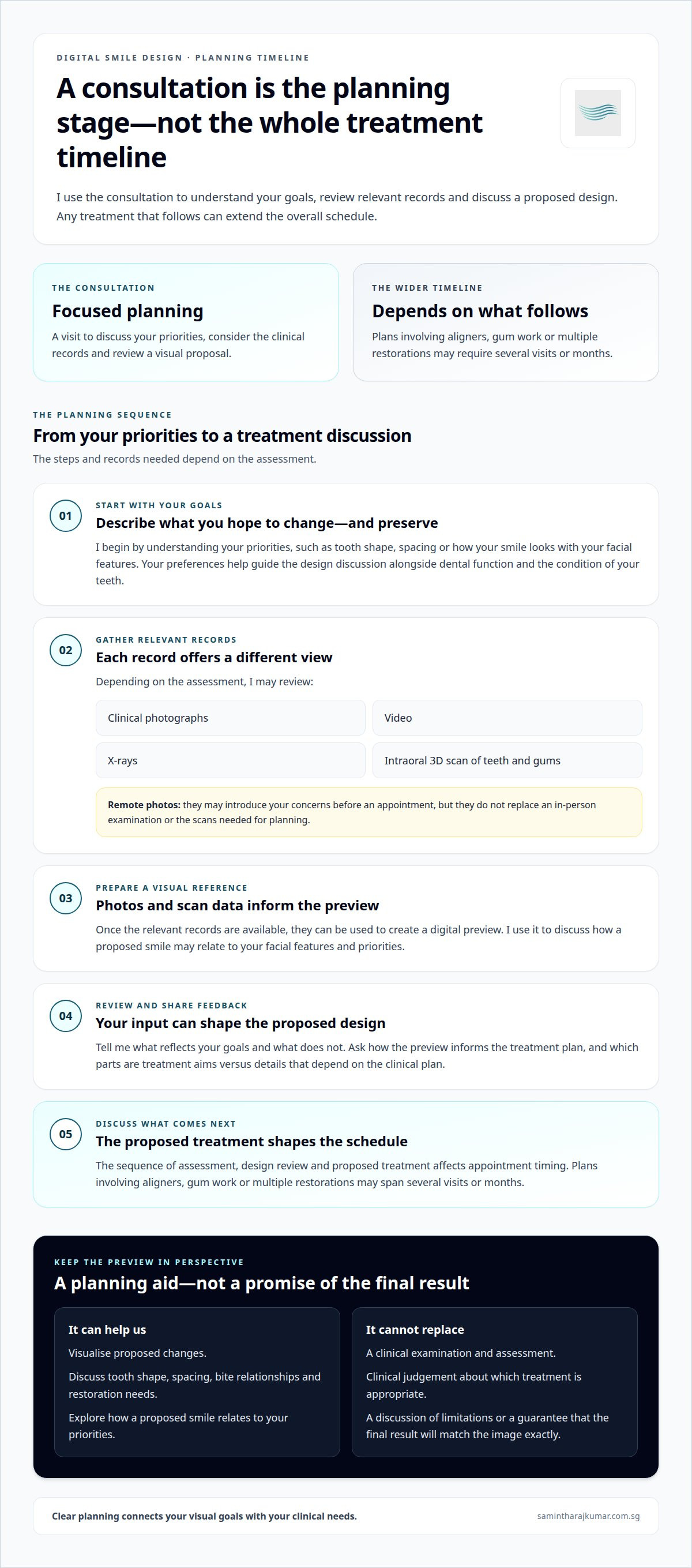
A digital smile design consultation is a focused planning appointment, although the full process may extend beyond that visit. It can include discussing your goals, taking photographs and digital scans, and reviewing a preview. Plans involving aligners, gum work or multiple restorations may require several visits or months. The overall timeline includes both planning and any treatment that follows.
It’s natural to want to know how much time to set aside before deciding about your smile. I’ll explain what happens during the consultation, what can affect the timeline, and how a digital preview can help you take part in planning with greater clarity.
You’ll also learn what a preview can and cannot tell you about a potential outcome. Understanding each step can help you weigh your options calmly and decide what feels right for your oral health, function and smile.
Table of Contents
How long does digital smile design take?
A digital smile design consultation is a focused planning appointment, while any treatment may take longer. I discuss your goals, review relevant images and consider the proposed design. Plans involving aligners, gum work or multiple restorations may require several visits or months.
Consultation Imaging and Scans
I begin by understanding what you hope to change, then consider which records support the assessment. These may include photographs, video, X-rays and an intraoral 3D scan of your teeth and gums. Each provides a different view, so I explain how the information relates to your concerns and proposed plan.
Submitting photos remotely may help introduce your concerns before an appointment, but it does not replace an in-person examination or the scans needed for planning. Appointment timing depends on the assessment and records required.
Digital Preview Preparation
Once the relevant records are available, photographs and scan data can inform a digital preview. Scans and photos can be used to create a preview of expected treatment results. I use this visual reference to discuss how a proposed smile may relate to your facial features and priorities.
Consider whether the preview reflects your goals, and ask how it informs the treatment plan. Software supports visual planning; it does not determine on its own which treatment is appropriate or how long it may take.
The overall duration depends on what follows the design discussion. A plan involving aligners, gum work or multiple restorations may span several visits or months. The sequence of assessment, design review and proposed treatment shapes the appointment schedule.
Whether a consultation fee is applied toward cosmetic dental treatment depends on the practice’s fee terms. The consultation charge and any subsequent treatment costs are separate parts of the financial discussion.
Dentists use smile design software alongside clinical photographs and 3D scan data to visualise proposed changes. I focus on how the imaging informs planning, rather than on a software name alone.
Benefits of digital smile design
I use digital planning to make treatment options easier to discuss, not to replace clinical judgement. Its value is in connecting a visual goal with the dental needs behind it.
Potential Benefits and Limitations
I can use a digital model to organise a treatment plan and discuss how proposed changes may suit your facial features. Three-dimensional scans can help assess tooth shape, spacing, bite relationships and restoration needs. For example, I may compare whitening with veneers or consider how a restoration could address a worn tooth.
I treat the design as a planning aid, not as treatment itself. It can make options easier to understand, but I still need to assess whether a proposed change suits your teeth and bite. A visual simulation is one part of the decision, not a substitute for examining the clinical picture.
Who May Benefit
This approach can be useful if you are considering cosmetic dentistry, including veneers or teeth whitening, or are unsure about changing your smile. It can also support discussion of functional concerns, such as bite issues or worn-down teeth. I start by understanding your priorities, whether they involve tooth shape, spacing or how restorations fit your smile.
If a plan involves several types of care, I can use the digital model to discuss how the options relate. Crowns, bridges, dental implants and orthodontic aligners can be visualised during planning before I develop a personal treatment plan.
How do I choose a dentist for digital smile design near me? Look for a dentist who explains how imaging informs the plan, discusses both appearance and function, and listens to your questions. The quality of the clinical conversation matters more than the visual preview alone.
As I explain in my smile design perspective, thoughtful planning starts by connecting the image with your clinical needs and priorities.
Patient participation and informed consent
Your preferences are part of smile planning, not an afterthought. A useful discussion connects your aesthetic priorities with the clinical plan and its limitations.
Patient Collaboration in Smile Design
During the treatment-plan discussion, describe what you hope to change and what you want to preserve. You might focus on tooth shape, spacing or how your smile looks with your facial features. Digital Smile Design can be tailored to face shape, personality and preferences, giving the conversation a visual starting point rather than relying on general descriptions alone.
My role is to explain how your preferences relate to the proposed plan. A desired change may need to be considered alongside dental function and the condition of your teeth.
Patient Feedback and Design Adjustments
Review the proposed design carefully and explain what aligns with your goals and what does not. For example, discuss whether the planned appearance reflects the aesthetic direction you had in mind. Your feedback during the initial treatment-plan discussion can inform adjustments to the proposed design.
A preview supports communication, but remains a planning tool. It does not guarantee that every detail of the final result will match the image exactly. Ask which parts represent a treatment aim and which depend on the clinical plan.
Consultation Steps and Patient Input
At the appointment, the discussion can move from your priorities to the proposed design, then to questions about treatment options. If the plan includes crowns or other restorations, ask how each element contributes to the intended outcome. This helps you understand what you are considering before deciding whether to proceed.
Informed decision-making means understanding the purpose, expected steps and relevant limitations of the proposed care. Take time to clarify anything that is unclear, including how an adjustment may affect the overall plan. Clear communication gives you and your clinician a shared basis for deciding on next steps.
Before agreeing to a treatment plan, make sure your questions have been addressed and your preferences heard. A digital design can help you visualise a possible transformation, while the clinical discussion explains how that aesthetic goal relates to treatment.
Digital smile design and simulated smile previews
A digital preview makes a proposed smile easier to examine and discuss. It can help compare treatment directions, from changing one tooth to planning a broader smile makeover.
Digital Smile Mock-Ups
Digital software can place proposed changes into a visual representation of your smile. A clinician may use it to discuss options such as veneers, whitening, crowns or aligners before developing your personal treatment plan. Consider how the proposed tooth shape and proportions relate to your face, rather than judging the image against an abstract idea of a perfect smile.
The preview is a planning aid. It helps make possible changes easier to understand, but does not replace assessment of your teeth, bite and restoration needs.
Setting Expectations with Smile Previews
Use the image to identify what you want to discuss: the appearance of a front tooth, the shade after whitening, or how porcelain veneers might change your smile. Point out details that feel right and those that do not. This gives the treatment discussion a specific visual reference, rather than relying only on descriptions such as “brighter” or “more even”.
A preview can also clarify which treatments are being considered and how they relate to your goals. Ask how the proposed design connects to the clinical plan, especially if several teeth or treatment types are involved.
Preview Accuracy and Final Results
How accurate are digital smile design previews compared with final results? They show a proposed direction, not a guarantee that every detail will match the finished treatment. The final result depends on the treatment plan and the clinical work required to achieve it.
In my clinical experience, the most useful question is what the preview represents: tooth shape, colour, alignment or a combination. A digital image helps set expectations, but a discussion of its limits matters just as much. If you are considering a smile transformation, discuss how smile previews can guide your planning.
Dr Samintharaj Kumar: Ceramic Dental Implants
Dr Samintharaj Kumar offers Ceramic Dental Implants for patients considering tooth replacement as part of a broader restorative discussion. A digital smile design preview can help clarify aesthetic goals, while implant planning considers the clinical needs behind a missing or damaged tooth. These are connected but distinct steps: an attractive visual plan does not replace an assessment of whether an implant is suitable.
If your smile goals involve replacing missing teeth, I can discuss how implant treatment may fit into your overall plan. I consider the intended appearance alongside function and restoration needs, grounding the next step in understanding rather than an image alone.
You’re welcome to contact me or visit samintharajkumar.com.sg to learn more.
Make your next decision with clarity
Your next step need not be choosing a treatment immediately. It can be deciding what you want your care to support over time: comfort, confidence, function, or a thoughtful balance of these. That clarity gives the clinical conversation direction and keeps decisions connected to your priorities, not to an image alone.
In my clinical experience, the most constructive discussions begin with listening. A digital smile design consultation can open a conversation about your goals, while those goals are considered in the context of your wider oral health and personal preferences. This is how planning becomes deliberate and grounded in informed choice.
If you would like to discuss what matters to you and explore a considered path forward, contact Dr Samintharaj Kumar. I welcome a conversation that begins with your questions. A thoughtful beginning can shape a confident next chapter for your smile.
Frequently Asked Questions
How do smile simulators work?
Smile simulators use digital images and design software to show proposed changes to a patient’s teeth. Depending on the planning system, a simulation may illustrate options involving veneers, crowns, implants or aligners, from changing one tooth to considering the full dentition. Treat the image as a way to compare ideas and communicate preferences, not as a treatment recommendation by itself.
Will my smile look natural after treatment?
A natural-looking result depends on how proposed changes relate to your facial features, tooth shape and bite. A useful discussion identifies what “natural” means to you, such as preserving familiar tooth proportions or choosing a subtle shade change. The clinician then considers those preferences alongside the treatment plan. A preview can help express your aims, but cannot guarantee an exact final appearance.
What is a digital smile design consultation?
It is a planning discussion that uses digital records to explore possible changes to a smile and consider appropriate treatment options. The process can be relevant to a small change, such as reshaping one tooth, or a wider plan involving several teeth. Its purpose is to connect your goals with a visual treatment discussion, rather than to commit you automatically to a procedure.
What happens during a digital smile design consultation?
You discuss what you would like to change, review relevant dental records and consider a proposed design with the clinician. You can raise practical priorities, such as wanting a modest change or understanding how proposed restorations relate to your bite. The discussion should clarify the purpose of each suggested treatment and leave room for questions before you decide whether the plan suits you.
What photos, scans, or records are needed for digital smile design?
Records may include high-resolution photographs, video and a three-dimensional scan of your teeth and gums. X-rays may also be part of the diagnostic records when relevant to assessment. Each record offers a different view: photographs show your smile and face, while scans capture dental shapes and relationships. The records used depend on the planning and clinical assessment your case requires.
How long does digital smile design planning take?
The planning timeline depends on the scope of the design and any treatment that follows. A discussion focused on a limited change differs from a plan involving aligners, gum work or multiple restorations, which may require several visits or months. The key distinction is between time spent developing the design and the longer sequence of appointments needed to carry out treatment.

Comments