
Flipper Tooth vs Dental Implant: Compare Costs and Eating

Updated: 2 days ago
The lower upfront cost of a flipper tooth comes with a practical trade-off: it’s removable and can make chewing harder, while a dental implant is fixed once treatment is complete. The flipper tooth vs dental implant decision also depends on whether you need a temporary replacement or a longer-term restoration.
It’s understandable to focus on appearance and cost, especially when a missing tooth affects your confidence. Eating comfortably matters too. A flipper needs to be removed for cleaning and may feel less stable when you chew, while an implant is designed to function as a fixed replacement after healing.
I’ll explain what a flipper is, what eating with one is like, and how the options compare in cost, stability and care. You’ll also see how a dental bridge fits into the decision, and which factors shape the next step towards restoring your smile.
Table of Contents
What is a dental flipper?
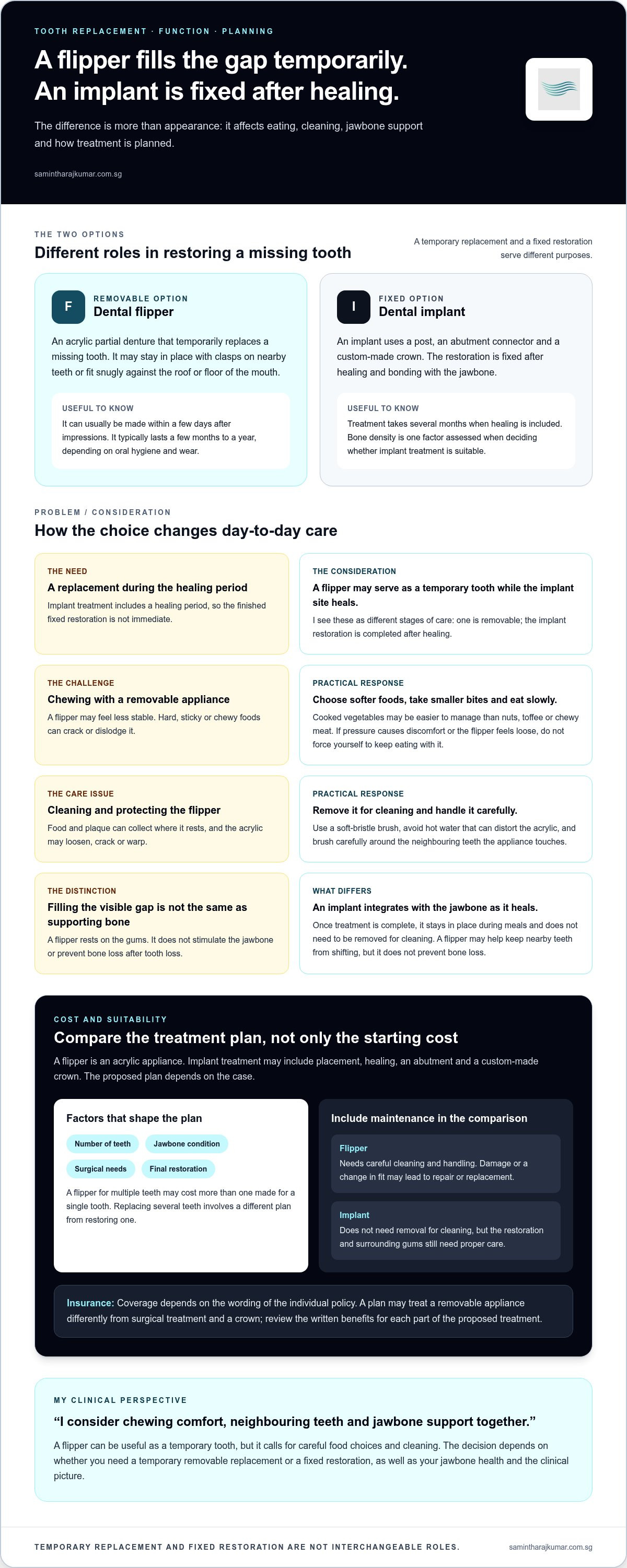
A dental flipper is a removable acrylic partial denture that temporarily replaces a missing tooth. Unlike an implant, it doesn’t involve placement in the jawbone, but it also doesn’t provide a fixed restoration or stimulate the bone.
Flipper Durability and Comfort
A flipper is made in a dental laboratory from acrylic designed to resemble natural gum colour. It may stay in place with clasps on adjacent teeth or fit snugly against the roof or floor of the mouth. In my clinical experience, its removable design is useful for temporary tooth replacement, though it may feel less stable than a fixed implant.
A flipper typically lasts a few months to a year, depending on oral hygiene and wear. I advise careful handling because it may loosen, crack or warp. Remove it for cleaning with a soft-bristle brush, and avoid hot water that can distort the acrylic.
Flipper as a Temporary Option
A flipper can usually be made within a few days after impressions are taken. Implant treatment takes several months when healing is included, so a flipper may serve as a temporary replacement while the implant site heals. I see these as different stages of care: one is removable, while the implant restoration is completed after healing and bonding with the jawbone.
An implant uses a post, an abutment connector and a custom-made crown. A flipper fills the gap but doesn’t prevent bone loss. Bone density is one factor assessed when determining whether implant treatment is suitable.
Consider whether you need a temporary removable replacement or a fixed restoration, as well as your jawbone health.
Can I eat with a flipper tooth?
You can eat with a flipper, but food choice matters. Softer foods may be easier to manage because hard, sticky or chewy items can crack or dislodge the appliance. Smaller bites can make chewing feel more controlled. If pressure causes discomfort or the flipper feels loose, don’t force yourself to keep eating with it.
For example, cooked vegetables are easier to manage than nuts, toffee or chewy meat. I remind patients that a flipper isn’t anchored like a natural tooth, so movement during chewing can affect comfort. Eating slowly and noticing where pressure occurs can help identify which foods are difficult to manage with the appliance.
Pay attention to the neighbouring teeth that support or touch the flipper. Food and plaque can collect where the appliance rests, so remove it for cleaning and brush carefully around the teeth it contacts. This practical hygiene step helps care for both the appliance and the natural teeth around the gap.
A flipper may help keep nearby teeth from shifting into a gap left by missing teeth. However, because it rests on the gums, it doesn’t stimulate the jawbone or prevent bone loss after tooth loss. I consider this an important distinction: filling the visible space and supporting the underlying bone are separate functions.
A dental implant integrates with the jawbone as it heals, creating a stable base for replacement teeth. Once complete, it stays in place during meals and doesn’t need to be removed for cleaning. In my view, the key difference is removable support versus a fixed restoration that stimulates the bone.
I assess chewing comfort, neighbouring teeth and jawbone support together when discussing replacement options. A flipper can be useful as a temporary tooth, but it calls for careful food choices and cleaning. For a considered discussion of tooth replacement options, these functional factors are a useful starting point.
Flipper tooth and dental implant costs
When comparing the cost of replacing a missing tooth, distinguish a removable appliance from surgical treatment. A flipper is an acrylic appliance, while an implant involves placement in the jawbone and a restoration. A flipper designed to replace multiple teeth may cost more than one made for a single tooth.
Implant costs relate to the treatment components, not just the post. The plan may include placement, healing, an abutment and a custom-made crown. The number of teeth being replaced, jawbone condition and restoration required all shape the proposed care. Replacing several teeth involves a different plan from restoring one.
Implant treatment pricing is provided after a quote request and depends on the case. Factors include the number of teeth, jawbone condition, surgical needs and final restoration. Compare the proposed treatment plans, not just the initial appliance cost: a temporary replacement and a fixed restoration serve different purposes.
Maintenance is also part of the financial picture. A flipper needs careful cleaning and handling; damage or a change in fit may lead to repair or replacement. An implant doesn’t need removal for cleaning, but the restoration and surrounding gums still need proper care. Weigh these ongoing needs alongside the initial cost.
Who is a good candidate? A flipper may suit someone who needs a removable temporary replacement. For a fixed option, implant suitability is assessed, including jawbone density.
In my clinical experience, a useful comparison starts with your priorities: immediate replacement, chewing function, maintenance and longer-term planning. I consider these alongside the condition of the missing-tooth site, so the decision reflects both your needs and the clinical picture.
Does dental insurance cover flipper teeth or dental implants?
Dental insurance coverage depends on the wording of the individual policy, so don’t assume either a flipper or an implant is covered. A plan may treat a removable appliance differently from surgical treatment and a crown. Read the written benefits for each part of the proposed treatment, rather than relying on a general description of “tooth replacement”.
Separate the proposed care into its components. An implant plan, for example, may include placement in the jawbone and a later crown, while a flipper is a removable appliance. Ask the insurer how the policy classifies each item, what documentation it needs, and whether exclusions or limits apply. A written response can clarify which components the plan considers before treatment begins.
Use this checklist when reviewing the policy and estimate:
Identify each item: Compare the flipper, implant placement and crown as separate entries.
Read exclusions and limits: Note wording that could affect replacement appliances, surgery or restorative treatment.
Check required paperwork: Confirm whether the insurer needs a treatment plan, clinical notes or other records.
Keep the written decision: Save the estimate and insurer response together for comparison.
Reviewing the details helps distinguish treatment choices from insurance terms. If a plan addresses the flipper but not implant treatment, that difference affects how much you may need to fund. If it covers only part of an implant plan, ask which specific component the decision covers, rather than treating the whole procedure as one item.
Compare the written policy response with the dentist’s proposed treatment plan before deciding. The clinical priorities remain the missing tooth, jawbone condition and intended function; insurance terms are a separate financial consideration. For a considered discussion of dental implant treatment planning, explore the factors that shape a suitable restoration.
Dr Samintharaj Kumar: Ceramic Dental Implants
Dr Samintharaj Kumar offers Ceramic Dental Implants for patients considering a fixed replacement for a missing tooth. He can help you understand how this option compares with a removable flipper and whether implant treatment suits your oral health needs and goals.
The decision begins with the whole clinical picture, including the condition of the jawbone and the number of teeth requiring replacement. For broader tooth loss, treatment planning may also consider standard dental implants, full-arch restorations, or specialized implant techniques. Each option addresses different needs; the right discussion starts with diagnosis, not assumption.
The aim is to make the choices clear, so you can weigh function, treatment and longer-term priorities with confidence. If you’re considering a fixed tooth replacement, contact Dr Samintharaj Kumar to discuss your options.
Choose a path that supports your long-term wellbeing
Choosing between a flipper tooth and a dental implant is also a chance to think beyond the immediate gap. Consider how you want daily life to feel, how you prefer to care for your replacement tooth, and what matters most for your future oral health. Much like weighing upfront costs against long-term comfort when investing in your home through resources such as warmhomesscheme.uk, these priorities can guide a more meaningful conversation than appearance or initial expense alone.
Approach treatment as a considered decision, not a race towards the most permanent-sounding option. Your comfort with removable treatment, readiness for surgery and longer-term goals all deserve consideration. Understanding these priorities can help make the next step more deliberate.
If you would like to explore your options with me, get in touch with Dr Samintharaj Kumar. I welcome thoughtful conversations about restoring function and confidence. The right path begins with understanding what matters to you.
Frequently Asked Questions
What Are Dental Implants?
Dental implants replace missing teeth by anchoring an artificial tooth root in the jawbone. A typical restoration includes a post, an abutment connector and a custom crown. Implants can replace one tooth, several teeth or an entire arch, depending on the treatment plan. The number of teeth involved shapes the type of restoration required.
What is a flipper tooth and how does it work?
A flipper tooth is a removable partial denture that fills a gap with an artificial tooth on an acrylic base. It can replace one tooth or support several replacement teeth on the same base. Clasps or the shape of the appliance help keep it in place. Because it can be removed, it isn’t fixed like an implant restoration.
What is a dental implant and what are the treatment steps?
A dental implant replaces a tooth using a post placed in the jawbone. Treatment generally follows a sequence: the dental professional assesses the site and bone, places the post, allows healing and bonding, then attaches the abutment and custom crown. The healing stage means the complete process takes several months. The exact restoration depends on how many teeth need replacement.
How do flipper teeth and dental implants compare in appearance, comfort, and function?
Both options can fill a visible gap, but they feel and function differently. A flipper is removable and may shift during eating, while an implant restoration is fixed after healing. The flipper’s acrylic base is made to resemble gum colour. An implant crown is custom-made to complete the restoration, and its stability comes from integration with the jawbone.
How long do flipper teeth and dental implants last?
A flipper commonly serves as a temporary replacement and typically lasts a few months to a year, depending on hygiene and wear. Dental implants can last decades with proper care. These are different types of restoration, so the comparison isn’t simply about durability: removable acrylic may need careful handling, while an implant requires ongoing care of the restoration and surrounding gums.
What is the average cost of a flipper tooth versus a dental implant in the United States?
Implant treatment costs depend on the case and are provided after a quote request. Factors include the number of teeth, jawbone condition, surgical needs and the final restoration, so the full treatment plan matters.


Comments