
Full Mouth Rehabilitation: A Specialist Surgeon’s Checklist for Total Oral Restoration

What if the true cost of delaying your dental restoration isn't just a failing tooth, but the gradual erosion of your systemic health and facial structure? I understand that the prospect of a full mouth rehabilitation can feel overwhelming. You've likely spent years managing chronic TMJ discomfort or feeling a sense of social isolation because your teeth no longer reflect who you are. It's a heavy burden to carry, and the complexity of modern treatment options often adds more questions than answers.
As a clinician and founder with over 20 years of surgical experience, I believe clarity is the first step toward healing. My promise is to provide you with a specialist surgeon’s checklist to evaluate your readiness for total oral restoration, grounded in the principles of biological dentistry. We will examine the essential clinical markers, from bone volume to neuromuscular alignment, giving you a clear roadmap toward long-term stability and a renewed quality of life. The best outcomes begin with understanding the root cause.
Key Takeaways
Learn to distinguish between a purely cosmetic smile makeover and a functional reconstruction that restores the structural integrity of your entire oral environment.
Understand the biological science behind oral collapse and how addressing the jaw joint (TMJ) is critical for preventing further bone and tooth loss.
Use my specialist framework to evaluate your clinical and emotional readiness for full mouth rehabilitation, moving beyond temporary fixes toward a comprehensive plan.
Explore how I integrate AI-assisted diagnostics and advanced surgical protocols to achieve higher levels of precision and predictable, life-changing results.
Gain insight into a bespoke treatment philosophy that prioritises long-term well-being and a seamless transition to total oral health.
Table of Contents Understanding Full Mouth Rehabilitation: Beyond Simple Restorations The Science of Oral Collapse: A Biological Perspective The Essential Patient Checklist: Are You Ready for Full Mouth Rehabilitation? Navigating the Clinical Journey: Advanced Protocols and AI Diagnostics My Perspective: The Philosophy of Life-Changing Outcomes
Understanding Full Mouth Rehabilitation: Beyond Simple Restorations
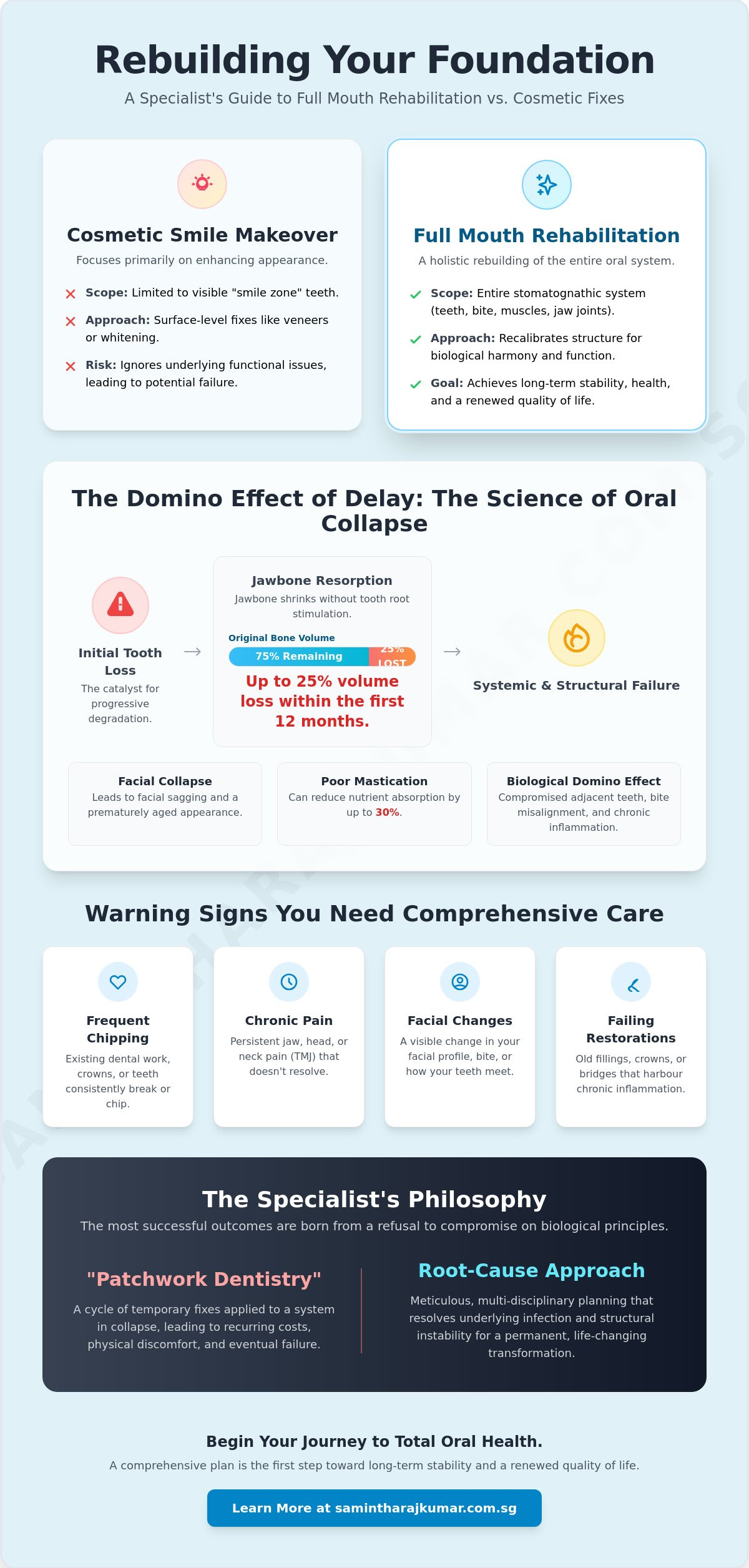
In my clinical experience, patients often mistake a smile makeover for a comprehensive oral reconstruction. While aesthetics are a vital component, full mouth rehabilitation is a holistic rebuilding of the entire stomatognathic system. It involves the scientific recalibration of the teeth, bite, and jaw muscles to restore a harmony that has been lost to decay, trauma, or wear. As a clinician and founder, I view this process as an architectural necessity rather than a cosmetic luxury. We aren't just fixing teeth; we're restoring the biological foundation of the face.
To better understand this concept, watch this helpful video:
I often speak to my colleagues about the "Science of Failure." This occurs when partial fixes are applied to a mouth in systemic collapse. If we place a high-end crown on a tooth without addressing a misaligned bite, the forces of mastication will eventually fracture that restoration. In my 20 years of practice, I've seen that patchwork dentistry often leads to a cycle of recurring costs and physical discomfort. A specialist surgeon must manage the multi-disciplinary care required to ensure that every implant, bridge, and veneer works in unison with the patient's unique anatomy.
The Clinical Consequences of Delay
Missing teeth are a catalyst for progressive bone resorption. Within the first 12 months of tooth loss, the jawbone can lose up to 25% of its original volume, leading to facial sagging and a prematurely aged appearance. From a biological perspective, poor mastication due to missing teeth or malocclusion can reduce nutrient absorption by 30%, directly impacting systemic health. Untreated periodontal disease creates a biological domino effect where localised infection compromises the alveolar bone, leading to the inevitable loss of adjacent healthy teeth.
Identifying the Need for Total Restoration
Signs that you require comprehensive care include frequent chipping of existing dental work, chronic jaw pain, or a visible change in your facial profile. These symptoms often point to failing restorations that harbour chronic inflammation. I believe a root-cause approach is essential for long-term stability; we must resolve the underlying infection and structural instability before placing final prosthetics. This methodology ensures that the transformation is not just beautiful, but permanent.
My Perspective: As a specialist surgeon, I've learned that the most successful outcomes are born from meticulous planning and a refusal to compromise on biological principles. Total rehabilitation is about more than just a new set of teeth. It is about giving a patient back their confidence and their ability to live without the constant shadow of dental failure. The best outcomes begin with understanding the root cause.
The Science of Oral Collapse: A Biological Perspective
Oral collapse isn't a sudden event. It's a slow, biological degradation that begins the moment a tooth is lost or severely worn. From a biological perspective, your teeth serve as the primary stimulation for your jawbone. When that stimulus disappears, the bone begins to resorb; it often loses up to 25% of its volume within the first year of tooth loss alone. This isn't merely an aesthetic concern. It's a structural failure that affects the entire craniofacial complex. In my clinical experience, the goal of full mouth rehabilitation is to halt this decline and restore the biological equilibrium that allows for long-term health.
The American College of Prosthodontists notes that full mouth reconstruction is often necessary when the bite has collapsed so significantly that simple crowns can no longer provide a stable solution. This collapse also triggers a systemic inflammatory response. Chronic oral pathology, such as advanced periodontitis or periapical lesions, elevates systemic markers like C-reactive protein (CRP). These markers are closely linked to cardiovascular health and metabolic stability, proving that a failing mouth is a burden on the entire body.
The Role of the Jaw Joint in Rehabilitation
When teeth are missing or worn down, your jaw joint (TMJ) must compensate for the lack of vertical support. This often leads to the jaw shifting into an unnatural position, causing chronic pain or clicking. I don't view TMJ dysfunction as an isolated issue; it's a symptom of structural imbalance. Before any surgical intervention, I assess the neuromuscular relationship to ensure the new bite aligns with the natural resting position of the joints. For those experiencing these symptoms, consulting a tmj specialist singapore is a critical first step in the diagnostic phase.
Biological Dentistry and Material Choice
In my practice, I prioritise biological compatibility. This means moving away from traditional metals and embracing bio-inert materials like ceramic dental implants. Zirconia is my preferred choice for full mouth rehabilitation because it's highly resistant to plaque accumulation and integrates seamlessly with the soft tissues. Metal-free options reduce the risk of galvanic currents and inflammatory responses in the gums. The long-term success of a reconstruction depends entirely on how well the body accepts these foreign elements.
My Perspective: The Biological Foundation
As a clinician and founder, I believe that every restoration must respect the body's innate biology. We aren't just fixing teeth; we're restoring a living system. My clinical philosophy centres on "bio-integration," where the materials we choose and the surgical protocols we follow work in harmony with your natural bone and tissue. The best outcomes begin with understanding the root cause of the collapse. A comprehensive clinical assessment is the only way to ensure your new smile is built on a foundation of health.
The Essential Patient Checklist: Are You Ready for Full Mouth Rehabilitation?
In my clinical experience, many patients arrive at my practice after years of "patchwork dentistry." They've spent decades reacting to individual tooth failures rather than addressing the systemic breakdown of their oral health. Transitioning to a comprehensive full mouth rehabilitation requires a shift in perspective. It's about moving from temporary fixes to a unified, biological strategy. As a clinician and founder, I believe the most successful outcomes begin when a patient stops asking "Can you fix this tooth?" and starts asking "How can we restore my entire oral ecosystem?"
The Functional & Structural Assessment
Determining your clinical readiness begins with identifying the signs of structural collapse. I look for specific indicators that the current dental state is no longer sustainable. The American College of Prosthodontists explains full mouth reconstruction as a necessary step when the bite is compromised or multiple teeth are missing. Consider these functional markers:
Do you experience difficulty chewing or persistent jaw clicking? These are often symptoms of a collapsed vertical dimension, where the teeth no longer support the jaw joint correctly.
Have you lost more than three teeth in a single arch? Clinical data suggests that losing 3 or more teeth significantly accelerates bone resorption, destabilising the remaining dentition and shifting the workload to healthy teeth that weren't designed to carry it.
Are your existing crowns or bridges frequently failing? If restorations last less than 5 years, it's usually a sign that the underlying foundation or bite alignment is faulty.
The Emotional & Lifestyle Readiness
From a biological perspective, surgery is only one part of the equation. The patient's commitment to the process is what ensures longevity. Full mouth rehabilitation is a sophisticated journey that demands patience and a long-term vision. It's not a "quick fix," but a total life transformation.
Are you prepared for a multi-stage clinical journey? Complex cases often follow a 4 to 12-month protocol. This allows for proper osseointegration and soft tissue healing, ensuring the final result is as durable as it is beautiful.
Is your goal long-term health rather than a quick aesthetic fix? True rehabilitation prioritises the root cause of decay or bone loss over surface-level veneers.
My Perspective:
I've spent my career refining protocols to help patients navigate the anxiety of complex surgical protocols. We utilise AI-assisted diagnostics and IV sedation to lower the "barrier of fear," but the real comfort comes from a specialist-led diagnosis. When you understand the "why" behind every stage of your treatment, the process feels less like a series of appointments and more like a structured path toward a higher quality of life.
Navigating the Clinical Journey: Advanced Protocols and AI Diagnostics
In my clinical experience, the success of full mouth rehabilitation depends on a disciplined, sequential approach. We move through four distinct phases: comprehensive diagnostic mapping, digital blueprinting, surgical intervention, and final prosthetic integration. This structured programme ensures that we don't just fix teeth; we restore the entire masticatory system. As a clinician and founder, I've found that the most predictable results come from a meticulous pre-surgical phase where we eliminate variables before the patient even enters the theatre.
I utilise 3D digital planning to visualise the final outcome before we begin any invasive work. This "top-down" approach means we design the ideal smile first, then work backwards to place implants where they best support that vision. By using virtual surgical guides, I can achieve a level of precision that was historically impossible. This technology reduces surgery time by approximately 30 percent, which directly translates to less post-operative swelling and a faster recovery for you.
State-of-the-Art Surgical Protocols
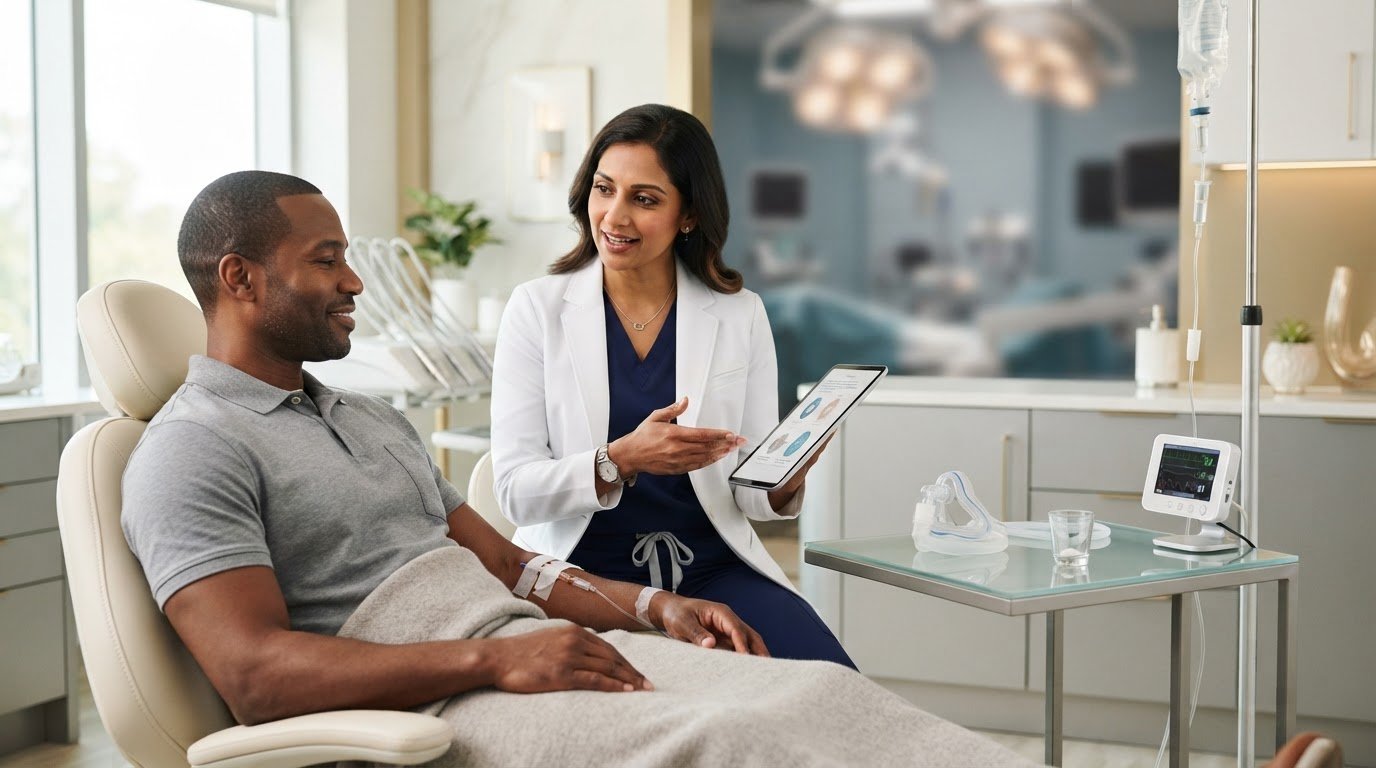
Modern restoration relies heavily on the quality of a dental implant singapore. For patients facing severe bone loss, I often employ Zygomatic or All-on-4 protocols. These allow us to bypass the need for extensive bone grafting by utilising the denser bone of the cheekbones or tilting implants to maximise existing jaw structure. By providing immediate functional and aesthetic relief, the "Teeth in a Day" protocol transforms the patient experience from one of prolonged waiting to one of instant confidence. To ensure total comfort, we integrate advanced intravenous sedation, allowing you to undergo complex full mouth rehabilitation in a state of deep relaxation, often with no memory of the procedure itself.
AI in Modern Oral Rehabilitation
AI diagnostics have fundamentally changed how I identify risks. We now use AI-driven software to detect sub-clinical issues in the jawbone and teeth, such as early-stage periapical lesions or subtle bone density fluctuations that might be missed on standard scans. This data-driven precision allows us to predict long-term success with far greater accuracy.
The benefit of digital impressions over traditional, uncomfortable moulds cannot be overstated. We use intraoral scanners to create a perfect 3D replica of your mouth in seconds. This digital file is more accurate than physical putty and serves as the foundation for our data-driven treatment planning. It allows us to simulate your bite forces digitally, ensuring your new teeth are not only beautiful but also biologically functional for decades to come.
The right diagnosis changes everything. If you are ready to understand the biological potential of your smile, start your journey with a specialist consultation.
My Perspective: The Philosophy of Life-Changing Outcomes
As a clinician and founder, I've spent more than 20 years observing the profound intersection between surgical precision and human emotion. My dual role allows me to view every case of full mouth rehabilitation not just as a series of complex procedures, but as a strategic reconstruction of a person's future. I believe every patient deserves a bespoke, visionary treatment plan because no two biological systems are identical. From a biological perspective, we must consider how oral health affects systemic longevity. When we design these restorations, we aren't just replacing teeth; we're restoring the structural integrity of the face and the psychological foundation of the individual.
Beyond the Surgery: The Quality of Life Impact
In my clinical experience, the most rewarding moments occur months after the final prosthesis is fitted. I've seen patients move from a state of social isolation, where they avoided public speaking or dining out, to a life of vibrant health and confidence. This transformation is the core of the Nuffield legacy. I've built institutions that prioritise patient outcomes by combining specialist expertise with a compassionate environment. We focus heavily on the years following the procedure. Long-term success depends on a structured maintenance programme, including:
Regular clinical reviews to monitor tissue health and implant stability.
Advanced hygiene protocols tailored to the specific materials used in the rehabilitation.
Personalised education to help patients protect their investment in their health.
A Vision for the Future of Care
Innovation in Southeast Asia is currently setting global standards for dentistry, particularly in the integration of AI diagnostics and digital workflows. My commitment to ethical scale ensures that as Nuffield Dental grows, we maintain the highest clinical excellence. We adhere to rigorous international protocols to ensure every full mouth rehabilitation meets a world-class standard. I'm focused on building an ecosystem where technology serves the patient, making complex care more accessible and predictable. I've always believed that the most successful clinical journeys are rooted in a mentor-like relationship between the surgeon and the patient. The best outcomes begin with a deep, holistic understanding of the root cause. The right diagnosis changes everything.
Restoring Your Foundation for a Lifetime of Confidence
Deciding to undergo full mouth rehabilitation is a transformative choice that extends far beyond a new smile. In my clinical experience as the founder of Nuffield Dental Holdings, I've found that the most successful outcomes happen when we address the underlying biological causes of oral collapse. By utilising AI-assisted diagnostics and specialist protocols like Zygomatic or All-on-4 implants, we're able to provide a level of precision that safeguards your long-term health. It's about moving from a state of dental instability to one of total functional harmony.
I've spent my career refining these clinical pathways to ensure that every patient feels secure in their journey toward recovery. My philosophy is rooted in the belief that modern innovation should always serve human comfort and clinical excellence. We don't just replace teeth; we rebuild your quality of life through a meticulous, science-led approach. I'm proud to lead a team that prioritises these global standards of care every day.
Your path to a healthier future is a journey we're ready to take together.
Frequently Asked Questions
How long does a full mouth rehabilitation process typically take?
A full mouth rehabilitation typically spans between 3 and 12 months from the initial consultation to the final restoration. In my clinical experience, the timeline depends heavily on whether we're performing bone grafting or immediate-load implant protocols like the All-on-4 technique. While surgical phases might conclude within a few days, biological integration of implants usually requires a 3 to 6-month healing period to ensure long-term stability.
Is full mouth rehabilitation painful, and what are the sedation options?
You won't feel pain during the procedure because I utilise advanced pain management protocols, including intravenous (IV) sedation and local anaesthesia. As a clinician, I prioritise patient comfort through "sleep dentistry" where a dedicated anaesthetist monitors your vitals throughout the surgery. Most patients report only mild discomfort for 3 to 5 days post-surgery, which is easily managed with prescribed analgesics and cold compresses.
Can I get full mouth rehabilitation if I have significant bone loss?
Yes, patients with 50% or more bone loss in the jaw can still undergo full mouth rehabilitation through specialised surgical techniques. I often employ zygomatic or pterygoid implants for those who lack sufficient alveolar bone, bypassing the need for traditional grafting in 90% of complex cases. These advanced protocols allow us to anchor restorations into the denser cheekbone, providing a stable foundation even in severe atrophy scenarios.
What is the difference between a smile makeover and full mouth rehabilitation?
A smile makeover focuses primarily on the aesthetic appearance of the teeth, whereas full mouth rehabilitation addresses the functional integrity and biological health of the entire oral cavity. While a makeover might involve 6 to 10 veneers for visual improvement, rehabilitation restores the bite, replaces missing teeth, and repairs damaged structures across both arches. It's a comprehensive medical necessity rather than a purely cosmetic choice.
How long do the results of a total oral reconstruction last?
The results of a total oral reconstruction can last 15 to 25 years, and in many cases, they're designed to be a lifelong solution. My perspective is that longevity depends on the synergy between surgical precision and your commitment to maintenance. Clinical data suggests that dental implants have a 95% success rate over 10 years when supported by professional cleanings twice a year and proper home care.
Will I be without teeth at any point during the treatment process?
You'll never be without teeth during your treatment as I provide high-quality provisional restorations at every stage. On the day of surgery, I typically fit a fixed temporary bridge that allows you to eat and speak with confidence while your permanent teeth are being crafted. This ensures your social and professional life remains uninterrupted throughout the entire rehabilitative journey.
How much does full mouth rehabilitation cost in 2026?
The cost of full mouth rehabilitation varies significantly based on the number of implants required and the materials chosen for the final prosthetics. In the Singapore dental market, complex rehabilitations are priced according to the specialist expertise involved and the technology used, such as 3D surgical guides. I recommend a comprehensive diagnostic assessment to receive a transparent, itemised breakdown tailored to your specific clinical needs.
Can I use my insurance or Medisave for these procedures?
You can use Medisave for the surgical components of your treatment, such as dental implant placement or bone grafting, provided the clinic is MOH-accredited. While insurance coverage for restorative crowns varies, many international plans provide partial reimbursement for procedures deemed medically necessary for oral function. My team assists in navigating these claims to ensure you maximise your available benefits for the surgical phases.

Comments