
How to Plan a Smile Makeover and Understand the Timeline

Updated: 7h
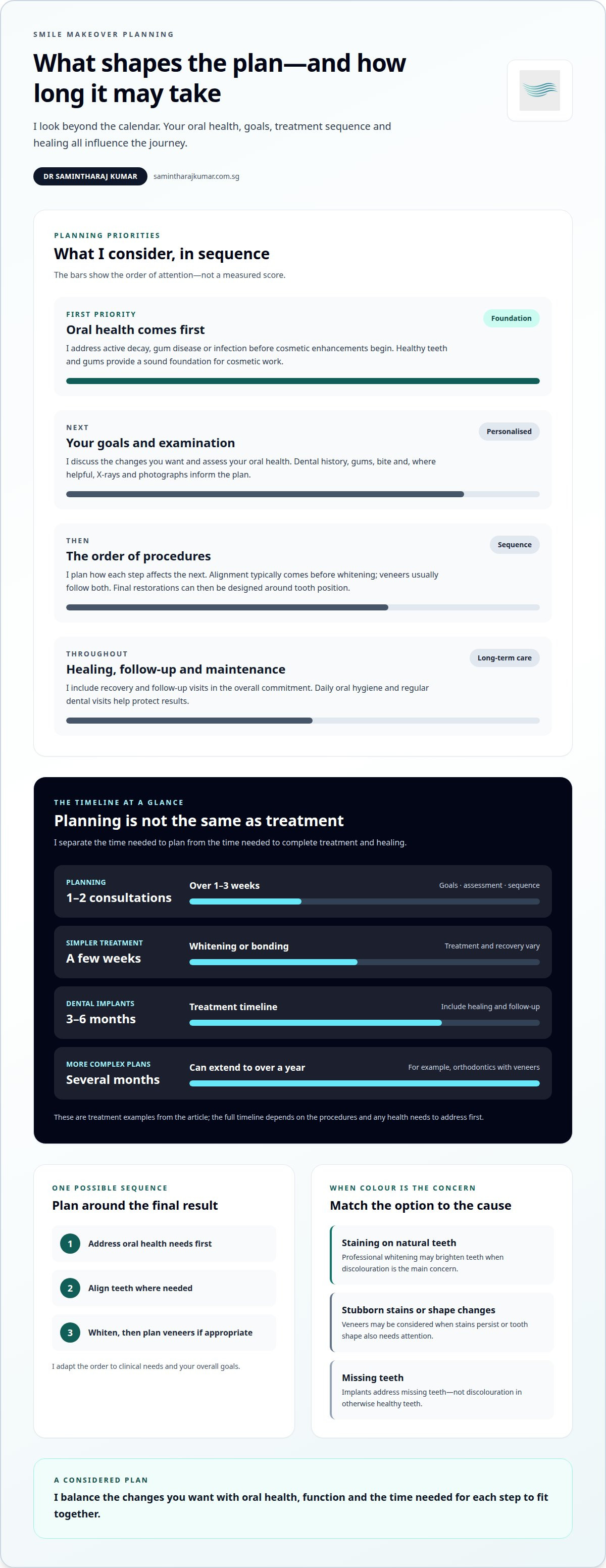
The planning window is often shorter than treatment itself. A smile makeover typically takes one to two consultations over one to three weeks to plan, while treatment can take a few weeks to several months. In my clinical experience, understanding how to plan a smile makeover means looking beyond the calendar to your goals and oral health.
It’s natural to want a clear timeline and a result that feels right for you. Planning starts with what you’d like to change, followed by an assessment of your oral health and which treatments suit your goals. Not every cosmetic concern requires extensive treatment.
The timeline depends on the procedures and healing involved. A smile makeover focuses primarily on aesthetic changes, while full mouth reconstruction addresses broader functional or structural needs. Understanding the difference helps set clear expectations and keep long-term oral health in view.
Table of Contents
How long to plan a smile makeover from start to finish?
Planning usually takes one or two consultations over one to three weeks. This time is used to discuss your goals, assess your oral health and organise a suitable treatment sequence.
Treatment Timelines and Recovery
Treatment and recovery timelines depend on the procedures involved. Simple whitening and bonding may take a few weeks; complex plans involving orthodontics and veneers can take several months to over a year. Dental implant treatment typically takes three to six months. Include recovery and follow-up appointments when considering the full commitment, not just the treatment visits.
Phased and Combined Procedures
A phased plan completes procedures in sequence, while a coordinated plan considers how they fit together. The order depends on clinical needs and your overall goals. For example, alignment typically comes before whitening, and veneers usually follow both. Staging allows time for healing between procedures, while coordination clarifies how each step affects the next and helps organise appointments around work, family commitments, or extended holiday plans such as travelling with Historic War Tours.
Treatment Priorities
Oral health needs come first, alongside the changes you want to see. Active decay, gum disease or infection should be treated before cosmetic enhancements begin. Then consider how alignment, whitening and restorations relate to your goals. Completing orthodontic treatment before final restorations, for example, allows tooth position to inform their design. This sequence provides a healthier foundation for lasting cosmetic work.
Costs depend on the procedures selected and the extent of restorative work. The price depends on the case and is provided after a quote request; treatment choices and complexity shape the estimate. Dental insurance rarely covers purely cosmetic procedures, but may partially cover restorative crowns used to repair damaged teeth or address functional problems.
Risks and side effects depend on the procedures involved. I include healing and maintenance needs in the discussion. Daily oral hygiene and regular dental visits help protect results; whitening may need touch-ups every six to 12 months as stains develop.
What is the best smile makeover procedure for stained or discoloured teeth?
The right option depends on whether discolouration is the only concern or teeth also need reshaping or restoration. Professional whitening can brighten natural teeth, while veneers may address stubborn stains or changes to tooth shape. An examination helps distinguish surface staining from concerns involving tooth structure, alignment or missing teeth, so the plan addresses the cause rather than colour alone.
At an initial consultation, oral health is assessed and your goals discussed; X-rays and photographs may help inform treatment choices. Bring examples of smiles you like and describe specific details, such as tooth shade, a chipped edge or gaps. Clear priorities help shape a personalised plan. Ask what each proposed procedure is intended to change and how the options address your concerns.
Digital smile design may use photographs and scans to create a 3D preview of potential results before treatment begins. A temporary mock-up can also help you visualise proposed changes. I use these planning tools to support a more focused discussion about details such as tooth shape and proportions before restorative work is considered.
For minor imperfections, dental bonding can repair chips, small gaps or uneven edges with tooth-coloured material. If crooked or crowded teeth are the main concern, clear aligners may be considered before bonding or veneers. Whitening commonly follows alignment, allowing the resulting shade to inform restoration design.
Dental implants address missing teeth, not discolouration in otherwise healthy teeth. Where several teeth are missing or broader structural issues affect function, implant-supported restorations may form part of full mouth reconstruction. Full-arch solutions can replace an upper or lower arch with a fixed bridge supported by implants. Clarify whether your priority is shade, alignment, repair or restoring function before shaping the treatment plan.
Useful questions include: “What is causing the discolouration?”, “Could whitening meet my goal?” and “How might treatment affect my bite?” For a considered smile makeover consultation, bring your concerns and discuss the result you hope to achieve.
Identifying smile goals and cosmetic concerns
Start by naming the changes you notice in your smile, such as stained teeth, chipped edges, visible gaps, uneven shapes or a gum line that feels unbalanced. Bring photographs of smiles you like and explain what appeals to you, such as tooth length or symmetry. Knowing how to plan a smile makeover starts with distinguishing a specific aesthetic preference from concerns affecting comfort or function.
A dentist should connect your goals with an assessment of oral health, dental history, gums and bite. Tooth decay, gum disease or infection needs attention before cosmetic procedures begin. X-rays may help identify concerns beneath visible tooth surfaces. This preparation matters because veneers or bonding cannot resolve an untreated underlying problem. Healthy teeth and gums provide a sound foundation for cosmetic work.
Orthodontics and cosmetic procedures can work together when tooth position is part of the concern. For example, clear aligners may address crowding before bonding repairs a chipped edge or closes a small gap. Coordinating the sequence lets the dentist plan around final tooth positions and bite. Not every smile needs veneers; alignment and whitening may meet some goals, while restorative treatment may be needed when damage affects function.
To plan a smile makeover around your needs, organise your priorities into the changes you most want and any concerns affecting everyday comfort. The plan should reflect your goals, examination findings and dental history, rather than applying the same procedures to every patient. This keeps cosmetic and restorative decisions connected to your individual needs.
Smile makeover versus full mouth reconstruction
A smile makeover primarily addresses planned changes to appearance, while full mouth reconstruction focuses on restoring broader dental function and structure. The distinction depends on the condition of the teeth, gums and bite, not simply how many teeth look different. Someone seeking whiter teeth and smoother edges may have aesthetic goals; someone with damaged teeth and difficulty chewing also needs functional needs considered.
A cosmetic treatment plan may include teeth whitening, alignment, bonding or veneers. If teeth need straightening, orthodontic treatment generally comes before final restorations because tooth position shapes their design. Whitening can also establish the shade before veneers are selected. Discuss the order and purpose of each procedure so the plan addresses your desired appearance without overlooking your bite.
Full mouth reconstruction considers multiple teeth and how they work together. Extensive damage, missing teeth or significant wear may call for restorative care to rebuild chewing function as well as appearance. The plan can involve different procedures, sequenced around dental health, tooth structure and healing. The central question is not only “How should my smile look?” but also “What needs to work reliably?”
The categories can overlap. A person may begin with cosmetic concerns, then discover that damaged teeth or bite problems also require attention. Conversely, a restorative plan may improve appearance as it restores function. In my clinical experience, this is where precision matters: the examination should establish the underlying needs before the treatment plan settles on veneers or other cosmetic changes.
The timeline follows the procedures and their sequence, rather than the label used for treatment. Ask which concerns are aesthetic, which affect function, and what must happen first. That conversation makes the scope clearer before you commit. To discuss how your goals relate to function and appearance, arrange a smile assessment.
Dr Samintharaj Kumar: Ceramic Dental Implants
Ceramic Dental Implants may be relevant when missing teeth affect both your smile and chewing function. I consider the wider treatment picture first: whether the priority is replacing a tooth, restoring an arch, or addressing more complex dental needs. Dental Implants, full-arch restorations and Zygomatic Dental Implants may also form part of treatment planning where clinically appropriate.
The important first step is understanding what needs restoration and how that relates to your goals. An assessment can distinguish a focused cosmetic concern from a need for broader reconstruction. From there, suitable options can be discussed and considered as part of a plan for appearance and function.
If you’re considering dental restoration as part of your smile goals, contact Dr Samintharaj Kumar to discuss your concerns and next steps.
Make your next decision with clarity
A considered smile plan is not simply a route to a different appearance. It is a chance to align what you hope to change with the health, function and future care of your teeth. In my clinical experience, the most useful next step is an open conversation about your priorities, including what feels important and what you want to understand before deciding.
Learning how to plan a smile makeover starts with asking how each proposed treatment supports your individual goals. Dr Samintharaj Kumar offers Ceramic Dental Implants, Dental Implants and All on 4/ Teeth in A Day for patients whose needs include tooth replacement or broader restoration. The right direction begins with understanding the clinical picture, not choosing procedures in isolation.
If you’re ready to discuss your smile goals and possible next steps, contact Dr Samintharaj Kumar. A thoughtful conversation can help you move forward with greater understanding and confidence.
Frequently Asked Questions
How much does a smile makeover cost on average?
There is no useful average because the total depends on the procedures and extent of treatment. A plan involving whitening differs from one that includes restorative work or replacement of missing teeth. The price depends on the case and is provided after a quote request; the selected procedures and complexity shape the estimate. An examination helps connect the proposed treatment with your needs.
Is a smile makeover worth the investment?
A smile makeover may feel worthwhile when its planned changes address concerns that matter to you, whether that means feeling more comfortable smiling or improving damaged teeth. Consider the value alongside maintenance, treatment time and how each procedure supports function. For example, correcting a damaged tooth may serve restorative needs as well as appearance. A sound decision fits your priorities and longer-term oral health.
Sequencing Smile Makeover Treatments: What Happens First?
The sequence begins by identifying anything that needs attention before cosmetic work, then placing the remaining procedures in a workable order. Ask for the proposed stages in writing, including what each is intended to achieve and what must be completed before the next begins. This clarifies how a change in one step, such as delaying orthodontics, could affect later restorations.
What is a smile makeover and which cosmetic dental treatments can it include?
A smile makeover is a personalised plan to address selected concerns about your smile. Depending on examination findings and goals, cosmetic dentistry may include tooth whitening, tooth straightening, bonding or veneers. Restorative procedures may also be relevant when a tooth is damaged or missing. For example, a plan for discoloured teeth differs from one addressing a chipped tooth and uneven alignment together.
How do I choose a cosmetic dentist for a smile makeover?
Look for a clinician who can explain how the proposed procedures relate to your examination, goals and bite. Dr Samintharaj Kumar is a Diplomate and Fellow of the International Congress of Oral Implantologists and a member of the American Academy of Cosmetic Dentistry. He discusses the clinical reasoning behind a plan so you can understand the purpose of each treatment before deciding.
What steps are involved in planning a smile makeover consultation?
Prepare by noting the changes you want and bringing photographs that show features you like. At consultation, discuss your dental history, concerns and priorities. The assessment may include photographs, X-rays and an oral health examination to inform the options. Ask what each proposed treatment would change, how the stages relate and what care your teeth may need after treatment.


Comments