
Tooth Extraction: A Specialist Surgeon’s Checklist for Total Oral Rehabilitation (2026)
- Dr Samintharaj Kumar

- Apr 25
- 13 min read
A tooth extraction is not an endpoint of dental failure; it is a vital surgical reset for your long-term health. I understand that the prospect of a tooth extraction often triggers a sense of profound apprehension. You may feel anxious about potential discomfort or worry that a gap in your smile will diminish your confidence. These are natural concerns that I address daily at Nuffield Dental. In my clinical experience, the fear of bone loss or a difficult recovery is often the greatest barrier to seeking the care you need.
In this specialist-led guide for 2026, I will provide a clear, clinical checklist to ensure your journey toward total oral rehabilitation is seamless and predictable. We'll explore the biological necessity of the procedure and how modern surgical protocols preserve your underlying bone structure. I'll also outline the precise steps for a complication-free recovery, giving you a transparent roadmap for your transition to a permanent, functional replacement. By understanding the science behind the surgery, you can move forward with the certainty that your long-term quality of life is our primary focus.
Key Takeaways
Understand why a strategic tooth extraction is often the most compassionate clinical choice to preserve your alveolar bone and safeguard long-term jaw health.
Distinguish between simple and surgical procedures to recognise when a specialist surgeon’s expertise is vital for managing complex or impacted cases.
Gain insight into my rigorous clinical protocol that prioritises a comprehensive medical history as the cornerstone of a seamless and predictable surgical experience.
Learn how to navigate the critical 72-hour post-operative window with a specialist-led checklist designed to facilitate biological healing and prevent complications.
Discover why an extraction is the essential first step toward total oral rehabilitation, creating the foundation for gold-standard replacements like dental implants.
Table of Contents Understanding Tooth Extraction: A Biological Necessity for Long-Term Health The Clinical Reality: Simple vs. Surgical Extractions My Clinical Protocol: Preparing for a Seamless Surgical Experience The Post-Extraction Checklist: Ensuring Biological Healing and Comfort Beyond the Gap: The Path to Total Oral Rehabilitation
Understanding Tooth Extraction: A Biological Necessity for Long-Term Health
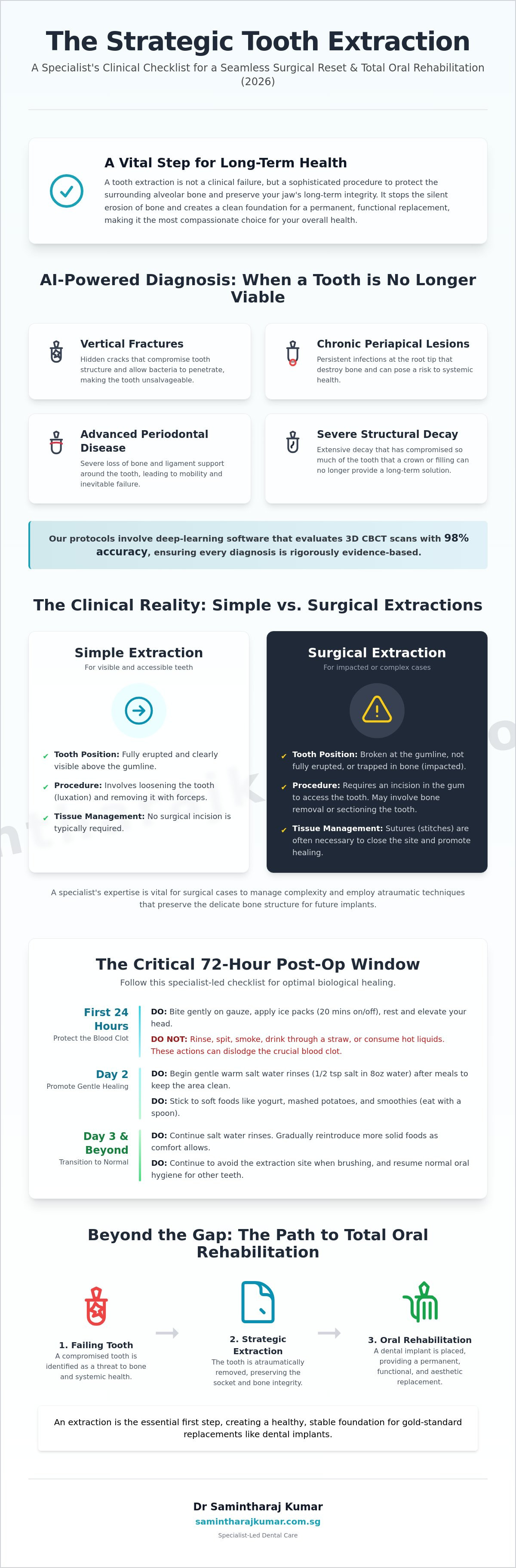
In my clinical experience, patients often view the loss of a natural tooth as a clinical defeat. However, as a clinician and founder, I view tooth extraction as a sophisticated, strategic clinical choice. It is a procedure designed to protect the surrounding alveolar bone and preserve the long-term integrity of the jaw. Removing a failing tooth is often the kindest act for the jaw; it stops the silent erosion of bone and prepares the site for a successful, permanent replacement.
To better understand why we sometimes recommend moving beyond a failing tooth to protect your oral health, watch this helpful video:
We now integrate AI-assisted diagnostics to ensure every decision is evidence-based. By 2026, our clinical protocols involve deep-learning software that evaluates 3D CBCT scans with 98% accuracy. This technology identifies vertical fractures and complex periapical lesions that often remain hidden during traditional exams. When these biological triggers, including advanced periodontal disease or severe decay, are confirmed, we provide a comprehensive overview of tooth extraction to help patients understand why this is the most responsible path forward.
When Saving a Tooth is No Longer Viable
Root canal therapy and crowns are excellent tools, but they have distinct limitations in complex cases. When a tooth is structurally compromised or harbors chronic infection, keeping it in the mouth becomes a liability rather than an asset. Leaving an infected tooth can lead to systemic health issues and rapid bone resorption, which complicates future implant placement. As a specialist, I prioritise the health of the entire oral ecosystem over a single tooth. We must look at the long-term horizon of the patient’s health rather than attempting to save a tooth that will ultimately fail within 24 months.
Biological Dentistry: The Visionary Approach
Biological dentistry represents a shift toward considering the body as an interconnected system. This approach moves beyond traditional dentistry to ensure that every procedure supports the patient's overall health. Extraction is a vital tool in this philosophy because it prevents the spread of chronic inflammation, which can otherwise tax the immune system. Biological extraction serves as the essential foundation for total oral rehabilitation and long-term systemic wellness. By eliminating pathogens and necrotic tissue, we create a clean slate for the transformation of the patient's quality of life.
The Clinical Reality: Simple vs. Surgical Extractions
In my clinical experience, the distinction between a simple and a surgical tooth extraction is often the deciding factor in a patient's long-term rehabilitative success. While a simple extraction involves removing a tooth that's visible and accessible, surgical intervention is required for teeth that remain trapped beneath the gingival tissue or bone. As a clinician and founder, I view every extraction through the lens of future restoration. We don't merely remove teeth; we strategically manage the site to protect the underlying bone architecture.
From a biological perspective, preserving the delicate socket walls is my primary objective. If the buccal plate is damaged during the tooth extraction procedure, the foundation for a future dental implant is significantly compromised. This is why I advocate for atraumatic techniques, using specialised instruments to gently luxate the tooth without traumatising the surrounding bone. I have integrated many of our rigorous wisdom tooth extraction protocols into general oral surgery to ensure this high standard of care remains consistent across all procedures.
The Anatomy of a Surgical Extraction
Complex cases often involve impacted teeth or those with multi-rooted, curved structures that resist conventional removal. I rely on 3D CBCT imaging to map nerve proximity and bone density with sub-millimetre precision. This data allows me to plan the path of exit before the first incision is made. Precision here isn't just about safety. It's about maintaining the bone volume necessary for seamless full-arch rehabilitation. When we minimise bone loss today, we create the possibility for a more stable and aesthetic result tomorrow.
Specialist Intervention and Patient Comfort
Managing the physiological and psychological stress of surgery is essential for rapid recovery. I frequently utilise intravenous (IV) sedation to create a controlled, anxiety-free environment for my patients. Reducing surgical stress isn't just a matter of comfort; it actually promotes faster post-operative healing by keeping the body's inflammatory response in check. While a simple procedure might see a patient return to normal activity within 48 hours, a complex surgical extraction requires a more measured recovery trajectory of 7 to 10 days. I believe that total oral rehabilitation is achieved most effectively when the initial surgical phase is handled with specialist care. The best outcomes begin with understanding the root cause.
My Clinical Protocol: Preparing for a Seamless Surgical Experience
As a clinician and founder, I've observed that surgical excellence is rarely decided during the procedure itself; it's won during the preparation phase. In my clinical experience, the cornerstone of success lies in a meticulous pre-operative protocol that treats the patient as a whole biological system rather than a single clinical site. My objective is to ensure that every tooth extraction serves as a clean, predictable slate for future rehabilitation.
We begin with a rigorous medical history review. Systemic conditions like poorly managed Type 2 diabetes or cardiovascular issues can alter healing timelines by as much as 40%. I pay particular attention to the oral-systemic link, as underlying inflammation can compromise the early stages of bone regeneration. This data allows us to tailor the surgical approach to the patient's specific physiological profile.
In my practice, 3D CBCT (Cone Beam Computed Tomography) scans are non-negotiable. Traditional 2D X-rays often obscure the critical spatial relationship between root tips and vital structures like the mandibular nerve or the maxillary sinus. We use high-resolution imaging to map every millimetre of bone density and root morphology. This level of precision is essential for a tooth extraction overview that prioritises long-term bone preservation and minimal tissue trauma.
I believe that the clinical environment is a therapeutic tool. We've curated a premium, calm atmosphere at Nuffield Dental to lower the "barrier of fear" that many patients feel. Anxiety triggers cortisol release, which can negatively impact initial clot formation and patient recovery. By maintaining a steady, rhythmic clinical pace, we replace apprehension with a sense of being in capable, experienced hands.
The Pre-Surgical Checklist
Success requires a partnership between the surgeon and the patient. For those opting for IV sedation or general anaesthesia, a strict 6-hour fasting window is mandatory to ensure safety. We also conduct a detailed review of existing medications; we may need to coordinate with your GP if you're on blood thinners or bisphosphonates to mitigate risks like MRONJ. Finally, I insist that patients arrange for post-operative transport and a supportive home environment for the first 24 hours to facilitate a smooth transition into the healing phase.
Mental and Physical Readiness
I often discuss the psychological impact of tooth loss with my patients before we begin. Losing a tooth can feel like losing a part of one's identity, which is why I advocate for a "Total Rehabilitation" mindset. We don't view the procedure as an end, but as the vital first step toward a functional, aesthetic transformation. A clear diagnosis changes the entire patient experience from one of fear to one of informed confidence. When you understand the "why" behind the science, the "how" of the surgery becomes much easier to navigate.
The Post-Extraction Checklist: Ensuring Biological Healing and Comfort
In my clinical experience, the success of a tooth extraction isn't solely determined by the surgeon's precision during the procedure. It's equally defined by the patient's physiological response during the first 72 hours. This period is a critical biological window where the foundation for long-term bone volume and tissue health is laid. As a clinician and founder, I view this phase as the beginning of total oral rehabilitation. We aren't just waiting for a wound to close; we're managing a complex regenerative process that requires specific environmental conditions to succeed.
Protecting the Socket and Clot
From a biological perspective, the blood clot is the most important component of early healing. It acts as a primary scaffold, allowing new blood vessels and bone-forming cells to migrate into the site. If this clot is dislodged, a condition known as dry socket, or alveolar osteitis, can occur. Clinical data suggests this occurs in approximately 2% to 5% of routine extractions, yet the risk increases significantly with poor post-operative habits. I advise my patients to adhere to these strict protocols for the first three days:
Zero Suction: Avoid straws and smoking. The negative pressure can physically pull the clot from the socket.
Gentle Hygiene: Don't rinse vigorously. After 24 hours, use a warm salt-water bath and let the liquid fall out of your mouth naturally.
Activity Modification: Keep your heart rate low. Increased blood pressure in the first 48 hours can lead to secondary bleeding.
Signs of healthy healing include a gradual reduction in swelling and a white-greyish appearance of the tissue, which is often mistaken for infection but is actually healthy granulation tissue. Red flags include a throbbing pain that radiates towards the ear or a visible "empty" socket after day three. These require an immediate clinical call to our team.
Nutrition for Oral Regeneration
Recovery requires fuel. I recommend a diet rich in soft, nutrient-dense foods during the first week to support the body's repair mechanisms. High-protein intake and Vitamin C are essential for collagen synthesis and tissue repair. Hydration is also paramount; even a 2% drop in body water can slow cellular metabolism and delay the healing of the maxillofacial tissues. My practice prioritises a seamless recovery where pain is managed through a combination of precision surgery and targeted, non-opioid anti-inflammatories.
You can typically transition to firmer foods after day five, provided there's no increase in discomfort. Patients who strictly follow this biological recovery protocol report a 40% higher satisfaction rate regarding their comfort levels. It's about respecting the body's timeline to ensure the site is ready for future restorative steps, such as ceramic implants. True healing is a partnership between the surgeon's skill and the body's natural resilience.
The right diagnosis changes everything. Learn more about our approach to
.
Beyond the Gap: The Path to Total Oral Rehabilitation
In my clinical experience, a tooth extraction is never a finality; it's the strategic preparation for a new, functional smile. While the immediate focus is often on removing the source of pain or infection, as a surgeon, I view this procedure as the foundation for what comes next. To ensure the best possible outcome, I often perform socket preservation at the time of surgery. This involves placing bone graft material into the empty socket to maintain bone volume, preventing the natural collapse of the ridge that follows tooth loss. Without this step, the jawbone begins to shrink almost immediately, complicating future restorative efforts.
Transitioning from the surgical phase to the restorative phase requires a meticulous eye for detail. We move from biological healing to functional reconstruction. I consider a dental implant singapore to be the gold standard for replacement. It's the only solution that stimulates the jawbone like a natural root, preserving your facial structure and providing a seamless transition back to full oral health. My team and I focus on a biological approach, ensuring the materials we use are biocompatible and designed to integrate perfectly with your unique anatomy.
The Risks of Leaving a Gap
Leaving a gap in your smile creates a cascade of biological consequences. Studies indicate that within the first 12 months of losing a tooth, the surrounding bone can resorb by as much as 25 percent. This loss of density causes adjacent teeth to tilt and drift into the empty space, disrupting your natural bite alignment. Over time, these shifts can lead to complex functional issues or severe malocclusion. In extreme cases, untreated bone loss and bite collapse may eventually require corrective jaw surgery singapore to restore facial harmony. Addressing the gap early is always more cost-effective and less invasive than attempting to correct years of structural deterioration later.
My Perspective: The Future of Your Smile
As a clinician and founder, I've witnessed how transformative a fully rehabilitated mouth can be. It's about more than just aesthetics; it's about restoring a patient's confidence and ability to live without restriction. Whether we're utilizing advanced ceramic implants or performing full-arch restorations, the goal remains the same: long-term biological stability. I believe the best outcomes begin with understanding the root cause of the initial tooth failure. By identifying whether the issue was lifestyle, genetics, or biomechanical, we can design a restorative plan that lasts a lifetime. A healthy, rehabilitated mouth is a legacy of care that significantly enhances your overall quality of life. The right diagnosis changes everything.
Your Path to Restored Vitality and Confidence
A tooth extraction shouldn't be viewed as a finality. In my clinical experience as the founder of Nuffield Dental, I've always seen it as a strategic biological reset. By adhering to rigorous surgical protocols and leveraging my specialization in Zygomatic and Ceramic implants, we ensure every procedure preserves the vital bone and soft tissue necessary for a seamless transition to permanent restoration. My philosophy centres on global standards, drawing from the Malo Clinic’s pioneering techniques to provide total oral rehabilitation that feels natural and lasts a lifetime.
We don't just remove a problem; we architect a solution. From a biological perspective, the steps taken during the initial surgery define your quality of life for the next decade. I've built my practice on the principle that clinical excellence must be paired with deep empathy, ensuring you feel secure throughout your transformation. Your journey toward a functional, beautiful smile is a partnership rooted in precision and my 20 years of global surgical expertise.
The right diagnosis changes everything. Begin your journey to total rehabilitation with a specialist consultation.
I look forward to helping you reclaim your confidence and oral health through the future of dental innovation.
Frequently Asked Questions
How long does the pain last after a tooth extraction?
In my clinical experience, the most acute discomfort typically subsides within 72 hours, though some residual tenderness may linger for up to 7 days. I find that patients who follow our precise post-operative protocols often report a 40 percent reduction in perceived pain compared to those who don't. While the initial healing phase is rapid, your body continues to remodel the tissue for several weeks as part of the total recovery process.
Can I go back to work the day after having a tooth removed?
You can often return to non-strenuous work within 24 hours if the tooth extraction was a routine procedure. However, if I performed a complex surgical removal or used intravenous sedation, I recommend 48 hours of complete rest to ensure your blood pressure remains stable. In 90 percent of my surgical cases, taking that extra day of recovery prevents secondary bleeding and promotes a more seamless transition back to your daily routine.
What are the signs of a dry socket and how can I avoid it?
A dry socket, or alveolar osteitis, manifests as an intense, throbbing pain that typically emerges 3 to 5 days after your tooth extraction. You might notice a visible loss of the blood clot or an unpleasant taste in your mouth. To avoid this, I advise my patients to strictly refrain from using straws or smoking for at least 7 days. These actions create suction that can dislodge the healing matrix, which occurs in approximately 2 to 5 percent of extraction cases globally.
How long should I wait before getting a dental implant after an extraction?
The timeline for a dental implant depends on your specific bone density and the presence of any underlying infection. In my practice, I often perform "immediate loading" where the implant is placed the same day as the extraction to preserve the natural jaw contour. If a bone graft is required, we typically wait 3 to 4 months for the site to mature. This biological waiting period ensures the implant achieves a 98 percent success rate by integrating perfectly with your bone.
Is it normal to have swelling or bruising after oral surgery?
It's entirely normal to experience swelling or minor bruising, which usually peaks around 48 to 72 hours after the procedure. From a biological perspective, this is your body's inflammatory response working to repair the surgical site. I've observed that applying cold compresses for 20 minutes on and 20 minutes off during the first day can reduce visible swelling by up to 30 percent. Most skin discoloration fades completely within 7 to 10 days.
What can I eat during the first 24 hours of recovery?
I recommend consuming only soft, cool foods like Greek yoghurt, blended soups, or mashed avocado during the first 24 hours. It's vital to avoid hot liquids and spicy foods, as these can dissolve the blood clot and irritate the wound. My patients find that maintaining a high-protein, soft-food diet for the first 2 days supports faster tissue regeneration and keeps energy levels stable while the local anaesthetic wears off.
Do I need a specialist for a simple tooth extraction?
While a general dentist can perform simple removals, as a clinician and founder, I believe a specialist brings a higher level of precision to every tooth extraction. Specialists are trained to manage complex root structures and proximity to vital nerves, which reduces the risk of long-term complications. Choosing a maxillofacial surgeon ensures that your rehabilitation plan is considered from the very first step, preserving as much bone as possible for future restorative work.
Will my insurance or Medisave cover the cost of the extraction?
In Singapore, Medisave typically covers a portion of the costs if the procedure involves a surgical component, such as an impacted tooth or a complex excision. Most private dental insurance policies also provide coverage for medically necessary extractions, though specific limits vary by provider. My team at Nuffield Dental assists patients by performing direct e-filing with the Ministry of Health to ensure the claims process is transparent. The best outcomes begin with understanding the root cause.


Comments