
Waking Up with a Tired Jaw? Morning Clenching, Stress and What Your Teeth Are Telling You

The clues you may notice in the morning
Some people wake with jaw muscles that feel tired, teeth that seem tight, or a dull ache near the ears. Others notice a headache around the temples. Sometimes it is a partner who mentions hearing grinding sounds during the night. Many people clench while asleep without knowing it.
These symptoms can have more than one explanation. In this article, I’ll explain what sleep bruxism is, why morning symptoms can occur, what an examination can and cannot tell us, and how we can approach care sensibly.
What is sleep bruxism?
Sleep bruxism refers to repetitive jaw-muscle activity during sleep. It can involve clenching, grinding, or other jaw movements. Because it happens while a person is asleep, they may be unaware of it unless a partner hears grinding or they notice symptoms on waking.
Awake bruxism is different. It means clenching or holding the jaw tense while awake, often during concentration, stress or other moments when someone is not aware of their jaw position. A useful resting reminder is: lips together, teeth apart, resting position.
Sleep bruxism is not, in itself, a disease. It is a behaviour, and in many people it causes no damage or need for treatment. The clinical question is whether it is causing harm in this particular mouth, or contributing to symptoms that need attention.
Why the morning can be the tell
Sleep bruxism activity is often associated with brief arousals and lighter stages of sleep. It may occur more prominently in the second half of the night, although patterns differ between people. The person may not wake fully during an episode, but repeated muscle activity can still be noticed as tiredness or tension on waking.
Think of the difference between a muscle working in short bursts with rests, as it usually does during chewing, and a muscle that contracts repeatedly or remains tense without the same rest pattern. That activity may leave the jaw muscles feeling fatigued. Parafunctional forces can, at moments, exceed ordinary chewing loads; they may also be repeated and sustained for much longer than a meal. That general point does not mean damage will happen. The effect depends on the person, the teeth and restorations, the pattern of loading and other aspects of their health.
What the teeth may show
An examination may find wear facets, flattened cusps, chipped tooth edges or damaged restorations. Some people have notching near the gumline that looks abfraction-like. Others may have tooth mobility or cracks. These findings need interpretation: mobility, for example, can have causes other than clenching.
Untreated parafunctional loading is associated with cracked teeth and, in some cases, pulpal involvement. Association is not cause: a crack or a change in the pulp does not prove that clenching was the sole reason it occurred. Nor does every person with bruxism develop these problems.
Teeth also wear through normal function and with age. A single flattened cusp or worn edge cannot diagnose sleep bruxism. The pattern, symptoms, history and whether changes are progressing matter more than any one sign. The teeth can provide useful clues, but they do not tell the whole story.
Why does it happen?
There is no single explanation that fits everyone. Sleep arousal and sleep quality may be part of the picture. Stress can affect how the body settles and responds during sleep, while caffeine, alcohol, smoking and some medications may be relevant for some people. Medication changes should be discussed with the prescribing clinician rather than stopped without advice.
Bite and tooth contacts may matter when assessing an individual mouth, but they should not be treated as a simple, universal explanation for sleep bruxism. A dentist cannot diagnose why someone clenches from their teeth alone. The history (including what is happening in someone’s life, their sleep and any medication use) helps build a more useful picture.
In my earlier writing on the biopsychosocial side of jaw problems, I discussed how stress, sleep and muscle behaviour can interact. The same broad principle is relevant here: the jaw is part of a system, not an isolated set of teeth.
What an assessment adds
I ask about morning symptoms, when they started, how often they occur, and whether a partner has noticed grinding sounds. Stress, sleep quality, caffeine, alcohol, smoking and relevant medications may also be worth discussing. If symptoms are changing, that matters too.
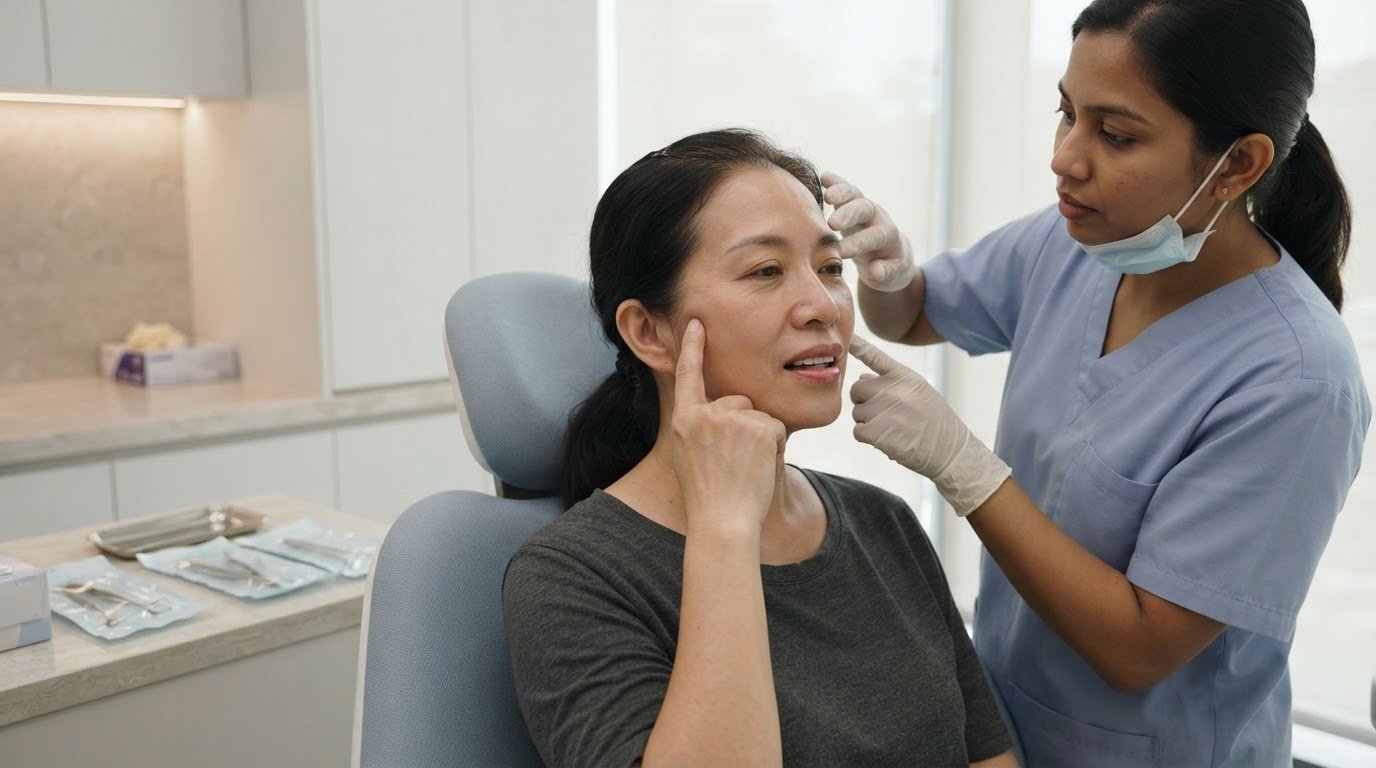
An examination may include looking for patterns of wear or damage, feeling the jaw muscles, checking the jaw joints and measuring how comfortably the mouth opens. Imaging may be appropriate if the findings or symptoms call for it; it is not automatically needed for every person who wakes with a tired jaw.
Several findings together help build the picture. No single sign diagnoses bruxism, and a screen reading is not a diagnosis. If poor sleep, snoring, breathing pauses or other sleep concerns arise, a medical assessment may be important. Sleep medicine is a medical field, and dental and medical care can work together where needed.

What can be done?
Conservative care comes first. For daytime clenching, start by noticing when the teeth are touching and gently returning to the resting position: lips together, teeth apart. Where stress or disrupted sleep appears relevant, consider practical changes to sleep routines and discuss persistent concerns with an appropriate healthcare professional. Jaw exercises or physiotherapy may help in selected cases, depending on the assessment.
A night guard can be considered when the examination suggests it is appropriate. Night guards are effective for many patients, particularly as a way to protect teeth and restorations and redistribute some of the load. A guard does not necessarily stop the clenching itself, so it is important to be clear about its purpose and arrange review.
Appliance choice follows diagnosis rather than habit. Repositioning orthotics are reserved for carefully selected cases; they are not a routine first step for every person with morning jaw tension. If you are looking for TMJ Singapore information, keep in mind that jaw symptoms deserve an individual assessment rather than a one-size-fits-all appliance.
The aim is to manage load and reduce the risk of damage over time, not to promise a cure for a behaviour that may have several influences. At a dental clinic in Singapore, as elsewhere, the appropriate plan should follow the individual’s symptoms and findings.
When should you seek an assessment?
Arrange an assessment if tooth damage appears to be progressing, restorations keep fracturing, or jaw pain is persistent. Jaw locking, restricted opening or headaches on waking are also worth discussing, particularly if they are new, worsening or affecting daily life.
The teeth keep a record of the nights; an assessment reads that record alongside your symptoms and history. Have you noticed a change in your teeth, jaw comfort or sleep that you would like to understand?
For an assessment, contact Nuffield Dental.
This article provides general information only and is not a diagnosis or a substitute for individual assessment. Your symptoms and treatment options should be discussed with a suitably qualified clinician. No outcome can be guaranteed.
Comments