
What Happens If You Don’t Replace a Missing Tooth? A Clinical Guide

Updated: Oct 6
A painless gap can still affect how your mouth works over time. If you’re wondering “what happens if you don't replace a missing tooth”, the answer depends on its position, your bite and your wider oral health. Some people notice little change at first. Others may find that nearby teeth move, chewing feels different or the jawbone in the area changes.
It’s understandable to feel uncertain when you’re weighing treatment, recovery or whether replacement is necessary at all. A missing tooth doesn’t automatically mean you need an implant, and the possible effects aren’t the same for everyone.
An individual assessment is a useful starting point. This guide explains how a gap may influence neighbouring teeth, bite function and the jawbone, which changes or symptoms may warrant attention, and what can shape your options. It also covers questions to raise with a dental professional, so you can understand the benefits and considerations of different approaches without feeling rushed into a decision.
Table of Contents
What happens if you don’t replace a missing tooth?
A gap that doesn’t hurt can make waiting feel reasonable. The answer to “what happens if you don't replace a missing tooth” isn’t the same for everyone. An unreplaced tooth may affect chewing or the position of nearby teeth, but change isn’t inevitable. The location of the gap, how many teeth are missing and your existing oral health all matter.
This video offers a general overview of the topic. Individual effects and suitable care still depend on your own mouth.
Why a missing tooth can matter beyond appearance
Teeth work together during chewing. Losing one can change how food is broken down and how pressure is shared across the dental arch. Remaining teeth also meet as part of the bite. If a gap changes those contacts, function may feel different over time. The effects depend on the missing tooth’s position and the condition of surrounding teeth and gums.
Teeth may move towards an available space, but whether this happens, and to what extent, varies. A gap does not automatically cause visible facial changes. For a broader introduction to the causes and effects of tooth loss, see this overview. It can’t predict how an individual gap will affect your mouth.
An assessment can be useful even without pain because it may identify changes in function or the dental arch that aren’t obvious to you.
Does every missing tooth need to be replaced?
No single rule applies to every gap. A dentist considers which tooth is missing, your bite, the health of nearby teeth and gums, and what you hope to achieve. Monitoring may be part of the discussion in some cases. In others, replacement may be considered to support function. An implant is one possible option, not a universal recommendation.
This is general information, not a diagnosis or personalised treatment advice. Only an examination can help establish what is appropriate for you. Discuss the clinical findings alongside your priorities, then ask about the options and their relevant considerations. You can take time to understand the reasoning before making a decision.
How a missing tooth may affect neighbouring teeth, bone and bite
A missing tooth can change the local balance of the dental arch, but the response varies from person to person. The location of a missing tooth helps determine how it may affect nearby teeth, the jawbone and bite function. A gap at the front may have different functional implications from one towards the back, where teeth help with chewing. The number of missing teeth and the condition of the surrounding mouth also matter.
Can nearby teeth move into the gap?
Teeth are supported by surrounding structures and make contact with neighbouring and opposing teeth. When one tooth is lost, those contacts change. Adjacent teeth may gradually lean or move towards the space, while the tooth that used to meet the missing one may move towards the gap from the opposing jaw. These are possibilities, not guaranteed outcomes. Whether movement occurs, and how much, varies with the tooth, bite and oral health. When shifting does occur, orthodontic and aesthetic solutions—such as those highlighted on justsmile.hu—can help re-align the dental arch as part of a broader restorative plan.
What can happen to the jawbone and bite?
After a tooth is lost, the bone in that area may remodel. The extent and pattern of change vary, so the presence of a gap alone can’t predict an individual outcome. The American Dental Association explains that bone loss can occur after tooth loss, alongside possible movement of the remaining teeth.
Changes in tooth position or contact may affect how the upper and lower teeth meet. Some people notice a difference in chewing or bite balance; others may not experience an obvious change. Examining how the teeth meet can help distinguish a possible concern from a change that is actually present. For further context on the relationship between oral structure and facial appearance, see how dental structure affects face shape.
These possibilities don’t mean that every gap will alter someone’s bite or facial appearance. An assessment can help establish whether there are observable changes and what they may mean for your oral health. If you’re considering what happens if you don't replace a missing tooth, discuss the gap’s position, your chewing function and your priorities with a dental professional. You can also read more about individual dental assessment as part of understanding your options.
Is it safe to leave a missing tooth if it does not hurt?
A gap without pain may feel like a problem you can set aside. But the absence of pain doesn’t confirm that the gums, bone or bite are unchanged. Equally, a painless missing tooth doesn’t automatically mean there is damage, that treatment is urgent or that every person needs the same response. An assessment is a way to understand your situation, not a reason to assume the worst.
What does a painless gap tell you?
It tells you that you’re not currently experiencing pain in the area. It cannot, by itself, show what is happening beneath the gum or whether the way your teeth meet has changed. Some oral changes may not cause noticeable symptoms, while some gaps remain comfortable without an obvious functional problem.
If you’re asking what happens if you don't replace a missing tooth, discomfort alone can’t provide the answer. Tell your dentist when the tooth was lost and, if you know, how it happened. A tooth lost after an injury may prompt different questions from one removed because of a dental problem. Mention any changes you’ve noticed, even if they seem minor.
As general background, Harvard Health Publishing discusses how missing teeth may alter your bite and weaken your jawbone. This describes potential concerns, not a prediction of what will happen to every person. Your oral health needs clinical assessment.
When should you seek dental advice?
Arrange professional advice if you develop new pain, swelling, bleeding or difficulty chewing. If symptoms are severe or worsening quickly, seek prompt advice from an appropriate dental or healthcare professional. These signs need assessment, but they don’t identify a cause on their own. A gap alone is not evidence of infection or another specific condition.
Even when the area feels comfortable, a routine dental assessment can help clarify the condition of the surrounding tissues, how your teeth meet and whether any options are relevant. The discussion can cover what is observable, what remains uncertain and whether follow-up is appropriate.
You don’t have to decide on replacement before understanding the findings. To explore how an individual dental assessment can guide that conversation, see personal dental assessment.
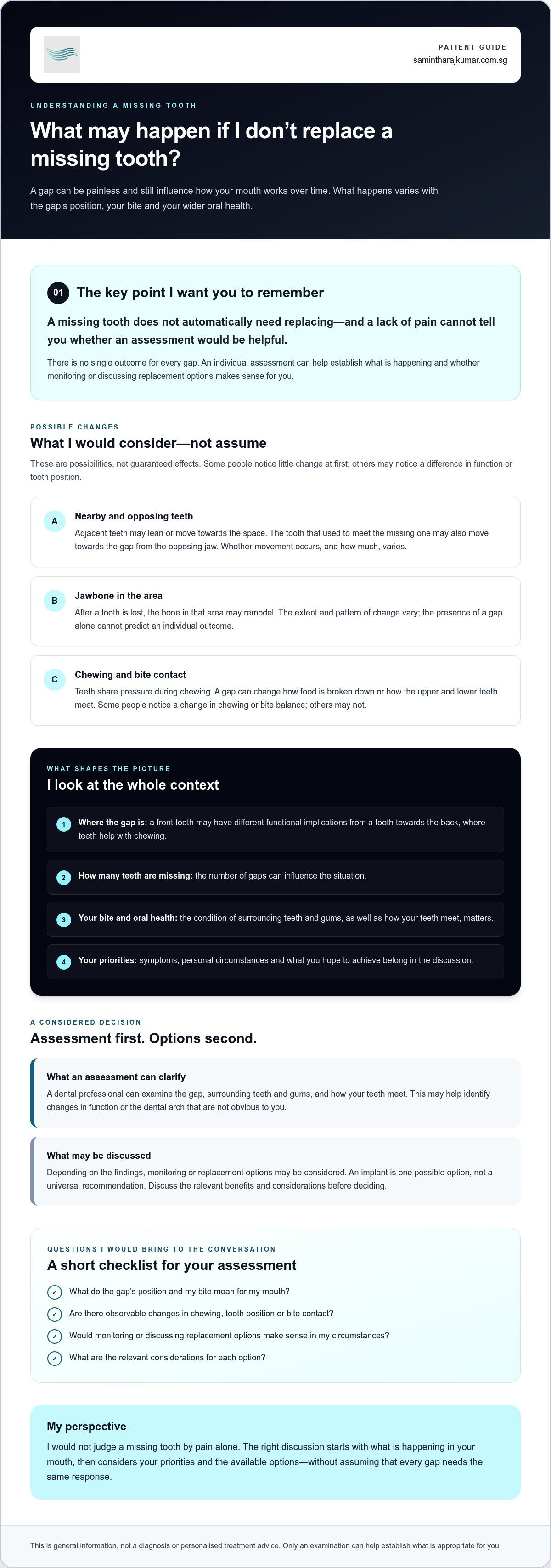
How to assess a missing tooth and understand your options
Understanding what may be appropriate starts with an individual assessment, not an online checklist. If you’re wondering what happens if you don't replace a missing tooth, an examination can help clarify the condition of the gap and surrounding teeth, how your bite functions, and which choices may fit your priorities.
What may a dental assessment involve?
The discussion can proceed in stages. The exact process depends on your circumstances and clinical findings.
History: Discuss when and how the tooth was lost, your medical and dental history, any symptoms, and what you hope to address.
Examination: The dentist assesses the gap and surrounding oral structures, including nearby teeth and how your bite comes together.
Relevant imaging: If further information is needed, imaging may be considered to support assessment and planning. The type of investigation depends on the individual case, and it isn’t automatically required in every situation.
Discussion: The dentist explains the findings, uncertainties and options that may be appropriate, including the considerations and limitations of each.
Follow-up: Discuss whether monitoring or further review is relevant, and what changes should prompt you to seek advice.
A plan follows clinical assessment, not just the fact that a gap is present. The position of the missing tooth, your oral health, bite, medical context and personal goals all inform the conversation.
What questions should you ask about replacement?
A useful consultation should leave you better informed, not pressured to choose immediately. You might ask:
What might happen if we monitor the gap, and what signs should prompt a review?
Which options could be considered in my case, and what limitations or ongoing maintenance should I understand?
How do my oral health and bite affect the timing or planning of treatment?
What are the benefits and considerations of replacing the tooth compared with leaving the space as it is?
Replacement discussions may include an implant, bridge or denture, but no approach is automatically suitable for everyone. The clinical findings and your priorities help guide the discussion. For a deeper discussion of implant planning in the context of overall oral rehabilitation, read a specialist perspective on dental implants.
If you would like to discuss how an individual assessment can clarify your choices, you can explore a missing-tooth assessment. The aim is to give you a clear understanding of your options, so any decision is informed and aligned with your needs.
My clinical perspective on replacing a missing tooth
The decision about a missing tooth should begin with understanding the mouth as a whole, not with assuming that every gap needs the same solution. Patients often want a clear answer about whether to replace a tooth. I first consider what the assessment shows, how the gap relates to function and what matters most to the person sitting with me.
Why the right plan depends on the whole mouth
A gap is considered alongside the neighbouring teeth, gums, bite and wider health context. Those details help shape a discussion about whether monitoring or replacement may be worth considering. The goal is not simply to fill a space, but to understand the likely functional implications and plan with long-term oral health in mind.
No single replacement method suits everyone. Depending on the clinical findings and the patient’s priorities, the conversation may include different options. Ceramic dental implants may be one possibility when clinically appropriate, but they are not an automatic recommendation. Any potential benefits, limitations and relevant considerations should be explained in relation to the individual case.
Careful planning takes account of both the biological context and the person’s preferences, rather than treating the missing tooth in isolation. It can help support decisions that consider function and long-term care, though no plan can promise a particular outcome.
What a considered next step looks like
If you’re considering what happens if you don't replace a missing tooth, the most useful next step is to understand your diagnosis and discuss the available choices. Ask what monitoring would involve, what changes should prompt review and which replacement options may be relevant to your circumstances. Ask about the benefits, limitations and ongoing care associated with each option, too.
You don’t need to decide before you understand the findings. A considered conversation should give you room to weigh the clinical information against your goals, comfort and preferences. If you choose to monitor the gap, ask how follow-up would work. If you explore replacement, ask how your oral health and bite inform the plan.
Good care begins with a clear diagnosis and an informed partnership. An assessment doesn’t commit you to treatment. It helps clarify what is happening and gives you a sound basis for deciding what to do next. The right diagnosis changes the conversation.
Make your next step an informed one
A missing tooth may affect neighbouring teeth, bone or bite, but those changes aren’t inevitable, and a painless gap doesn’t reveal the whole picture. Understanding what happens if you don't replace a missing tooth starts with considering its location, your oral health and how your teeth function together.
A clear assessment helps separate possible risks from what is actually happening in your mouth. It also gives you space to discuss monitoring or replacement options, including their benefits and limitations, without being rushed into a decision.
Dr Samintharaj Kumar specialises in complex dental implantology and oral surgery. Ceramic dental implants are one option he may discuss when clinically appropriate, but suitability depends on individual assessment. To explore his perspective on dental implant treatment and planning for the whole mouth, read his perspective on dental implant treatment.
The right diagnosis changes the conversation. Visit the practice website to discuss an individual dental assessment and understand your options before deciding on a next step.
Frequently Asked Questions
What happens if you never replace a missing tooth?
If you never replace a missing tooth, possible effects include nearby or opposing teeth moving, changes in chewing and remodelling of the bone in that area. These changes aren’t inevitable. The tooth’s position, the condition of the surrounding mouth and how the bite functions all help shape the discussion. The question “what happens if you don't replace a missing tooth” can’t be answered for an individual without an examination.
Can a missing tooth cause other teeth to shift?
Yes, teeth beside or opposite a gap may move towards it, though this doesn’t happen in the same way for everyone. The position of the gap, the surrounding teeth and how the bite comes together all matter. If movement is present, its relevance depends on the individual findings. A dentist can explain whether monitoring or discussing an option for the gap may be appropriate.
Can a missing tooth affect chewing or your bite?
It can, although the effect varies. A gap changes the contact between teeth and may influence how chewing pressure is shared. The position of the missing tooth matters: a gap in an area used for chewing may affect function differently from one elsewhere. An assessment of how the upper and lower teeth meet can help clarify whether there is a change. Some people notice differences in chewing or bite balance, while others don’t report an obvious difference.
Does the jawbone change after a tooth is removed?
The jawbone in the area of a lost tooth may remodel, but the pattern and extent differ between individuals. A gap alone doesn’t show how much change, if any, has occurred. A dentist can consider the clinical findings and whether further investigation is relevant. This makes any discussion about monitoring or possible replacement specific to the person, rather than based on a general assumption.
How soon should you see a dentist about a missing tooth?
Seek dental advice if you have new pain, swelling, bleeding or difficulty chewing. Severe or rapidly worsening symptoms warrant prompt attention from an appropriate dental or healthcare professional. If you feel well, a routine assessment can still help clarify the condition of the area and your options. Tell the dentist when and how the tooth was lost, as that history helps guide the assessment and any follow-up discussion.
What are the options for replacing a missing tooth?
Options may include a dental implant, bridge or denture. Each involves different considerations, and none is automatically suitable for everyone. A dentist can discuss which options may be relevant after assessing your oral health, the gap and your bite, including any limitations and maintenance to consider. Ceramic dental implants may also be discussed when clinically appropriate, but individual assessment is needed to determine suitability.


Comments