
What Is Involved in a Smile Makeover? A Specialist’s Guide

Updated: Oct 8
What if the best smile makeover begins with deciding what not to change? If you’re wondering what is involved in a smile makeover, it isn’t simply a list of cosmetic procedures. I begin by understanding your dental health, bite and personal goals, then consider which changes are appropriate.
It’s natural to wonder which treatments may suit you, how long they could take and whether the result will still feel like your own smile. A smile should look natural and function comfortably, not just look different. That is why I assess the teeth, gums and bite together, so the plan considers health and function as well as appearance.
In this guide, I’ll explain how assessment and planning work, and how options such as whitening, veneers or restorative treatment may be considered or combined when appropriate. I’ll also cover useful questions to ask about timing, comfort and your preferred result. The aim is to help you make an informed decision, with a plan shaped around your needs rather than a standard set of procedures.
Table of Contents
What is involved in a smile makeover, and what can it address?
“What is involved in a smile makeover?” is often the first question patients ask when they’re considering a change. I describe it as an individually planned approach based on your concerns, oral health and clinical needs. The aim may be to address the appearance, balance, condition and function of your teeth, rather than simply changing how they look.
A smile makeover isn’t one fixed procedure or a standard package. A focused aesthetic treatment may be enough for one person, while another may need restorative care as well. Assessment helps determine what is appropriate and in what order. The broader field of cosmetic dentistry includes different ways to change the appearance of teeth, but the suitability of each option depends on the individual.
For a visual introduction, watch this video on what a smile makeover may involve:
Which concerns might lead someone to consider a smile makeover?
Patients may want to discuss tooth shape, colour, spacing, uneven edges or wear. Some are concerned about how the gum line frames their teeth. Others have missing or damaged teeth, where restoring a tooth or replacing what’s missing may need to be considered alongside appearance.
Your priorities help me understand what you hope to change and what a natural-looking result means to you. Preference alone, however, can’t determine the right treatment. I also examine the teeth and gums and consider how your teeth meet when you bite.
Why should appearance and function be considered together?
Tooth condition, gum health and bite can all affect whether an aesthetic change is suitable. For example, wear or damage may point to a functional concern that needs attention as part of the plan. Changing appearance without understanding these factors could mean overlooking what the teeth need to function comfortably.
In my clinical experience, natural-looking results begin with careful diagnosis, not a predetermined choice of treatment. I consider how proposed changes will look within the smile and function in everyday life. This is the thinking behind cosmetic dentistry and functional aesthetics: planning for appearance while keeping oral health and function in view.
How does a dentist assess and plan a smile makeover?
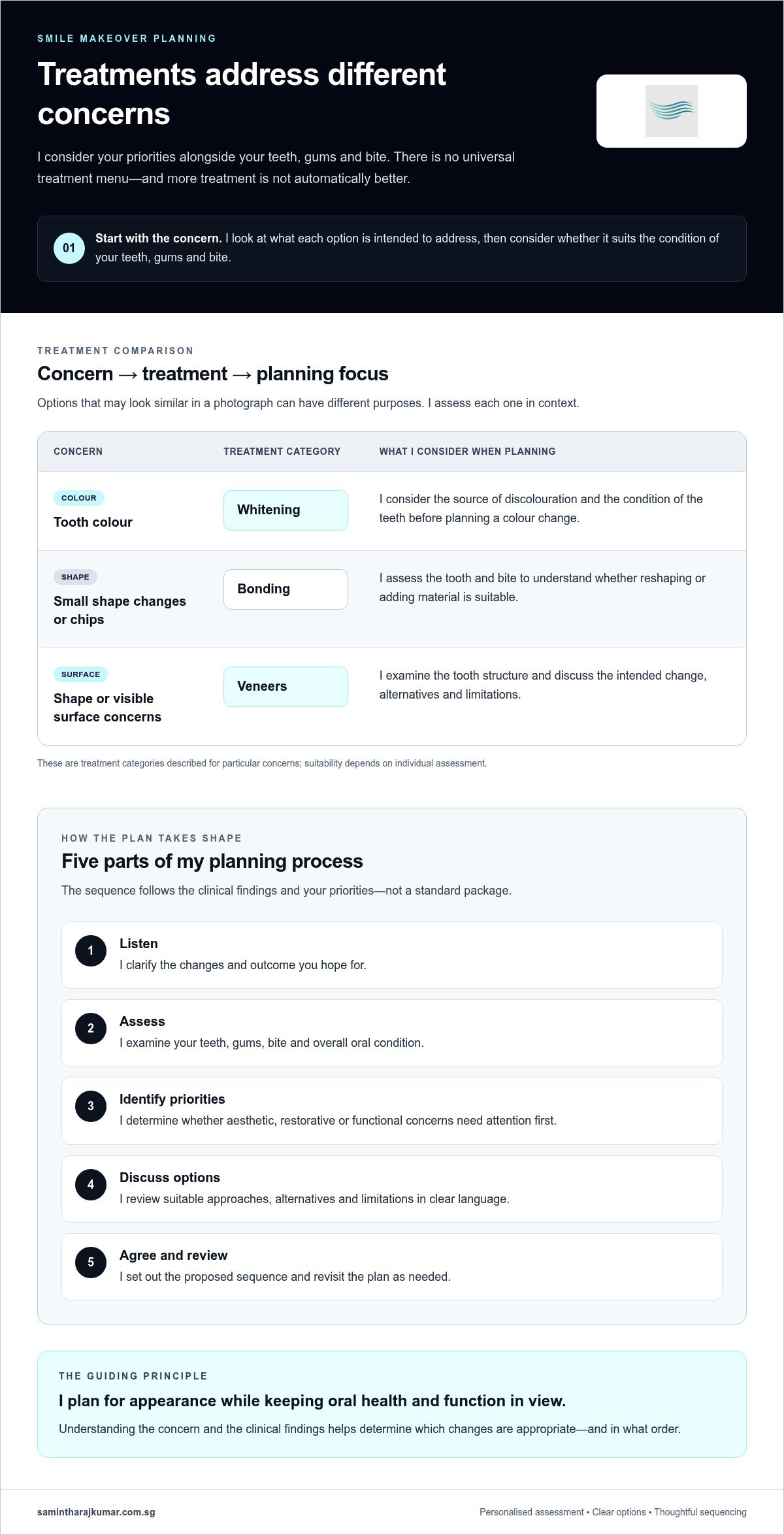
Understanding what is involved in a smile makeover also means understanding how the plan takes shape. I don’t begin with a preset menu of treatments. I listen, examine your mouth and identify which concerns should be addressed first. The sequence follows the findings, not a standard package.
What happens during the first consultation?
I ask what you’d like to change, what has prompted you to consider treatment and what kind of result would feel right to you. Your priorities guide the discussion, while your dental history and clinical findings help establish what is suitable.
I assess your teeth, gums, bite and overall oral condition. If further diagnostic information would help clarify a concern, I may consider it where clinically appropriate. The purpose is to understand the starting point before discussing possible changes.
How are goals translated into a personalised treatment plan?
Once I understand your aims and the examination findings, I explain relevant treatment categories, possible alternatives and limitations in clear language. We can then consider what should come first. For instance, a concern involving tooth condition or bite may need attention before an aesthetic change is planned.
The plan balances appearance with oral health, function and your priorities. Not every option is appropriate for every person, and more treatment isn’t automatically better. Leading providers of comprehensive care, such as Al Haneen Dental Clinic, similarly highlight the importance of individualised planning to align patient expectations with clinical health. I want you to understand why a step is being considered and how it fits into the wider plan.
Listen: Clarify the changes and outcome you hope for.
Assess: Examine your teeth, gums, bite and overall oral condition.
Identify priorities: Determine whether aesthetic, restorative or functional concerns need attention first.
Discuss options: Review suitable approaches, alternatives and limitations.
Agree and review: Set out the proposed sequence and revisit the plan as needed.
Facial balance may also be part of the conversation. The teeth and their supporting structures contribute to how a smile relates to the face, so I consider the wider picture rather than looking at tooth appearance in isolation. You can read more about how dental structure affects face shape.
A consultation is an opportunity to consider your priorities and the clinical findings together. You can learn more about a smile makeover consultation as a starting point for that discussion.
Which smile makeover treatments may be considered, and how do they differ?
There isn’t a universal treatment menu. To explain what is involved in a smile makeover, I look at the concern each option is intended to address, then consider whether it suits the condition of your teeth, gums and bite. Treatments that look similar in a photograph can have quite different purposes.
How do options for tooth colour, shape and alignment differ?
Whitening addresses colour, while bonding may be considered for certain changes to tooth shape. Veneers are a different option, involving a covering on the visible tooth surface. Alignment treatment addresses tooth position. These approaches aren’t interchangeable, and none should be selected on appearance alone. I assess tooth condition and discuss which category, if any, fits the clinical findings and your priorities.
When might restorative or gum-related care enter the discussion?
A damaged or worn tooth may need restorative consideration, while a missing tooth raises questions about replacement and function as well as appearance. Where replacement is relevant, I consider the broader needs of the mouth, as explained in my guide to dental implants and total oral rehabilitation.
The gum line can also affect how balanced a smile appears. An uneven appearance calls for assessment, not an automatic assumption that gum treatment is needed. I explain the options in context, including why a treatment may or may not be appropriate. A smile makeover discussion can help connect your priorities with the clinical findings and the choices available to you.
Is a smile makeover one procedure, and what should patients expect?
A smile makeover may involve one treatment or several, depending on the assessment and the plan you agree with me. There’s no fixed number of appointments or standard sequence. I explain the process in advance, including what each proposed step is intended to address and what care may be needed afterwards.
If you’re asking what is involved in a smile makeover, expect discussion as well as treatment. I explain the options, preparation, relevant aftercare and follow-up so you can consider the plan with a clear understanding of its purpose. Your experience and outcome depend on your clinical needs and the treatments involved. A photograph or visual example can help communicate an aesthetic preference, but it cannot predict exactly how a result will look for you.
How might treatment be staged?
If the assessment identifies an oral health or foundational concern, it may need attention before elective aesthetic steps. The order matters because later decisions should take account of the condition of your teeth and gums, as well as how your bite functions. I review the proposed sequence with you and explain the reasoning, so the plan feels considered rather than like a collection of unrelated procedures. The number and timing of appointments depend on the agreed care, not a preset schedule.
What questions help patients make an informed decision?
It’s reasonable to ask questions before deciding. I encourage patients to clarify the purpose of each proposed treatment and how it fits their priorities. For example, you might ask:
What concern is this treatment intended to address?
What alternatives are suitable, and what are their limitations?
How does the plan take my bite and tooth condition into account?
What care or maintenance may be needed afterwards?
How will we review progress and decide whether the next step is appropriate?
These conversations are part of shared decision-making. You should have space to understand the options, raise concerns and consider whether the proposed sequence aligns with your goals. My role is to connect your preferences with the clinical findings and make the reasoning behind the plan clear.
If you’re considering treatment, a smile makeover consultation can be a considered starting point for discussing your goals and the clinical factors that may shape a plan.
How does a thoughtful smile makeover support long-term confidence and oral health?
A smile makeover should be considered beyond the moment treatment is completed. The plan needs to account for how your teeth will function, how the result will be cared for and what follow-up may be appropriate. A considered approach can support confidence while keeping oral health and practical function in view. Each patient’s experience and result will be individual.
What does long-term care involve after a smile makeover?
Follow-up and everyday care depend on the treatments performed and the clinical advice for your situation. Review appointments provide an opportunity to discuss comfort, assess function and check the condition of treated teeth. If something feels different from what you expected, that conversation helps me understand your experience and consider an appropriate next step.
There isn’t one maintenance schedule that applies to everyone. I explain the care relevant to your plan, including what to monitor and how to look after your teeth as part of your usual oral hygiene. The needs of someone who has had a single aesthetic treatment may differ from those of a patient whose plan includes restorative care, where dental providers such as Spinney Brook Dental Practice emphasize ongoing routine monitoring to safeguard both health and aesthetics.
What is my approach to planning a smile makeover?
In my clinical experience, patients feel more confident in a plan when they understand the reason behind each recommendation. That understanding begins with careful diagnosis and connects clinical findings with the person’s priorities. A treatment choice should make sense aesthetically and in relation to tooth condition, bite and ongoing care.
My philosophy has always been to plan for the individual rather than pursue a uniform idea of the perfect smile. Precision matters because the right decisions depend on what the examination reveals and what you hope to achieve. This is how I approach what is involved in a smile makeover: with attention to appearance, function and the needs of the person who will live with the result.
If you’re considering a change, an informed consultation gives you space to discuss your goals, understand the clinical findings and consider the options without pressure. A thoughtful plan should leave you clearer about both the possibilities and the considerations involved. The right diagnosis changes everything.
Make your next smile decision with clarity
Understanding what is involved in a smile makeover begins with recognising that the right plan is individual. Treatment may focus on one concern or combine different approaches, guided by an assessment of your oral health, bite, priorities and desired appearance.
In my clinical experience, confidence in a treatment plan grows when you understand the reason behind each recommendation and how care will be approached over time. As a dental surgeon specialising in complex dental implantology, oral surgery and full mouth rehabilitation, I bring that same patient-centred perspective to smile makeovers.
As Founder and CEO of Nuffield Dental Holdings, I also believe trust in healthcare begins with clear, considered decisions. My aim is to help you understand your options without assuming that everyone needs the same treatment.
If you’re considering a change, explore my approach to smile makeovers. A thoughtful conversation is a positive first step towards a plan that feels right for you.
Frequently Asked Questions
What is involved in a smile makeover?
A smile makeover involves an assessment-led plan to address your dental concerns and goals. I begin by listening to what you hope to change, then examine your teeth, gums, bite and overall oral condition. Depending on the findings, the plan may involve one treatment or a combination of aesthetic, restorative or functional care. The aim is to choose suitable options for you, not apply a standard package.
Is a smile makeover just one dental procedure?
No. A smile makeover may involve a single treatment or several coordinated procedures, depending on your examination and agreed goals. One person may be considering a change to tooth colour, while another may need damaged or missing teeth considered as part of a broader plan. I explain the purpose and order of proposed steps so you can understand how each relates to your needs.
Which treatments can be included in a smile makeover?
Possible categories include whitening for tooth colour, bonding or veneers for certain shape concerns, alignment treatment for tooth position, and restorative care for damaged or missing teeth. These options aren’t interchangeable, and none is automatically suitable for everyone. I consider the condition of your teeth and gums, your bite and your priorities before discussing which treatments may be appropriate and what limitations to consider.
How long does a smile makeover take?
The time required depends on the treatments in your individual plan, their sequence and the appointments involved. A plan involving one treatment will differ from one that includes several stages or restorative care. Once I’ve assessed your needs, I can explain the proposed order and what to expect at each step. There isn’t one reliable timeline that applies to every smile makeover.
Is a smile makeover painful?
Comfort varies according to the treatment performed and the individual. A discussion before treatment can clarify what the procedure involves, what you may experience during it and what care to expect afterwards. I encourage patients to raise concerns about discomfort or anxiety during planning, so these can be considered alongside the clinical needs. I won’t assume everyone’s experience will be the same.
How do I know which smile makeover option is right for me?
The most suitable option is determined through a clinical assessment and discussion of your goals. I examine your teeth, gums and bite, then explain relevant approaches, alternatives and limitations in clear terms. Ask what each treatment is intended to address, how it fits your priorities and what care may follow. This helps you make a considered decision based on both your preferences and the clinical findings.
Can a smile makeover improve bite function as well as appearance?
A smile makeover can include care that considers function, but it doesn’t automatically correct every bite concern. I assess how your teeth meet and whether functional or restorative issues should be addressed as part of the plan. Recommendations depend on the examination. By considering appearance and function together, I can explain whether proposed care relates to both or is primarily aesthetic.
Comments