
When Can I Resume Exercise After Oral Surgery? A Surgeon’s Perspective

The decision of exactly when can I resume exercise after oral surgery isn't actually about how fit you feel; it's about the biological stability of a delicate blood clot. As a clinician and founder, I've observed that the most disciplined athletes are often the ones most eager to bypass recovery protocols. I understand the frustration that comes with forced inactivity, especially when you rely on your workout for mental clarity and physical well-being. It's natural to feel restless when your routine is interrupted.
In my clinical experience, rushing back to the gym can jeopardise the intricate healing process. This article provides the professional reassurance you need by explaining the clinical rationale behind exercise restrictions. I'll share a safe, phased timeline for returning to your routine, ensuring you understand the risks of premature exertion like dry socket or secondary bleeding. We'll look at how to transition from complete rest to high-impact training without compromising your long-term surgical outcome.
Key Takeaways
Discover why the first 72 hours are critical for the stability of the fibrin clot, which serves as a biological bandage protecting your surgical site.
Identify the physiological risks of elevated heart rates and blood pressure that can lead to secondary haemorrhage if you return to intensity too soon.
Gain a clear understanding of when can I resume exercise after oral surgery through a timeline tailored to the complexity of your specific treatment.
Learn to implement the "staircase" model of recovery, a phased approach designed to balance systemic wellness with meticulous surgical healing.
Understand the metabolic requirements of your body during recovery and how proper nutrition supports a safe return to functional excellence.
Table of Contents
The Biological Imperative of Rest Following Oral Surgery
In my clinical experience, the first 24 to 72 hours are the most critical for wound stability. As a clinician and founder, I often see patients who are eager to return to their fitness routines because they feel physically capable. However, "feeling fine" is a deceptive metric for surgical site readiness. While your mind may feel energised, your body is channelling significant metabolic resources toward cellular repair. From a biological perspective, healing requires an immense amount of energy to synthesise new tissue. If you divert this energy toward a strenuous workout, you're essentially depriving the surgical site of the nutrients and oxygen it needs to stabilise.
The primary concern during this initial window is the protection of the fibrin clot. This clot acts as a biological bandage, sealing the wound and protecting the underlying bone and nerves from exposure. To understand the intricacies of post-operative healing after a dental extraction or implant placement, we must respect the timeline of primary intention healing. If this clot is dislodged or fails to form correctly, the risk of complications like dry socket increases significantly. This is why the question of when can I resume exercise after oral surgery is not about your stamina, but about protecting this fragile biological seal.
To better understand this concept, watch this helpful video:
The Science of Hemostasis and Wound Stability
Hemostasis is the vital first stage of surgical recovery. This complex process involves platelets and clotting factors working in unison to stop bleeding and create a scaffold for new tissue growth. Physical exertion can prematurely dislodge a developing clot by causing sudden spikes in blood pressure. When you lift weights or perform high-intensity cardio, the increased force of blood flow can literally push the clot out of the socket. This disruption halts the healing process and leaves the sensitive nerves underneath vulnerable to the environment.
Why the Oral Cavity is a Unique Surgical Environment
The mouth is a challenging environment for surgery because it is never truly at rest. We constantly speak, swallow, and produce saliva, all of which introduce bacteria and movement to the site. Heavy breathing during exercise compounds this by creating rapid changes in intraoral pressure. These pressure shifts can tug on delicate sutures and irritate the wound. I also advise patients to be mindful of intra-abdominal pressure. Exercises that involve straining or the Valsalva manoeuvre can transmit pressure upwards to the head and neck, potentially leading to secondary haemorrhage at the surgical site. Maintaining a low-pressure environment is essential for long-term functional excellence.
Understanding the Physiological Impact of Elevated Heart Rates
From a biological perspective, elevated blood pressure acts as a hydraulic force against the surgical site. When we discuss when can I resume exercise after oral surgery, we must consider the fragility of the vascular network during the initial recovery phase. During surgery, I work meticulously to ensure stable hemostasis, but this stability is temporary and requires time to become permanent. If you increase your heart rate too soon, you risk undoing the delicate work performed in the clinic.
I generally advise patients that once the heart rate exceeds 100 beats per minute, the risk of secondary haemorrhage increases significantly. High-intensity movement also triggers systemic inflammation. This is not merely a general body response; it can exacerbate localised swelling in the jaw and prolong your recovery timeline. There is also a hormonal cost to consider. Intense physical stress spikes cortisol, the body's primary stress hormone. In my clinical experience, elevated cortisol levels can actively delay the proliferative phase of healing, where the body begins to build the structural matrix for new tissue.
Pulsatile Pressure and the Risk of Bleeding
Increased cardiac output forces blood into the capillaries surrounding an extraction or implant site with significant force. This pulsatile pressure can lead to hematoma formation or the complete loss of the blood clot. I tell my patients to listen for a rhythmic throbbing at the surgical site. It's a clear warning signal from your body that your heart rate is too high for your current state of healing. Following American Dental Association guidelines regarding rest ensures the wound remains undisturbed during these early days. Determining when can I resume exercise after oral surgery depends largely on allowing these vessels to seal properly without the interference of high-pressure blood flow.
The Connection Between Exercise and Dry Socket
Alveolar Osteitis, commonly known as dry socket, is the most painful complication associated with premature exercise. If you're recovering from a wisdom tooth extraction, I recommend reviewing my impacted wisdom tooth surgery recovery guide for specific management strategies. Negative pressure is often the primary culprit for this condition. Heavy gasping or "valsalva" manoeuvres during heavy lifting can create a suction effect that pulls a clot right out of its socket. This leaves the underlying bone and nerves exposed to the air and bacteria, leading to intense discomfort. Protecting your recovery means respecting these physiological boundaries. The best outcomes begin with understanding the root cause of potential complications.
Clinical Timelines: When Can You Safely Return to Physical Activity?
As a clinician and founder, I categorise recovery timelines based on the specific invasiveness of the procedure. Not all oral surgeries are equal; a single tooth removal requires a vastly different recovery protocol than a full-arch reconstruction involving Zygomatic implants. When considering when can I resume exercise after oral surgery, we must account for the depth of tissue involvement and whether bone grafting was necessary. Bone grafting procedures require a far more conservative approach than simple soft tissue work. The graft material requires a completely stable, undisturbed environment to integrate with your natural bone. Any premature increase in blood flow or physical jarring can compromise this delicate biological union.
The type of anaesthesia used also plays a significant role in your immediate safety. If you've undergone IV sedation or general anaesthesia, your coordination and reaction times may be subtly impaired for up to 48 hours. Attempting to use gym equipment or engaging in high-impact movement during this window is a safety hazard. I prioritise your long-term well-being by ensuring your systemic recovery matches your local surgical healing.
Timeline for Simple Extractions and Minor Procedures
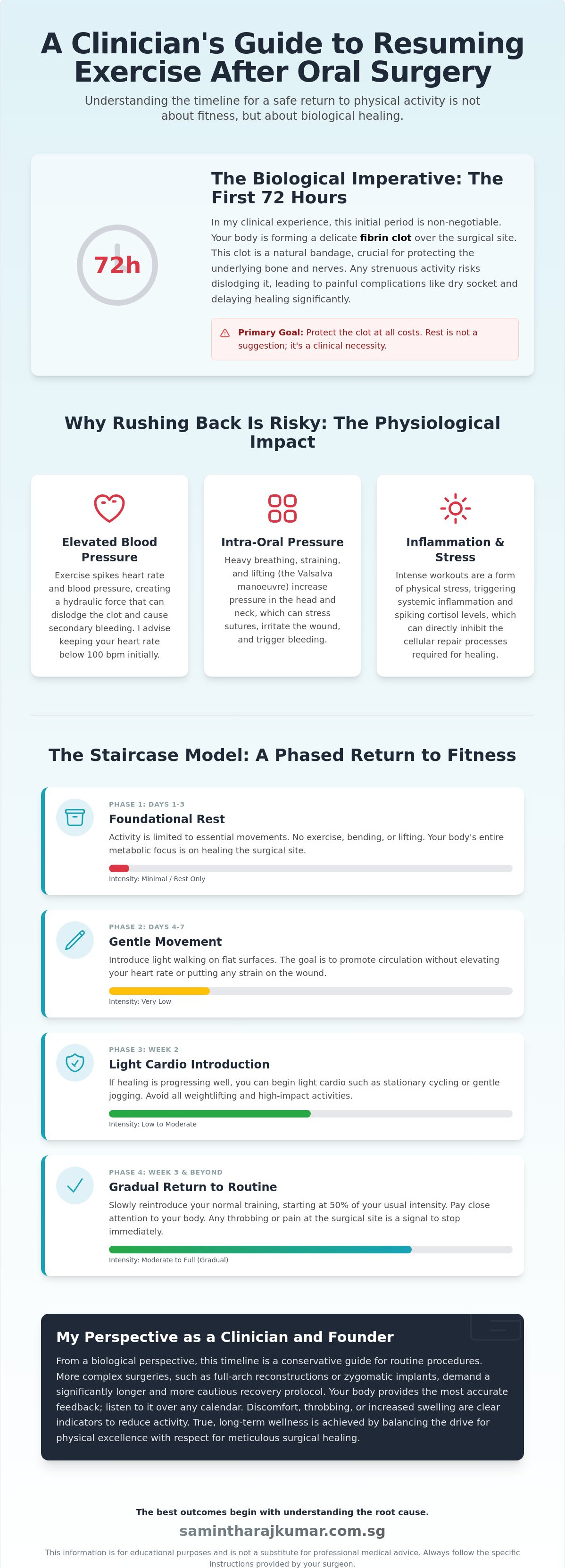
For minor procedures, the guidelines for resuming activity follow a predictable trajectory. In my clinical experience, following this phased approach ensures the most comfortable outcome:
Days 1-3: Absolute rest is mandatory. Limit yourself to light walking around the home to maintain circulation without elevating your heart rate.
Days 4-7: You may begin low-impact activities. Gentle stretching or slow-paced walking is typically appropriate if your swelling has started to subside.
Day 7+: A gradual return to normal routines is usually safe. If you experience any throbbing or discomfort, it's a sign to scale back immediately.
Timeline for Dental Implants and Complex Rehabilitations
Complex cases, such as the teeth in a day procedure, demand a higher degree of patience. For multi-unit implant cases, 7 to 10 days of rest is often necessary to ensure osseointegration begins undisturbed. When patients ask when can I resume exercise after oral surgery involving implants, I highlight the hidden risk of micro-movements. During heavy lifting, many people instinctively clench their jaw. This clenching can transmit significant force to the fresh implant sites, potentially disrupting the early stages of bone-to-metal bonding. To protect your investment and ensure functional excellence, I recommend avoiding heavy resistance training for at least two weeks following complex reconstructions.
A Phased Approach to Resuming Your Fitness Routine
In my clinical experience, the transition from total rest to physical activity must be intentional and measured. I recommend a "staircase" model to ensure the body and the surgical site aren't overwhelmed by sudden physiological changes. As you reintroduce movement, your metabolic demand increases. This means your hydration and nutrition must be impeccable to support both your workout and the ongoing tissue synthesis at the wound site. If you're wondering when can I resume exercise after oral surgery, the answer depends on how well you navigate these progressive stages.
Phase 1: Low-Impact and Flexibility (Days 4–7)
During this initial window, your focus should remain on walking and light mobility work. If you're a yoga enthusiast, it's vital to avoid any posture where the head is below the heart. Inversions can cause blood to rush to the face, which increases pressure on sutured areas and may lead to discomfort or swelling. I also advise against swimming at this stage. Even treated pool water contains bacteria that can irritate a healing surgical site, and the physical exertion of treading water can be more taxing than it appears.
Phase 2: Moderate Resistance and Cardio (Days 7–14)
Once you've passed the first week without complications, you can introduce stationary cycling or light resistance bands. The goal here is to maintain a heart rate below 60 or 70% of your maximum. I still recommend avoiding high-impact cardio like running or jumping. The mechanical jarring of the jaw during these activities can be uncomfortable and may disturb the early stages of bone healing. If you feel a rhythmic throbbing at the surgical site, it's a clear sign your heart rate is too high for your current state of recovery.
Phase 3: Full Return to Intensity (Post-Day 14)
Most patients can resume heavy weightlifting and HIIT after two weeks, provided there's no lingering discomfort or swelling. For those involved in contact sports, a custom-fitted mouthguard is an absolute necessity to protect the surgical area from external trauma. Patient compliance during this transition is particularly crucial for the long-term success of complex procedures like all-on-4 dental implants. Identifying "Stop Signals" is vital; if you experience sharp pain or renewed bleeding, stop immediately. The best outcomes begin with understanding the root cause of any post-operative discomfort before pushing your physical limits.
My Perspective: Balancing Total Body Wellness with Surgical Recovery
As a clinician and founder, I've spent my career observing the intersection of physical vitality and oral health. Many of my patients are high-performers who view their daily workout as non-negotiable. I appreciate this discipline. However, when patients ask when can I resume exercise after oral surgery, I often find myself acting as a mentor as much as a surgeon. I view the post-surgical phase not as a period of "doing nothing," but as a high-stakes biological event where your body is the lead architect. From a biological perspective, your systemic resources are limited. If you spend those resources on a treadmill, you're essentially taking them away from the complex cellular work occurring in your jaw.
In my clinical experience, the long-term integrity of a dental implant or a complex bone graft far outweighs the benefit of a few days of intense cardio. I often tell my patients that surgery is a temporary pause to ensure a lifetime of functional excellence. We're not just fixing a tooth; we're restoring a legacy of health and confidence. When we determine when can I resume exercise after oral surgery, we're making a strategic decision based on your unique healing rate. To support this, I recommend shifting your focus to nutrition. A diet rich in micronutrients and lean proteins can act as a metabolic substitute for the "high" you get from exercise, providing the fuel your body needs for tissue synthesis without the risk of haemorrhage.
The Psychological Component of Recovery
I'm deeply aware of the anxiety that can accompany forced inactivity. For many, exercise is a tool for mental clarity. I encourage you to reframe this period as an active part of your rehabilitation programme. Rest is a clinical requirement, not a sign of weakness. This is a time for restorative practices, such as meditation or light stretching, which maintain your mental focus without elevating your heart rate above safe thresholds. By respecting this boundary, you're actively participating in the success of your surgical outcome and ensuring your body has the space it needs to rebuild.
Founder Philosophy: Institutional Standards of Care
At Nuffield Dental, my vision has always been to bring international protocols and global standards to every patient journey. This commitment to excellence doesn't end when you leave the operating theatre. Our post-operative instructions are designed to be a comprehensive roadmap for restoration. As a founder, I've built an institution that prioritises long-term thinking over immediate gratification. We're focused on the future of care, where technology and biological understanding meet to produce transformative results. The best outcomes begin with understanding the root cause of the body’s needs.
Securing the Legacy of Your Functional Restoration
Understanding when can I resume exercise after oral surgery is a vital component of your broader rehabilitation journey. As a clinician and founder of Nuffield Dental, I've seen that the most successful restorations are those where the patient views rest as an active clinical requirement. By respecting the biological stability of the fibrin clot and following a phased staircase return to fitness, you protect the long-term integrity of your treatment. Whether you've received simple extractions or complex Zygomatic and All-on-4 protocols, your patience during the first fourteen days is an investment in functional excellence.
My commitment to global standards of clinical excellence ensures that every aspect of your care is grounded in meticulous science. We aren't just managing a recovery; we're building the foundation for your long-term well-being and confidence. The best outcomes begin with understanding the root cause; consult with Dr Kumar today. Trust in the process of healing. Your strength will return, and when it does, it will be supported by a healthy, fully restored smile that lasts a lifetime.
Frequently Asked Questions
Can I go for a walk the day after oral surgery?
Yes, light walking around your home or on flat ground is actually beneficial for circulation. However, you should avoid power walking or any incline that significantly raises your heart rate. In my clinical experience, gentle movement helps prevent stiffness, provided you remain within a low-intensity threshold during the first 24 hours. If you feel lightheaded or notice any throbbing, you should return to rest immediately.
Why does my jaw throb when I bend over or lift something?
Throbbing occurs because bending over increases the blood pressure in your head, creating a hydraulic force against the surgical site. This sensation is a warning that the blood vessels are under too much strain. From a biological perspective, this pressure can dislodge the fibrin clot, so it's essential to keep your head elevated. Avoid heavy lifting during the initial recovery phase to prevent secondary haemorrhage.
Is it safe to do yoga or Pilates after a tooth extraction?
You should wait at least three to four days before attempting gentle yoga or Pilates. It's crucial to avoid any "head-down" positions or inversions, as these direct blood flow towards the jaw. When considering when can I resume exercise after oral surgery, I recommend focusing on seated or standing poses that keep your heart below your head. This ensures the wound remains undisturbed during the early proliferative phase of healing.
When can I start lifting heavy weights after getting a dental implant?
I generally advise waiting 10 to 14 days before returning to heavy resistance training. Lifting heavy weights often leads to involuntary jaw clenching, which can transmit micro-vibrations to the implant site. These movements can disrupt the early stages of osseointegration. As a clinician and founder, I prioritise the long-term success of your implant over an early return to the gym, ensuring the metal-to-bone bond remains stable.
Does exercise affect the success rate of bone grafting?
Yes, premature exercise can negatively impact the success of a bone graft. Grafting material requires a completely still environment to vascularise and integrate with your existing bone. Mechanical jarring from running or high-impact aerobics can cause the graft to shift or fail to bond properly. I recommend a more conservative rest period of at least two weeks for these specific procedures to ensure functional excellence.
What should I do if my surgical site starts bleeding during exercise?
Stop your activity immediately and apply firm, steady pressure to the site using a clean piece of damp gauze. Sit upright to lower your blood pressure and remain still for at least 30 minutes. If the bleeding doesn't subside or if it becomes heavy, you must contact your surgeon. In my clinical experience, persistent bleeding during exertion is a clear sign that the site hasn't yet reached sufficient biological stability.
Can I swim after oral surgery if I keep my head above water?
I recommend avoiding swimming for at least seven days, even if you keep your head above the water. Swimming is a full-body cardiovascular activity that raises your heart rate more than you might realise. Additionally, pool water contains bacteria and chemicals that can irritate the surgical site if splashed. To ensure a safe outcome, it's best to wait until the soft tissue has closed significantly before entering a pool.
How does smoking combined with exercise affect my recovery?
Combining smoking with exercise creates a significant risk for healing complications. Smoking causes vasoconstriction, which reduces oxygen delivery to the wound, while exercise increases the body's demand for that same oxygen. This deprivation significantly increases the risk of dry socket and infection. When determining when can I resume exercise after oral surgery, I urge patients to abstain from smoking to protect the biological integrity of the healing site.


Comments