
Who is a Candidate for Zygomatic Implants? A Specialist Surgeon’s Perspective (2026)
- Dr Samintharaj Kumar

- Jul 12
- 12 min read
Being told you lack the bone structure for dental implants is no longer the final word on your oral health. In my clinical experience, many patients arrive at my practice feeling exhausted by unstable dentures or the daunting prospect of multi-stage bone grafting surgeries. You might feel that your options have simply run out, particularly if you've experienced the frustration of failed traditional implants. Understanding who is a candidate for zygomatic implants is the first step toward moving past these limitations and reclaiming a functional, fixed smile.
As a clinician and founder, I believe in providing solutions that bypass the trauma of extensive grafting. From a biological perspective, we can utilise the dense zygomatic bone to provide immediate stability for a full bridge, often in a single day. This article explores the specific clinical criteria for this graft-free protocol, the latest 2026 surgical advancements, and what you can realistically expect from the restoration process. We'll look at how this specialist approach avoids the need for sinus lifts while restoring your facial structure and the simple joy of eating without worry.
Table of Contents
Understanding Severe Maxillary Atrophy: The Primary Indicator for Candidacy
The Biological Foundation: Why the Zygoma Bone is a Specialist's Choice
Zygomatic Implants vs. Traditional Protocols: A Candidacy Comparison
Clinical Criteria: Identifying the Ideal Candidate for Zygomatic Protocols
My Perspective: Total Rehabilitation and the Impact on Quality of Life
Understanding Severe Maxillary Atrophy: The Primary Indicator for Candidacy
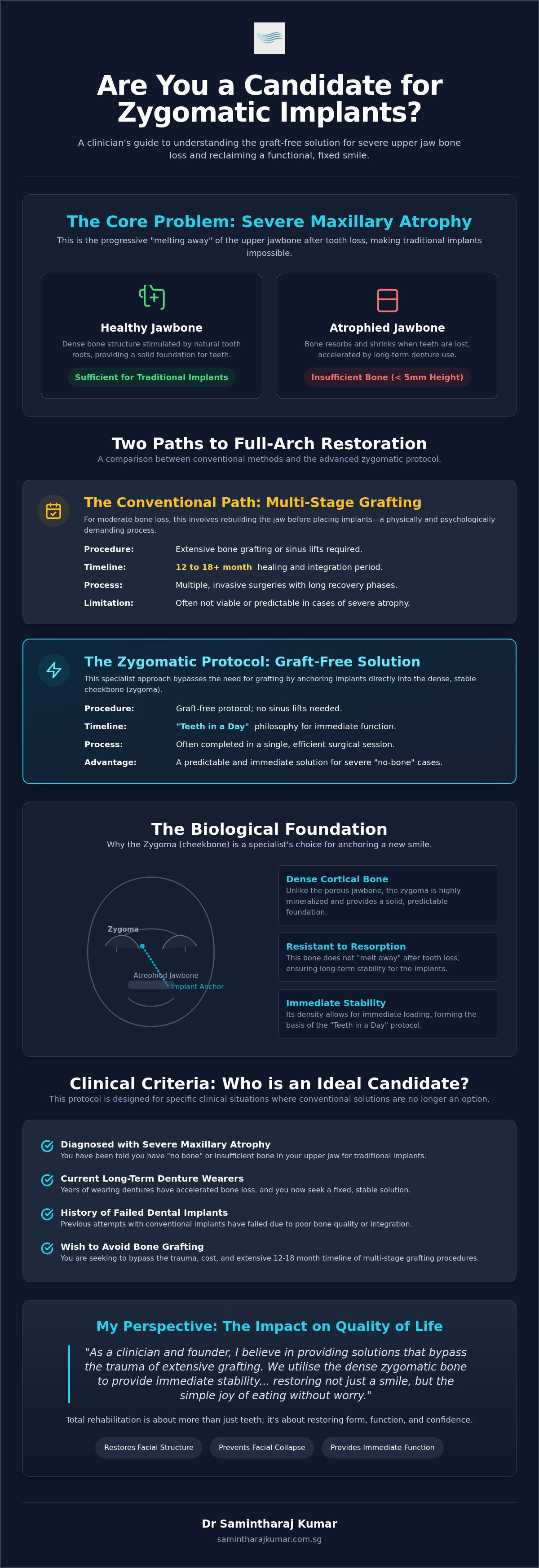
In my clinical experience, the journey toward determining who is a candidate for zygomatic implants begins with a precise assessment of the alveolar bone, the portion of the jaw that holds your teeth. When teeth are lost, the body initiates a process known as maxillary atrophy. This is the progressive depletion of upper jawbone density and volume. It isn't merely a dental concern; it's a physiological "melting away" of the bone structure that once supported your smile.
To better understand this concept and how it relates to your eligibility, watch this helpful video:
The Science of Bone Resorption
From a biological perspective, bone is a "use it or lose it" tissue. Natural tooth roots provide mechanical stimulation that signals the body to keep the jawbone dense and strong. Once those teeth are removed, that signal disappears, and the bone begins to shrink. This resorption is often significantly accelerated by long-term denture wear. While dentures restore the appearance of teeth, they sit on top of the gums and don't provide internal stimulation. Over years or decades, the jaw can reach a "no-bone" scenario where standard implants simply cannot be stabilised. Traditional implants typically require at least 5 to 8mm of bone height to be successful. When you fall below this threshold, you enter the territory of "terminal dentition," where conventional dentistry no longer offers a predictable foundation.
Why Traditional Bone Grafting May Not Be the Answer
For many years, the only solution for severe bone loss was extensive bone grafting or complex sinus lifts. These procedures involve harvesting bone from other parts of your body or using donor materials to rebuild the ridge. While these methods work for moderate loss, they have clear limitations in severe cases. As a clinician and founder, I've observed the physical and psychological toll of these multi-stage surgeries. Patients often endure a grueling 12 to 18 month healing period before they receive their final teeth.
This is why the Zygoma implant has become such a vital tool in modern oral rehabilitation. Instead of spending over a year building bone that may or may not successfully integrate, we anchor the implants into the dense, stable zygomatic bone of the cheeks. This specialist approach is essential for preventing facial collapse with dental implants, as it immediately restores the structural support required to maintain a natural face shape. The right diagnosis at this stage changes the entire trajectory of your care.
The Biological Foundation: Why the Zygoma Bone is a Specialist's Choice
From a biological perspective, we look beyond the traditional confines of the jaw to the zygomatic arch, commonly known as the cheekbone. This shift in focus is what makes total rehabilitation possible for those who have been told they have "no bone left." The zygoma bone is predominantly cortical bone; it is dense, highly mineralised, and exceptionally resistant to the resorption that plagues the jawbone. While the upper jaw (maxilla) is often cancellous and porous, the zygoma provides a solid, predictable foundation that can support significant mechanical loads.
In my clinical experience, determining who is a candidate for zygomatic implants involves assessing the quality of this malar bone structure. A Systematic Review on Zygomatic Implant Indications confirms that the dense nature of this bone is the primary reason for the high survival rates we see in complex cases. By utilising a tilted implant design, we can achieve superior load distribution across the midface. This mechanical advantage allows us to bypass the maxillary sinus entirely, avoiding the complications often associated with traditional grafting and sinus lifts.
Anatomy of the Zygomatic Arch
Differentiating between the alveolar process and the malar bone structure is vital for patient understanding. The alveolar bone is functional bone; it exists to hold teeth and begins to shrink the moment those teeth are lost. In contrast, the zygomatic bone is a structural component of the skull. It remains robust and intact even when the jawbone has completely atrophied. The zygomatic bone serves as a permanent anchor for oral rehabilitation.
Immediate Loading and Osseointegration
The inherent density of the zygoma allows for a teeth in a day procedure explained through the concept of immediate loading. Because the implant achieves high primary stability upon placement, we don't have to wait months for bone to grow around it before attaching a functional bridge. Osseointegration still occurs over the following weeks, but the initial mechanical "lock" is strong enough to support a new smile immediately. This biological efficiency is a hallmark of the modern zygomatic protocol.
As a clinician and founder, I've seen how this biological approach changes the lives of patients who felt their situation was hopeless. Understanding the science behind your treatment is the first step toward a predictable, long-term outcome. The best outcomes begin with understanding the root cause.
Zygomatic Implants vs. Traditional Protocols: A Candidacy Comparison
As a clinician and founder, I often find myself at the crossroads of these two paths with my patients. Choosing between traditional grafting and a zygomatic protocol isn't just about surgical preference; it's about weighing the total surgical burden against the desired quality of life. Traditional protocols are fundamentally "bone-driven." We spend months, sometimes years, attempting to build a foundation where none exists. This often involves two or three separate surgeries and a healing period that can exceed 12 months. In contrast, the zygomatic approach is "prosthetically-driven." We focus on the final result, the teeth, and utilise the existing zygomatic architecture to support that outcome immediately.
Understanding who is a candidate for zygomatic implants involves a realistic comparison of these timelines. If you are seeking a solution that bypasses the variable success of autogenous bone grafts, the zygomatic route offers a more predictable, single-stage alternative. It moves the conversation from "can we grow enough bone?" to "how quickly can we restore your function?"
Evaluating the Surgical Burden
The difference in recovery times is stark. Traditional grafting requires the body to heal and integrate donor bone before an implant is even placed, which can take six to nine months. Zygomatic protocols allow for immediate loading, meaning you often leave the clinic with functional teeth on the same day. By reducing the number of surgical sites, we minimise patient trauma and the risk of infection. In many complex cases, all on 4 dental implants are combined with zygomatic anchors to create a hybrid bridge that offers maximum stability with minimal biological cost.
Success Rates and Long-term Predictability
The clinical data supporting this approach is robust. Systematic reviews of studies published between 2015 and 2025 show a consistent implant survival rate of 94% to 99% over follow-up periods longer than five years. In specialised centres, these rates often sit comfortably above 97%. However, candidacy is still influenced by systemic health. Factors such as heavy smoking or uncontrolled diabetes can impact the healing process and must be managed carefully. As a surgeon, my role is to ensure that the prosthetic design accounts for these variables, providing long-term stability even in the most challenging biological environments. The right diagnosis changes everything, ensuring that we choose the path that offers the highest predictability for your specific anatomy.
Clinical Criteria: Identifying the Ideal Candidate for Zygomatic Protocols
Identifying who is a candidate for zygomatic implants is a meticulous clinical process that goes far beyond a simple visual examination. In my clinical experience, candidacy is defined by specific anatomical classifications of bone loss. We primarily look for patients presenting with Cawood and Howell Class V or VI atrophy. These classifications represent the most severe stages of maxillary resorption, where the upper jaw has flattened or become concave, leaving no room for traditional implant placement. For these individuals, the zygomatic protocol isn't just an option; it's often the only predictable path to total rehabilitation.
Beyond bone volume, we evaluate the history of previous dental interventions. Candidates often include those who have experienced failed sinus lifts or traditional implant clusters that didn't achieve long-term stability. If you've been told you are a "dental cripple" due to these failures, you may still be an ideal candidate for this advanced approach. The goal is to provide a definitive solution that bypasses the need for further bone grafting delays, fulfilling the desire for a "Teeth in a Day" outcome.
AI-Assisted Diagnostics in Candidacy
As a clinician and founder, I've integrated AI-assisted diagnostics to remove the guesswork from the planning phase. We use high-resolution CBCT scans combined with AI algorithms to map bone density within the zygomatic arch with pinpoint accuracy. This allows us to perform 3D surgical planning, visualising the exact trajectory of each implant before the first incision is ever made. The sheer complexity of these cases necessitates the eye of a dental implant singapore specialist who can navigate both the digital and biological landscapes to ensure safety and precision.
The "Failed Implant" Rescue
Zygomatic implants serve as the gold standard for rescuing cases where traditional dentistry has reached its limit. Managing patient expectations during this transition is vital. Many arrive at my practice feeling a sense of hopelessness after years of unsuccessful treatments. Moving from failed traditional work to a zygomatic anchor provides more than just functional stability; it offers immense psychological relief. Finding a definitive surgical solution allows patients to move past the trauma of repeated failures. If you are ready to explore a permanent foundation, the right diagnosis begins with an expert consultation.
Finally, we must ensure systemic health is prioritised. Ideal candidates should be free from acute sinus pathology and have stable medical conditions that support healthy healing. From a biological perspective, ensuring the body is prepared for osseointegration is just as important as the surgical technique itself. When these clinical criteria meet expert execution, the results are life-changing.
My Perspective: Total Rehabilitation and the Impact on Quality of Life
As a clinician and founder, I view zygomatic implants through a lens that extends far beyond the operating theatre. To me, these are not just titanium components; they are tools for profound personal transformation. When we determine who is a candidate for zygomatic implants, we aren't merely checking boxes on a diagnostic list. We're identifying individuals who have been sidelined by their oral health and offering them a pathway back to a life of dignity. In my clinical experience, the restoration of the ability to eat, speak, and smile without hesitation is one of the most rewarding outcomes of modern medicine.
From a biological perspective, the consequences of inaction are severe. Allowing maxillary atrophy to progress without intervention leads to a hollowing of the cheeks and a premature ageing of the face. My treatment philosophy has always been where biological integrity meets high-tech execution. We respect the body’s natural architecture while using the latest innovations to bypass its limitations. This approach ensures that the impact is not just functional but deeply emotional, restoring self-esteem and social confidence for years to come. The goal is to provide a foundation that lasts a lifetime.
Beyond the Surgery: Functional Aesthetics
Zygomatic support does more than hold a bridge; it restores mid-face projection and provides essential lip support. This is where the synergy between cosmetic dentistry singapore and structural oral surgery becomes evident. We aren't just placing teeth; we're rebuilding the scaffolding of the face. As a clinician and founder, I also see this as a form of nation-building. In Singapore, as our population ages, providing high-tier, reliable solutions for complex bone loss is essential for maintaining the quality of life for our seniors. It is about building an ecosystem of care that values longevity and technical excellence.
The Patient Journey: What to Expect
The journey begins with a measured, comprehensive consultation where we absorb your history and concerns at a comfortable pace. Using our established international protocols, we move from AI-assisted diagnostics to a meticulously planned surgical day. Recovery is swifter than most expect, guided by our institutional heritage of patient-centred care. You aren't just undergoing a procedure; you're entering a partnership dedicated to your long-term well-being. This steady, rhythmic approach replaces anxiety with the confidence that you're in capable, experienced hands. We prioritise your comfort and long-term health at every stage of the rehabilitative process.
The best outcomes begin with understanding the root cause.
The Path to Permanent Restoration
In my clinical experience, the transition from terminal dentition to a stable, functional smile is a journey of both science and empathy. We've explored how severe bone loss no longer necessitates months of painful grafting. The dense architecture of the zygoma provides a biological anchor that traditional methods simply cannot match. Understanding who is a candidate for zygomatic implants is about recognising that even the most complex "no-bone" scenarios have a definitive, predictable solution.
As a clinician and founder, I'm committed to maintaining global standards of care through Nuffield Dental. By utilising AI-assisted diagnostics and specialist expertise in zygomatic and pterygoid systems, we ensure that every patient's journey is precise, safe, and life-changing. The right diagnosis changes everything. Explore the possibilities of total rehabilitation with Dr Samintharaj Kumar.
The best outcomes begin with understanding the root cause. I look forward to helping you rediscover the confidence of a permanent, fixed smile and the functional excellence you deserve.
Frequently Asked Questions
Can I get zygomatic implants if I have osteoporosis?
Yes, patients with osteoporosis are often excellent candidates for this procedure. Osteoporosis typically impacts the cancellous bone of the jaw more severely than the dense cortical bone of the zygoma. In my clinical experience, this resilient cheekbone structure often remains a viable anchor even when the jaw has thinned significantly. We carefully review your medical history and bone density scans to ensure the protocol is safe for your specific biological profile.
What is the recovery time for a zygomatic implant procedure?
You can expect the initial surgical recovery to last between 7 and 14 days. While you'll leave the clinic with functional teeth on the same day, minor swelling and bruising around the cheeks are normal. I advise a soft food diet for the first few weeks to allow the implants to integrate undisturbed. Most patients return to their regular social routines and work within a single week.
Are zygomatic implants more painful than traditional dental implants?
The perceived discomfort is comparable to traditional implants, especially since we perform these surgeries under IV sedation or general anaesthesia. You won't feel anything during the process itself. Post-operative discomfort is managed effectively with prescribed medication and cooling packs. From a biological perspective, the precise, AI-planned approach we use at Nuffield Dental actually helps facilitate a smoother and more predictable healing phase.
How long do zygomatic dental implants typically last?
These implants are designed to be a lifelong solution for total oral rehabilitation. Clinical data from 2025 and 2026 shows survival rates between 94% and 99% over long-term follow-up periods. Their longevity depends heavily on meticulous oral hygiene and regular professional maintenance. Just like natural teeth, they require care to prevent biological complications like sinusitis. Regular check-ups ensure the prosthetic remains stable and functional for decades.
What happens if a zygomatic implant fails?
If an implant fails to integrate, it is removed, and we allow the site to heal before reassessing the foundation. In my practice, failure is exceptionally rare, often occurring in less than 3% of cases. We can usually implement a "rescue" protocol using an alternative trajectory or a different implant system to ensure you still achieve a fixed result. The right diagnosis at this stage allows us to pivot effectively.
Do I need to be under general anaesthesia for the surgery?
I generally recommend IV sedation or general anaesthesia for this specific protocol to ensure maximum patient comfort. Because the surgery involves anchoring into the cheekbone, it's vital that you're completely relaxed and still. This allows me to work with the high level of precision required for a successful outcome. Our anaesthetists follow strict international safety protocols to ensure your well-being throughout the entire session.
Can zygomatic implants be used for both the upper and lower jaw?
No, these implants are used exclusively for the upper jaw. The term "zygomatic" refers specifically to the cheekbone, which only exists in the mid-face. If you have severe bone loss in the lower jaw, we typically utilise traditional dental implants or All-on-4 protocols. Determining who is a candidate for zygomatic implants always involves a focus on the maxilla where traditional bone volume is insufficient.
Is there an age limit for becoming a candidate for zygomatic implants?
There is no strict upper age limit for this procedure. I've successfully treated many patients in their 70s and 80s who wanted to move away from the frustration of unstable dentures. Identifying who is a candidate for zygomatic implants is more about your overall systemic health and bone structure than the year you were born. As long as you're fit for the surgical process, age isn't a barrier to restoration.


Comments