
Achieving a Natural-Looking Smile Makeover: A Thoughtful Step-by-Step Guide

Updated: 4 days ago
What if a smile makeover didn’t mean making every tooth look perfectly identical? For many people, the concern isn’t simply whether their smile can change, but whether it will still feel like their own. Achieving a natural looking smile makeover begins with that personal question, not a template for a perfect smile.
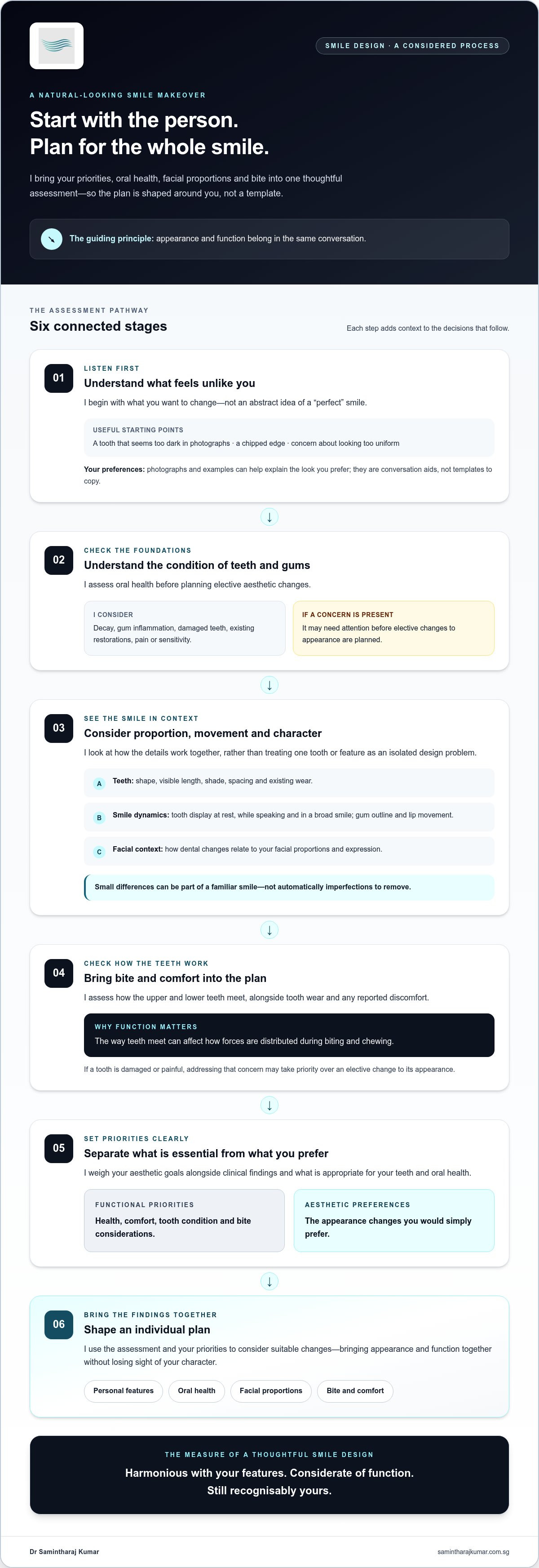
In my clinical experience, a harmonious result comes from considering the whole person. Tooth shape and shade matter, but so do facial proportions, how the lips move and how the teeth meet when you bite. Subtle differences can preserve character, while careful functional planning helps ensure that appearance-led changes don’t overlook comfort and oral health.
In this guide, I’ll explain what can make a smile look balanced rather than artificial, how different treatments address different concerns and what a thoughtful assessment involves. I’ll also explore why I consider aesthetic goals alongside bite function and long-term wellbeing. The aim is not to create someone else’s smile, but to consider changes that feel naturally yours.
Table of Contents
What makes a smile makeover look natural rather than artificial?
Wanting to improve your smile while still recognising yourself is a reasonable concern. A natural-looking result isn’t a row of identical teeth or a shade chosen simply to stand out. It is a smile that feels in proportion to your features and preserves details that give it character. In my clinical experience, the most useful starting point is not an abstract idea of perfection, but what feels right for you.
Tooth colour and shape matter, but neither tells the whole story. I also consider how much tooth shows when you speak and smile, the outline of the gums, how the lips frame the teeth and how these elements relate to your facial proportions. A smile makeover is part of cosmetic dentistry, a broad field described in this Cosmetic Dentistry Overview. Choosing what suits you, however, calls for individual assessment.
For a visual introduction to natural-looking smile design, you can watch this video:
Which details influence the character of a smile?
Tooth shape can feel soft, angular or somewhere between. Visible tooth length affects how prominent the smile appears, while colour is not simply a matter of choosing the lightest shade. A shade that sits comfortably with your features may look more believable than one that draws attention to itself. Spacing matters too: small gaps or slight differences can be part of a familiar smile, not automatically imperfections to remove.
Gum display and lip movement influence the overall impression. The teeth seen at rest may differ from those visible in a broad smile or during speech. I assess these features together rather than treating one tooth, the gum line or the shade as an isolated design problem. Harmonious smile design respects proportion and personal character; artificially perfect teeth make uniformity the goal.
How do personal preferences guide smile design?
Instead of asking for a perfect smile, try describing what feels unlike you now. Perhaps your teeth seem too dark in photographs, a chipped edge catches your eye, or you worry that a change could make your smile look too uniform. These observations give me a more practical starting point than a general request to look better.
Photographs or specific examples can help explain the shapes, shades or overall feel you prefer. They are conversation aids, not templates to copy. I consider your preferences alongside clinical findings and what is appropriate for your teeth and oral health. Achieving a natural looking smile makeover means finding that balance: a plan should support your appearance without losing sight of your individual needs.
Why oral health, facial proportions and bite matter in smile design
A smile makeover should begin with a clear understanding of the teeth and gums that will support it. If there is untreated decay, gum inflammation, a damaged tooth or discomfort, these concerns may need attention before elective aesthetic changes are planned. Starting with appearance alone risks overlooking conditions that affect what can be done and in what order.
In my clinical experience, a careful assessment brings together oral health, existing dental work, tooth condition, bite and your priorities. A filling, crown or other restoration can influence how a tooth looks and functions. Tooth wear may also change the visible shape of teeth and prompt me to consider how the bite is working before discussing aesthetic options.
What should a clinical smile assessment consider?
I look beyond what is visible in a photograph. The assessment includes the condition of the teeth and gums, existing restorations, any reported pain or sensitivity, and the way the upper and lower teeth meet. I also listen to what you want to change, since the same visible concern can mean different things to different people.
Function matters in practical ways. The way teeth meet can affect how forces are distributed during biting and chewing. If a tooth is damaged or painful, addressing that concern may take priority over an elective change to its appearance. A considered smile plan brings appearance and function together, because a result should look harmonious while respecting the health and use of the teeth.
How can facial proportions guide natural-looking choices?
Tooth display is dynamic. The amount of tooth visible changes with the lips, the position of the mouth and facial expression. The gum line frames the smile, while facial proportions help guide how dental changes may be perceived as a whole. I don’t apply one measurement or template to every face; proportion is assessed in the context of the individual.
This broader perspective is useful when a concern seems to involve more than the teeth alone. For deeper context on the relationship between dental structure and facial appearance, read how dental structure affects face shape. This helps explain why facial context belongs in the discussion, without suggesting there is one ideal facial proportion to pursue.
Achieving a natural looking smile makeover means planning around the person and the clinical picture, not treating each feature as a separate design problem. A discussion about your priorities and oral health can help clarify what should guide the plan. I begin with a personalised smile makeover assessment, where appearance and function can be considered together.
How do smile makeover treatments compare for different concerns?
The right approach depends on what you want to change and what I find when I assess your teeth, gums and bite. A treatment that addresses a colour concern won’t repair structural damage, while restorative care may be unnecessary for a small cosmetic detail. I compare options by their purpose and clinical considerations, rather than ranking one approach as universally best.
The overview below is a starting point for discussion, not a substitute for individual assessment. The same concern can have different causes, and existing dental work or oral health may affect which options are suitable.
Which approaches may address colour, shape or minor damage?
Whitening may be considered when the concern is tooth colour and the teeth are suitable for it. Existing fillings, crowns or other restorations don’t necessarily change shade in the same way as natural teeth, so this needs to be factored into planning. Bonding may be discussed for a localised change, such as a small chip, while veneers may be considered when exploring changes to visible tooth shape or surface. These aren’t automatic recommendations. I discuss what each approach involves, including tooth preparation where relevant, and how ongoing care may differ.
When might restorative or replacement planning be relevant?
A damaged or missing tooth may need more than an appearance-led solution. If chewing or the way teeth meet is also affected, the plan may extend into restorative care or full-mouth rehabilitation, rather than a makeover focused mainly on visible features. My clinical perspective on cosmetic dentistry and functional aesthetics explores this connection further.
Achieving a natural looking smile makeover means choosing an approach that fits the concern, clinical findings and personal goals, without assuming that every tooth needs treatment. A personalised smile makeover discussion can help clarify the options and priorities.
How to Prepare for Your Ideal Smile Makeover Plan
A useful planning conversation starts before treatment options are discussed. Organising what you notice, what matters most and what you want to understand can help me build a clearer picture of your priorities. It also makes it easier to distinguish a functional concern that may need attention from an aesthetic preference you’d like to explore.
What should you bring into the first planning conversation?
You don’t need technical language or a fixed idea of treatment. A few notes about what you notice and what you hope will feel different are enough to begin. Mention previous dental work and relevant medical or dental history, as these details help inform a clinically appropriate discussion.
Use this simple sequence to prepare:
Record your concerns. Note what draws your attention, such as a chipped edge, uneven colour or a feeling that your smile has changed. Be as specific as you can.
Separate function from appearance. Identify issues such as pain, difficulty chewing or a damaged tooth separately from preferences such as a different shade or shape. Both deserve attention, but they may call for different priorities.
Describe your preferred degree of change. Consider whether you’re looking for a subtle adjustment or a more noticeable transformation. If a particular tooth shape or colour appeals to you, a photograph can help explain your preference.
Share relevant history. Tell me about previous dental treatment, current concerns and medical history that may be relevant. This gives important context for assessment and planning.
Keep questions visible. Write down anything you want clarified, including the purpose of each proposed step and what ongoing care could involve.
How can you assess a proposed plan thoughtfully?
A considered plan should make its reasoning understandable. I encourage you to ask how each recommendation relates to your concern, what alternatives may be relevant, and whether any clinical issue should be addressed first. You can also discuss what a proposed approach may involve, its limitations and how maintenance fits into everyday care.
Ask how the treatment sequence has been chosen. If a plan includes more than one type of care, it should be clear why one step comes before another and how the stages relate to your overall oral health. It’s also reasonable to ask what may be gained or compromised by different options. These conversations help ensure aesthetic preferences are considered alongside clinical judgement, rather than treated as instructions in isolation.
There isn’t one correct plan for every person. The value lies in understanding the choices and their rationale before deciding how to proceed. Achieving a natural looking smile makeover is collaborative: your priorities shape the discussion, while assessment helps determine what is appropriate. For further context on cosmetic dentistry and functional aesthetics, consider how appearance and oral function can inform the same plan.
Explore a personalised smile makeover plan to learn more about the approach.
My approach to achieving a natural-looking smile makeover
My philosophy has always been to understand the person before considering procedures. A smile makeover should reflect what matters to you, while being grounded in a careful assessment of your oral health and the way your teeth function. I begin by listening: what feels out of place, what change are you hoping for, and what would still feel recognisably yours?
That conversation helps me distinguish a clear aesthetic preference from a concern that may have a functional or restorative dimension. The aim isn’t to impose a predetermined look, but to make the reasoning behind each option clear before decisions are made.
How I balance aesthetic goals with clinical judgement
In my clinical experience, a preference for subtle change can be a valuable guide, but it doesn’t determine the treatment plan on its own. The least extensive option isn’t automatically right for every case. I consider the condition of the teeth, the bite, existing dental work and the goals we’ve discussed before weighing possible approaches.
My role is to explain how clinical findings relate to the options, including relevant considerations and limitations. You should be able to understand why a recommendation is being made and how it fits your priorities. Shared decisions work best when appearance matters, but not at the expense of function or a clear understanding of the care involved.
My experience in implantology and full-mouth rehabilitation informs planning when missing teeth, complex restorations or wider functional concerns are part of the picture. These areas aren’t automatically relevant to every smile makeover. I bring them into the discussion when the assessment indicates that broader restorative planning may be appropriate.
What patients can expect from personalised planning
I start with a discussion of your concerns and priorities, then carry out an assessment suited to the situation. From there, I explain the options and how the findings inform them. If more than one issue needs attention, the sequence depends on individual clinical findings and what we agree should take priority.
You can expect space to ask questions, consider alternatives and understand the reasoning behind the proposed steps. I also want the discussion to cover relevant maintenance and practical limitations, so the plan is considered beyond the initial aesthetic change. If something isn’t clear, I see that as a reason to explain it differently, not as a detail to leave unspoken.
For me, achieving a natural looking smile makeover is not about promising a particular appearance. It is about making considered decisions with a clear view of your goals, oral health and function. Confidence begins with understanding what a plan is designed to address and why. You can explore my smile makeover approach to learn more about personalised care.
Take the Next Step Towards a Smile That Feels Like Yours
The most meaningful starting point is not choosing a treatment. It is understanding what you hope to change, what you want to preserve and what you want to feel when you see your smile. With that clarity, achieving a natural looking smile makeover becomes a thoughtful process of making informed decisions, rather than pursuing an ideal that may not feel like you.
As founder and CEO of Nuffield Dental Holdings, I believe trust in healthcare begins with clear communication and considered decisions. My guiding principle is personal: aesthetic goals deserve to be explored with care, with your priorities at the centre of the conversation.
I provide smile makeover care grounded in personalised assessment and thoughtful planning. Explore Dr Samintharaj Kumar’s approach to smile makeovers and take the first step towards understanding your options. The right diagnosis changes everything.
Frequently Asked Questions
Can a smile makeover still look natural if I want noticeably whiter teeth?
Yes, noticeably whiter teeth can still suit your smile if the shade is chosen in relation to your features and dental work. I’d discuss how bright you want your teeth to appear and whether any crowns or fillings are visible, as these won’t lighten with whitening. If restorative treatment is also planned, the sequence matters: the shade of new work can be selected with your whitening goal in mind.
Is a smile makeover suitable if I have missing teeth?
It may be, but replacing a missing tooth involves more than matching its visible appearance. I’d assess the gap, the neighbouring teeth, your bite and the condition of the surrounding tissues before discussing possible restorative or tooth-replacement approaches. The cause and location of tooth loss can also influence planning. A personalised assessment helps establish whether your priorities are mainly aesthetic, functional or a combination of both.
Will a smile makeover change the way my face looks?
A smile makeover can change the way your face is perceived by changing what shows when you smile, but it shouldn’t be assumed to reshape your face. The effect depends on the changes planned and your individual features. I consider how your teeth relate to your lips and expression, including how your smile appears in conversation as well as in a posed photograph. The discussion should focus on realistic, relevant changes.
Does a natural-looking smile makeover mean treating every visible tooth?
No. Treatment can be limited to the teeth that are appropriate to address. A localised concern, for example, may call for a different plan from a broader difference in shade or wear. I also consider whether changing one tooth could create a noticeable mismatch with nearby teeth. The aim is to recommend only what supports the agreed goal and clinical findings, rather than expanding treatment simply because more teeth are visible.
Can I have a smile makeover if I already have crowns or fillings?
Yes, existing crowns and fillings don’t automatically rule out a smile makeover. I’d review their condition, position and appearance, and consider how they relate to the natural teeth around them. A restoration may be satisfactory and need no change, or it may affect the options for addressing a concern. The plan should take existing work into account rather than assume that every older restoration needs replacing.
Is a smile makeover only about cosmetic improvements?
No. A smile makeover can involve aesthetic aims, but assessment may also identify dental concerns that need attention. If you have pain, a damaged tooth or difficulty biting comfortably, those issues may affect what should happen first. In some cases, planning may need to consider broader restoration rather than appearance alone. I explain how the findings relate to the proposed care so you can understand its purpose.
How can I avoid choosing a smile design that does not suit me?
Describe what you want to change in everyday terms, such as wanting a softer tooth shape or a less prominent appearance, rather than relying only on a reference image. When planning for achieving a natural looking smile makeover, ask how a proposed change relates to your features and what its limitations may be. Take time to clarify anything you’re unsure about before agreeing to a plan; informed understanding helps keep decisions aligned with your preferences. Reputable practices, such as Manohar Dental Care, follow this principle by prioritizing personalized assessments so treatments complement each patient's individual smile.

Comments