
Types of sedation used in dentistry and how to choose

Sedation doesn’t always mean being asleep. The main types of sedation used in dentistry are nitrous oxide, oral sedation and intravenous (IV) sedation; general anaesthesia may be used in selected cases when a patient needs to be fully unconscious for treatment.
If dental treatment makes you feel tense, it’s understandable to wonder what sedation involves and whether you’ll remain aware. Sedation can ease anxiety and help you relax, while local anaesthetic numbs the area being treated to help prevent pain. They have different roles, and sedation does not automatically mean losing consciousness.
This article explains how nitrous oxide, oral and IV sedation differ, what general anaesthesia involves, and how clinicians consider the procedure, your health and your anxiety when planning care. You’ll also learn what sedation can and cannot do, helping you approach a treatment discussion with greater clarity.
Table of Contents
Do dentists ever use general anesthesia?
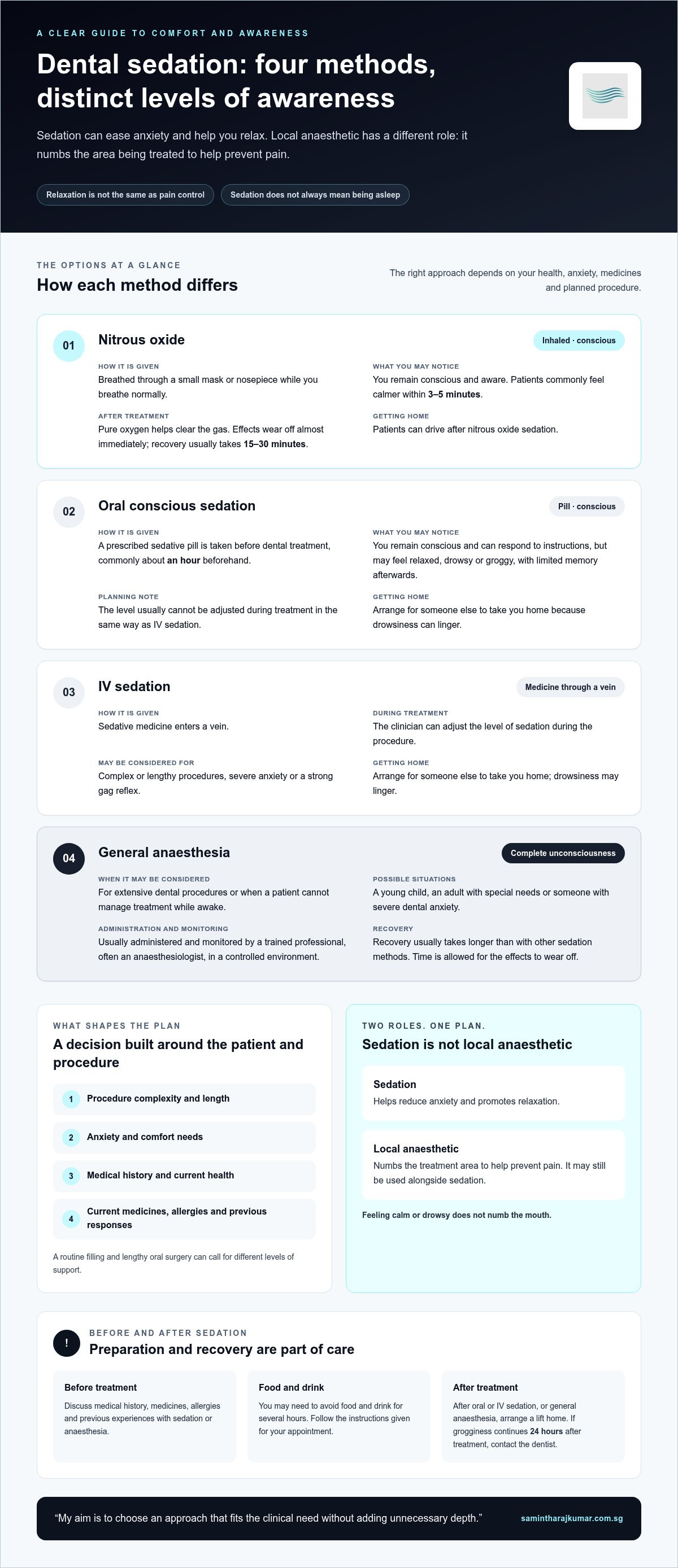
Yes. Dentists may use general anaesthesia for extensive dental procedures or when a patient cannot manage treatment while awake. It may be considered for a young child, an adult with special needs or someone with severe dental anxiety. General anaesthesia leaves the patient completely unconscious during the procedure. Understanding this distinction helps clarify the level of awareness involved in a treatment plan.
Conscious sedation is different. The patient remains awake, though less aware of treatment, and may not remember the procedure afterwards. Sedation ranges from mild relaxation to deep unconsciousness. With deep sedation, a patient may be difficult to wake until the medicine wears off, so clinicians closely monitor vital signs. This distinction matters because “sedation” can refer to different levels of awareness.
To understand what a lighter sedation option may feel like, watch this explanation of dental nitrous oxide:
General anaesthesia may involve inhaled gases, intravenous medicines or both. A trained professional, usually an anaesthesiologist, administers and monitors it in a controlled environment. This differs from laughing gas, or nitrous oxide, which is inhaled and typically allows the patient to remain conscious. The level of support and monitoring reflects the depth of unconsciousness.
Deep sedation and general anaesthesia are not interchangeable. Deep sedation can leave someone almost unconscious and difficult to awaken, while general anaesthesia produces complete unconsciousness. Both require close attention to vital signs. Recovery from general anaesthesia usually takes longer than recovery from other sedation methods, so the care plan allows time for its effects to wear off. Recovery is part of the overall treatment plan.
Sedation and local anaesthesia also have distinct roles. Sedation helps reduce anxiety and promotes relaxation; local anaesthetic, such as lidocaine, numbs the treatment area to help prevent pain. A patient may receive local anaesthetic during sedation, because feeling calm or drowsy does not numb the mouth. The planned procedure helps determine which approach is needed.
Before sedation, patients should discuss their medical history, current medicines, allergies and previous experiences with sedation or anaesthesia. They may need to avoid food and drink for several hours, following the instructions given for their appointment. After oral or IV sedation, or general anesthesia, arrange for someone to drive you home; drowsiness can linger. If grogginess continues 24 hours after treatment, contact the dentist.
Choosing The Right Sedation: Nitrous Oxide, Oral or IV?
Dentists consider your health, medicines, anxiety and planned procedure when selecting sedation. Starting with these factors helps match the method to the care required, rather than choosing based on sedation level alone. Nitrous oxide may suit mild anxiety or routine care, while oral or IV sedation may be considered for greater anxiety or more involved treatment.
Nitrous oxide, often called laughing gas, is inhaled through a small mask or nosepiece placed over the nose. You breathe normally as the gas takes effect. Patients commonly feel calmer within three to five minutes and remain conscious and aware during dental care. The clinician can adjust the amount inhaled during treatment.
After the procedure, the dentist gives you pure oxygen to help clear the nitrous oxide. Its effects wear off almost immediately, with recovery usually taking 15 to 30 minutes. Patients can drive after nitrous oxide sedation. I consider how quickly its effects clear when discussing whether this method fits a patient’s appointment and needs.
How the methods compare:
Nitrous oxide: inhaled through a mask, takes effect quickly, and suits patients who can remain conscious during treatment.
Oral sedation: taken as a pill before the appointment; it can leave you drowsy, and you may remember less of the procedure.
IV sedation: medicine enters a vein, allowing the clinician to adjust the level during treatment. It may suit complex or lengthy procedures, severe anxiety or a strong gag reflex.
Oral and IV sedation can cause lingering drowsiness, so patients need someone else to take them home. Local anaesthetic may still be used with any method to numb the treatment area. Sedation supports comfort, while local anaesthetic addresses pain.
How does a dentist choose? The decision takes into account the procedure’s complexity and length, your anxiety, medical history, current health, medicines and previous responses to sedation. A routine filling and lengthy oral surgery can call for different levels of support.
My aim is to choose an approach that fits the clinical need without adding unnecessary depth. A discussion of your health and treatment goals helps clarify the options. If you’re considering personalised dental treatment planning, include your comfort needs in the wider conversation about the procedure and recovery.
Oral conscious sedation
Oral sedation involves taking a prescribed sedative pill before dental treatment to reduce anxiety. Patients remain conscious and can respond to instructions, although they may feel relaxed, drowsy or groggy and have limited memory afterwards.
Triazolam and lorazepam are examples of benzodiazepines used for oral conscious sedation. The medicine and dose influence whether sedation is minimal or moderate. A minimal approach may involve one pill, while a larger dose may produce moderate sedation. These medicines are selected and managed as part of an individual treatment plan, not as a substitute for local anaesthetic.
Dentists commonly give oral sedation medication about an hour before a procedure. The medicine needs time to take effect, so its level usually cannot be adjusted during treatment in the same way as IV sedation. Patients should share their full medical history, current medicines, allergies and past reactions to sedation. These details can affect how the body responds.
What is oral sedation, and which medicines are used? It is a pill taken before dental treatment to reduce anxiety while the patient stays conscious. Triazolam and lorazepam are examples; the planned dose determines whether the effect is minimal or moderate.
Preparation matters. Patients may need to avoid food and drink for several hours before an appointment involving sedation, following the specific instructions provided for their care. Anyone feeling drowsy or groggy after oral sedation should have someone accompany them home. The effects can take time to wear off.
IV sedation is an option sometimes used for oral surgery. Medication enters the bloodstream through a vein, allowing the sedation level to be adjusted during treatment. Wisdom tooth extractions, dental implants and gum surgery are examples of procedures where IV sedation is commonly used. The choice reflects the procedure, anxiety level and health considerations.
Oral medication may suit patients with moderate dental anxiety or a longer procedure, while IV sedation can be considered for more complex or lengthy treatment. These methods are not interchangeable shortcuts. Oral sedation is taken before care and can leave the patient awake but less aware; IV medication enters the bloodstream directly and can be adjusted as treatment progresses.
The decision considers the relationship between comfort, awareness and the demands of the procedure. A patient’s medical conditions and medicines matter alongside anxiety and treatment length. Precision is important: the aim is to choose a level of sedation that supports the planned care while allowing for appropriate monitoring and recovery arrangements.
Benefits for dental anxiety and treatment planning
In the United States, sedation costs vary by method, procedure and monitoring needs; insurance coverage depends on policy terms and clinical circumstances. When discussing whether sedation may help, anxiety, health and planned treatment are considered together.
Sedation for Dental Anxiety and Comfort
Dental sedation can reduce anxiety and encourage relaxation, while local anaesthetic numbs the treatment area. Feeling calmer does not, by itself, prevent pain.
For example, a patient anxious about an implant procedure may discuss sedation alongside local anaesthetic. The appropriate level depends on the treatment’s complexity, expected length, medical history and current medicines. In my clinical experience, considering these factors together keeps the plan focused on the patient’s comfort and the needs of treatment.
Dental anxiety can make it harder to attend appointments or remain comfortable during care. A considered approach may help patients take part in treatment planning and proceed with care they have been postponing. Sedation is one possible support, not a replacement for explaining each stage or addressing the source of anxiety.
A plan described as a “same-day new smile” refers to a treatment pathway, not a sedation method. Dental implant planning and sedation planning are related decisions, but one does not automatically determine the other. The procedure, health factors and the patient’s comfort needs guide the discussion.
Patients Who May Benefit from Sedation
Patients who experience dental anxiety, have a strong gag reflex or face complex, lengthy treatment may benefit from discussing sedation options. The decision weighs both the person’s needs and the demands of treatment.
For instance, a short filling and extensive oral surgery place different demands on comfort and treatment planning. A clinician considers anxiety, overall health, medicines, allergies and previous experiences with sedation or anaesthesia. These details help determine whether sedation may support the procedure and which level is appropriate.
Dental sedation can also be considered for patients who find it difficult to tolerate treatment while fully alert. Deep sedation differs from lighter approaches and requires close monitoring of vital signs. The level of sedation should reflect the care required, rather than convenience alone.
In the United States, state dental boards regulate dental sedation, and many states require dentists to hold permits to perform it. Rules can therefore differ between states. Treatment planning should account for applicable state requirements, the patient’s health and the procedure being considered.
Insurance coverage depends on the individual policy and circumstances of care. The sedation method, procedure and monitoring needs are relevant factors in understanding the total cost. The central clinical question is whether sedation supports the patient’s ability to receive necessary dental treatment.
Definition and purpose of sedation dentistry
Dental sedation uses medication to reduce anxiety and help a patient tolerate dental care. It includes a range of approaches, from the relaxation associated with nitrous oxide to deeper levels that may make someone almost or fully unconscious. Its purpose is to support treatment, not replace local anaesthetic, which numbs the area being treated.
That distinction matters. A patient receiving nitrous oxide may remain conscious and responsive, while someone receiving general anaesthesia is unconscious during the procedure. Local anaesthetic addresses pain at the treatment site; sedation changes awareness and anxiety. For a filling, for example, comfort and the need to numb the tooth are separate parts of the plan.
The type of sedation is selected according to the procedure and the person receiving care. A routine filling differs from lengthy oral surgery, and a patient’s health, current medicines, allergies and previous experiences also matter. These factors help the clinician decide whether sedation is appropriate and what level of support is needed.
Common approaches include:
Nitrous oxide: inhaled through a mask, it can help a patient feel calm while remaining conscious.
Oral sedation: a prescribed pill taken before treatment can cause drowsiness while the patient remains awake and responsive.
IV sedation: medicine enters a vein, and the clinician can adjust the sedation level during treatment.
General anaesthesia: used in selected cases, it renders the patient fully unconscious during dental procedures.
These approaches are not interchangeable. Nitrous oxide takes effect quickly and wears off soon after treatment, while oral and IV sedation can leave a patient drowsy afterwards. General anaesthesia involves unconsciousness and a longer recovery. These differences affect practical planning, including how the patient gets home and what support may be needed after the appointment.
Dental sedation can make treatment more manageable for people whose anxiety, gag reflex or difficulty tolerating care presents a barrier. For example, a patient facing a complex procedure may discuss sedation alongside the treatment plan, while a routine appointment may call for a different approach. Sedation can support access to care, but it does not determine which dental treatment is clinically suitable.
In my clinical experience, the useful question is not simply which method feels strongest. It is how the planned treatment, the patient’s health and their comfort needs fit together. A clear conversation about these factors helps make sedation part of thoughtful dental care, rather than an isolated choice.
Dr Samintharaj Kumar: Ceramic Dental Implants
Dr Samintharaj Kumar offers Ceramic Dental Implants for people exploring tooth replacement and seeking to understand their treatment options. If dental implants are part of your care plan, discussing the procedure and comfort can help clarify what to expect and which decisions need attention.
My approach is to consider the broader clinical picture, rather than treating sedation as a decision separate from dental care. Depending on the patient’s needs, treatment options may also include Dental Implants, All on 4/ Teeth in A Day or Zygomatic Dental Implants. Each option relates to a different treatment plan, so understanding the clinical needs comes first.
To discuss dental implant treatment with Dr Samintharaj Kumar, please contact him or visit samintharajkumar.com.sg.
Make comfort part of your next dental decision
Understanding the types of sedation used in dentistry can help you take a more active role in planning care. Consider what would make treatment feel manageable, then discuss those priorities alongside your health and clinical needs. Clear communication can turn uncertainty into a practical conversation about comfort, awareness and recovery.
Thoughtful dental care begins with listening, not assumptions. Your concerns, treatment goals and questions matter when shaping a plan that supports long-term oral health. You don’t need to choose a sedation method before speaking with a dental professional; knowing what worries you is a useful place to begin.
If you’re considering dental treatment and would like to discuss your options, contact Dr Samintharaj Kumar. A considered conversation can help you move forward with greater understanding and confidence.
Frequently Asked Questions
What Is Sedation Dentistry?
Sedation dentistry uses medication to help patients feel calmer or less aware during dental care. The level can range from relaxation while fully awake to unconsciousness under general anaesthesia. For example, a patient who feels anxious about treatment can discuss whether sedation may make the experience more manageable. Sedation is part of a wider care plan, not a dental procedure in itself.
Comparing Different Types Of Sedation: Which One Is Right For You?
The suitable option depends on your health, anxiety, planned treatment and the degree of awareness needed. Nitrous oxide may suit a routine appointment; oral medication can promote relaxation, while IV sedation allows adjustment during treatment. General anaesthesia is used selectively when complete unconsciousness is needed. Share your medicines, allergies and past reactions so these considerations can inform the discussion.
What Is Conscious Sedation?
Conscious sedation reduces awareness or anxiety while the patient remains awake and can respond to instructions. The experience varies with the medication and sedation level. Some people feel drowsy or remember little of the procedure, but that does not mean they received general anaesthesia. This distinction can help patients describe what they hope to experience, such as feeling calmer while still able to communicate.
What Is Dental Sedation?
Dental sedation uses medication to support comfort and relaxation during treatment. Depending on the method selected, it can be inhaled, swallowed as a pill or delivered into a vein. General anaesthesia is distinct because it makes the patient fully unconscious. Before an appointment, tell the dental team about your health conditions, medicines, allergies and previous experiences with sedatives or anaesthesia.
What are the potential benefits and risks of this treatment?
Sedation may help reduce anxiety and make it easier to tolerate dental treatment. Possible side effects include dry mouth, prolonged drowsiness, headache, nausea or vomiting; IV sedation can also cause bruising at the injection site. Most side effects settle within a day. Contact the dentist if grogginess remains 24 hours after the procedure, and follow the aftercare guidance provided.
When to Use Each Type of Sedation?
Nitrous oxide may be considered for mild anxiety or routine care, while oral medication can suit moderate anxiety or longer treatment. IV sedation may be considered for complex or lengthy procedures, severe anxiety or a strong gag reflex. General anaesthesia may be used for extensive treatment or when someone cannot manage care while awake. Both health and the procedure shape the choice.
What are the main types of sedation used in dentistry?
The main approaches are nitrous oxide, oral sedation, IV sedation and general anaesthesia. Nitrous oxide is inhaled; oral sedation is taken as medication; IV sedation enters the bloodstream; general anaesthesia causes complete unconsciousness. These approaches differ in how they are administered and the level of awareness they produce. A clinician considers the planned procedure and the patient’s health when discussing options.
How does nitrous oxide sedation work in dentistry?
Nitrous oxide, often called laughing gas, is breathed through a mask or nosepiece. It can help a patient feel calm within three to five minutes while they remain conscious. After treatment, the dentist provides pure oxygen to clear the gas. Its effects wear off quickly, and recovery usually takes 15 to 30 minutes. Patients can drive after nitrous oxide sedation.


Comments