
All-on-4 Dental Implants: Specialist Perspective
- Dr Samintharaj Kumar

- 2 minutes ago
- 12 min read
What if the most significant impact of missing teeth isn't the gap in your smile, but the subtle, irreversible change in the very shape of your face? In my clinical experience, many patients face a quiet, daily struggle with the limitations of traditional dentures, from the embarrassment of a slip during speech to the physical discomfort of restricted eating. You've likely felt the weight of these challenges and perhaps feared the eventual facial collapse that follows significant bone loss. This is why all-on-4 dental implants have become a cornerstone of modern restorative dentistry, offering a solution that addresses both function and biological integrity.
In this article, I'll share how this protocol serves as a sophisticated bio-mechanical intervention rather than just a simple replacement for missing teeth. From a biological perspective, we use advanced surgical precision to mimic natural tooth-to-bone stimulation, effectively halting jawbone resorption and preserving your facial structure. We'll explore the meticulous standards of this "Teeth in a Day" rehabilitation and how my philosophy at Nuffield Dental prioritises your long-term health. By the end, you'll understand why this specialist-led approach is the definitive path to a fixed, natural-looking smile and a profound restoration of your personal confidence.
Table of Contents
Understanding the All-on-4 Protocol: More Than Just a Smile
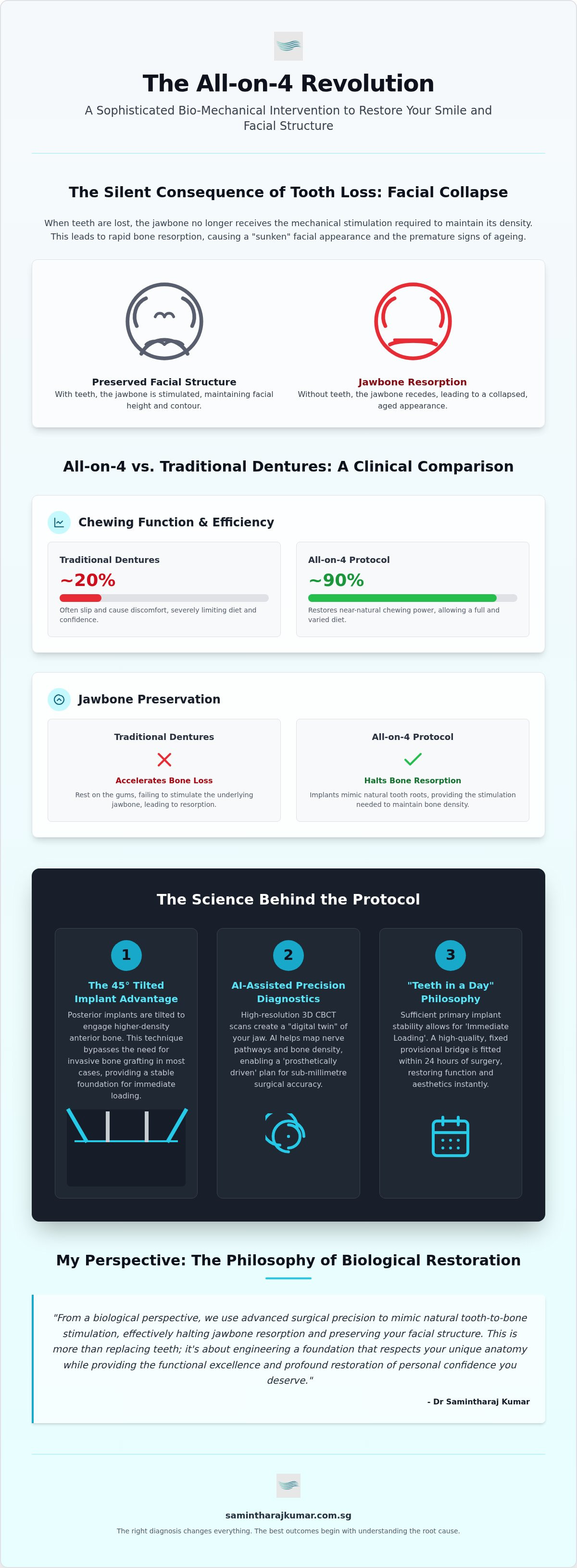
In my clinical experience, patients often view tooth loss as a purely cosmetic inconvenience, yet the underlying biological reality is far more severe. When you lose a full set of teeth, the jawbone no longer receives the mechanical stimulation it needs to maintain its density. This leads to rapid resorption, which is the primary cause of the "sunken" appearance often associated with traditional dentures. The all-on-4 dental implants protocol is designed specifically to arrest this decline. It is a sophisticated surgical technique where a full-arch dental prosthesis is supported by just four strategically placed implants. My clinical goal with this procedure is to restore approximately 90% of your natural chewing function. This represents a profound leap from the 20% efficiency typically provided by conventional removable dentures, which often slip and cause irritation to the delicate gum tissue.
The Science of Tilted Implants
The genius of this protocol lies in the 45-degree tilt of the posterior implants. By angling these fixtures, we can utilise the higher-density bone found in the anterior part of the jaw. This structural orientation is what allows us to bypass the need for complex bone grafting, which was once a mandatory and lengthy prerequisite for full-mouth reconstruction. From a biological perspective, this tilting provides the primary stability necessary to support a fixed bridge immediately. This is the cornerstone of our "Teeth in a Day" philosophy; it ensures that you leave the clinic with a secure, functional smile without waiting months for integration. It's a method that respects the body's existing anatomy while providing an uncompromising foundation for rehabilitation.
Identifying the Ideal Candidate for Rehabilitation
As a clinician and founder, I believe every patient deserves a bespoke structural assessment. We typically look for individuals who are either completely edentulous (missing all teeth) or those with failing terminal dentition, where remaining teeth can no longer be saved due to decay or periodontal disease. While bone volume is always a consideration, the tilted design of all-on-4 dental implants makes this treatment accessible to many who were previously told they lacked the bone density for traditional implants. We also meticulously assess your systemic health to ensure your body can support the healing process. My philosophy is rooted in the belief that a precise diagnosis, often involving AI-assisted imaging, is the only way to guarantee a predictable, long-term outcome for your facial health and overall well-being.
The Clinical Journey: What to Expect During the All-on-4 Procedure
The journey toward full-mouth rehabilitation is a meticulously choreographed sequence of events. In my clinical experience, the success of all-on-4 dental implants is determined long before the patient enters the surgical suite. We begin with a digital workflow that prioritises surgical precision and long-term biological harmony. This isn't merely about replacing teeth; it's about engineering a foundation that respects your unique anatomy while providing the functional excellence you deserve.
Precision Diagnostics and AI Integration
As a clinician and founder, I've integrated AI-assisted diagnostics into our core protocol at Nuffield Dental to eliminate the guesswork inherent in traditional methods. We utilise high-resolution 3D CBCT scans to create a digital twin of your jaw. This allows us to map nerve pathways and sinus cavities with sub-millimetre accuracy. By employing a 'prosthetically driven' surgical plan, we determine the ideal position of your future teeth first. We then work backwards to place the implants in the exact orientation required to support that aesthetic and functional goal. This foresight significantly reduces surgical time and enhances the predictability of the clinical outcome.
The surgical phase itself is designed to be minimally invasive. Under appropriate sedation, the four implants are inserted into the predetermined sites. One of the most transformative aspects of this protocol is 'Immediate Loading'. From a biological perspective, if we achieve sufficient primary stability during insertion, the implants can immediately support a provisional fixed bridge. This bridge is typically fitted within 24 hours of surgery, fulfilling the 'Teeth in a Day' promise. This immediate restoration is vital for maintaining the vertical dimension of your face and providing an instant boost to your confidence. Understanding the root cause of dental anxiety is often the first step in moving forward with such a life-changing procedure.
Recovery and the Osseointegration Phase
Post-operative comfort is managed through specialist protocols I've refined over years of specialist practice. While you'll leave with a functional smile, the real work happens beneath the surface during the osseointegration phase. Over the following three to six months, your natural bone will fuse with the titanium or ceramic implants, creating a permanent biological bond. During this critical timeline, I recommend a soft-food diet to avoid excessive mechanical stress on the healing sites. This transition period is essential for the long-term success of the final, permanent prosthesis, ensuring that your new smile is as durable as it is beautiful.
All-on-4 vs. Traditional Implants: A Comparative Analysis
Choosing between restorative protocols requires a deep understanding of both surgical efficiency and biological impact. In traditional full-mouth reconstruction, we typically place six to ten implants to support a full arch. While effective, this approach often necessitates multiple surgeries and extensive healing periods. Conversely, all-on-4 dental implants streamline this process by using just four strategically angled fixtures to achieve the same structural integrity. This isn't merely about using fewer components; it's about a sophisticated engineering approach that maximises the use of your existing bone.
The True Cost of Bone Grafting
From a biological perspective, the most significant advantage of the All-on-4 protocol is its "graftless" nature. Traditional implants often require sufficient bone height and width that many long-term denture wearers simply don't possess. This leads to supplementary procedures like sinus lifts or block grafts. These aren't just financial investments; they carry a physiological 'cost' in terms of increased surgical trauma and extended recovery times. By tilting the posterior implants, we bypass these requirements, significantly reducing patient morbidity. However, as a clinician, I recognise that traditional implants may still be the superior choice if a patient has exceptional bone volume and desires individualised crown restorations rather than a one-piece bridge.
The timeline for traditional methods can stretch over many months as grafts heal and implants integrate. With all-on-4 dental implants, we achieve "Teeth in a Day," providing immediate functional and aesthetic results. Long-term maintenance is also simplified. A fixed arch is often easier for a dental professional to clean during routine maintenance visits compared to individual units, though it requires dedicated home care with specialised flossing tools to ensure the health of the underlying tissue.
Fixed vs. Removable Solutions
In my clinical experience, the psychological difference between a fixed bridge and a removable overdenture is profound. Patients often struggle with the "click" of snap-on dentures or the underlying anxiety that their prosthetic might shift during a meal. A fixed All-on-4 bridge behaves like natural dentition, offering a sense of permanence that removable options cannot match. The 'hygiene gap' between these systems is the difference between the simple external scrubbing of a removable plate and the sophisticated bacterial management required to maintain the mucosal seal of a fixed bridge. My philosophy centres on providing solutions that integrate seamlessly into your lifestyle, removing the daily reminders of tooth loss.
My Perspective: The Philosophy of Biological Restoration
As a clinician and founder, I've always maintained that the true value of all-on-4 dental implants lies far beyond the mechanics of the surgery itself. I view this protocol as a vital gateway to total oral rehabilitation. It's a transformative process that addresses the physiological and psychological impact of tooth loss simultaneously. From a biological perspective, we must choose materials that respect the body's natural tissues. This is why I prioritise biocompatibility, often incorporating ceramic implants into my treatment plans to ensure the gingival architecture remains healthy and the restoration integrates seamlessly with the patient's systemic well-being.
The emotional trauma of living with failing teeth or unstable dentures is significant. By championing the "Teeth in a Day" protocol, I aim to minimise this distress, providing a fixed solution that restores dignity in a single visit. Furthermore, a stable bite is the cornerstone of craniofacial health. When we restore a full arch, we realign your occlusion to support long-term TMJ health. In my clinical experience, many patients suffer from chronic jaw pain due to a collapsed bite. Restoring the correct vertical dimension alleviates this stress, providing relief that extends well beyond the oral cavity.
Innovation and Institution Building
My work with Nuffield Dental is driven by a commitment to raising regional standards in implantology across Southeast Asia. We don't just follow trends; we set benchmarks by adopting rigorous global protocols for local patient care. Mastering complex cases, particularly those requiring Zygomatic or Pterygoid systems, requires a culture of continuous education and clinical mastery. It's about building an institution where sophisticated diagnostics and surgical excellence are the standard, ensuring every patient has access to the highest tier of specialised expertise. The right diagnosis changes everything, and I invite you to learn more about my approach to facial aesthetic rejuvenation to see how we bridge the gap between function and form.
The Future of Full-Arch Rehabilitation
Looking ahead, the integration of AI-assisted diagnostics and 3D printing is making restorations more lifelike and durable than ever before. We're moving towards a future where digital twins of a patient's anatomy allow us to simulate every aspect of the surgery before it even begins. My vision for healthcare is to build an ecosystem where innovation and ethical scale go hand in hand. We're shifting towards a more holistic, biological dentistry approach where the success of all-on-4 dental implants is measured by how well they support the patient's long-term quality of life. This visionary path ensures that the legacy we build today defines the future of restorative care.
Long-Term Impact: Preventing Facial Collapse and Improving Quality of Life
The true success of full-arch rehabilitation isn't measured in the days following surgery, but in the decades of health and confidence that follow. In my clinical experience, the most profound benefit of all-on-4 dental implants is the preservation of the patient's natural facial architecture. When teeth are lost, the jawbone begins to resorb almost immediately because it lacks the mechanical stimulation provided by tooth roots. This biological decline leads to a reduction in bone volume, which in turn causes the overlying facial muscles to lose their support. By preventing facial collapse with dental implants, we maintain the skeletal integrity required to keep the jawline defined and the facial contours youthful.
Structural Rejuvenation Beyond the Teeth
Traditional dentures often fail to address the underlying issue of bone loss, which is why long-term wearers frequently develop a "sunken" appearance as their facial height diminishes. This happens because dentures sit on top of the gums rather than integrating with the bone. From a biological perspective, all-on-4 dental implants act as artificial roots that signal the body to keep the jawbone dense and strong. A critical component of this restoration is the recovery of the vertical dimension of occlusion. The vertical dimension of occlusion is the measured distance between the upper and lower jaws when the teeth are in contact, serving as the primary skeletal foundation for balanced facial proportions. By restoring this dimension, we can effectively "lift" the lower third of the face, smoothing out deep lines around the mouth and rejuvenating your overall profile.
Beyond aesthetics, the functional restoration of your bite has significant nutritional implications. Many patients with failing dentition or removable plates subconsciously restrict their diet to soft, processed foods that are easy to chew but low in essential nutrients. Restoring the ability to eat a diverse, healthy diet including fibrous vegetables and lean proteins improves systemic health and longevity. It's a comprehensive restoration that supports the body from the inside out.
A Legacy of Confidence
The transformative power of a smile that functions as well as it looks cannot be overstated. When you no longer have to worry about the stability of your teeth, you can engage in social settings with a sense of profound personal renewal. This protocol is not a temporary fix; it's a long-term investment in your well-being. Clinical data spanning over two decades highlights the durability of this approach, with 20-year survival rates for the implants themselves exceeding 90%. This level of predictability is what allows me, as a clinician and founder, to recommend this treatment with such measured confidence.
As we look toward the future of your oral health, remember that the most successful journeys are those rooted in precision and personal care. My philosophy at Nuffield Dental is that we don't just treat symptoms; we engineer solutions that last a lifetime. The best outcomes begin with understanding the root cause of dental failure, and the right diagnosis changes everything for your long-term quality of life.
Reclaiming Your Structural Health and Confidence
Choosing to address total tooth loss is a significant step toward reclaiming your systemic health and facial harmony. As a clinician and founder of Nuffield Dental Holdings, I've seen how the strategic application of all-on-4 dental implants provides a foundation that traditional dentures simply cannot match. By prioritising global clinical standards in Singapore, we ensure that every procedure reflects a commitment to precision and biological compatibility. We've explored how this protocol halts bone resorption, restores the vertical dimension of your face, and allows for immediate functional recovery. My philosophy remains rooted in the belief that innovation should always serve the human experience, turning a complex surgical process into a journey of personal renewal.
Success in complex implantology is built on a foundation of specialist expertise, particularly when navigating advanced Zygomatic and All-on-4 protocols. It's about more than just a new smile; it's about building a legacy of confidence and well-being that lasts for decades. The best outcomes begin with understanding the root cause; explore your options with Dr Samintharaj Kumar. I look forward to helping you rediscover the freedom that comes with a secure, natural-looking smile.
Frequently Asked Questions
Are All-on-4 dental implants painful during the procedure?
Patients typically experience very little discomfort because the procedure is performed under local anaesthesia or intravenous sedation. In my clinical experience, the sensation is comparable to other minor dental surgeries. We prioritise post-operative comfort through tailored pain management protocols that ensure a smooth transition into the healing phase. Most patients find that any mild swelling or tenderness resolves within a few days, allowing them to resume normal activities quickly.
How long do All-on-4 dental implants last with proper care?
All-on-4 dental implants are designed to be a permanent, lifelong solution for tooth loss. Clinical research indicates that these titanium fixtures have 10-year success rates ranging between 95% and 98%. While the implants themselves should last for decades, the prosthetic bridge may require refurbishment or replacement after 10 to 15 years due to natural wear. Maintaining rigorous oral hygiene and attending regular specialist reviews are the most critical factors in ensuring long-term durability.
Can I really get my new teeth in just one day?
Yes, the "Teeth in a Day" protocol is a core feature of this rehabilitation. Once we achieve sufficient primary stability during the surgical phase, we can fit a fixed provisional bridge within 24 hours. This allows you to leave the clinic with a functional, aesthetic smile immediately. You'll wear this temporary set while your bone fuses with the implants, after which we'll transition you to your final, permanent prosthesis.
What is the difference between All-on-4 and All-on-6 implants?
The primary difference lies in the number of support points and the requirement for bone volume. While All-on-4 utilises angled posterior implants to bypass the need for grafting, All-on-6 requires more bone density to accommodate the additional vertical fixtures. In my clinical experience, All-on-4 is often the more efficient choice for patients with moderate bone loss, as it provides exceptional stability without the physiological cost of extensive supplementary procedures.
How do I clean and maintain my All-on-4 dental implants?
Cleaning requires a dedicated routine using specialised tools like water flossers, interproximal brushes, and superfloss to reach beneath the bridge. You'll treat your all-on-4 dental implants much like natural teeth, but with a focus on the junction where the prosthesis meets the gum. Professional hygiene appointments every six months are essential. These visits allow us to verify the integrity of the mucosal seal and perform deep cleaning that isn't possible at home.
Is bone grafting always avoided with the All-on-4 technique?
Bone grafting is avoided in the majority of cases due to the strategic angling of the posterior implants. This "graftless" advantage is a hallmark of the protocol, making it accessible to those with significant bone resorption. However, in extreme cases where even the anterior bone is insufficient, I may recommend Zygomatic implants instead. Every patient receives a bespoke structural assessment to determine if their anatomy can support the implants without supplementary grafting.
What happens if an implant fails in an All-on-4 bridge?
If an individual implant fails to integrate, it doesn't necessarily mean the entire restoration is lost. In many instances, we can remove the failing fixture, allow the site to heal, and then place a new implant to support the existing bridge. Early intervention is vital. This is why I emphasise regular monitoring through AI-assisted diagnostics, as it allows us to identify and address biological issues before they compromise the entire structural foundation.
Can smokers get All-on-4 dental implants?
Smokers can certainly undergo the procedure, though it's important to understand that smoking is a significant risk factor for implant failure. Nicotine constricts blood vessels and impairs the body's natural healing response, which can interfere with osseointegration. I always advise patients to cease smoking for at least two weeks before and several months after surgery. This commitment to your biological health significantly improves the chances of a successful, long-term clinical outcome.


Comments