
Am I a Candidate for Teeth in a Day? A Specialist Surgeon’s Clinical Checklist
- Dr Samintharaj Kumar

- Jun 7
- 12 min read
What if the primary barrier between you and a confident smile isn't a year of complex surgeries, but a single, meticulously planned day? I know how exhausting it is to live with the constant discomfort of loose dentures or the social anxiety that comes with missing teeth. In my clinical experience, many patients feel trapped by the assumption that their dental health has deteriorated beyond the point of a rapid solution.
If you're wondering, "am I a candidate for teeth in a day," it's important to understand that candidacy is rarely a simple yes or no. From a biological perspective, it's a spectrum of surgical possibilities that we navigate using advanced diagnostics and precise protocols. As a clinician and founder, my goal is to provide you with a clear, specialist-led framework for understanding how we achieve immediate full-mouth restoration. In the following sections, I'll detail the structural criteria and bone density requirements necessary to move from frustration to functional excellence and emotional renewal in just twenty-four hours.
Key Takeaways
Understand the biological science of immediate functional loading and how primary stability ensures your new smile is secure from the very first day.
Identify the specific clinical indicators, such as total or near-total tooth loss, to help determine "am I a candidate for teeth in a day" based on specialist criteria.
Discover how advanced surgical protocols like Zygomatic and Pterygoid implants allow us to overcome severe bone loss that might have disqualified you elsewhere.
Learn what to expect during each stage of the journey, from comprehensive digital planning to the seamless transition of extraction and restoration.
Explore my personal treatment philosophy on why the right diagnosis is the essential foundation for life-changing, long-term oral health.
Table of Contents
Understanding the Biological Prerequisites for Teeth in a Day
The Clinical Checklist: Are You a Candidate for Immediate Restoration?
Overcoming Structural Barriers: When Traditional Implants Aren’t Enough
The Patient Journey: What to Expect During Your Transformation
My Perspective: Why the Right Diagnosis is the Foundation of Success
Understanding the Biological Prerequisites for Teeth in a Day
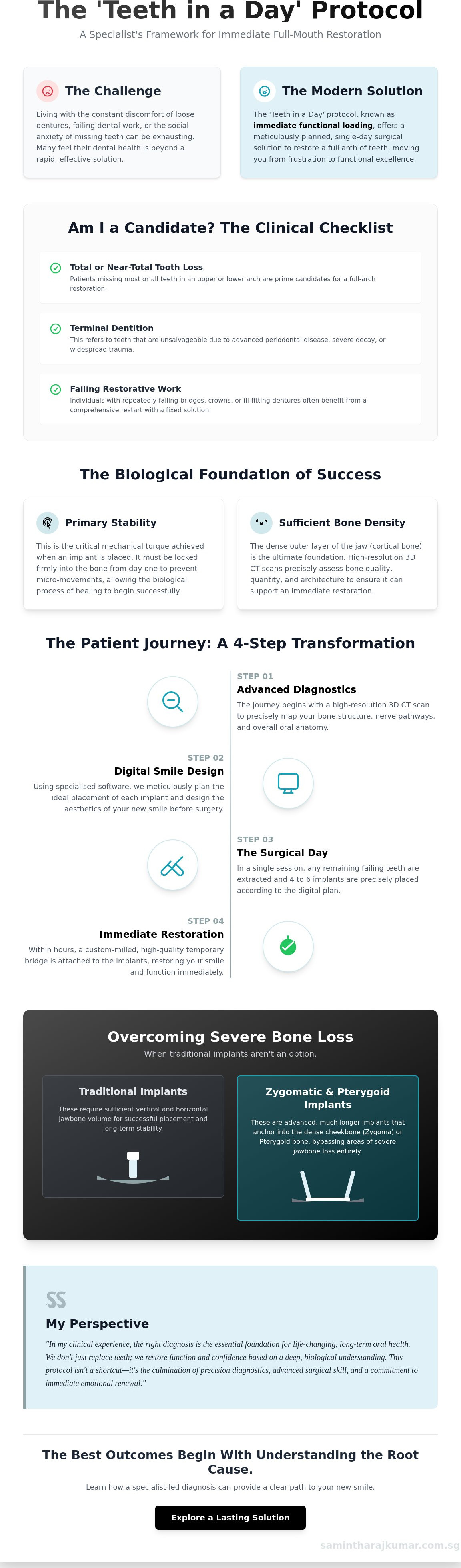
In my clinical experience, the term "Teeth in a Day" is often misunderstood as a purely cosmetic shortcut. In reality, it represents a sophisticated surgical protocol known as immediate functional loading. This process involves the strategic placement of a dental implant followed by the attachment of a temporary bridge within hours. While the aesthetic change is instantaneous, the underlying biological success depends on the science of osseointegration, the process where bone cells fuse with the implant surface.
Many patients ask me, "am I a candidate for teeth in a day?" during our first consultation. To answer this, we must look beyond the surface. From a biological perspective, success hinges on achieving primary stability. Primary stability is the mechanical torque achieved during placement, ensuring the implant is locked firmly into the bone. Without this initial security, the bone cannot knit to the implant surface effectively. I prioritise a biological approach to dental materials, often considering ceramic dental implants for their exceptional biocompatibility and soft tissue integration.
To better understand this concept, watch this helpful video:
The Mechanism of Immediate Loading
The success of this protocol relies on the principle of cross-arch stabilisation. By placing four to six implants at specific angles, we create a rigid foundation that distributes biting forces evenly. This prevents micro-movements, which are the primary enemy of healing bone. It's a balance of physics and biology. We distinguish between immediate temporisation, which gives you teeth to smile with on day one, and the final permanent restoration that is fitted months later once full biological fusion is complete.
Bone Density as a Foundation
Your structural foundation is the ultimate deciding factor. Cortical bone, the dense outer layer of the jaw, provides the necessary support for immediate loading. At Nuffield Dental, we utilise high-resolution 3D CT scanning to assess this foundation with precision. This assessment is the first step in answering "am I a candidate for teeth in a day" with clinical certainty. As a clinician and founder, I evaluate bone quality beyond simple volume measurements. We look at the mineral density and the architecture of the bone to ensure it can withstand the forces of a new smile.
The Clinical Checklist: Are You a Candidate for Immediate Restoration?
Determining your suitability for immediate loading requires a meticulous evaluation that extends beyond a simple visual inspection. When patients ask, "am I a candidate for teeth in a day," they are often looking for a definitive answer to a complex biological puzzle. In my clinical experience, the most successful outcomes occur when we align your current oral health with the precise requirements of modern implantology. We don't just look at where teeth are missing; we look at the health of the entire oral ecosystem, including the supporting periodontium and the quality of the remaining soft tissues.
The checklist below serves as my primary guide for answering "am I a candidate for teeth in a day" during a clinical evaluation. It is designed to ensure that the rapid transition to a new smile is both safe and sustainable for the long term.
Primary Indicators for Treatment
The most common candidates for this protocol are individuals facing terminal dentition. This refers to a state where existing teeth are no longer salvageable due to advanced periodontal disease, severe decay, or failing restorative work like bridges. If you find yourself constantly repairing old dental work only for it to fail again, you're likely at the stage where a comprehensive restart is the most predictable option. For those with sufficient bone volume, all on 4 dental implants provide a streamlined, fixed solution that bypasses the need for multiple, staged surgeries. This is also a life-changing path for long-term denture wearers who are tired of the instability and social anxiety caused by traditional removable prosthetics.
Health Factors and Lifestyle Considerations
Your systemic health is a quiet but powerful factor in the success of dental implant surgery. While conditions like controlled diabetes or autoimmune disorders don't automatically disqualify you, they do require a more specialised approach to your recovery programme. Smoking is perhaps the most significant lifestyle variable. It restricts blood flow to the gums, which can significantly delay healing and jeopardise the integration of the implants. I often work with patients to establish a cessation period before and after the procedure to protect their surgical outcome. Additionally, we must account for bruxism, or chronic teeth grinding. As a clinician and founder, I ensure that patients who grind their teeth are fitted with protective appliances to prevent excessive force on the new implants during the critical first few months of healing. The best outcomes begin with understanding the root cause, and a comprehensive clinical assessment is the only way to truly map your path forward.
Overcoming Structural Barriers: When Traditional Implants Aren’t Enough
One of the most disheartening experiences for a patient is being told they aren't a candidate for restoration due to "insufficient bone." In my clinical experience, this diagnosis is often based on the limitations of traditional Dental Implants rather than the patient's actual biological potential. As a clinician and founder, I've dedicated much of my career to treating complex cases that others have rejected. The question "am I a candidate for teeth in a day" takes on a different meaning when we apply advanced surgical protocols designed specifically for severe bone resorption.
My philosophy is rooted in innovation. We don't see bone loss as an absolute barrier, but as a structural challenge that requires a more sophisticated surgical answer. By looking beyond standard protocols, we can often find the stability needed for immediate rehabilitation even in the most challenging cases.
Solutions for Severe Bone Resorption
When the upper jaw has significantly atrophied, we can look beyond the alveolar bone to find support. Zygomatic implants are specialised fixtures that anchor into the cheekbone (zygoma). This bone remains dense and stable even when the jawbone has diminished over time. By utilising the zygoma or pterygoid bone, we can achieve the primary stability required for immediate loading. This strategy is often preferable to a sinus lift surgery for dental implants, which can involve lengthy healing periods. Avoiding extensive bone grafting means we can move directly to your restoration, providing functional and aesthetic results in a significantly shorter timeframe.
The Role of AI and Digital Diagnostics
Precision is the hallmark of modern surgery. At Nuffield Dental, we integrate AI-assisted diagnostics to map your unique anatomy in three dimensions. This technology allows us to perform virtual surgical simulations, predicting exactly how an implant will interact with your bone structure before the procedure begins. This level of digital planning ensures that your prosthesis is anatomically aligned with your facial structure. It isn't just about placing teeth; it's about restoring the harmony of your smile and ensuring long-term functional excellence. This meticulous preparation is how we accurately determine "am I a candidate for teeth in a day" for those with complex structural needs.
The Patient Journey: What to Expect During Your Transformation
Once we've answered the fundamental question, "am I a candidate for teeth in a day," the focus shifts from biological assessment to precision execution. As a clinician and founder, I view the patient journey as a partnership. It begins with a comprehensive consultation where we use AI-driven diagnostics to map your facial structure and design your ideal smile. We aren't just replacing teeth; we're restoring the architecture of your face. This planning phase ensures that on the day of your procedure, every movement is calculated and every outcome is predictable.
In my clinical experience, patients often arrive with a mix of excitement and trepidation. My role is to replace that fear with a sense of being in capable, experienced hands. We prioritise your comfort at every stage, ensuring you understand the biological transition your body is about to undergo.
The Day of Surgery
The day itself is a masterclass in clinical coordination. We typically begin in the morning with any necessary extractions and the precise placement of your implants. To ensure a comfortable experience, we utilise a combination of local anaesthesia and intravenous sedation. This allows you to remain relaxed while we work. By the afternoon, we've transitioned to the restorative phase, where your temporary bridge is securely attached to the new implants. For a deeper look at the surgical steps involved, you can read the teeth in a day procedure explained. You'll leave the clinic with a functional, aesthetic smile that same day.
Adapting to Your New Prosthesis
The weeks following your surgery are a critical period of osseointegration. While your new teeth look and feel natural, the implants are still biologically fusing with your jawbone. I provide strict dietary guidelines during this phase, usually recommending soft foods to prevent excessive pressure on the healing sites. You'll also go through a short adaptation period as your tongue and facial muscles adjust. For practical advice on this transition, I recommend my guide on speaking and chewing with a new prosthesis. Maintenance is straightforward but essential; we'll establish a protocol of regular check-ups to monitor the healing process.
After approximately four to six months, once biological stability is fully achieved, we replace the temporary bridge with your final, bio-compatible ceramic restoration. This final step completes your transformation, providing a smile that is as durable as it is beautiful. If you're ready to explore these possibilities, you can consult with a specialist to begin your clinical assessment.
My Perspective: Why the Right Diagnosis is the Foundation of Success
Reflecting on my clinical experience with total mouth rehabilitation, I've seen how a single day can redefine a person's entire outlook on life. However, as a clinician and founder, I must emphasize that the surgery itself is only the midpoint of the journey. The true work begins much earlier, during the diagnostic phase. Determining "am I a candidate for teeth in a day" is not just about checking bone volume; it's about understanding the systemic reasons why your dental health reached this point. I believe in treating the root cause of dental failure rather than just masking the symptoms with hardware.
Innovation in surgery must always be balanced with patient-centred care. We don't just place implants; we restore a human being's ability to eat, speak, and smile without reservation. This transformation has a profound impact on systemic health and long-term quality of life. When we eliminate chronic oral inflammation and restore proper chewing function, we're supporting the body's overall well-being.
Biological Dentistry and Systemic Health
From a biological perspective, the materials we choose to place in your body matter immensely. This is why I often advocate for biocompatible materials, such as ceramic implants, which integrate harmoniously with your natural tissues. Oral health serves as a primary gateway to your overall physical health. My vision for the future of dental surgery involves even deeper AI integration to refine these biological outcomes. By using AI-assisted diagnostics, we can predict healing patterns and tailor our approach to your specific genetic and structural profile, ensuring a result that lasts a lifetime.
Choosing Clinical Excellence
When facing complex rehabilitation, choosing a specialist surgeon is the most critical decision you'll make. You should look for a practitioner who adheres to global standards and international surgical protocols. At Nuffield Dental, our commitment to excellence is rooted in an institutional heritage that values meticulous planning and ethical care. We don't take shortcuts because we understand that your smile is your legacy. A visionary leader in healthcare must prioritize the patient's long-term journey over immediate convenience. The right diagnosis changes everything, and the best outcomes begin with understanding the root cause.
The Path to Your Permanent Restoration
The journey from oral discomfort to a complete, functional smile is anchored in the precision of the initial assessment. As a clinician and founder, I've seen that answering "am I a candidate for teeth in a day" requires a deep understanding of both your unique biology and the advanced surgical protocols available today. Whether we're achieving primary stability through standard implants or utilising specialist zygomatic and pterygoid protocols for complex cases, our focus remains on your long-term systemic health.
By integrating AI-assisted surgical planning with our expertise in All-on-4 techniques, we remove the guesswork from your transformation. We don't just aim for a same-day result; we aim for a foundation that supports your legacy and well-being. The right diagnosis changes everything. Begin your journey toward total rehabilitation with a specialist consultation.
I'm committed to leading a practice where clinical excellence meets compassionate, patient-centred care. Your path to emotional renewal and functional excellence is a collaboration that begins with a single, expert-led conversation.
Frequently Asked Questions
Can I really get a full set of teeth in just one day?
Yes, you can receive a functional, fixed set of teeth in a single clinical session. In my clinical experience, this protocol involves placing the implants and attaching a high-quality temporary bridge within hours of the surgery. While this is a temporary restoration used during the healing phase, it allows you to eat, speak, and smile with confidence immediately. We replace this with your final, permanent bridge once the bone has fully integrated.
What happens if I have been told I have low bone density?
Low bone density does not automatically disqualify you from treatment. When patients ask "am I a candidate for teeth in a day" despite being told they have "no bone," I often utilise advanced zygomatic or pterygoid implants. These specialised fixtures anchor into the denser bone of the cheekbones or the back of the jaw. This approach bypasses the need for traditional bone grafting and provides the primary stability required for immediate loading.
Is the "Teeth in a Day" procedure painful?
The procedure is designed to be a comfortable and stress-free experience. We typically perform the surgery under intravenous sedation combined with local anaesthesia, ensuring you remain relaxed and pain-free throughout the day. Most patients describe the sensation as a feeling of pressure rather than sharp discomfort. Any post-operative tenderness is usually well-managed with standard medication and typically subsides within a few days of the procedure.
How long do same-day dental implants typically last?
Dental implants are designed to be a lifelong solution for tooth loss. Current clinical data shows success rates for implants exceeding 95% over several decades. While the implant posts themselves are permanent, the prosthetic bridge attached to them may require maintenance or replacement after ten to fifteen years due to natural wear. Maintaining excellent oral hygiene and attending regular specialist check-ups are the most important factors in ensuring their longevity.
Will my new teeth look and feel natural?
Your new restoration is bespoke, designed to complement your unique facial proportions and aesthetic goals. From a biological perspective, we use materials that mimic the translucency and strength of natural teeth. Because the bridge is fixed and does not shift like traditional dentures, it quickly begins to feel like a natural part of your mouth. Most patients find that their speech and chewing function return to a natural state within a few weeks.
What is the difference between All-on-4 and Teeth in a Day?
All-on-4 is a specific surgical technique, while Teeth in a Day is the clinical protocol of providing immediate teeth. The All-on-4 method uses four strategically tilted implants to support a full arch. Teeth in a Day refers to the process of attaching the teeth to those implants on the same day as the surgery. As a clinician and founder, I often combine these approaches to provide the most efficient and stable result for my patients.
Are there any age limits for this procedure?
There is no specific upper age limit for dental implant surgery. Candidacy is determined by your systemic health and bone quality rather than your age. I have successfully treated many patients in their 80s and 90s, helping them regain the ability to eat comfortably and enjoy their social lives. As long as chronic conditions like diabetes are well-managed, you can likely benefit from this life-changing procedure regardless of your age.
What is the failure rate for immediate load dental implants?
The failure rate for immediate load implants is very low, generally ranging between 2% and 5%. In my clinical experience, the use of AI-assisted diagnostics and 3D planning has made these outcomes even more predictable. Success depends on achieving high primary stability during surgery and the patient’s commitment to a soft-food diet during the initial months of healing. The best outcomes begin with understanding the root cause of any potential risks during your consultation.


Comments