
At-Home Care for TMJ Pain: A Surgeon’s Guide to Physiotherapy and Rehabilitation
- Dr Samintharaj Kumar

- 4 days ago
- 12 min read
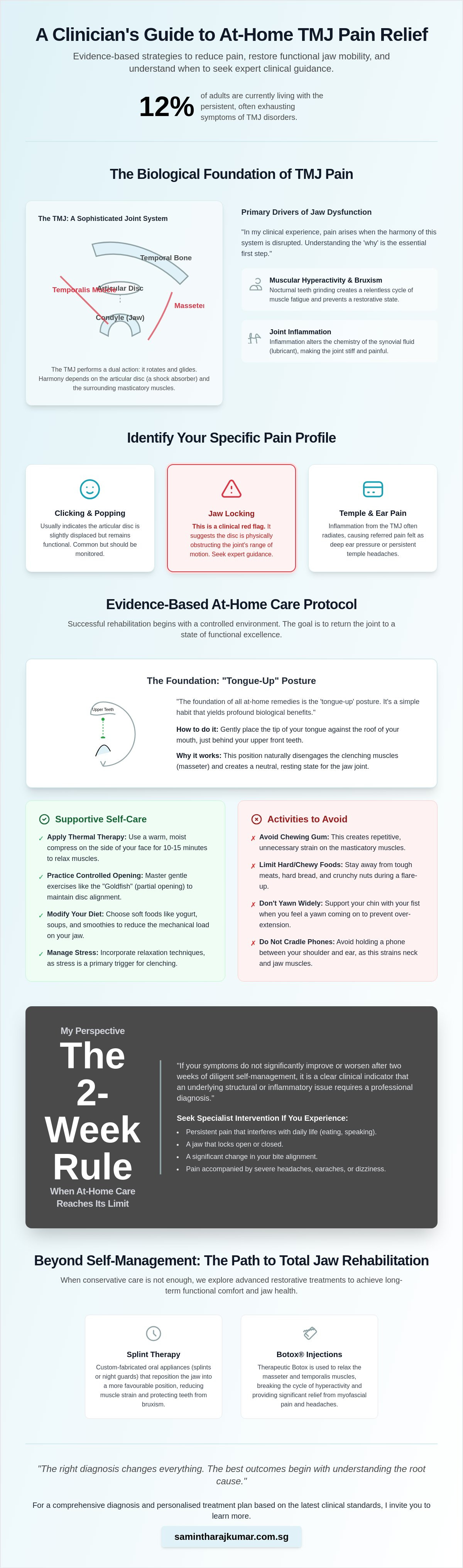
Did you know that as many as 12% of adults are currently living with the persistent, often exhausting symptoms of TMJ disorders? In my clinical experience, many patients describe a similar cycle of waking with dull headaches or feeling a sharp, anxious click every time they speak. Establishing effective at-home care for tmj pain is a vital part of the recovery journey, aligning with the latest 2026 clinical standards that prioritise conservative, non-invasive rehabilitation over immediate surgical intervention.
I believe that the best outcomes begin with a deep understanding of the root cause. You deserve to chew, speak, and smile without the constant shadow of discomfort. This guide shares evidence-based physiotherapy exercises and specialist-led strategies designed to reduce your pain and restore functional jaw mobility. We'll explore the precise mechanics of jaw tension and provide a clear roadmap for your recovery, ensuring you know exactly when to self-treat and when to seek expert clinical guidance.
Key Takeaways
Understand the biological complexity of the temporomandibular joint and why successful rehabilitation requires a focus on both the articular disc and masticatory muscles.
Learn how to implement effective at-home care for tmj pain by mastering the "tongue-up" posture to recalibrate your jaw's natural resting state.
Discover the science behind thermal therapy and how specific dietary modifications can significantly reduce the mechanical load on your jaw joints.
Identify the critical "Two-Week Rule" and the specific clinical red flags that indicate when self-management should transition to specialist intervention.
Explore the role of advanced restorative treatments, including splint therapy and Botox, in achieving long-term functional comfort and jaw health.
Table of Contents
The Biological Foundation of Temporomandibular Joint (TMJ) Pain
In my clinical experience, patients often feel overwhelmed by the sheer variety of symptoms they face. To manage this condition effectively, we must first understand that the temporomandibular joint is arguably the most sophisticated joint system in the human body. Unlike a simple hinge like the knee, it performs a dual action: it rotates and glides. This ginglymoarthrodial movement is what allows for the intricate, multi-directional shifts required for speech, yawning, and mastication.
From a biological perspective, the harmony of this system relies on the articular disc, a firm yet flexible pad of cartilage that acts as a shock absorber between the condyle and the skull. When the masticatory muscles, specifically the masseter and temporalis, become chronically hyperactive, this balance is disrupted. This tension rarely stays confined to the jaw. It frequently radiates, causing referred pain that patients often mistake for ear infections or migraines. Understanding this biological "why" is the essential first step before beginning any Temporomandibular joint dysfunction rehabilitation.
To better understand this concept and explore immediate relief techniques, watch this helpful video:
The Mechanism of Jaw Dysfunction
Jaw dysfunction rarely happens in isolation. Bruxism, or nocturnal teeth grinding, is a primary driver of muscular fatigue. It creates a relentless cycle where the muscles never truly enter a restorative state, leading to chronic inflammation of the synovial fluid within the joint capsule. This fluid is vital; it acts as a lubricant for smooth movement. When inflammation alters the chemistry of this fluid, the joint becomes stiff and painful. Additionally, malocclusion, or an uneven bite, can force the jaw into a compromised resting position, further straining the surrounding ligaments. Effective at-home care for tmj pain starts by identifying and mitigating these mechanical stressors.
Identifying Your Specific Pain Profile
Not all jaw pain is identical. Your path to recovery depends on identifying whether your pain is myofascial or structural. Myofascial pain is muscular, often manifesting as a dull, heavy ache that fluctuates with your stress levels. Structural pain, however, involves the internal components of the joint. Morning tension almost always points toward night-time clenching, while pain triggered by chewing suggests the articular disc is struggling to glide.
Clicking and Popping: This usually indicates the disc is slightly displaced but still functional.
Locking: This is a clinical red flag, suggesting the disc is physically obstructing the joint’s range of motion.
Temple and Ear Pain: The proximity of the TMJ to the auditory canal means inflammation here is often felt as deep ear pressure or temple headaches.
By categorising these symptoms, we can apply at-home care for tmj pain with surgical precision, targeting the root cause rather than just the surface discomfort. The goal of any rehabilitative protocol is to return the joint to a state of functional excellence.
Evidence-Based Physiotherapy Exercises for TMJ Pain Relief
Successful rehabilitation begins with a controlled environment. You can't heal a joint while the body is in a state of high stress. In my clinical experience, the foundation of all at-home remedies for TMJ is the "tongue-up" posture. Simply place the tip of your tongue against the roof of your mouth, just behind your upper front teeth. This position naturally disengages the masseter muscles and prevents clenching, creating a neutral resting state for the joint. It's a simple habit that yields profound biological benefits.
When we design a protocol for at-home care for tmj pain, we follow a logical sequence: warm-up, range of motion, and finally, strengthening. We don't jump into heavy loading. We treat the jaw with the same clinical precision I use in the operating theatre. One foundational movement is the Goldfish exercise, which is a partial-opening controlled movement designed to keep the disc aligned during function. By following a structured path, we move from acute discomfort to functional excellence.
Step-by-Step Rehabilitation Exercises
The Goldfish Exercise: Place your tongue on the roof of your mouth and one finger on the TMJ. Place your other index finger on your chin. Drop your lower jaw halfway and then close. This improves symmetry and prevents the jaw from deviating to one side.
Chin Tucks: Sit with your shoulders back and chest up. Pull your chin straight back, creating a "double chin," to stretch the neck and upper cervical spine. This addresses the cervical-jaw connection, which is vital for postural relief.
Resisted Opening: Place your thumb under your chin. Open your mouth slowly, providing light resistance with your thumb. This builds muscular endurance without overextending the joint capsule.
Frequency and Intensity Guidelines
How many repetitions are safe for an inflamed joint? I typically recommend the "6x6x6" rule: six repetitions per set, six times a day. This frequency keeps the synovial fluid moving without exhausting the masticatory muscles. If you find that these movements trigger sharp discomfort rather than relief, it may be time to discuss TMJ pain management options that address deeper structural misalignments.
The "No-Pain" Rule is absolute. Pushing through sharp or radiating pain is counterproductive and can exacerbate inflammation. Your goal is a gentle stretch or a sense of mild muscular engagement. Integrating these movements into your daily routine, perhaps after a warm shower when the muscles are most pliable, ensures long-term impact. Consistency is the bridge between temporary relief and a permanent restoration of your quality of life.
Lifestyle Modifications and Self-Care Protocols
As a clinician and founder, I advocate for a holistic approach to rest that extends beyond the dental chair. Targeted exercises are essential, yet they cannot succeed if the joint is constantly subjected to excessive mechanical loading throughout the day. In my clinical experience, the most effective at-home care for tmj pain involves a deliberate recalibration of your daily environment to support biological healing. We must look at the jaw not as an isolated unit, but as part of a complex musculoskeletal system that responds to your overall lifestyle.
Thermal therapy is a cornerstone of this rehabilitative process. I often advise patients to use moist heat to relax hyperactive masticatory muscles, as it increases local circulation and tissue pliability. Conversely, cold compresses are best reserved for acute flare-ups where inflammation is the primary driver of discomfort. Balancing these modalities helps manage the physiological responses that occur when the joint is under stress. This nuanced approach to TMJ self-care ensures that we are treating the tissue according to its current state of repair, allowing for a more comfortable recovery period.
Dietary Adjustments for Joint Rest
Reducing the mechanical load on the condyle is paramount for long-term success. The "Soft Food" diet is not merely about avoiding pain; it is a strategic clinical choice to allow the articular disc and surrounding ligaments to recover without the repetitive trauma of heavy chewing. From a biological perspective, repetitive force on an inflamed joint prevents the synovial fluid from returning to a healthy state. You should temporarily remove crusty breads, tough meats, and chewy sweets from your routine. Supporting your connective tissue with a diet rich in anti-inflammatory omega-3 fatty acids and Vitamin C can further assist the body's natural repair mechanisms. I suggest focusing on nutrient-dense, soft options like poached fish, avocados, and well-blended smoothies to ensure you maintain high-tier nutrition while prioritising jaw rest.
Sleep Hygiene and Stress Management
The link between sleep posture and nocturnal jaw clenching is often overlooked. If your head is not properly supported, the muscles of the neck and jaw may engage to maintain airway stability, leading to significant morning tension. A neutral neck position is essential for TMJ recovery. I recommend using a contoured pillow that supports the natural curve of your cervical spine. Daytime "bracing" is another silent contributor to joint fatigue. Many patients clench their teeth during focused work or high-stress moments without conscious awareness. Implementing mindfulness techniques to periodically check that your teeth are apart and your shoulders are relaxed can break this cycle. True functional rest occurs when the masticatory muscles are allowed to remain in their neutral, "tongue-up" position throughout the day.
My Perspective: When At-Home Care Reaches Its Clinical Limit
While I am a firm advocate for conservative rehabilitation, there is a distinct threshold where self-management must transition into specialist care. In my view, the "Two-Week Rule" is a critical benchmark for every patient. If you have followed a consistent programme of at-home care for tmj pain for fourteen days without a measurable reduction in symptoms, it suggests that the dysfunction is no longer merely muscular. From a biological perspective, persistent pain often indicates a structural issue within the joint capsule that cannot be "exercised away" through physiotherapy alone.
Early specialist intervention is not about rushing into surgery. It is about preventing long-term joint degradation. When the articular disc remains displaced or the synovial fluid stays chronically inflamed, the joint begins to undergo degenerative changes. I look for specific "red flags" that demand immediate clinical attention: persistent jaw locking, visible facial swelling, or radiating neurological pain that mimics an electric shock. These are signals that the biological system is in distress and requires a more sophisticated diagnostic approach.
The Risk of Compensatory Movements
One of the most significant dangers of delayed treatment is the development of compensatory movements. The brain is remarkably adept at avoiding pain, often "rewiring" your chewing patterns to bypass the sensitive joint. While this provides temporary relief, it creates a cascade of new problems. These altered patterns place undue stress on healthy teeth and can lead to significant bite misalignment over time. Understanding what kind of doctor treats tmj is essential here, as a specialist can identify these subtle shifts in your occlusion before they cause permanent damage to your dental structure.
Diagnostic Standards in Specialist Care
In my practice, I prioritise a logical progression from home care to clinical rehabilitation. We begin by moving beyond the surface symptoms to understand the internal architecture of your jaw. Modern diagnostic standards, particularly 3D imaging and CBCT scans, allow us to identify precise disc displacement without invasive procedures. This level of clarity is vital. It ensures that any clinical intervention, whether it be splint therapy or advanced TMJ pain management, is tailored to your unique biological profile. We aim for comprehensive restoration, ensuring your journey from at-home care for tmj pain leads to a future of functional excellence. The best outcomes always begin with understanding the root cause.
Beyond Self-Management: The Path to Total Jaw Rehabilitation
In my clinical experience, the transition from self-management to professional intervention is a pivotal moment in a patient's journey. While at-home care for tmj pain provides a necessary biological baseline, it is often just the initial phase of a broader strategy. When the joint's structural integrity is compromised, we must move toward total oral rehabilitation. This approach addresses the root cause of dysfunction rather than merely suppressing the symptoms. It's about restoring a biological harmony that has been lost to chronic tension or injury.
From a biological perspective, the goal of clinical intervention is to offload the joint while recalibrating the muscles. This is where the synergy between surgical expertise and rehabilitative medicine becomes most apparent. We aren't just looking for a temporary fix. We are seeking a permanent restoration of your functional comfort. True healing occurs when the teeth, muscles, and joints work in a balanced, effortless unison once again.
Clinical Solutions for Chronic Dysfunction
When at-home protocols reach their limit, we introduce precision-engineered tools. Custom-milled occlusal splints are a cornerstone of my treatment philosophy. Unlike over-the-counter guards, which can inadvertently worsen a bite by providing uneven support, a clinical splint is designed with micron-level accuracy. It serves to decompress the condyle and provide the masticatory muscles with a neutral platform to rest. For patients struggling with severe bruxism, I often utilise Botox to selectively relax hyperactive muscles. This clinical intervention provides a vital window of relief, allowing physiotherapy to be more effective. Seeking a TMJ specialist in Singapore ensures that these treatments are integrated into a comprehensive plan that also considers facial aesthetics. Restoring functional jaw health often has the secondary benefit of rejuvenating the lower facial profile.
The Vision for Long-Term Comfort
As a clinician and founder, I am focused on the future of healthcare delivery through innovation. Modern technology, including AI-assisted diagnostics, allows us to map your jaw movement with unprecedented clarity. This data-driven approach removes the guesswork from complex cases, ensuring that every adjustment to your bite is purposeful and precise. We are moving away from simple pain management and toward a future of total functional restoration. My vision is to provide a pathway where patients can reclaim their quality of life, free from the anxiety of clicking sounds or the exhaustion of chronic headaches. Expert-led care is the bridge to that future. The best outcomes begin with understanding the root cause.
Restoring Your Quality of Life Through Functional Excellence
Reclaiming your life from jaw tension requires a balanced commitment to both personal diligence and clinical insight. We've explored how at-home care for tmj pain serves as a vital first step, allowing you to manage symptoms through evidence-based exercises and mindful lifestyle adjustments. However, true restoration often lies in the synergy between these daily habits and specialist-led rehabilitation. In my clinical experience, the most profound transformations occur when we move beyond surface-level relief to address the intricate structural needs of your jaw joint.
As a clinician and founder, I remain dedicated to a philosophy of complex oral rehabilitation that prioritises your long-term well-being. By combining founder-led clinical excellence with advanced 3D diagnostic protocols, we can identify the precise biological drivers of your discomfort. Whether your path involves continued home care or sophisticated clinical interventions like custom-milled splints, the goal is a future of effortless, pain-free movement. The right diagnosis changes everything. Explore our approach to TMJ rehabilitation. I look forward to helping you restore the functional comfort you deserve.
Frequently Asked Questions
Can TMJ pain go away on its own with just at-home care?
Yes, many cases of mild dysfunction are self-limiting and resolve with consistent conservative management. However, if your symptoms persist beyond two weeks, it often indicates a structural issue that requires a specialist's diagnosis. In my clinical experience, addressing the problem early prevents the progression of joint degradation and long-term dental wear.
How often should I perform jaw exercises for the best results?
You should ideally perform your prescribed jaw exercises six times a day, with six repetitions per set. This "6x6x6" protocol ensures the joint remains mobile without overworking the masticatory muscles. Consistency is the primary driver of success when implementing at-home care for tmj pain, as it helps recalibrate your natural resting posture.
Is it safe to use a heating pad on my jaw for TMJ pain?
Yes, moist heat is highly effective for relaxing hyperactive muscles and increasing local circulation. I recommend applying a warm compress for 10 to 15 minutes before you begin your physiotherapy routine to make the tissues more pliable. If you notice visible swelling or acute inflammation, you should switch to a cold compress to reduce the internal pressure.
What is the best sleeping position to avoid jaw pain in the morning?
Sleeping on your back with a contoured pillow that supports the natural curve of your neck is the optimal position. This prevents the lower jaw from being pushed to one side, which is a common issue for stomach and side sleepers. Maintaining a neutral cervical spine is essential for reducing the nocturnal strain placed on your temporomandibular joints.
Can teeth grinding be cured by at-home exercises alone?
No, exercises alone rarely cure bruxism because it is often a subconscious habit or a mechanical response to bite misalignment. While physiotherapy can certainly mitigate the resulting muscular fatigue, true resolution usually requires a custom-milled occlusal splint. These clinical tools protect your teeth and decompress the joint in a way that exercises cannot achieve on their own.
When should I stop at-home care and see a TMJ specialist?
You should seek specialist care immediately if you experience persistent jaw locking, sharp neurological pain, or if your symptoms don't improve after fourteen days. these red flags suggest the articular disc may be physically obstructed or displaced. As a clinician and founder, I believe that the right diagnosis changes everything once at-home care for tmj pain reaches its threshold.
Does stress make TMJ pain worse even if I do the exercises?
Yes, stress significantly exacerbates symptoms by triggering involuntary clenching and daytime bracing of the jaw muscles. High cortisol levels can keep your muscles in a state of chronic fatigue, even with a perfect exercise routine. I advocate for integrating mindfulness techniques to identify these subconscious habits, as emotional well-being is a cornerstone of functional jaw recovery.
Are there any exercises I should avoid if my jaw is clicking?
You should avoid wide yawning, heavy chewing, or any movement that causes the jaw to deviate sharply to one side. If a specific exercise produces a loud, painful pop or causes the joint to catch, stop the movement immediately. Focus instead on controlled, partial-opening movements that maintain stability without straining the delicate ligaments surrounding the articular disc.


Comments