
Managing Swelling After Tooth Extraction: A Specialist Surgeon’s Clinical Checklist
- Dr Samintharaj Kumar

- Jun 4
- 13 min read
Updated: Jun 13
What if the swelling you see in the mirror isn't a sign that something has gone wrong, but rather a vital biological signal that your body is working exactly as it should? As a clinician and founder, I've noticed that the "chipmunk cheeks" phase often causes more anxiety than the surgical procedure itself. It's entirely natural to feel concerned when your reflection doesn't match how you felt leaving the clinic, especially when conflicting home remedy advice online only adds to the confusion.
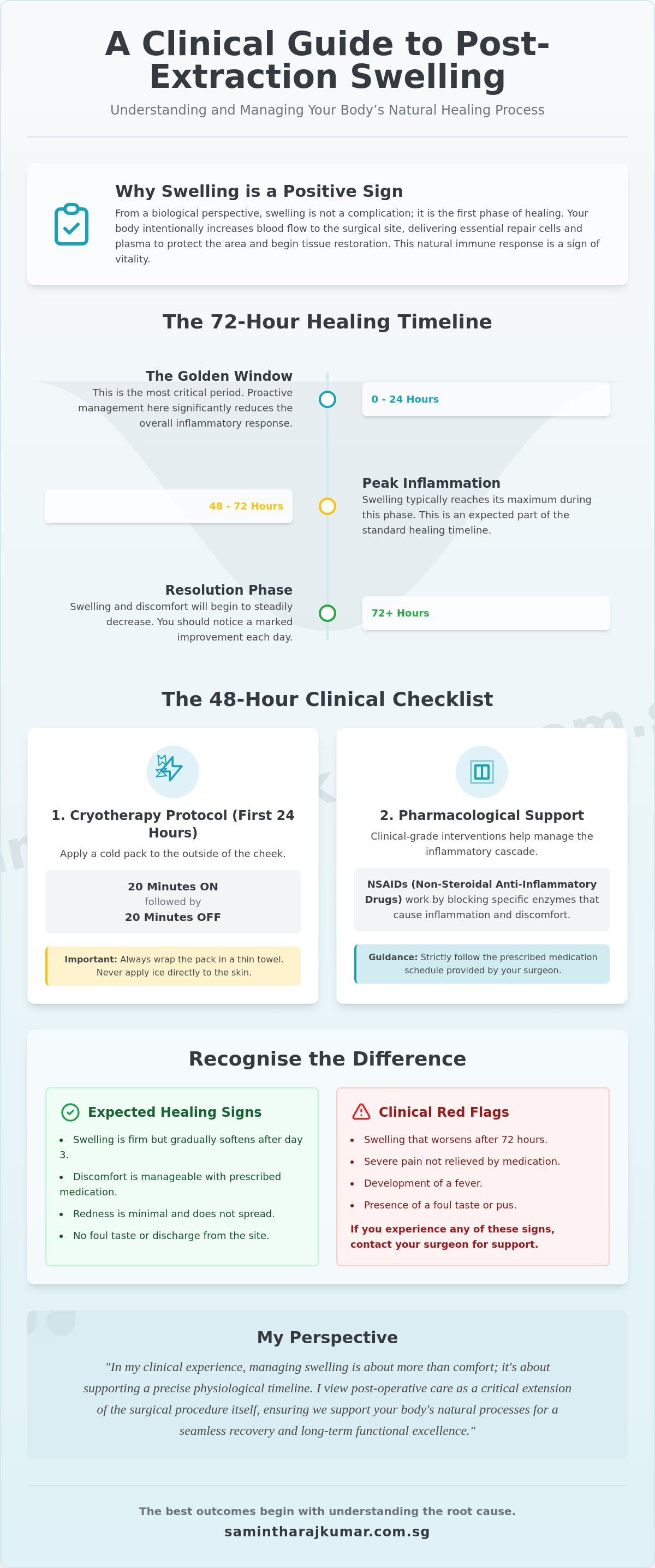
In my clinical experience, managing swelling after tooth extraction is about more than just aesthetic comfort; it's about supporting a precise physiological timeline. From a biological perspective, inflammation typically peaks between 48 and 72 hours, and knowing how to navigate this window is essential for a seamless recovery. I've developed a professional-grade protocol designed to reduce this inflammation and accelerate your biological healing. This clinical checklist provides a clear recovery timeline, my specific instructions for the first few days, and the markers that indicate when it's time to contact your surgeon for additional support.
Key Takeaways
Understand that swelling is a vital immune response, signalling that your body has initiated the biological repair process for long-term recovery.
Master the "Golden Window" protocol for managing swelling after tooth extraction using my recommended cryotherapy cycles during the first 24 hours.
Learn how clinical-grade pharmacological interventions, including NSAIDs, work to block specific enzymes and effectively reduce post-operative edema.
Recognise the standard 72-hour healing timeline to help you differentiate between expected inflammation and genuine clinical red flags.
Discover why I view post-operative care as a critical extension of the surgical procedure itself, ensuring your comfort and functional excellence.
Table of Contents
The Biology of Post-Extraction Inflammation: Why Swelling Occurs
Swelling is not a failure of the surgical process; it's the body's primary immune response to trauma. As a clinician and founder, I often explain to my patients that this physical change is actually the first phase of biological restoration. When we perform oral surgery, the body initiates a sophisticated defence mechanism designed to protect the extraction socket and prepare the site for new tissue growth.
From a biological perspective, the process begins with increased capillary permeability. The blood vessels near the site expand, allowing plasma and essential repair cells to leak into the surrounding tissues. This fluid accumulation is what we perceive as swelling. While it might feel uncomfortable, this fluid acts as a medium for white blood cells to travel to the site, ensuring the area remains clean and protected. In my clinical experience, managing swelling after tooth extraction requires an understanding that this response typically peaks between the 48-hour and 72-hour mark before it begins to recede. During a standard tooth extraction procedure, the degree of inflammation is often proportional to the complexity of the surgery. For instance, a simple extraction involves less tissue manipulation than a complex wisdom tooth removal or a full arch restoration.
To better understand the practical steps for recovery, watch this helpful video:
The Inflammatory Cascade Explained
The body signals for neutrophils and macrophages to begin tissue debridement, effectively clearing away microscopic debris to make way for new bone and soft tissue. The volume of swelling is closely linked to surgical complexity and the duration of the procedure. While a single implant might cause only localised puffiness, more extensive protocols like "Teeth in a Day" involve a broader biological response. In these cases, the inflammatory cascade is more pronounced because the body is reacting to a comprehensive structural change across the dental arch. This response is a sign of vitality, indicating that your system is actively working to integrate the new restoration.
Clinical Consequences of Unmanaged Edema
Excessive swelling, or edema, can lead to secondary discomfort such as restricted jaw movement, known as trismus, which can make eating and speaking difficult in the short term. It's vital to distinguish between healthy inflammation and early signs of infection. Healthy swelling is firm but gradually softens after the third day; it lacks a foul taste, discharge, or increasing redness. By managing swelling after tooth extraction effectively, we ensure that the primary healing of the surgical site remains undisturbed, allowing the biological "scaffolding" to form correctly for long-term functional excellence.
The 48-Hour Clinical Checklist: Immediate Swelling Management
The first 24 hours following surgery represent what I call the ‘Golden Window’. This is the period where clinical intervention has the most profound impact on the trajectory of your recovery. If we don't proactively address edema during this phase, the secondary inflammatory response becomes much harder to contain later. In my clinical experience, managing swelling after tooth extraction is most successful when patients follow a structured, chronological protocol rather than reacting to symptoms as they appear.
Cryotherapy and Cold Compress Protocol
From a biological perspective, cold therapy induces vasoconstriction, which limits the volume of fluid escaping from your capillaries into the surgical site. My recommended protocol involves applying external cold packs in 20-minute ‘on-off’ intervals throughout the first day. This rhythmic application prevents the tissue from becoming over-chilled while maintaining a consistent reduction in local blood flow. It’s a simple yet highly effective method to modulate the body’s natural response.
Avoid direct ice-to-skin contact at all costs. Always wrap your cold pack in a thin towel or cloth to prevent thermal tissue damage or ‘ice burns’, which can complicate the healing of the skin. Once you pass the 48-hour peak, the clinical goal shifts from restriction to circulation. At this stage, transitioning from cold to warm compresses helps to dissipate any residual fluid and encourages the final stages of tooth extraction recovery.
Activity and Physical Restraints
Postural adjustments are equally critical to a smooth recovery. I advise all my patients to sleep with their head elevated at a 30-45 degree angle for at least the first two nights. This change uses gravity to reduce hydrostatic pressure in the jaw, significantly limiting the accumulation of fluid in the facial tissues. Propping yourself up with extra pillows isn't just for comfort; it’s a strategic clinical move to keep puffiness at a minimum.
Rest is a non-negotiable component of my recovery philosophy. Strenuous activity increases your heart rate and blood pressure, which can lead to throbbing and renewed swelling at the surgical site. I generally recommend avoiding the gym for at least 72 hours. You can read more about when you can resume exercise after oral surgery in my detailed guide for athletes and active patients.
Finally, consider your diet as part of your pharmacological support. Heat and spice act as vasodilators, effectively undoing the work of your cold compresses by rushing blood back to the sensitive area. Stick to cool, soft foods that don't require heavy chewing. As a clinician and founder, I believe that the best outcomes begin with understanding the root cause. If you have concerns about your specific healing progress, consulting a specialist ensures your recovery remains on the right path.
Advanced Management: Pharmacological and Clinical Interventions
While physical measures like cryotherapy are essential, managing swelling after tooth extraction often requires a sophisticated pharmacological strategy to address internal inflammatory markers. In my clinical experience, a multi-modal approach yields the most predictable results. We don't just want to mask the discomfort; we want to modulate the body's chemical response to surgery to ensure a smoother transition to the healing phase.
I often recommend Non-Steroidal Anti-Inflammatory Drugs (NSAIDs) as the first line of defence. From a biological perspective, these medications work by blocking cyclooxygenase (COX) enzymes, which are responsible for producing prostaglandins. By inhibiting these chemical messengers, we directly reduce the volume of edema and the sensitivity of the surgical site. It's a precise way to control the inflammatory surge before it reaches its peak. If I prescribe a course of antibiotics alongside these, it's vital to finish the entire course. This isn't just about preventing infection; it's about maintaining a stable oral ecosystem during the vulnerable early stages of bone and tissue regeneration.
The Role of Corticosteroids in Complex Surgery
For more invasive procedures, I may prescribe corticosteroids such as Dexamethasone. These potent agents inhibit the initial inflammatory surge at a cellular level, preventing the broad-scale swelling that often follows significant surgical trauma. This intervention is particularly vital for impacted wisdom tooth surgery recovery, where the manipulation of surrounding bone typically triggers a more robust response. As a clinician and founder, I always balance the benefits of these medications with patient safety, carefully screening for contraindications like uncontrolled diabetes or specific systemic conditions before including them in a recovery plan.
Natural and Biological Support
I also see great value in biological adjuncts such as Platelet-Rich Fibrin (PRF). This involves using a small sample of your own blood, processed to concentrate growth factors, which is then placed into the extraction socket. PRF significantly influences post-operative swelling by accelerating the body's natural repair timeline and providing a biological "scaffold" for new tissue. It's a hallmark of modern, biological dentistry that prioritises your body's innate healing capacity.
There is also clinical validity in natural support, such as Arnica Montana or Bromelain, to assist with bruising and soft tissue recovery. These work best when supported by meticulous hydration. Drinking plenty of water supports lymphatic drainage, which is the body's natural way of flushing out the fluids and toxins that contribute to puffiness. I prioritise biocompatible materials and holistic recovery protocols because they ensure functional excellence while respecting the delicate balance of your biological systems. The right pharmacological support doesn't just manage symptoms; it paves the way for a faster return to your daily life.
The Recovery Timeline: What to Expect and Red Flags
Understanding the biological roadmap of healing is essential for maintaining peace of mind during your recovery. In my clinical experience, patients who know what to expect are far better equipped to navigate the physiological shifts that occur in the week following surgery. Managing swelling after tooth extraction is not a linear process; it is a curve that reflects your body's intensive efforts to repair and restore the surgical site.
On Day 1, you may experience surprisingly minimal puffiness, as your primary focus remains on clot stabilisation and initial cold therapy. However, do not be misled by this initial calm. Day 2 and Day 3 represent the biological 'Peak', where you should expect maximum puffiness and perhaps some minor bruising as the inflammatory response reaches its full expression. The peak period of inflammation is a necessary part of the healing arc, signalling that the body has successfully recruited the cellular resources required for long-term tissue restoration.
By Day 4 and Day 5, you will notice a gradual subsidence of the edema. This is the transition point where I recommend switching from cold compresses to warm salt water rinses to encourage local circulation. By Day 7 and beyond, your facial contours typically return to normal, and we often schedule a follow-up to remove any non-resorbable sutures and verify that the soft tissue is maturing as expected.
When Swelling Becomes a Concern
As a clinician and founder, I believe it is my responsibility to help you distinguish between a healthy recovery and genuine clinical 'Red Flags'. While some discomfort is expected, swelling that begins to increase after Day 4 is a signal that requires professional attention. You should also be vigilant for a persistent fever, a foul taste in the mouth, or a throbbing sensation that does not respond to your prescribed medication.
It is also important to differentiate between normal edema, which is a diffuse collection of fluid, and a developing hematoma, which is a localised collection of blood that may feel firmer and appear more discoloured. While most inflammation is a sign of healthy repair, these specific markers can indicate a secondary infection or a complication with the healing process. If you notice any of these symptoms, contacting your surgical team immediately ensures that we can intervene early and keep your recovery on track.
Managing Expectations for Complex Cases
The timeline I have outlined can shift depending on the complexity of your procedure and your individual health profile. For example, a sinus lift surgery for dental implants typically requires a longer recovery window because the procedure involves more delicate tissue manipulation within the maxillary sinus. Systemic factors also play a significant role; patients with diabetes or those who smoke may experience a more protracted inflammatory phase due to reduced microcirculation. From a biological perspective, every patient is unique, and my priority is always to tailor the recovery protocol to your specific physiological needs to ensure a profound personal impact and functional excellence.
My Perspective: A Founder's Philosophy on Patient Comfort
In my clinical experience, the most successful outcomes are born from meticulous preparation long before the first incision is made. I have always maintained that surgery is only half of the healing equation. I view post-operative care not as a secondary phase, but as a critical extension of the surgical procedure itself. As a clinician and founder, I believe that managing swelling after tooth extraction is a shared responsibility between the surgeon's technical precision and the patient's adherence to a biological protocol. When these two elements align, the path to recovery becomes predictable rather than stressful.
The Intersection of Innovation and Empathy
At Nuffield Dental, we utilise AI-assisted diagnostics to plan our surgical entries with absolute precision. This integration of technology isn't just about technical flair; it's a deeply empathetic choice. By visualising the exact bone density and nerve proximity before we begin, we can adopt a 'gentle' surgical technique that minimises unnecessary tissue disruption. From a biological perspective, a cleaner, more precise entry reduces the initial inflammatory trigger. This means that the body doesn't need to mount such an aggressive immune response, which directly translates to less puffiness and a faster return to comfort for the patient. My commitment to global standards of surgical excellence ensures that every procedure we perform is anchored in the latest international protocols.
Restoring More Than Just a Smile
Managing the immediate recovery phase leads to far better long-term functional aesthetics. If we allow inflammation to go unchecked, the resulting pressure can sometimes compromise the delicate architecture of the healing bone and soft tissue. This is particularly relevant for patients who may eventually require dental implants or a full arch restoration. By managing swelling after tooth extraction effectively, we preserve the biological 'scaffolding' necessary for future rehabilitation. We aren't just treating a single site; we are safeguarding the long-term integrity of your oral and maxillofacial health.
I believe in empowering my patients with clinical knowledge. When you understand the physiological reasons behind your recovery steps, you move from a place of anxiety to a place of confidence. My goal is to ensure that every patient feels they are in capable, experienced hands, supported by a team that values their long-term well-being as much as their immediate surgical success. A holistic approach to health means looking beyond the surgery to the life you will lead after you have healed. Ultimately, the best outcomes begin with understanding the root cause. The right diagnosis and meticulous post-operative care change everything.
The Path to Lasting Restoration
In my clinical experience, the most successful recoveries occur when patients understand the biological necessity of inflammation while actively modulating its expression. We've explored how the initial 48 hours represent a critical window for intervention and why the peak on day three is a natural part of the healing arc. By following a structured protocol of cryotherapy, head elevation, and pharmacological support, you aren't just seeking immediate comfort; you're ensuring the long-term integrity of your surgical site.
As a clinician and founder of Nuffield Dental Holdings, I've built my practice on the principle that technical excellence must be matched by meticulous post-operative care. As a specialist in complex implantology and oral surgery, I remain dedicated to international surgical protocols to ensure your safety and comfort at every stage of your journey. Managing swelling after tooth extraction is a vital step toward full functional restoration. The best outcomes begin with understanding the root cause; consult with my team for specialised surgical care.
Your body is a remarkably resilient system. With the right support and specialist guidance, you'll soon return to your daily life with renewed confidence and health.
Frequently Asked Questions
Is it normal for swelling to be worse on the second or third day?
Yes, the inflammatory peak typically occurs between 48 and 72 hours after the procedure. This is the biological window where the body’s repair cells are most active at the surgical site. In my clinical experience, patients often feel most "puffy" on day three before the fluid begins to dissipate naturally. It is a sign that your immune system is working exactly as it should.
Can I use a straw or spit while I have swelling after an extraction?
No, you must avoid using straws or spitting forcefully for at least five to seven days. These actions create negative pressure in the mouth which can dislodge the protective blood clot. Losing this clot can lead to a painful condition called dry socket, which significantly delays your recovery timeline and can lead to secondary inflammation that is much harder to manage.
How much swelling is considered 'too much' after oral surgery?
Swelling is concerning if it continues to increase after the fourth day or if it begins to restrict your breathing or swallowing. While managing swelling after tooth extraction involves expected facial puffiness, any inflammation that spreads toward the eye or down into the neck requires immediate clinical evaluation. These symptoms can indicate a secondary infection that needs professional intervention to ensure your long-term well-being.
Does heat or cold work better for swelling after a tooth is pulled?
Cold therapy is superior for the first 24 to 48 hours to restrict blood flow and limit the initial volume of edema. After this initial window, switching to warm compresses is more effective. The gentle warmth encourages local circulation, which helps the lymphatic system clear away the residual fluids and cellular debris that have accumulated in the facial tissues during the peak phase.
Will my face bruise as the swelling goes down?
Yes, bruising is a common part of the healing process as blood products beneath the skin begin to break down and dissipate. You may notice the skin changing from deep purple to yellow or green as the body reabsorbs these elements. This transition is a positive sign that your biological repair systems are functioning correctly and that the initial trauma is being resolved.
Can I take ibuprofen and paracetamol together for post-op swelling?
I often recommend a combination of ibuprofen and paracetamol to provide multimodal relief for my patients. Ibuprofen acts as an anti-inflammatory to directly target the enzymes causing edema, while paracetamol works on pain signalling in the nervous system. However, you should always follow the specific dosage instructions provided by your surgeon to ensure the protocol is safe for your individual health profile.
What should I eat to help reduce inflammation after a dental procedure?
Focus on soft, nutrient-dense foods that are cool or at room temperature to support your recovery. Greek yogurt, mashed avocado, and blended smoothies are excellent choices that provide the protein needed for tissue repair without irritating the site. Avoid spicy or acidic foods, as these act as vasodilators and can increase local blood flow, which may exacerbate the inflammatory response. Once you have fully recovered, you can look forward to enjoying your favorite cuisines again, perhaps by organizing a festive event with Copper Chimney.
When can I stop sleeping with my head elevated?
Most patients can return to sleeping flat after the third night once the peak inflammatory phase has passed. By this stage, the risk of hydrostatic pressure causing new fluid accumulation in the jaw is significantly reduced. In my clinical experience, maintaining elevation for those first 72 hours is the most effective way to ensure managing swelling after tooth extraction remains predictable and comfortable.


Comments