
Bone Grafting for Dental Implants: A Specialist Surgeon’s Guide to Regenerative Foundation

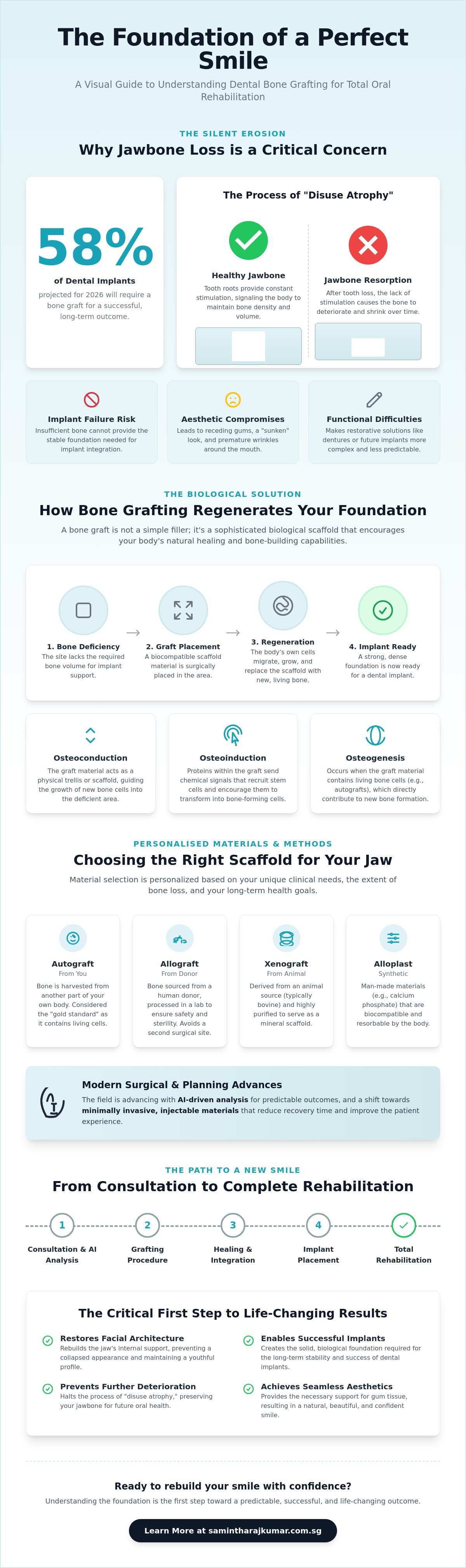
Did you know that approximately 58% of all dental implants performed in 2026 require a bone graft to achieve a successful outcome? In my clinical experience, many patients feel a sense of trepidation when they first hear this term. It's natural to feel anxious about surgical complexity or to worry that bone loss might prevent you from ever regaining your smile. I understand these concerns deeply. From a biological perspective, however, this procedure isn't a hurdle; it's a vital regenerative foundation for your future health.
In this guide, I'll explain how we use sophisticated techniques to restore your jaw health and provide the essential support for total oral rehabilitation. We'll look at the latest FDA-finalised guidance from August 2025 regarding grafting devices and the shift towards minimally invasive, injectable materials that reduce recovery time. By understanding the science behind these life-changing results, you can move forward with confidence. You'll see that the best outcomes begin with understanding the root cause of bone depletion and how we address it with clinical mastery and global standards of care.
Key Takeaways
Understand the biological necessity of regeneration to counter "disuse atrophy" and prevent further jawbone deterioration after tooth loss.
Learn how a bone graft serves as a sophisticated scaffold, allowing your body to naturally rebuild the biological foundation required for successful dental implants.
Discover the importance of personalised material selection, from autografts to xenografts, based on your unique clinical requirements and long-term health goals.
Gain insight into the modern surgical journey, which utilises AI-driven analysis to ensure a predictable and transparent path toward total rehabilitation.
Recognise how restoring bone density is the critical first step in rebuilding facial architecture and achieving seamless, life-changing aesthetic results.
Table of Contents The Silent Erosion: Understanding Jawbone Loss and the Need for Regeneration The Biology of Bone Grafting: How We Regenerate Your Foundation Materials and Methods: Choosing the Right Scaffold for Your Jaw The Patient Journey: What to Expect from Consultation to Integration My Perspective: Why Foundation is the Key to Total Rehabilitation
The Silent Erosion: Understanding Jawbone Loss and the Need for Regeneration
In my clinical experience, bone loss is a silent consequence of tooth loss that many patients overlook until they seek restorative care. When a tooth is removed, the underlying alveolar bone begins to resorb almost immediately. It's a subtle process that occurs beneath the surface, often hidden from view until it begins to change the shape of the face or makes simple dental solutions impossible. Identifying the problem early is vital, whether the loss stems from periodontal disease, physical trauma, or the long-term wear of traditional dentures that don't provide the necessary stimulation to the jaw.
From a biological perspective, this phenomenon is known as "disuse atrophy." Much like a muscle that weakens without regular exercise, your jawbone requires the mechanical stimulation provided by tooth roots to maintain its density and volume. Without this constant signal, the body begins to reclaim the minerals from the bone; it's a natural biological process but one that has significant clinical consequences for your oral health. To better understand how this process impacts your treatment options, watch this helpful video:
Why Bone Volume is Critical for Dental Implants
For those seeking a dental implant singapore specialists often highlight that success depends on the "biological width" and the quality of the surrounding tissue. If there isn't enough bone to encase the implant, the titanium or ceramic post cannot achieve primary stability. This lack of support leads to aesthetic compromises, such as receding gums or a visible greyish tint through the soft tissue. A bone graft acts as the essential restorative bridge here. By consulting a comprehensive overview of bone grafting, we understand that it is a foundational surgical procedure used to repair and rebuild bone structures. It ensures the longevity of the implant by creating a robust environment where the device can integrate seamlessly with your living tissue.
The Emotional Impact of Bone Loss
Beyond the clinical measurements, I see the emotional toll of resorption daily. As the jawbone shrinks, the facial structure loses its internal support, leading to a collapsed appearance and premature wrinkles around the mouth. This change often erodes a patient's self-confidence more than the missing tooth itself. As a clinician and founder, I've seen how the transition from anxiety to hope begins the moment we discuss regenerative surgery. It's about moving from a state of loss to a state of total rehabilitation. For complex cases involving significant bone depletion, a specialist's perspective is essential to ensure that the journey is both safe and predictable. The best outcomes begin with understanding the root cause of bone loss and addressing it with clinical mastery.
The Biology of Bone Grafting: How We Regenerate Your Foundation
From a biological perspective, a bone graft is far more than a simple filler. In my clinical experience, many patients assume we are merely "adding" material to a void. In reality, we are installing a sophisticated biological scaffold designed to recruit your body's own regenerative powers. This process relies on three fundamental pillars of bone healing: osteoconduction, the physical structure that allows new cells to migrate; osteoinduction, the chemical stimulation that encourages stem cells to transform into bone-forming cells; and osteogenesis, the actual formation of new living bone. For this transformation to succeed, the biological environment must be pristine. A robust blood supply is essential, as it delivers the nutrients and oxygen required for cellular life. Without a healthy vascular network, even the most advanced material cannot integrate with your host bone.
As a clinician and founder, I've prioritised the integration of AI-assisted diagnostics at Nuffield Dental to remove the guesswork from this regenerative process. We use high-resolution scans to map bone density with surgical precision before we even begin. This level of detail allows us to identify the exact volume of graft material required and the optimal placement for future implants, ensuring the foundation is as strong as the final restoration. The right diagnosis changes everything. If you are considering your options for restoration, exploring our comprehensive dental services can help you understand the path to a stable, healthy smile.
The Science of Osteointegration
Osteointegration is the ultimate goal of any regenerative procedure. It involves the migration of osteoblasts, or bone-forming cells, into the grafting material. Over a period of four to nine months, the material is biologically replaced by your own living host bone. I prioritise biological dentistry principles here, ensuring we use biocompatible materials that support the body's natural healing rhythm. This transition from graft material to living tissue is a miracle of modern medicine that creates a seamless bond between your body and your dental implants.
Advanced Diagnostics in Bone Mapping
Precision is the hallmark of modern maxillofacial surgery. By using CBCT (Cone Beam Computed Tomography) for 3D surgical planning, we can visualise the internal architecture of the jaw in ways traditional X-rays cannot. This accuracy significantly reduces surgical time, which in turn improves patient comfort and minimises post-operative swelling. When we understand the patient journey for a dental bone graft, it becomes clear that the diagnostic phase is where long-term predictability is born. Accurate diagnostics ensure that our clinical decisions are rooted in data, leading to the life-changing results my patients expect.
Materials and Methods: Choosing the Right Scaffold for Your Jaw
In my practice, the choice of material for a bone graft is never a "one size fits all" decision. It is a meticulous clinical choice rooted in your unique biology and the specific requirements of your future implant. While I always look to the most advanced technologies, we must also respect the fundamental principles of wound healing. From a biological perspective, we are selecting a scaffold that must remain stable while your body's own cells perform the work of reconstruction.
Autografts remain the "gold standard" in my clinical experience. By using your own living tissue, usually harvested from a secondary site within the jaw, we achieve maximum biocompatibility. This material contains your own living cells and growth factors, which significantly accelerates the transition to host bone. However, for many patients, we utilise processed alternatives such as allografts or xenografts. These provide excellent structural scaffolds and are managed under rigorous safety protocols. In fact, the FDA finalised updated guidance in August 2025 to ensure these devices meet the highest global standards for safety and performance. Understanding the different types of bone graft materials is the first step toward a predictable outcome.
Comparison of Grafting Materials
I often combine different materials to achieve a balance between immediate stability and long-term volume retention. For instance, a synthetic alloplast might be used alongside an autograft to ensure the site doesn't lose its shape during the months of healing. This hybrid approach allows us to customise the regenerative process to your specific bone density needs.
Specialised Techniques: Sinus Lifts and Ridge Augmentation
When bone loss is severe, particularly in the upper jaw, we may perform a sinus lift. This procedure gently elevates the sinus membrane to create space for additional bone, ensuring the implant has a deep, secure foundation. Similarly, ridge augmentation allows us to restore the natural contour of the jaw. This is vital for those considering false teeth singapore alternatives, as it ensures the final result looks and feels like natural tissue. As a clinician and founder, I believe these specialised techniques are the bridge between clinical necessity and life-changing aesthetics. The best outcomes begin with understanding the root cause of bone depletion and selecting the right architecture for your total rehabilitation.
The Patient Journey: What to Expect from Consultation to Integration
As a clinician and founder, I believe transparency in the surgical journey is the best antidote to anxiety. In my clinical experience, patients who understand the sequential steps of their treatment feel a far deeper sense of security and control. The journey to total rehabilitation is a meticulous process that respects the natural pace of biological healing. It isn't a race; it's a carefully managed transformation that begins with data and ends with a life-changing smile.
Step 1: The Comprehensive Consultation. We begin with AI-driven bone analysis and 3D CBCT imaging. This allows us to visualize your jaw's internal architecture and plan the bone graft with millimetre precision.
Step 2: The Surgical Procedure. On the day of the procedure, we prioritise minimally invasive techniques. Whether we're performing a simple socket preservation or a complex ridge augmentation, our focus is on preserving the integrity of the surrounding tissue.
Step 3: The Healing Phase. This is the "quiet" period of bone maturation. Over the next four to nine months, your body works to integrate the grafting material, turning the scaffold into living host bone.
Step 4: Final Assessment. Once maturation is complete, we perform a final assessment to confirm the site is ready for the seamless placement of your dental implants.
If you're ready to explore how this journey applies to your specific needs, I invite you to learn more about our specialised clinical protocols.
Managing Comfort and Recovery
The question I hear most often is, "How painful is it?" In modern maxillofacial surgery, discomfort is managed with extreme precision. We utilize advanced local anaesthesia and, where appropriate, intravenous sedation to ensure you remain entirely relaxed. During the first 72 hours, you may experience minor swelling. I recommend using cold compresses and following a soft-food diet to support the initial healing phase. Follow-up appointments are a critical part of the Nuffield legacy; they allow me to monitor the biological integration and ensure your recovery is progressing perfectly.
Long-term Expectations and Success Rates
From a biological perspective, a successful graft is the most important investment you can make in your oral health. When performed by a specialist surgeon, success rates for these procedures are exceptionally high. A robust foundation doesn't just support a tooth; it protects the integrity of your entire jaw. This proactive approach significantly impacts the dental implant cost singapore by preventing future complications and the need for corrective surgeries. The ultimate result is a lifestyle without restriction, where you can eat, speak, and smile with absolute confidence. The right diagnosis changes everything, and the best outcomes begin with a foundation built to last.
My Perspective: Why Foundation is the Key to Total Rehabilitation
I often tell my patients that we are not just building teeth; we are rebuilding the architecture of the face. In my clinical experience, focusing solely on the gap in the smile ignores the underlying biological reality of the jawbone. A bone graft is the essential bridge between clinical necessity and life-changing aesthetics. It restores the structural integrity that supports your lips and cheeks, preventing the "collapsed" facial appearance that so often follows long-term tooth loss. My philosophy is rooted in the belief that a smile is only as beautiful as the foundation that supports it.
From a biological perspective, the synergy between regenerated bone and modern ceramic dental implants represents the pinnacle of a metal-free, biological approach. This combination allows us to restore function without introducing metal into the oral environment, aligning with the highest standards of systemic health. Looking forward, I am excited by how regenerative medicine continues to evolve under my leadership at Nuffield Dental. We are already exploring the integration of smart biomaterials and 3D bioprinting to create even more customised scaffolds for our patients. This innovation is not just about technology; it is about building a legacy of excellence in Southeast Asia.
The Vision of Total Oral Rehabilitation
As a clinician and founder, I choose to focus on "Total Rehabilitation" rather than simple "Single Tooth Replacement." This distinction is critical. When we address the jawbone's health, we are protecting the patient's facial profile for decades to come. Healthy bone volume ensures that dental implants integrate with a level of stability that mimics natural teeth. By adhering to international protocols and the Nuffield legacy, we provide a tier of specialised expertise that generalist practices cannot match. My goal is to ensure that every patient experiences a transformation that is both functional and profoundly aesthetic.
Conclusion: Your Journey to a New Smile
The journey to a new smile is a path that requires patience, precision, and a commitment to quality. I encourage you to view a bone graft not as an additional hurdle, but as a vital investment in your long-term quality of life. A robust foundation prevents future complications and ensures that your rehabilitation is a permanent solution rather than a temporary fix. In my practice, we don't settle for "good enough." We strive for perfection because your confidence and health deserve nothing less. The best outcomes begin with understanding the root cause of bone depletion. The right diagnosis changes everything.
Building Your Future on a Permanent Foundation
In my clinical experience, the most enduring results in oral rehabilitation are achieved when we refuse to compromise on the biological foundation. We've explored how a bone graft is a sophisticated regenerative scaffold that restores the very architecture of your face. By combining AI-assisted diagnostics with specialised surgical protocols, we transform what was once a complex challenge into a predictable journey toward health.
As a specialist in complex implantology and the founder of Nuffield Dental, I've seen how expertise in Zygomatic and All-on-4 protocols changes lives. My commitment is to provide you with a level of care that meets global standards and prioritises your long-term quality of life. The journey to a functional, seamless smile is one we take together, rooted in clinical mastery and compassionate care.
It's time to reclaim the confidence that a healthy, stable smile provides. You're in capable hands.
Frequently Asked Questions
Is a bone graft painful during or after the procedure?
You won't feel any pain during the procedure because we prioritise your comfort through advanced local anaesthesia or intravenous sedation. In my clinical experience, most patients describe the sensation as less intense than a standard tooth extraction. After the numbness wears off, you might feel some minor swelling or a dull ache for about three to five days, which is easily managed with prescribed medication and cold compresses.
How long do I have to wait for a bone graft to heal before getting implants?
The healing period typically ranges from four to nine months depending on the volume of bone required and your body's natural recovery speed. This "quiet phase" is essential because the grafting material must biologically mature into solid, living host bone before it can support the mechanical load of an implant. We use AI-driven diagnostics to monitor this integration and ensure the foundation is perfectly stable before we proceed.
Can my body reject a dental bone graft?
True biological rejection is exceptionally rare since the materials we use are highly biocompatible and don't contain the living cells that trigger an immune response. However, a bone graft can occasionally fail to integrate if the blood supply is compromised or if a patient smokes heavily. Success rates remain very high, often exceeding 95% in my practice, because we follow strict international protocols to ensure a pristine healing environment.
What happens if I choose not to have a bone graft for my dental implants?
Choosing to skip a necessary graft often leads to aesthetic compromises or total implant failure. Without sufficient bone volume, the titanium post may become visible through the gums, or the lack of support could cause the implant to loosen over time. From a biological perspective, placing an implant into inadequate bone is like building a house on sand; it simply won't withstand the daily forces of chewing and speech.
Are there any risks or complications associated with bone grafting?
Like any surgical procedure, there are minor risks such as infection, post-operative swelling, or graft resorption. These occur in a very small percentage of cases, usually fewer than 5% when managed by a specialist. I minimise these risks by using 3D surgical planning and meticulous sterile techniques. Most complications are preventable with proper aftercare and by following the specific recovery guidelines I provide to every patient.
How much does a dental bone graft typically cost in 2026?
In 2026, the national average cost for a bone graft ranges from $300 to $3,500 depending on the complexity of the case. A simple socket preservation graft is usually at the lower end of this scale, while a complex ridge augmentation or sinus lift requires more material and surgical time. I believe in total transparency regarding costs, and we provide a detailed breakdown after your initial AI-assisted bone analysis.
Is bone grafting always necessary for every dental implant case?
No, grafting isn't mandatory for everyone; approximately 58% of dental implant patients require some level of bone augmentation. If you have naturally dense jawbone and have only recently lost a tooth, we may be able to place the implant immediately. We use high-resolution CBCT scans to measure your bone width and height with surgical precision to determine if a graft is truly needed for your long-term success.
What is the difference between a sinus lift and a standard bone graft?
The primary difference lies in the location and the specific technique used to create space for the bone. A standard graft, or ridge augmentation, focuses on increasing the width or height of the jawbone where the tooth was lost. A sinus lift is a specialised procedure for the upper posterior jaw; it involves gently elevating the sinus membrane to make room for new bone so that implants don't interfere with your sinus cavity.

Comments