
Can You Get Cavities with Implants? A Surgeon’s Perspective on Biological Health
- Dr Samintharaj Kumar

- Jun 25
- 12 min read
Your new dental implant is physically incapable of developing a traditional cavity, yet it remains vulnerable to biological threats that can be far more destructive than simple tooth decay. Patients frequently ask me, "can you get cavities with implants?" and while the titanium or ceramic post cannot rot, the living tissue supporting it is still susceptible to infection. In my clinical experience, many patients assume that an artificial tooth means an end to oral health concerns. The reality is that we've simply shifted the focus from the tooth structure to the health of the surrounding bone and gums.
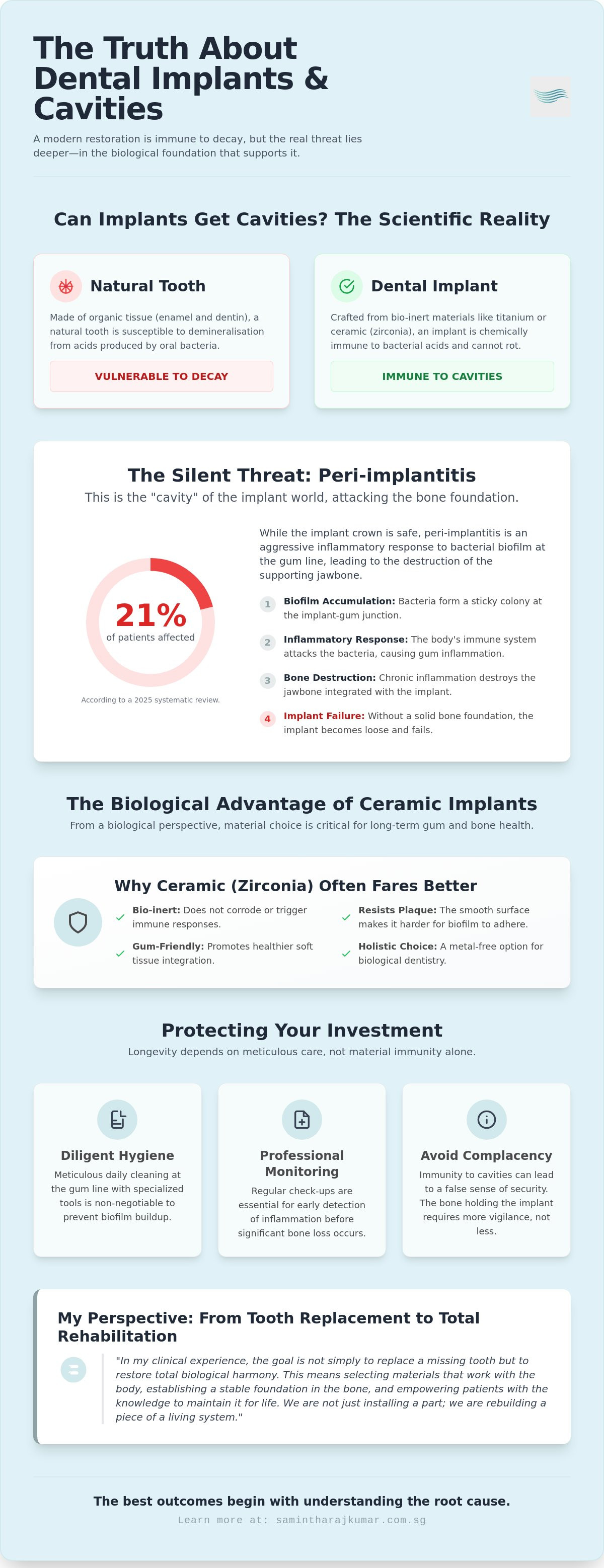
I understand the anxiety that comes with the fear of recurring dental pain or the potential cost of a failed procedure. You've likely chosen implants to find a permanent solution for your smile and your health. From a biological perspective, I'll show you how to prevent the "cavity equivalent" known as peri-implantitis, which a 2025 systematic review found affects approximately 21 percent of patients. We'll examine why choosing the right materials, such as ceramic, can offer superior biological integration and the specific maintenance protocols required to ensure your restoration remains a source of lifelong well-being.
Table of Contents
Can You Get Cavities with Dental Implants? The Scientific Reality
The Silent Threat: Why Peri-implantitis is the 'Cavity' of the Implant World
The Biological Advantage: Why Ceramic Implants Often Fare Better
Protecting Your Investment: Maintenance Protocols for Implants
My Perspective: Why Total Rehabilitation Transcends Simple Tooth Replacement
Can You Get Cavities with Dental Implants? The Scientific Reality
In my clinical practice, patients often seek clarity on the long-term resilience of their restorations. The most frequent query I encounter is: can you get cavities with implants? To provide a definitive answer, we must distinguish between biological tissue and engineered materials. While natural teeth are susceptible to decay, the titanium or ceramic components of a dental implant are chemically immune to the acids produced by oral bacteria. You cannot develop a cavity in an artificial tooth because the material lacks the organic structure that bacteria require to cause rot.
Natural tooth decay is a process of demineralisation. When you consume sugars, specific bacteria in your mouth produce acids that dissolve the hydroxyapatite crystals in your enamel. Because dental implants and their accompanying crowns are crafted from high-grade porcelain or zirconia, they're entirely inert. They don't react to sugar or acid in the same way your natural enamel does. This fundamental difference provides a level of structural security that natural teeth simply cannot match.
To help visualise how these restorations differ from natural teeth and why they remain immune to decay, I recommend watching this brief explanation:
From a biological perspective, we must view the implant as a permanent anchor within a dynamic, living environment. Even though the restoration itself cannot decay, it's integrated into your jawbone and surrounded by sensitive gum tissue. This creates what I call the biological foundation. While the screw remains stable, the health of the interface where the implant meets the gum is critical. If biofilm is allowed to accumulate at this junction, it can lead to Peri-implantitis, an inflammatory condition that mirrors the bone loss seen in severe gum disease rather than a traditional cavity.
The Chemistry of Immunity to Decay
When we look at the composition of a ceramic dental implant, we see a material that bacteria simply cannot metabolise. Zirconia is a non-corrosive material that doesn't provide a "food source" for the microbes that typically cause decay. Furthermore, the role of the abutment is vital here; it acts as a sophisticated seal that protects the internal screw from bacterial ingress. In my experience, this chemical immunity is the greatest advantage of modern implantology, as it removes the risk of traditional crown rot.
Demystifying the "Man-Made" Advantage
The engineering behind dental implant Singapore standards ensures that materials like zirconia mimic the light-reflecting properties of natural teeth without their vulnerabilities. However, this "immunity" often leads to a dangerous sense of complacency. Some patients believe that because they don't have to worry about can you get cavities with implants, they can relax their hygiene. This is a misconception. While the tooth won't rot, the bone holding it can still dissolve if neglected. The man-made advantage is a tool for longevity, not an excuse for reduced care.
The Silent Threat: Why Peri-implantitis is the 'Cavity' of the Implant World
If we accept that the answer to can you get cavities with implants is a scientific "no," we must immediately address the condition that actually causes implant failure. In my clinical experience, the most significant threat isn't decay, but a condition called peri-implantitis. While a cavity destroys the crown of a natural tooth, peri-implantitis destroys the foundation. It begins when biofilm, a complex colony of bacteria, adheres to the implant surface at the gum line. Your body responds with an inflammatory cascade that can be far more aggressive than traditional gum disease.
The primary danger lies in how this process differs from natural tooth decay. Bacteria on a natural tooth produce acid that dissolves enamel. In contrast, bacteria around an implant trigger your immune system to attack the surrounding environment. Because the implant is a foreign object, albeit a biocompatible one, the immune system can sometimes overreact. This leads to the rapid destruction of the very bone that provides stability. According to the guide on Dental Implants: What You Should Know, understanding these biological risks is essential for long-term surgical success.
Bone loss is a silent process. It typically doesn't hurt. By the time a patient notices mobility or a "wiggle" in their artificial tooth, the bone loss is often advanced. As a clinician and founder, I view this as the most critical hurdle in modern implantology. We've mastered the hardware, but we must remain vigilant about the biology.
From Plaque to Bone Loss: The Progression
The journey toward failure usually begins with peri-implant mucositis. This is a reversible inflammation of the soft tissues, similar to gingivitis. If left untreated, it progresses to peri-implantitis, where the damage becomes irreversible. A critical biological factor here is the absence of a periodontal ligament. Natural teeth have this "shock absorber" and sensory ligament that acts as a physical barrier against bacteria. Implants lack this structure. Consequently, infections can migrate to the bone much faster than they would around a natural tooth. The spread is often vertical and rapid.
Why Early Detection is Critical
Early warning signs are subtle. Bleeding during brushing is a major red flag. Around an implant, bleeding isn't just "sensitive gums"; it's a sign of a failing biological seal. I always tell my patients that an annual checkup for dental implants is the only way to monitor bone levels effectively. We use clinical diagnostics to identify early inflammation before it compromises the anchor. The longevity of your smile depends on this proactive approach. If you have concerns about your current restorations, seeking a specialist evaluation can provide the clarity you need to protect your investment.
The Biological Advantage: Why Ceramic Implants Often Fare Better
In my clinical experience, the choice of material is not merely a technical decision; it is a biological one. While titanium has been the industry standard for decades, ceramic implants, crafted from zirconia, offer distinct advantages in the context of long-term tissue health. When patients ask can you get cavities with implants, they are often seeking reassurance about the durability of their investment. While both metal and ceramic are immune to acid-driven decay, zirconia is uniquely bio-inert. This means it does not corrode or release metallic ions into the surrounding gums, which significantly reduces the risk of chronic low-level inflammation.
From a biological perspective, the surface properties of your restoration dictate how your body interacts with it. Research indicates that biofilm has a harder time adhering to the smooth, non-polar surface of zirconia compared to traditional titanium. This "plaque resistance" is a crucial factor in preventing the inflammatory cascade that leads to bone loss. By choosing materials that are less hospitable to pathogenic bacteria, we are effectively stacking the deck in favour of your long-term health. This holistic approach to material selection is a cornerstone of modern, biocompatible dentistry.
Biocompatibility and Tissue Integration
Success in Dental Implant Procedures depends heavily on how well the soft tissue adapts to the artificial post. Ceramic allows for superior soft tissue integration, where the gingiva tends to form a tighter "biological seal" around the zirconia surface. This seal acts as a physical barrier, preventing bacteria from reaching the underlying bone. Beyond the health benefits, ceramic eliminates the "grey line" effect often seen at the gum margin with metal implants. It is the preferred choice for patients with thin gum biotypes or those with high aesthetic demands who want their restoration to look and behave like a natural tooth.
Managing the Oral Microbiome
As a clinician and founder, I advocate for zirconia in complex dental implantology because of its impact on the oral microbiome. The surface roughness of an implant influences which species of bacteria will colonise it. Ceramic materials support a healthier balance of oral flora by discouraging the accumulation of the specific anaerobic bacteria associated with peri-implantitis. We aren't just replacing a missing tooth; we are managing an ecosystem. By utilising bio-inert materials, we create an environment where your body can maintain its biological harmony without the constant stress of metallic foreign bodies. This shift toward ceramic is not just about aesthetics; it is about ensuring that the question of can you get cavities with implants is replaced by a confidence in your total oral health.
Protecting Your Investment: Maintenance Protocols for Implants
An implant is a masterpiece of bio-engineering, but it's not a "get out of jail free" card for oral hygiene. In my clinical experience, the longevity of your restoration is 50 percent surgical precision and 50 percent post-operative care. Patients often feel a sense of relief knowing the answer to can you get cavities with implants is a definitive no, but this shouldn't lead to complacency. You've traded the risk of decay for the risk of inflammation, which requires a more sophisticated approach to daily maintenance. The goal is no longer just "preventing holes," but protecting the biological seal between your gums and the restoration.
The focus of your routine must shift to the "sulcus," the shallow gap where the crown meets the gum. This is the primary battleground against biofilm. Unlike natural teeth, where the attachment is broad and fibrous, the seal around an implant is more delicate. If bacteria breach this seal, they have a direct path to the bone. Professional maintenance is equally vital because standard "scaling and polishing" can actually damage an implant. We use specialised, non-metallic instruments designed to clean without scratching the zirconia or titanium surfaces, ensuring the material remains smooth and plaque-resistant.
The Daily Implant Hygiene Routine
Your toolkit needs an upgrade. I recommend low-abrasive toothpastes; avoiding grit is essential for maintaining the high-gloss finish of your crown, which prevents bacterial adhesion. Interproximal brushes and water flossers are non-negotiable for reaching the areas a manual brush cannot. This is particularly crucial for teeth in a day procedure explained patients, where the bridge structure requires specific techniques to ensure the underlying tissue remains healthy. Consistent care at home is the only way to ensure the question of can you get cavities with implants remains your only dental concern.
The Specialist’s Role in Long-Term Care
As a clinician and founder, I've integrated AI-assisted diagnostics into our maintenance programmes. This technology allows us to catch microscopic changes in bone density that the human eye might miss on a standard X-ray. We also monitor systemic factors like diabetes or smoking habits, which can significantly increase the risk of failure. The right diagnosis of early inflammation changes everything for the implant’s lifespan. If you're unsure if your current routine is sufficient, consulting with an implant specialist ensures your smile is protected by the latest in clinical protocols.
My Perspective: Why Total Rehabilitation Transcends Simple Tooth Replacement
As a clinician and founder, I've spent my career advocating for a shift in how we perceive oral health. We shouldn't view dental implants as "spare parts" or mere mechanical fixes for a gap. Instead, I see them as a vital restoration of your biological harmony. When patients ask me, "can you get cavities with implants," they're essentially asking for a fresh start. My role is to ensure that this new foundation is built to last by treating the mouth as an integrated system, not just a collection of individual teeth. This systemic approach is essential for long-term success.
This philosophy of total rehabilitation is what distinguishes a specialist practice. We don't just look at the missing tooth; we examine the bone density, the gum biotype, and the patient's systemic health factors. From a biological perspective, we must address the conditions that led to the original tooth loss. If we don't understand the root cause, we're simply repeating history. A healthy, decay-proof smile restores more than just chewing function; it preserves facial structure and provides a sense of emotional renewal that is profoundly life-changing.
Innovation and the Future of Care
We're currently in an era where technology allows for unprecedented precision. By using AI-assisted diagnostics and digital workflows, we can ensure the exact placement of all on 4 dental implants, minimising trauma and accelerating healing. I'm also a strong advocate for the shift toward biological, metal-free implantology. Zirconia represents the future because it respects the body's natural chemistry while providing the strength required for functional excellence. This commitment to innovation is how we build a legacy of health for our patients, ensuring every restoration is as meticulous as it is durable.
The Impact on Quality of Life
The transformation I see in my patients goes far beyond the clinical. It's about the confidence to smile without hesitation and the nutritional benefits of a fully functional bite. We're also deeply focused on structural rejuvenation. By preventing facial collapse with dental implants, we maintain the natural contours of the face that are often lost with traditional dentures. I prioritise your long-term well-being in every surgical plan I create. The best outcomes begin with understanding the root cause, ensuring your next smile is built on a permanent foundation.
Securing the Future of Your Biological Smile
We've established that the answer to can you get cavities with implants is a scientific no, yet the biological reality is far more nuanced. As a clinician and founder of Nuffield Dental Holdings, I've seen that the most enduring smiles are those where we prioritise the health of the living tissue over the mere mechanics of the hardware. By embracing biological dentistry and the superior biocompatibility of ceramic implants, we move beyond the limitations of traditional metal restorations.
My work as a specialist in Zygomatic and All-on-4 protocols has taught me that precision is only the beginning. True success requires a lifelong commitment to specialised maintenance and a deep understanding of your oral microbiome. We aren't just replacing teeth; we're restoring your confidence and systemic well-being through meticulous surgical standards and innovative digital diagnostics. Your journey to a permanent smile is a partnership between clinical excellence and dedicated personal care.
The best outcomes begin with understanding the root cause. Explore our approach to total oral rehabilitation.
Frequently Asked Questions
Can I still get gum disease if all my teeth are replaced by implants?
Yes, you can still develop a form of gum disease known as peri-implantitis even after a full mouth restoration. While the artificial teeth are immune to decay, the soft tissues and bone remain susceptible to bacterial infections. In my clinical experience, maintaining gum health is actually more critical with implants because they lack the natural immune barriers found in natural teeth.
What are the first signs that a dental implant is failing?
The earliest indicators of a failing implant are typically redness, swelling, or bleeding of the gums during brushing. You might also notice a dull ache or a change in how your teeth fit together. If an implant feels mobile or "wiggles," it's a sign of advanced bone loss that requires immediate surgical evaluation to prevent total failure.
Is it harder to clean dental implants than natural teeth?
Cleaning implants isn't necessarily harder, but it does require a more deliberate approach with specialised tools. While you don't have to worry about can you get cavities with implants, you must clean the sulcus where the crown meets the gum. I recommend using water flossers and interproximal brushes to reach these delicate areas effectively and protect the biological seal.
Can smoking cause my dental implants to fail even if I don’t get cavities?
Smoking is one of the primary causes of implant failure because it restricts blood flow to the gum tissue and bone. This impaired circulation slows down the healing process and makes it significantly harder for your body to fight off infections. Even without the threat of cavities, smokers face a much higher risk of losing the bone support around their implants due to this biological stress.
Do ceramic implants last as long as titanium ones?
Ceramic implants are engineered to be just as durable as titanium ones while offering superior biological benefits. Zirconia is a high-strength material that is resistant to fractures and corrosion. From a biological perspective, its smooth surface also makes it harder for plaque to accumulate, which can lead to better long-term outcomes for your gum health compared to traditional metal.
What happens if a dental implant gets infected?
If an implant becomes infected, it requires professional clinical intervention to stop the progression of bone loss. We typically use specialised non-metallic instruments to clean the area and may prescribe targeted antibiotics. In some cases, a minor surgical procedure is needed to decontaminate the implant surface and encourage bone regeneration to save the restoration.
How often should I see a specialist for my implant maintenance?
I recommend that my patients see a specialist for a comprehensive implant check-up at least once every twelve months. During these visits, we use digital diagnostics to monitor bone levels and perform specialised cleaning that goes beyond a standard scale and polish. High-risk patients, such as those with a history of gum disease, may require more frequent monitoring to ensure success.
Can a cavity in a neighbouring natural tooth spread to my implant?
A cavity in a neighbouring tooth cannot physically "spread" to an implant because the implant material cannot rot. However, the bacteria responsible for that cavity can migrate into the gum pocket of the implant. This increases the risk of inflammation and peri-implantitis, which is why treating natural tooth decay is vital. Understanding can you get cavities with implants helps you focus on the real threat of bacterial migration.


Comments