
Ceramic vs Titanium Implants: A Specialist Surgeon’s Guide to Material Selection (2026)
- Dr Samintharaj Kumar

- 1 day ago
- 12 min read
If you were told that the long-standing "gold standard" for dental restoration was a metal alloy, would you still choose it if a biocompatible, tooth-coloured alternative now offered a comparable 97.7% survival rate? I often meet patients who feel caught between traditional protocols and the desire for a metal-free, holistic lifestyle. It's completely natural to feel a sense of hesitation when faced with conflicting online advice about ceramic vs titanium implants. You want a solution that's functionally durable, yet you might worry about metal sensitivity or the aesthetic concern of greyish discolouration appearing at the gum margins.
In my clinical experience as a surgeon and founder, I've found that the best outcomes aren't found in a one-size-fits-all approach but in achieving true biological harmony. This guide will provide you with the clinical clarity you need to make an informed choice for your oral rehabilitation. I'll explain the specific strengths of both materials, from the proven mechanical strength of titanium to the superior soft-tissue response of zirconia. By the end, you'll understand how I evaluate these materials to ensure your smile remains as healthy as it is beautiful for the long term.
Table of Contents
The Evolution of Dental Materials: Why the Choice Matters
Modern oral rehabilitation has been transformed by the reliability of dental implants. They serve as a permanent foundation for health, but the choice of material is no longer a secondary concern. As a clinician and founder, I've watched the landscape of implantology evolve from a purely mechanical discipline into one that is deeply rooted in biological science. In my clinical experience, the shift toward ceramic is driven by a sophisticated understanding of both aesthetics and biology. Patients are increasingly questioning traditional metal options because they want a solution that aligns with their holistic health goals.
The core problem often lies in a lack of personalised material selection. When the material doesn't harmonise with your physiology, the clinical consequences can be significant. For some, titanium might trigger a low-level inflammatory response or lead to aesthetic dissatisfaction as the metal casts a greyish hue through thin gum tissue. This is why the conversation regarding ceramic vs titanium implants is so vital in 2026. It's about matching the material to your unique biological profile to ensure long-term stability and confidence.
The Rise of Biological Dentistry
At Nuffield Dental, I advocate for a biological approach that views oral health as inseparable from systemic well-being. This philosophy focuses on how the immune system responds to foreign materials. Many health-conscious patients now prioritise metal-free solutions to avoid potential sensitivities, even if those sensitivities are rare. From a biological perspective, we must consider the following when selecting a material:
Biocompatibility: How well the body accepts the material without an adverse immune response.
Soft Tissue Health: The way gums attach to the surface to create a protective seal.
Aesthetic Integration: How the material mimics the natural translucency of a tooth root.
I integrate these principles by assessing every patient's immune profile and aesthetic expectations before recommending a specific material. This ensures we aren't just replacing a tooth, but restoring a system.
Understanding Osseointegration
The success of any restorative procedure relies on osseointegration. This is the biological process where living bone bonds directly to the implant surface. Different dental implant materials facilitate this process in unique ways. While titanium has decades of documented success, modern zirconia (ceramic) surfaces are now engineered to achieve comparable integration rates. Recent data from 2026 indicates that zirconia implants can achieve survival rates as high as 97.7%. Successful bonding is the primary goal because it ensures the implant can withstand daily function while preventing the bone loss that leads to facial collapse. The right material choice ensures this bond remains healthy for decades.
Titanium Implants: The Orthopaedic Gold Standard
Titanium has been the anchor of modern implantology for over five decades. In my clinical experience, its primary advantage lies in its immense predictability. A 2023 systematic review noted a 10-year success rate of approximately 95.7%, with some clinical studies reporting figures as high as 98.8%. This track record provides a sense of security that is difficult to replicate with newer materials. When we discuss ceramic vs titanium implants, we are often weighing this established long-term data against the emerging aesthetic benefits of zirconia. Modern titanium alloys have evolved significantly to improve both biocompatibility and structural resilience. According to FDA guidance on dental implants, these materials are rigorously tested to ensure they are safe for long-term use within the human body.
For complex cases requiring total oral rehabilitation, titanium remains a vital tool in my surgical toolkit. Specifically, when performing All-on-4 dental implants, the material's high tensile strength is essential to support the full arch of teeth. Titanium remains the clinically superior choice for these complex structural loads, as it can withstand the significant functional forces of daily chewing without the risk of fracture.
Durability and Structural Integrity
One of the key reasons titanium is so versatile is its two-piece design. This allows for greater surgical flexibility during placement. In cases involving sinus lift surgery or extensive bone grafting, the ability to angle the abutment separately from the implant post is a distinct advantage. This modularity allows me to tailor the restoration to your specific anatomy. For patients who suffer from bruxism or have heavy biting forces, titanium's mechanical resilience is unmatched. It provides a robust foundation that handles stress efficiently over many years.
Potential Clinical Drawbacks
Despite its success, titanium isn't without its challenges. I've observed that some patients are concerned about metal sensitivities or galvanic toxicity, where different metals in the mouth create a tiny electric current. While rare, these concerns are valid and deserve a thorough consultation. There is also the aesthetic challenge of "grey shadows." In patients with thin gum tissue, the dark metal of the implant can sometimes be visible at the margin. This aesthetic drawback is a primary reason why many of my patients consider ceramic alternatives. Understanding the root cause of your dental concerns is the first step toward a successful outcome. If you are unsure which material suits your physiology, exploring a specialist consultation can provide the clarity you need.
Ceramic (Zirconia) Implants: The Biological Alternative
From a biological perspective, zirconia is a ceramic material, not a metal. This distinction is vital for patients seeking a holistic approach to their oral rehabilitation. While zirconium is a metal on the periodic table, the zirconium dioxide (zirconia) used in dentistry is a transition metal oxide with a crystalline structure. It's chemically inert. This means it doesn't corrode or trigger the same electrochemical reactions that some patients fear with metal alloys. In my clinical experience, the choice between ceramic vs titanium implants often comes down to this fundamental desire for a metal-free, hypoallergenic solution that respects the body's natural immune system.
The "Metal-Free" advantage is particularly significant for patients with documented allergies or sensitivities. While titanium allergies are statistically rare, the peace of mind that comes with a ceramic solution is invaluable for many. Beyond the absence of metal, zirconia offers a unique advantage in how it interacts with the surrounding tissues. Gums tend to adhere more readily to ceramic surfaces, creating a tight biological seal that protects the underlying bone.
Aesthetics and the "Natural Look"
When we address the "smile zone", the anterior teeth that are most visible, aesthetics are non-negotiable. Ceramic implants are naturally white and opaque, which allows them to mimic the translucency of natural tooth roots. This is a significant milestone for cosmetic dentistry. Because the material is tooth-coloured, there is no risk of dark grey margins appearing at the gum line, even if a patient has a thin gingival biotype. This ensures the restoration remains undetectable. It provides a level of confidence that traditional materials sometimes struggle to match.
Biocompatibility and Plaque Resistance
From a health-maintenance standpoint, zirconia is exceptional. Research, including a clinical trial comparing ceramic and titanium implants, shows that zirconia surfaces attract significantly less bacterial plaque than their metal counterparts. This is a critical factor in long-term success. Lower plaque accumulation reduces the inflammatory response in the surrounding soft tissues. This in turn lowers the risk of peri-implantitis. For patients who prioritise long-term biological harmony, this hypoallergenic and plaque-resistant nature makes ceramic a premium choice for modern restoration. It's not just about replacing a tooth; it's about fostering an environment where the body can thrive.
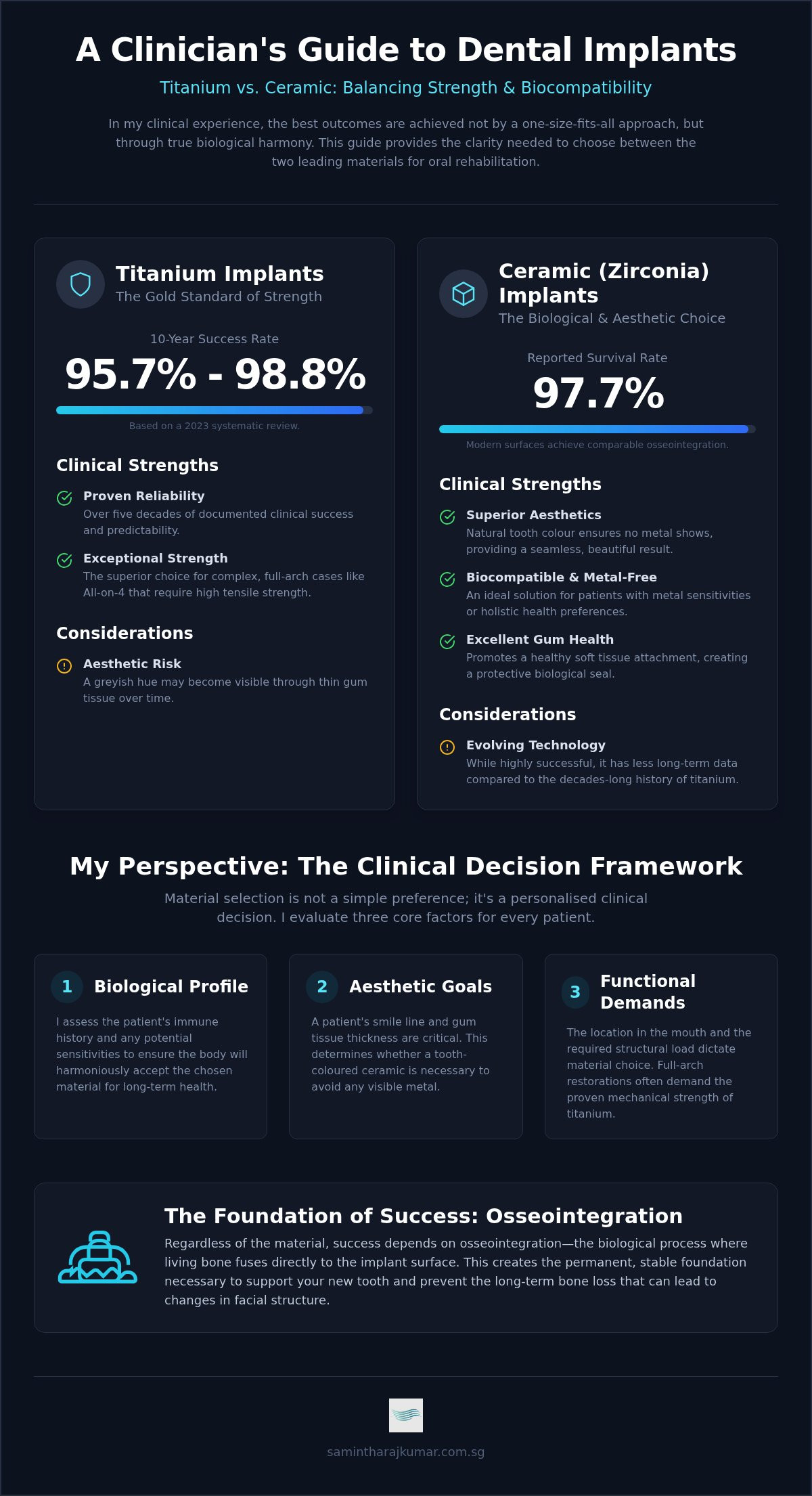
My Perspective: The Decision Framework for Material Selection
As a clinician and founder, I believe the best outcomes begin with understanding the root cause of tooth loss. It's not enough to simply replace a missing structure; we must restore a functional and biological system that lasts a lifetime. My unique treatment philosophy involves balancing structural necessity with biological harmony. While some practitioners might view the choice of ceramic vs titanium implants as a binary debate, I see it as a nuanced clinical decision tailored to your specific physiology, bone quality, and long-term aesthetic goals.
In my clinical experience, the decision framework is rarely about which material is "better" in a vacuum. Instead, it's about which material is "right" for your unique environment. I prioritise a visionary approach to your health, looking beyond the immediate surgery to the decades of function and confidence that follow. To help you understand how I navigate these choices, I have summarised the primary metrics I evaluate during a consultation.
When I Recommend Titanium
Titanium is my primary recommendation in cases requiring Teeth in a Day. This immediate loading protocol demands a material with exceptional fracture resistance and a proven track record of mechanical stability under load. Similarly, for complex full-mouth rehabilitations involving Zygomatic or Pterygoid systems, titanium provides the necessary structural versatility. When bone volume is extremely limited, the ability to utilise various lengths and diameters of titanium alloys allows me to build a lasting foundation where other materials might reach their physical limits. It remains the orthopaedic standard for high-stress areas of the mouth.
When Ceramic is My First Choice
Ceramic is my first choice for patients with a "thin biotype," where the gum tissue is delicate and translucent. In these instances, the dark shadow of titanium could compromise the final aesthetic result, whereas zirconia maintains a bright, natural appearance. It's also the ideal selection for health-conscious individuals who maintain a strictly metal-free lifestyle and want to avoid any risk of metal sensitivity. From a biological perspective, single-tooth replacements in the "smile zone" benefit immensely from the natural translucency of ceramic, ensuring maximum facial harmony and a seamless transition between the restoration and your natural teeth.
Clinical Comparison: Ceramic vs Titanium Implants
Aesthetic Quality: Titanium is reliable but may show through thin gums; Ceramic is superior, mimicking natural tooth translucency.
Biocompatibility: Titanium is high but is a metal alloy; Ceramic is exceptional and bio-inert.
Structural Versatility: Titanium is excellent for full-arch and complex cases; Ceramic is ideal for single-tooth and aesthetic zones.
Plaque Affinity: Titanium is standard; Ceramic is low, reducing the risk of soft tissue inflammation.
The best outcomes begin with understanding the root cause. For a comprehensive assessment of your oral health and to determine which material aligns with your biological needs, consult with our specialist team.
The Long-Term Impact on Quality of Life
When we decide between ceramic vs titanium implants, we aren't just choosing a material for a single procedure. We're investing in the future of your facial architecture. The right material choice prevents facial collapse by providing the necessary stimulation to the jawbone, which maintains the natural contours of your face. Without this structural support, bone resorption can lead to a prematurely aged appearance. As a clinician and founder, I prioritise a visionary approach where we look at your oral health as the foundation for total facial rejuvenation.
To achieve this, I utilize AI-assisted diagnostics during the planning phase. This technology allows for unparalleled precision, ensuring that whether we select the mechanical resilience of titanium or the biological harmony of zirconia, the implant is placed in the optimal position for both function and aesthetics. Setting realistic expectations is a vital part of my consultation process. While the surgical phase is critical, the healing and maintenance phases are where the legacy of your new smile is truly built. Precision in the early stages leads to predictable, lifelong results.
Maintaining Your Investment
Long-term success is a partnership between surgeon and patient. Different materials require slightly different hygiene protocols. Titanium surfaces, for instance, must be cleaned with specific non-metallic instruments during professional reviews to avoid microscopic scratches that could harbour bacteria. Ceramic implants, while naturally plaque-resistant, still require meticulous home care to protect the soft tissue seal. In my clinical experience, regular specialist reviews are essential to monitor osseointegration and the health of the surrounding gingiva. We don't just place an implant; we curate a long-term environment for health.
The Vision of Total Rehabilitation
Beyond the functional replacement of a tooth, I view every implant procedure as a step toward a patient's emotional renewal. There is a profound personal impact when a person regains the confidence to smile and eat without reservation. This is the transformative power of modern medicine. As a clinician and founder, my goal is to build an institution that values this human outcome as much as technical excellence. Total oral rehabilitation is about more than just a durable solution; it is about restoring your quality of life and ensuring your smile reflects your inner vitality. The best outcomes begin with understanding the root cause, and the right diagnosis changes everything.
Defining Your Path to Biological Harmony
Choosing between ceramic vs titanium implants is a pivotal moment in your journey toward oral rehabilitation. As a specialist in complex oral surgery and the founder of Nuffield Dental, I've dedicated my career to ensuring that every material we select aligns with global standards in biological dentistry. We've seen that while titanium remains the orthopaedic standard for structural stability, zirconia offers a sophisticated, metal-free alternative for those who prioritise aesthetics and hypoallergenic properties. It's about finding the precise balance that respects your body’s unique physiology while restoring your smile’s natural vitality.
I believe that modern dental innovation should serve both your health and your confidence. By integrating AI-assisted diagnostics with a patient-centred philosophy, we ensure that your restoration is built on a foundation of precision and trust. Your smile is a legacy of your health, and I'm here to help you protect it for the decades to come. The best outcomes begin with understanding the root cause. Explore our approach to specialist oral surgery.
Frequently Asked Questions
Can I be allergic to titanium dental implants?
Yes, although titanium is highly biocompatible, it's possible to have a sensitivity or rare allergy to the metal alloy. In my clinical experience, patients with multiple metal sensitivities often seek a ceramic alternative to avoid potential immune responses. If you have concerns, I recommend a MELISA test to confirm any hypersensitivity. While most patients tolerate titanium without issue, documented allergies are a primary reason I recommend exploring the biological benefits of zirconia.
Do ceramic implants break more easily than titanium ones?
Modern zirconia implants are exceptionally strong, though they possess different physical properties than titanium. Titanium is more ductile, meaning it can slightly flex under extreme load, whereas ceramic is more brittle. Recent advancements in material science have significantly reduced the risk of fracture in ceramic systems. For most single-tooth replacements, the strength of zirconia is more than sufficient for daily functional forces. I assess your bite and bruxism habits before selecting the material.
Which implant material looks more like a natural tooth?
Ceramic implants provide a superior aesthetic result because the material is naturally white and opaque. Unlike titanium, which can sometimes cast a greyish shadow through thin gum tissue, zirconia mimics the natural translucency of a tooth root. This is particularly important for restorations in the smile zone. When comparing ceramic vs titanium implants for anterior teeth, I often recommend ceramic to ensure the most seamless and natural-looking integration with your natural dentition.
Are ceramic implants more expensive than titanium?
Ceramic implants typically involve a higher investment than traditional titanium options. This is largely due to the complex manufacturing processes required to create high-strength zirconia and the specialised surgical protocols involved in their placement. As a clinician and founder, I view this as a premium choice for patients who prioritise a metal-free lifestyle and specific aesthetic outcomes. We focus on the long-term biological value and the personal impact of a biocompatible restoration.
How long do ceramic vs titanium implants last?
Both materials are designed to be long-term solutions for oral rehabilitation. Titanium has decades of data showing a 95.7% success rate over ten years. However, a 2026 multicenter trial reported a 97.7% cumulative survival rate for zirconia implants at the 10-year mark. When weighing ceramic vs titanium implants, the longevity of both is excellent, provided there is meticulous surgical placement and consistent patient hygiene. Success is a partnership between your home care and my expertise.
Can I get ceramic implants if I need All-on-4?
For All-on-4 or full-arch rehabilitations, I generally recommend titanium due to its superior mechanical resilience and the versatility of its two-piece design. Titanium allows for the use of multi-unit abutments that are essential for correcting the angles of a full bridge. While full-arch ceramic solutions are emerging, titanium remains the orthopaedic standard for these high-load cases. I evaluate your bone volume and functional requirements to determine if a hybrid or purely ceramic approach is feasible.
What happens if my body rejects a titanium implant?
What patients often call rejection is typically a failure of osseointegration or the development of peri-implantitis. If an implant fails to bond with the bone, I must first identify the root cause, which could be anything from a low-level immune response to bacterial inflammation. In such cases, we remove the implant, allow the site to heal, and often consider a ceramic alternative. Zirconia's lower plaque affinity can sometimes offer a more favourable environment for re-treatment.
Is zirconia considered a metal or a ceramic in dentistry?
In dentistry, zirconia is classified as a ceramic. While it's derived from the metal zirconium, the oxidation process transforms it into zirconium dioxide, which is a bio-inert ceramic material. It doesn't behave like a metal in the body; it doesn't corrode and it isn't thermally or electrically conductive. From a biological perspective, this makes it an ideal metal-free solution for patients who are concerned about the systemic effects of metal alloys in their mouths.


Comments