
Chao Pinhole Surgery Recovery: A Specialist Surgeon’s Guide to Rapid Healing (2026)
- Dr Samintharaj Kumar

- Aug 13
- 12 min read
What if the path to reversing gum recession didn't require a single scalpel or suture? Most patients arrive at my practice with a deep-seated fear of invasive gum grafting and the weeks of downtime that often follow. It's natural to feel anxious about how a surgical procedure might disrupt your professional life, and I find that many people are specifically concerned about the chao pinhole surgery recovery timeline. I understand that you're looking for a restorative solution that values your personal comfort as much as your clinical outcome.
I'm here to show you that this modern technique is fundamentally different, prioritizing biological preservation and rapid healing without the trauma of traditional incisions. In this guide, I'll share the precise clinical timeline and specialist protocols we use to ensure your return to oral health is both swift and seamless. We'll examine the critical first 24 hours of healing, the specific dietary transitions required, and the long-term habits that maintain your stable, aesthetically pleasing gum margins for years to come.
Table of Contents
Understanding the Biological Advantage of Chao Pinhole Surgery
The Chao Pinhole Surgical Technique (PST) is a suture-free approach to treating gum recession that eliminates the need for traditional scalpels. In my practice, I view it as a sophisticated alternative to conventional grafting. Instead of creating large flaps by cutting the gum tissue, we utilize a tiny entry point. This small opening, often no larger than a pinhead, allows us to reposition the existing tissue without the trauma of extensive incisions.
The science behind the "pinhole" is rooted in the preservation of the patient's existing anatomy. Traditional methods frequently involve harvesting tissue from the roof of the mouth, which creates a secondary wound and a more strenuous healing process. By contrast, the chao pinhole surgery recovery is significantly more comfortable because we don't have to manage a donor site. We focus entirely on the recession area, which simplifies the biological demands on your body.
Preserving the local blood supply is the cornerstone of my clinical approach. When tissue is cut and moved as a graft, the blood supply is temporarily interrupted; this can lead to slower healing or even graft failure. PST keeps the vascular network intact. This constant flow of nutrients and oxygen to the site is the primary reason why chao pinhole surgery recovery feels so much faster and more predictable for my patients.
The Mechanism of Gum Rejuvenation
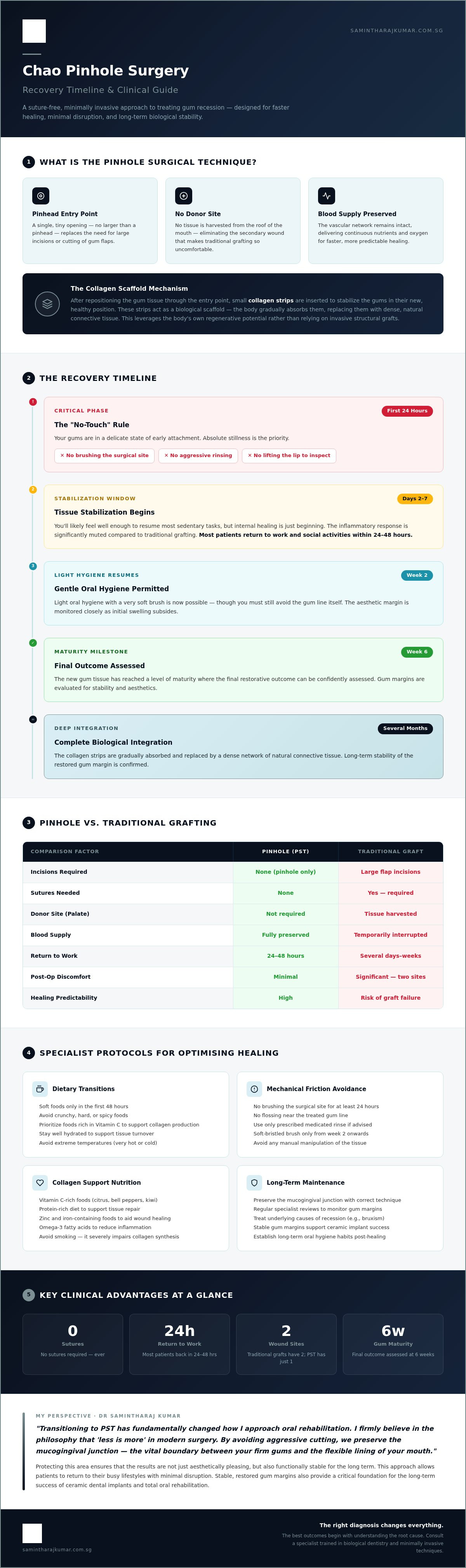
We use specialized, patented instruments to gently loosen the gum tissue through the small entry point. Once the tissue is moved to its ideal, healthy position, I insert small collagen strips into the space. These strips serve a dual purpose: they stabilize the gums in their new location and provide a scaffold for the body to build new, healthy connective tissue. PST represents a significant breakthrough in biological dentistry by utilizing the body’s natural regenerative potential rather than relying on invasive structural grafts.
My Perspective: The Shift to Minimally Invasive Care
Transitioning to PST has fundamentally changed how I approach oral rehabilitation. I firmly believe in the philosophy that "less is more" in modern surgery. By avoiding aggressive cutting, we preserve the mucogingival junction, which is the vital boundary between your firm gums and the flexible lining of your mouth. Protecting this area ensures that the results are not just aesthetically pleasing but also functionally stable for the long term. This approach allows my patients to return to their busy lifestyles with minimal disruption.
The Pinhole Recovery Timeline: What to Expect
The success of your chao pinhole surgery recovery depends on a clear understanding of the biological phases your body undergoes after the procedure. During the first 24 hours, the priority is absolute stillness. I instruct my patients to follow a strict "no-touch" rule. This means no brushing the surgical site, no aggressive rinsing, and no lifting the lip to inspect the area. Your gums are in a delicate state of early attachment, and even minor mechanical friction can disrupt the stabilization of the tissue.
From day 2 to day 7, we enter the critical window for tissue stabilization. While you'll likely feel well enough to resume most sedentary tasks, the internal healing is just beginning. By the second week, you can typically begin light oral hygiene using a very soft brush, though you must still avoid the gum line itself. We monitor the aesthetic margin closely during this time to ensure the new position of the gums remains stable as the initial swelling subsides. By the 6-week milestone, the new gum tissue has reached a level of maturity where we can confidently assess the final restorative outcome.
Immediate Post-Operative Milestones
One of the most rewarding aspects of this technique is how quickly patients return to their social and professional lives. Most of my patients find they can resume work and social activities within 24 to 48 hours. Because PST is suture-free, the inflammatory response is significantly muted compared to traditional grafting. In my practice, patients are often surprised by the lack of post-operative pain; they expect the lingering ache of a donor site wound, but since we haven't harvested tissue from the palate, that discomfort simply doesn't exist. If you have questions about your specific case, you can always consult with our specialist team for personalized guidance.
Long-Term Tissue Integration
While the surface heals quickly, the deeper integration of the collagen strips takes several months. Your body gradually absorbs these strips, replacing them with a dense network of natural collagen that anchors the gums to the underlying bone. This long-term stability is why follow-up appointments are essential. We don't just look for immediate coverage; we look for the functional health of the entire oral environment. Maintaining this health is similar to the care required for an annual checkup for dental implants, where we ensure the surrounding tissues remain resilient and disease-free to protect your investment in your smile.
Pinhole vs. Traditional Grafting: A Recovery Comparison
When comparing surgical techniques, the most significant difference lies in the level of trauma inflicted on the oral tissues. Traditional gum grafting has long been the standard of care, yet it requires a dual-site approach. Surgeons must harvest tissue from the roof of the mouth and transplant it to the area of recession. This creates two separate wounds that the body must heal simultaneously. In my experience, the chao pinhole surgery recovery is far superior because it eliminates this secondary surgical site entirely, focusing the body's regenerative energy on a single location.
The management of sutures also represents a major clinical divide. Traditional grafting relies on stitches to secure the donor tissue, which can cause tension, inflammation, and localized swelling. Because PST is suture-free, the inflammatory response is naturally minimized. This lack of tension allows the tissue to settle more comfortably and reduces the risk of the "bulky" appearance sometimes seen with traditional grafts. I've found that the predictability of the final margin is much higher when we aren't fighting against the restrictive pull of sutures during the initial healing phase. If you're weighing these options, you can speak with our clinical team to see which approach best suits your anatomy.
The Elimination of the Second Surgical Site
The primary driver of post-operative pain in traditional grafting isn't actually the gum line; it's the donor site on the palate. Harvesting tissue from the roof of the mouth leaves an area that feels like a severe pizza burn, often taking weeks to fully epithelialise. By using PST, we avoid this "donor site" trauma. We utilize the patient's existing gum tissue, gently expanding it to cover the exposed roots. This biological efficiency is a cornerstone of my practice, as it preserves the integrity of the palate while achieving the necessary coverage. This focused approach is why the chao pinhole surgery recovery feels so much more manageable for patients with demanding schedules.
Aesthetic Symmetry and Healing
One of the most profound benefits of PST is the ability to treat multiple teeth, or even the entire mouth, in a single session. Traditional grafting is often limited by the amount of donor tissue available, requiring multiple surgeries months apart. With PST, we achieve uniform healing across the entire smile line simultaneously. This ensures aesthetic symmetry that is difficult to replicate with piecemeal grafting. This level of comprehensive care perfectly complements our approach to cosmetic dentistry in Singapore, where we prioritize functional aesthetics alongside clinical excellence. By treating the whole arch at once, we ensure the color and texture of the gums remain consistent, providing a more natural and youthful appearance.
My Clinical Protocols for Optimising Your Healing
Following the procedure, the success of the biological integration depends on strict adherence to my post-operative protocols. The most critical instruction I give is the "No Brushing" rule. Mechanical friction is the primary enemy of early healing; even a soft-bristled brush can disrupt the delicate fibrin attachment that secures your gums in their new position. During this phase of your chao pinhole surgery recovery, we rely on prescription antimicrobial rinses to maintain oral hygiene. These rinses eliminate bacteria without the need for physical contact, ensuring the surgical site remains pristine while the tissue stabilizes.
Physical activity must also be moderated to protect the integrity of the surgical site. I advise patients to avoid strenuous exercise for at least 48 to 72 hours. Elevated blood pressure can lead to localized swelling or minor bleeding at the entry point, which may interfere with the initial stages of your chao pinhole surgery recovery. It's a small trade-off for a lifetime of improved oral health and functional aesthetics. If you're ready to begin your restorative journey, you can schedule a consultation with our specialist team to discuss your personalized recovery plan.
The "No-Zone" Protocol
Consistency is key during the first week of healing. You must resist the urge to "pull the lip" to inspect the results in the mirror. This action creates unnecessary tension on the mucogingival junction and can compromise the position of the gums. Similarly, avoid using straws or creating any form of suction in the mouth, as negative pressure can dislodge the collagen strips before they've fully integrated. To minimize minor facial swelling, I recommend sleeping with your head slightly elevated for the first two nights. This simple adjustment uses gravity to prevent fluid accumulation in the facial tissues.
Nutrition for Tissue Regeneration
Optimizing your diet goes beyond simply choosing "soft foods"; it's about providing the building blocks for new tissue. I emphasize nutrients that support collagen synthesis, particularly Vitamin C and high-quality proteins. In the first 72 hours, prioritize hydration and lukewarm options like nutrient-dense soups or protein shakes. You should avoid spicy or acidic foods to prevent irritation at the entry point. Cold liquids are excellent for soothing the area, but ensure they are sipped directly from a cup rather than through a straw to protect the delicate surgical site.
Long-Term Success and Total Oral Rehabilitation
The success of your chao pinhole surgery recovery isn't measured only by the first few weeks of healing; it's defined by the long-term stability of the restored tissue. Stable gum margins serve as the primary biological seal for the underlying alveolar bone. When recession is left untreated, the bone is exposed to bacterial infiltration, which can lead to gradual resorption. By restoring the gum line through PST, we create a resilient barrier that protects the structural integrity of your jaw. This protection is vital for the longevity of your natural teeth and any restorative work you've invested in.
I often see a profound synergy between healthy gums and the longevity of ceramic dental implants. For an implant to remain successful over decades, it requires a dense, healthy cuff of gingival tissue to prevent peri-implantitis. A successful chao pinhole surgery recovery ensures that the soft tissue environment is robust enough to support these advanced restorations. Beyond the clinical benefits, gum rejuvenation has a transformative impact on facial harmony. A receded gum line often creates a "toothy" smile that can prematurely age the face, whereas a balanced gum margin restores the natural frame of the teeth, contributing to a more youthful and vibrant appearance.
Protecting Your Investment in Health
In my practice, I view gum health as the essential foundation for preventing facial collapse with dental implants and other structural treatments. When we maintain the volume of the gums and the underlying bone, we support the soft tissues of the face, helping to preserve your natural face shape. Regular professional maintenance is a non-negotiable part of PST longevity. We work with you to correct the root causes of the initial recession, such as malocclusion or aggressive brushing habits, ensuring that your results remain stable for years to come. This proactive approach turns a single surgical procedure into a lifetime of oral health.
My Future Vision for Gum Health
The Pinhole Surgical Technique is a cornerstone of my vision for biological dentistry. It reflects a shift toward procedures that respect the body’s natural architecture and regenerative capacity. I prioritize the preservation of the blood supply and the mucogingival junction because I've seen how much more comfortably patients heal when we work with biology rather than against it. The transformative power of minimally invasive surgery lies in its ability to deliver exceptional results with minimal disruption to your life. Ultimately, the best outcomes begin with a specialist who understands that every detail of your recovery contributes to your total oral rehabilitation.
Restoring Your Confidence Through Biological Precision
Chao Pinhole Surgery represents a fundamental shift in how we approach gum recession, prioritizing your comfort by eliminating the trauma of traditional grafting. By focusing on the body's natural regenerative potential and preserving the local vascular network, we ensure that your chao pinhole surgery recovery is both swift and predictable. This technique isn't just about aesthetic correction; it's about building a stable foundation for your total oral health and long-term facial harmony.
As the founder of Nuffield Dental and a specialist in complex oral surgery, I've dedicated my career to pioneering minimally invasive rehabilitation protocols that respect your anatomy and your lifestyle. I believe that modern medicine should be transformative yet gentle, allowing you to return to your daily life with renewed confidence. The right diagnosis changes everything. Contact my team at Nuffield Dental to discuss your gum rejuvenation journey. Your path to a healthier, more resilient smile starts with a single, gentle step toward restoration.
Frequently Asked Questions
How long does the recovery from Chao Pinhole Surgery actually take?
Most patients find that the initial phase of chao pinhole surgery recovery takes only 24 to 48 hours, allowing a quick return to work. While you'll feel normal almost immediately, the internal biological stabilization of the gum tissue continues for about six weeks. During this time, the collagen strips we use are gradually integrated into your natural anatomy, ensuring the new gum position becomes a permanent part of your oral structure.
Will I experience significant pain during the PST recovery period?
You shouldn't experience significant pain because the Pinhole Surgical Technique eliminates the need for invasive cutting or harvesting tissue from the palate. Traditional grafting pain usually stems from the donor site wound on the roof of the mouth; since PST avoids this, discomfort is typically minimal. Most of my patients manage any minor sensitivity with standard over-the-counter relievers and are often pleasantly surprised by how comfortable the healing process feels.
When can I resume brushing my teeth after pinhole surgery?
You must avoid brushing the treated area for at least seven to ten days to prevent disrupting the delicate fibrin attachment. During this initial window, I prescribe a specialized antimicrobial rinse to keep the site clean without mechanical contact. After the first week, we'll typically clear you to use an extra-soft toothbrush, though you must still avoid the gum line itself until the tissue has fully stabilized at the six-week mark.
What foods should I avoid following the Chao Pinhole technique?
You should avoid crunchy, hard, or "sharp" foods like chips and nuts that could physically poke or scrape the surgical site. It's also vital to skip spicy or highly acidic items for the first 72 hours to prevent chemical irritation of the entry point. I also advise against using straws, as the suction can disturb the repositioned tissue. Instead, prioritize soft, lukewarm options like protein shakes, yogurt, and blended soups to support regeneration.
Are the results of Pinhole Gum Rejuvenation permanent?
The results of the procedure are designed to be permanent, provided the underlying causes of the original recession are addressed. If you continue aggressive brushing habits or leave bite alignment issues untreated, new recession can occur over time. However, when combined with proper maintenance and the specialist protocols I provide, the restored gum margins remain stable and protect your teeth and bone structure for many years.
Can I go back to work the day after my pinhole procedure?
Yes, most patients return to their professional and social lives within 24 to 48 hours after the procedure. Because the technique is suture-free and minimally invasive, the post-operative swelling and downtime are significantly less than traditional grafting methods. I simply recommend avoiding strenuous physical activity or heavy lifting for the first few days, as an elevated heart rate can occasionally cause minor localized swelling in the treated area.
Does Chao Pinhole Surgery require any stitches or sutures?
No, Chao Pinhole Surgery is entirely suture-free, which is one of its primary biological advantages. Instead of using stitches to hold tissue in place, we utilize specialized collagen strips that act as a natural scaffold to stabilize the gums in their new position. This lack of sutures significantly reduces the risk of inflammation and tension-related pain, leading to a much smoother and more comfortable chao pinhole surgery recovery for my patients.
What happens if I accidentally touch the treated gum area?
If you accidentally touch the area once, don't panic, but you must strictly avoid repeating the contact. The tissue is held in place by delicate fibrin bonds and collagen strips during the first few days, and physical pressure can cause the gums to shift from their ideal position. If you notice any visible displacement or significant bleeding after accidental contact, it's important to contact my clinical team immediately for a professional assessment.


Comments