
CHAO Pinhole Surgery Recovery: What to Expect and Heal

A quiet-looking surgical site doesn’t necessarily mean the gum tissue has finished healing. That distinction is central to chao pinhole surgery recovery. It can leave you wondering whether tenderness or swelling is expected, or whether a change deserves attention. It’s natural to want a clear day-by-day timetable, but recovery varies according to your tissues and the care needed after surgery.
In my clinical experience, patients feel more confident when they know what to watch for and have clear, personalised instructions. I’ll explain what you may experience as healing progresses, how to approach food and everyday activities, and why it’s important to follow the guidance for your surgical site. I’ll also explain when to contact me, so you’re not left trying to judge a concern alone. The aim is not to promise a fixed recovery time, but to help you support healing with patience and informed care.
Table of Contents
CHAO Pinhole Surgery Recovery: What the Healing Process Involves
It’s understandable to wonder whether your gums will feel uncomfortable, how the treated area may look, and when you can return to your usual routine. There isn’t one day-by-day pattern that applies to everyone. CHAO Pinhole Surgery recovery is the period of tissue healing and clinical follow-up after treatment, when I monitor the treated area and guide your care.
Recovery involves more than waiting for the gum to look settled. Your tissues need time to heal, and my advice helps you understand what is appropriate for your treatment. Feeling comfortable enough to resume some activities does not necessarily mean healing is complete. The reverse can also be true: a change in appearance may be part of healing and does not, on its own, determine the final result.
What happens to gum tissue during healing?
Gum recession occurs when the gingival tissue around a tooth moves away from the crown, exposing more of the tooth root. This may contribute to sensitivity or changes in appearance. The gums help protect the supporting structures around the teeth, so I assess recession in the context of your overall oral health. The overview of Gingival Recession explains the condition and its possible causes and treatments.
The broad purpose of CHAO Pinhole Surgery is to reposition gum tissue towards areas affected by recession. After treatment, the tissues involved need time to heal. Follow-up allows me to assess how they are responding. Repositioning tissue does not guarantee a particular degree of coverage or a permanent result. The findings at examination and the condition of the tissues matter.
Why recovery differs between patients
Recovery can vary according to the area treated, the extent of recession and individual health factors. The same sensation or appearance may not occur in every patient, and another person’s experience is not a reliable timetable for yours. A careful examination helps me understand the starting condition and explain what to expect in your case.
In my clinical experience, clear expectations are part of good care. Patients are better placed to follow advice when they understand that healing is assessed in context, not against a universal calendar. I use the examination findings and the response of the treated tissues to guide personalised recommendations, including which changes should prompt a conversation.
For that reason, treat general descriptions of recovery as orientation, not as a substitute for the instructions I give you after your procedure. Your follow-up plan gives you an opportunity to raise concerns and have the area assessed. This is where precision matters: attentive guidance supports you during healing while keeping the focus on long-term gum health.
Why CHAO Pinhole Surgery Healing Needs More Than a Fixed Timeline
The term “minimally invasive” can sound as though recovery will be immediate or identical for every patient. It shouldn’t be understood that way. The term describes an approach to treatment, not a promise that there will be no discomfort or that gum tissues will heal in the same way for everyone. It’s reasonable to have questions about what you feel and see as you recover.
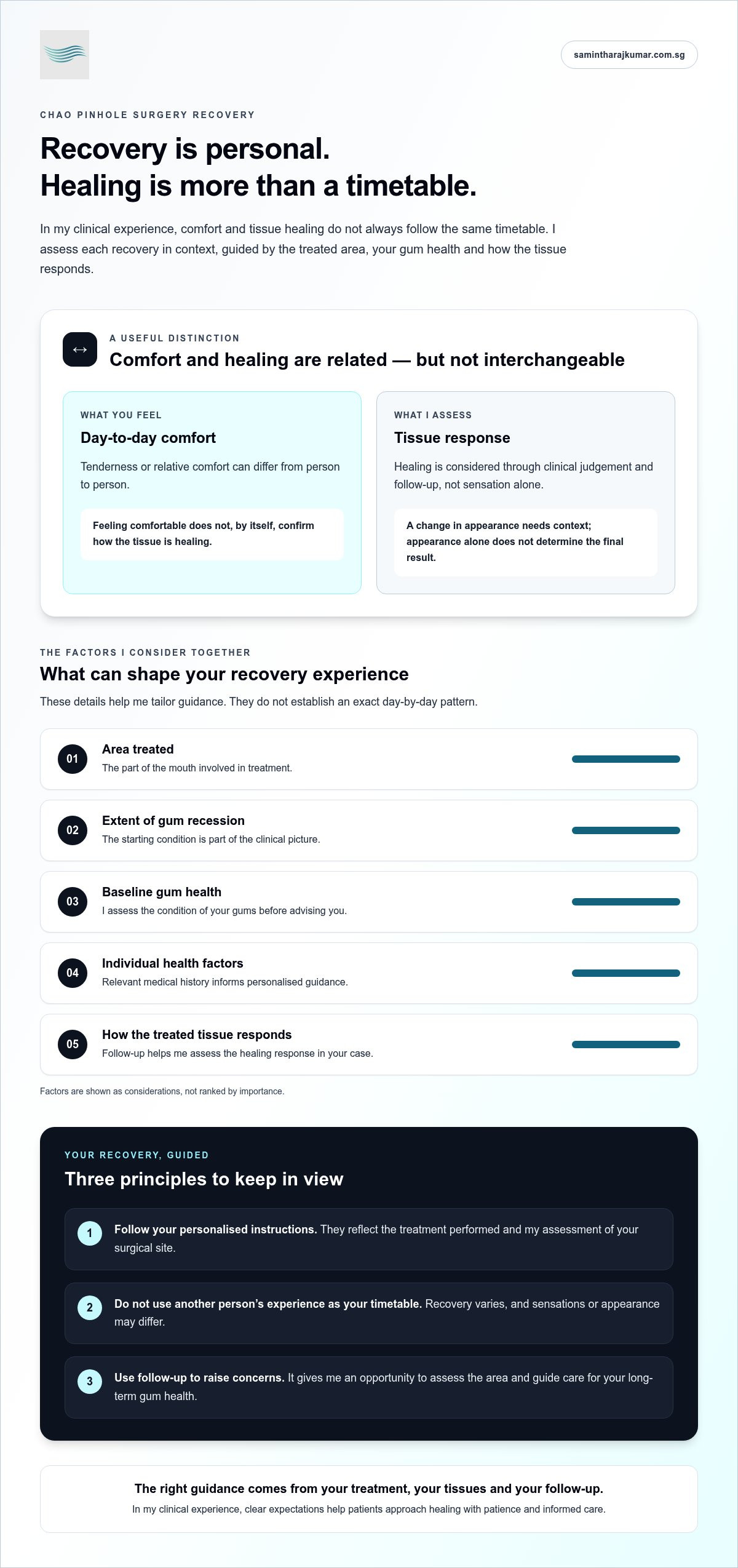
Healing varies from person to person, and the instructions I give you take priority over general recovery guidance. Your day-to-day comfort and the biological healing of the treated tissue are related, but they are not interchangeable. Feeling comfortable doesn’t by itself confirm how the tissue is healing. Equally, a change in appearance should be considered in context rather than judged in isolation.
What influences an individual recovery experience?
The area treated and the extent of gum recession are part of the clinical picture. Your baseline gum health matters too, because I need to assess the tissue before giving advice tailored to you. These details help shape care recommendations, but they don’t allow anyone to promise an exact recovery pattern.
Your medical history may also inform personalised guidance. During assessment, I consider relevant health information alongside the condition of your gums and the treatment planned. This helps me give advice suited to you rather than applying a general timetable. It does not predict precisely how you’ll feel each day.
Why “minimally invasive” does not mean “no recovery”
CHAO Pinhole Surgery is a specific approach to treating gum recession. The official website of Dr John Chao, who developed the technique, provides further information about the procedure. Whatever the approach, treated tissue still needs appropriate care as it heals. A minimally invasive technique should not lead you to dismiss discomfort or assume that you can resume normal routines without regard to your personalised postoperative instructions.
Comfort is subjective: one person may notice tenderness, while another may feel relatively comfortable. I assess tissue healing through clinical judgement and follow-up, not solely by how the area feels. If your sensations or concerns don’t match what I told you to expect, contact me for guidance rather than relying on another person’s experience.
In my clinical experience, understanding this distinction helps patients approach chao pinhole surgery recovery with realistic expectations. I encourage patients to raise questions early and follow the instructions given for their treatment. For more about my approach to CHAO Pinhole Surgery care, explore the information on my website.
Expected Healing Changes and Warning Signs After CHAO Pinhole Surgery
Changes after treatment can be difficult to interpret, especially when you’re unsure what is part of healing and what needs attention. Use your postoperative instructions as your first reference. They reflect the treatment performed and my assessment, while general information can only offer broad guidance.
During chao pinhole surgery recovery, distinguish between changes I’ve advised you may experience and changes that are worsening, persistent or concerning to you. No symptom list covers every situation, and noticing a change does not by itself establish a complication. If in doubt, seek individual advice rather than trying to diagnose the cause yourself.
Which changes may be part of recovery?
Some patients may notice soreness, tenderness or swelling after treatment. These are general observations, not a prediction of what you will experience or how long it will last. Your own instructions explain what applies to your case and how to care for the area. Follow that guidance rather than comparing your sensations or appearance with another person’s account.
Keep your observations simple. Notice whether a change is improving, staying the same or becoming more pronounced, and follow the advice you were given about caring for the treated area. Don’t probe or handle it to investigate a concern. If your instructions explain how to monitor healing, use that approach. If they don’t address a change you’re noticing, contact me for guidance.
When should I contact my treating clinician?
Contact me promptly if your postoperative instructions identify a symptom as requiring attention. You should also get individual advice if a change is worsening, persists in a way that concerns you, or feels significant. You don’t need to decide whether it represents a complication before getting in touch. Describing what you’ve noticed allows me to advise you on the appropriate next step.
Follow your written instructions: Use the specific contact guidance and warning signs provided for your treatment.
Describe the change clearly: Explain what you’ve noticed and whether it is improving or worsening.
Don’t rely on comparison: Another patient’s experience cannot determine what is appropriate in your case.
If you’re unsure whether a symptom matches the guidance you received, seek clarification. Online information cannot assess your gum tissue, account for your medical history or replace an individual clinical examination. I would rather you raise a genuine concern than feel you must interpret a changing symptom alone. The safest response depends on your treatment and your postoperative advice, so that guidance should take priority over general descriptions.
How to Support Recovery After CHAO Pinhole Surgery
Supporting healing does not mean creating your own aftercare plan. Follow the instructions I give you, protect the area as directed, pay attention to changes and attend your planned follow-up. These steps work together: home care supports the treatment plan, while follow-up gives me an opportunity to assess healing and address your questions.
Personalised postoperative instructions matter because they reflect the treatment performed and your individual health. They should take precedence over general advice in an article or online discussion. If an instruction is unclear or your experience raises a question, contact me rather than adding rules from another patient’s routine.
Following your personalised postoperative instructions
Use the care instructions provided specifically for your case. Advice about looking after the treated area can depend on what was done and my assessment of your gums and health. Generic directions about medication, brushing, rinsing or diet cannot replace those details. If written and verbal guidance seems unclear or inconsistent, clarify it with me before making changes.
A simple sequence can help you stay organised:
Follow your instructions: Keep your postoperative guidance accessible and refer to it when questions arise.
Protect the treated area: Apply only the precautions and care methods recommended for your treatment.
Monitor changes: Notice what is changing and raise concerns using the contact guidance you were given.
Attend follow-up: Keep the appointments arranged for your care, so I can assess healing and respond to your questions.
This sequence is a framework, not a substitute for the specific instructions you received. If my advice differs from a general point here, follow my advice.
Planning daily activities while you heal
Keep your plans flexible. Your comfort, the area treated and my recommendations all matter when deciding how to manage work, exercise and ordinary routines. Rather than setting a return date based on another person’s experience, use the guidance given for your recovery and adjust plans if needed. There is no universal schedule for resuming activity.
If you are unsure whether an activity fits your instructions, ask me for advice specific to your case. This is more useful than relying on a general online rule, particularly when your circumstances differ from another patient’s. If a change in how you feel affects your plans, mention it when you seek guidance.
For more information about the treatment and care approach I provide, explore CHAO Pinhole Surgery care. Thoughtful, individualised guidance helps you make informed decisions throughout recovery.
Follow-Up and Long-Term Gum Health After CHAO Pinhole Surgery
Follow-up gives me the opportunity to assess the treated gum tissue in the context of your clinical findings and discuss any questions that have arisen. I’m Dr Samintharaj Kumar, founder of Nuffield Dental, and I see review as an important part of thoughtful, patient-centred oral surgery care.
What follow-up can clarify
At a review, I can examine the treated area and discuss changes you have noticed. You might ask what an observation means, whether it affects your care plan, or what to do if it changes. These conversations place your experience alongside clinical findings, rather than relying on appearance alone.
The timing and number of reviews depend on the care plan for your case. If you have a concern between appointments, follow the contact guidance you were given rather than waiting solely because a review is scheduled. Follow-up creates space for clinical assessment and clear communication, but it cannot promise a particular result.
A review can also inform a discussion about your longer-term gum health. It does not guarantee a specific degree of coverage or that the tissues will remain unchanged indefinitely. I assess what is present and explain the options and guidance relevant to your circumstances.
My perspective on recovery and lasting oral health
As a clinician and founder, I believe sound decisions begin with understanding the individual case. Precise diagnosis helps frame treatment, while clear communication helps patients take part in decisions with confidence. Recovery is one part of care. Maintaining oral health remains an ongoing consideration shaped by your clinical needs.
CHAO Pinhole Surgery addresses gum recession, but long-term care should be considered in the wider context of your gums and teeth. I avoid promising permanence. Instead, I focus on careful assessment, useful follow-up and guidance that reflects what I find. This supports informed decisions without assuming every patient has the same needs.
If you would like to understand more about how I approach treatment decisions and patient-centred care, explore my clinical approach. Clear, considered care can help you feel informed as you look after your oral health.
Move Forward with Clarity and Confidence
Healing is easier to approach when you understand what is specific to your care. Rather than measuring your progress against someone else’s experience, let my assessment and guidance shape your next steps. That perspective can make chao pinhole surgery recovery feel less like waiting for a particular date and more like informed, attentive care for your oral health.
As a clinician specialising in oral surgery and complex dental care, I believe good treatment includes helping patients understand the decisions and follow-up that support their care. CHAO Pinhole Surgery is one of the treatments I offer. My focus is on thoughtful assessment and guidance suited to the individual.
To learn more about how I approach CHAO Pinhole Surgery and patient care, explore my clinical approach. With clear information and personalised guidance, you can take the next step with greater confidence.
Frequently Asked Questions
How long does recovery from CHAO Pinhole Surgery take?
There isn’t one recovery duration that applies to every case. At review, ask me what I’m assessing in the treated area and what changes would indicate that healing is progressing as expected. You can also ask what should prompt another review. These questions give you a more useful, case-specific understanding of recovery than counting days or using someone else’s experience as a benchmark.
Is CHAO Pinhole Surgery recovery painful?
Some discomfort may occur, but the experience is individual. Before treatment or as part of your postoperative discussion, ask me what approach to pain relief is suitable for you and what to do if it isn’t helping. This is especially useful if you take regular medicines or have health considerations that affect your care. Follow the advice given for your case rather than adjusting a prescribed plan yourself.
Can I return to work after CHAO Pinhole Surgery?
Many patients want to know whether they need to arrange cover or adjust their duties. Discuss the actual demands of your role with me, including whether your work makes it difficult to follow care advice or attend reviews. If a change to your usual duties may be needed, you can plan for that in advance. My recommendation should guide the decision.
What can I eat after CHAO Pinhole Surgery?
Choose foods according to the dietary guidance provided for your procedure. If you’re planning meals, check whether your instructions specify textures or foods to avoid, then prepare suitable options ahead of time. If the guidance doesn’t address a food you’re considering, ask me rather than assuming it is appropriate. Individual advice is particularly helpful if you have dietary needs that make meal planning less straightforward.
Can gum recession return after CHAO Pinhole Surgery?
It’s possible for gum recession to be present or develop again, and treatment cannot guarantee permanent coverage. If you notice a change later, an examination can help determine whether the treated area or another part of your gums needs attention. Don’t assume that any change means the procedure has failed. I can assess the findings and discuss what they mean for your ongoing care.
Can CHAO Pinhole Surgery treat every type of gum recession?
No. Suitability depends on clinical findings. The technique may be considered for some mild to moderate recession when there is enough existing gum tissue to reposition, but it may not suit cases with severe gum disease or insufficient tissue. An assessment helps determine whether the method is appropriate for the teeth and gum condition involved, or whether another treatment approach should be discussed.
What should I do if symptoms worsen after CHAO Pinhole Surgery?
Contact me and describe what has changed. It may help to note when you first noticed it, whether it has changed since then, and any relevant change in your care or health. Follow the contact instructions you were given. This information can help me understand your concern, but it cannot replace an examination when one is needed.


Comments