
Dental Tourism for Complex Implants: Costs and Follow-Up Care

The cost of complex implant care is only one part of the decision. Treatment and recovery may continue after you return home. Dental tourism for complex implant cases means travelling abroad for treatment, with planning that accounts for the procedure, recovery and follow-up care.
Lower fees abroad can reflect differences in operating costs, but a quoted treatment fee does not tell the whole story. The important question is whether the treatment plan supports a stable result over time, particularly when care involves multiple stages or extensive rehabilitation.
This article explains what dental tourism involves, why implant treatment may cost less abroad, and how treatment stages affect when you can fly. It also covers planning communication and follow-up care at home, so you can weigh potential savings against the practical demands of complex treatment.
Table of Contents
What Is Dental Tourism for Complex Implant Cases?
Complexity is less about a single implant than coordinating several clinical decisions. A case may involve full-mouth replacement, bone grafting or zygomatic implants. Each requires a plan that connects surgery with the final restoration and considers the patient’s needs at every stage.
When comparing clinic networks or intermediaries, clarify who is responsible for diagnosis, surgery and restoration, and how the clinicians share information. A polished package can make decisions feel straightforward, but the essential question is whether the proposed care fits the clinical problem.
Choose a destination for its suitability for the required care, not simply for convenience or holiday appeal. For example, if you need coordinated full-arch treatment, understand how the stages and responsibilities fit together before making travel plans.
Be cautious if you feel pressured to commit before receiving clear answers about who will manage each part of your care. Take time to understand the proposed approach, raise concerns and clarify the responsibilities involved. That clarity is an important part of planning complex implant treatment.
Why Can Complex Implant Treatment Cost Less Abroad?
Patients may consider travelling abroad when extensive dental care feels financially difficult. Lower operating costs in some destinations can contribute to lower clinic fees, but treatment is only one part of the decision. Weigh the fee against flights, accommodation and any repeat journeys.
Before deciding, find out what the proposed fee covers. Does it include diagnostics, surgery, temporary teeth, final restorations and follow-up? If bone grafting changes the sequence, could another visit be needed? These details help you compare the full treatment journey rather than focusing on a headline figure.
If you are returning to the United States, keep dental records accessible, including scans, treatment notes and implant-system details. Records and physical implant components raise different travel and import considerations. Rules for carrying a component depend on the item, so review current US requirements before travelling with one.
I also encourage patients to clarify who coordinates care between appointments and how the clinic responds if treatment needs change. Travel assistance may help organise flights or accommodation, but it cannot replace a clinically coherent plan. A consultation should make the proposed procedures and stages understandable. Patients considering implant care can explore complex implant treatment planning as they weigh the practical and clinical considerations.
Why Timing and Travel Matter After Implant Surgery
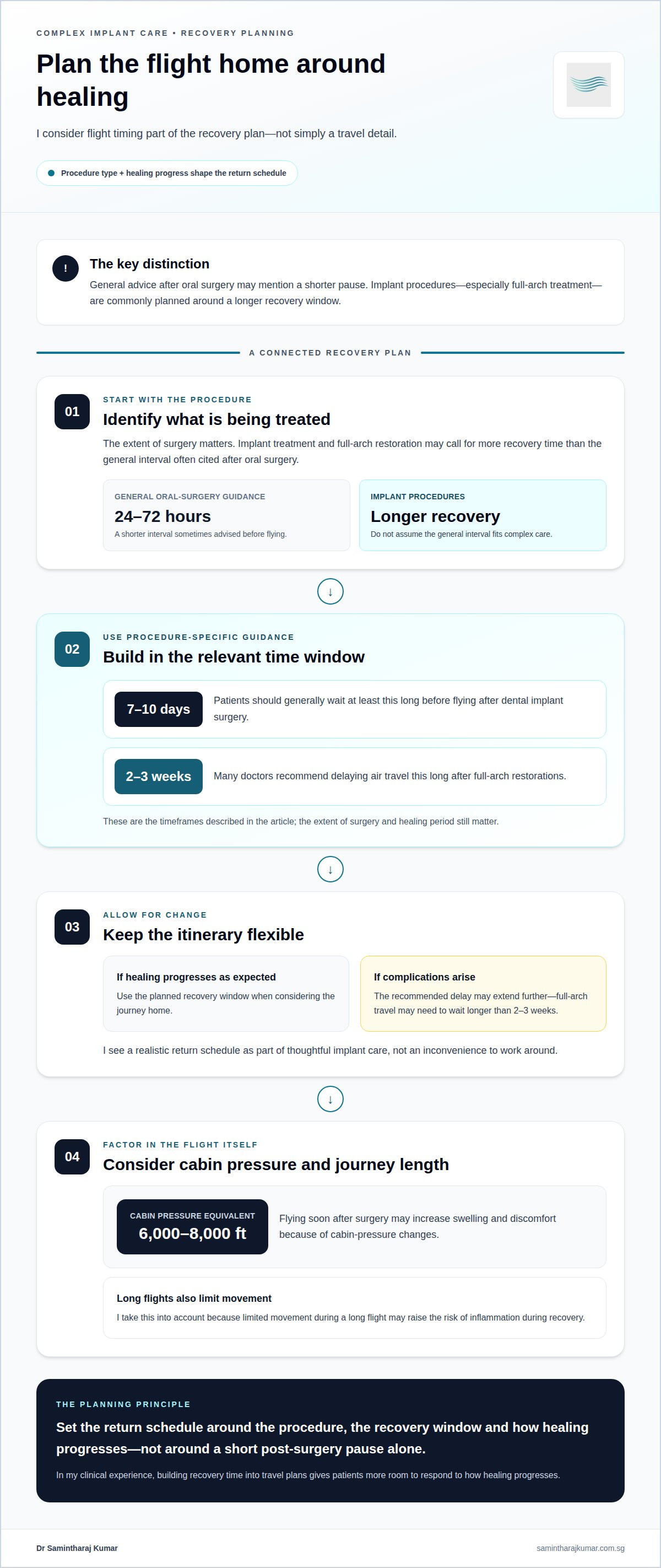
I consider flight timing part of the recovery plan, not merely a travel detail. After dental implant surgery, patients should generally wait at least 7-10 days before flying. For full-arch restorations, many doctors recommend delaying air travel for 2-3 weeks or longer if complications arise. I take the extent of surgery and the healing period into account when considering the journey home.
Some guidance advises waiting 24-72 hours after oral surgery before flying. I distinguish that general interval from the longer time commonly advised after implant procedures, particularly full-arch treatment. The difference matters: an itinerary based only on a short post-surgery pause may leave too little time for recovery.
Aircraft cabins are pressurised to the equivalent of roughly 6,000 to 8,000 feet of altitude. Flying soon after surgery may increase swelling and discomfort because of cabin-pressure changes. I also consider how a long flight limits movement, which may raise the risk of inflammation during recovery.
In my clinical experience, building recovery time into travel plans gives patients more room to respond to how healing progresses. If complications arise, the recommended delay may extend further. I see a realistic return schedule as part of thoughtful implant care, not an inconvenience to work around.
How I Assess Overseas Clinics and Treatment Plans
Assess a complex implant plan by looking beyond the destination and promotional claims. Ask who diagnoses the case, performs surgery and provides the final restoration, and how the team coordinates follow-up. A clear explanation of each clinician’s role helps show whether care is integrated or simply arranged through a network.
The destination should suit the clinical demands, not just the travel itinerary. Extensive bone loss or full-arch treatment calls for a plan that explains the surgical approach, restorative design and aftercare. Dental education, regulation and sterilisation standards vary between countries, so ask for the clinic’s protocols to be explained in plain language.
Digital diagnostics matter because implant placement depends on understanding the patient’s anatomy. I look for a plan that explains how scans inform decisions, rather than using technology as a marketing label. A reported treatment account from Turkey raised the absence of a 3D scan as a concern. This illustrates why diagnostic reasoning should be visible before treatment begins.
Treat promises of full-arch implant placement in one day as a reason to examine the plan carefully. A responsible plan distinguishes surgery from later healing and restoration, and explains what happens if the course changes. The proposed sequence should make clinical sense for the patient, not simply fit a package or travel schedule.
What Patients Can Expect When Planning Implant Treatment Abroad
Before booking overseas dental treatment, arrange a consultation and share relevant dental records and imaging. Ask for a written plan that separates surgery, healing and final restoration. Confirm which appointments require you to be present, so flights and accommodation fit the treatment sequence rather than a package schedule.
Most international implant cases involve two visits. The first places the implants; the later visit completes treatment after osseointegration, when bone fuses with an implant. All-on-4 and full-mouth treatment may involve a temporary restoration before the final one. If bone grafting is needed, the full sequence typically takes 4-12 months and may require two to three trips.
Build recovery time into your return itinerary. The appropriate flight date depends on the procedure and healing, particularly after full-arch surgery. Do not let a fixed return booking determine the clinical plan.
Before committing, clarify how the dental implant centre handles complications and who coordinates care between appointments. Corrective treatment after overseas dental work may require additional surgery. A lower quoted fee may not reflect the final cost if complications require extra travel or treatment. Assess savings across the full journey, including staged visits, recovery and continuity of care.
Follow-Up Care After Returning Home
Follow-up planning means arranging how clinical advice and assessment will continue after travel. This matters when the treating clinic is in another country.
Planning for Complications and Follow-Up
Before leaving, obtain copies of scans, treatment notes and implant details, then arrange how these records can reach a local dentist. Domestic providers may require a full diagnostic evaluation before taking over overseas care. Plan for a 5 to 10 percent chance of needing follow-up attention after major dental work. If symptoms need prompt assessment, a hospital-based service can provide a setting for urgent evaluation.
A local second opinion can help assess healing or restorations, while communication with the international clinic keeps the original treatment team informed. This matters whether treatment took place in Mexico or elsewhere: distance can make continuity harder, especially when the clinic is 2,000 miles away.
Follow-Up Coverage and Warranty Terms
Follow-up coverage and warranty terms describe what support or remedial care the overseas clinic provides after treatment. Read the written terms before travelling, including what they cover, how claims are handled and whether return visits are required.
Coverage does not arrange local assessment or guarantee that another clinic will provide corrective treatment. Keep the agreement with your clinical records, and clarify how the overseas team will review updates from a trained local dentist. A holiday itinerary should never replace a practical care pathway.
Discuss implant follow-up care as part of planning continuity after treatment abroad.
My Perspective as Dr Samintharaj Kumar
I can provide a clinical perspective on complex implant care. I help patients understand diagnostic records, treatment stages and follow-up needs, whether they are considering treatment abroad or have already returned home.
In my clinical experience, a useful review starts with the whole picture: existing teeth, bone support, bite, medical history and the proposed restoration. This allows me to discuss whether Dental Implants, All on 4/ Teeth in A Day or Zygomatic Dental Implants may be relevant to the clinical needs. The aim is informed decision-making, not a predetermined procedure.
If an overseas plan is difficult to understand, you want a second opinion before committing, or you need a local assessment after treatment, I can discuss your available records and explain what further assessment may be needed. A careful conversation can clarify the key clinical questions, including how treatment stages and continuity of care fit together.
My approach places long-term function and patient understanding at the centre of implant planning.
Make Your Next Decision With Clarity
Planning dental tourism for complex implant cases is not simply a choice between destinations. It is a decision about how diagnosis, treatment and ongoing care will work together over time. Before taking the next step, consider what you most need to understand: the clinical reasoning behind the plan, how treatment stages fit your circumstances, or how local care can continue afterwards.
As a clinician, I believe the best decisions begin with a clear view of the whole picture. My work includes dental implants, ceramic dental implants and All on 4/ Teeth in A Day, with treatment planning guided by each patient’s needs rather than a predetermined pathway. A thoughtful discussion can help clarify your questions and the options to explore.
If you are weighing an overseas plan or need perspective on implant care, you are welcome to contact Dr Samintharaj Kumar. Take the next step at a pace that allows you to understand your choices. Informed decisions create a stronger foundation for care and confidence.
Frequently Asked Questions
Are infection control standards the same overseas?
No. Dental regulations and sterilisation standards vary between countries, so they are not automatically identical. Before treatment, seek a clear explanation of the clinic’s instrument sterilisation, single-use items, operating-room procedures and infection-control protocols. Ask how these practices are documented and who oversees them. A destination’s reputation for dental tourism alone does not establish how an individual clinic manages infection risks.
Can materials used abroad be unsafe or unapproved?
Materials used abroad are not automatically unsafe, but implant systems, tools and components can differ between countries. This can complicate maintenance if a dentist at home cannot identify or source compatible parts. Keep the implant manufacturer, system name, component details and treatment records. This information helps a dentist assess your restoration and supports continuity of care.
How to Prepare for Your Dental Vacation?
Prepare for treatment, not just the holiday. Before booking, organise your dental history, medication list and existing scans for the clinic’s assessment. Get the proposed treatment stages and appointment dates in writing, then plan accommodation around clinical visits rather than sightseeing. Keep copies of your records and the clinic’s contact details accessible during travel. Leave flexibility in your itinerary for recovery and changes to care.
What are the advantages of dental treatment abroad?
Potential advantages include lower treatment fees in some destinations and access to clinics offering extensive implant procedures. Savings can make treatment feel more attainable, particularly if you are considering substantial dental work. Overall value depends on what the treatment plan includes and how travel, follow-up and possible additional care affect the total. A lower procedure fee alone does not show that an option suits your needs.
Which countries are popular for dental tourism for complex implant treatment?
Mexico, Costa Rica, Thailand, Turkey and Hungary are popular destinations for dental tourism. This list describes travel patterns, not a ranking of clinical quality or suitability for complex treatment. The right destination depends on the care required, the proposed treatment sequence and how follow-up can be coordinated. Compare the clinical plan, not just the country or travel package.
How much do full-arch dental implants cost abroad compared with the United States?
There is no single comparable price for full-arch implants abroad versus the United States. The total depends on clinical complexity, implant components, restorative work, travel and whether treatment requires staged visits. Compare itemised plans covering the same treatment scope, including what happens if additional care is needed. A headline fee may exclude important parts of the overall treatment journey.

Comments