
From Jakarta with Pain: Rescuing a Smile from the Era of Blade Implants

They say history belongs in a museum. In my line of work, however, history occasionally walks through the front door of my dental clinic in Singapore, takes a seat in the chair, and asks for a miracle.
Yesterday, that history arrived in the form of a lovely patient who had flown in from Jakarta. She wasn’t here for the shopping on Orchard Road or the view from the Marina Bay Sands. She was here because her upper jaw was quite literally failing her.
For the uninitiated, dental technology moves at a breakneck pace. What was "cutting edge" thirty years ago is often considered a liability today. This patient was a walking time capsule, carrying what we call "blade implants" in her upper jaw. If you’ve never heard of them, count yourself lucky. They are the archaeological relics of the dental world, and they were causing her an immense amount of chronic pain.
The Relic in the Room: What is a Blade Implant?
Before we dive into the "rescue mission," let’s talk shop for a moment. In the early days of oral surgery, long before I was placing the high-tech All on 4 systems we use today, surgeons used blade-style implants.
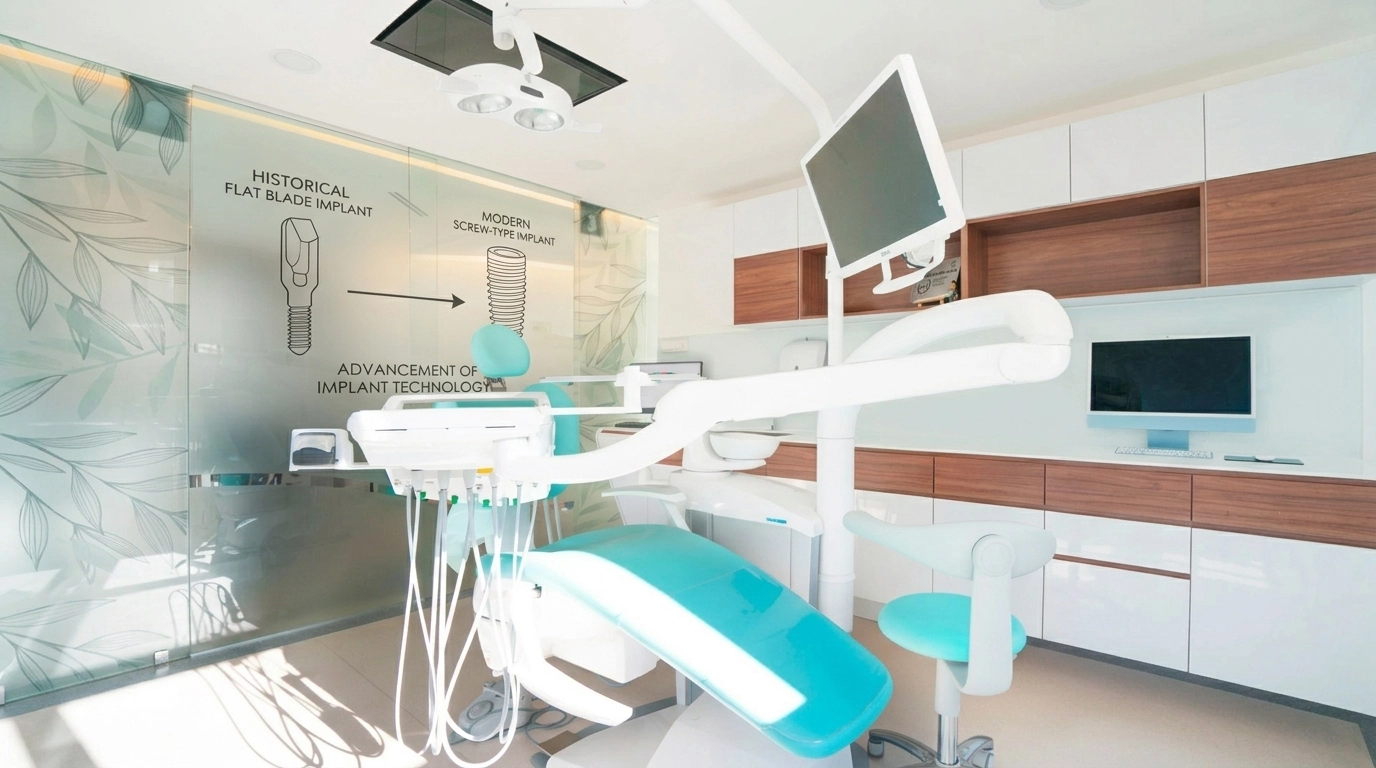
Instead of the sleek, titanium screws (fixtures) that mimic a natural tooth root, a blade implant is a flat, rectangular piece of metal with "vents" in it. The surgeon would essentially create a long, thin channel in the jawbone and wedge this metal plate inside. The idea was that the bone would grow through the vents and hold it in place.
On paper, it sounded revolutionary. In practice? Well, they often became a nightmare. Because they are flat and broad, they don't distribute biting forces particularly well. Over decades, the bone around them tends to recede, the metal becomes mobile, and: as my patient from Jakarta experienced: infection and chronic pain become the new normal.
When she arrived, her upper implants weren't just "loose"; they were shifting every time she spoke. Imagine having a piece of metal floating in your jawbone. It’s not just uncomfortable; it’s debilitating.
The Clinical Challenge: More Than Just a "Pull"
As a top dental implant surgeon in Singapore, I see my fair share of complications. But removing blade implants is a delicate dance. You can’t just "wrestle" them out. Because of their shape, if you aren't careful, you risk damaging the precious remaining bone: bone that we desperately need if we want to give the patient a functional smile again.
This patient had been living with this discomfort for far too long. In Jakarta, she had been told various things, but the consensus was clear: she needed an expert who understood the complexities of full-mouth rehabilitation and the nuances of the upper jaw’s anatomy.
My approach was straightforward but meticulous. We needed to:
Stop the Pain: This meant the immediate removal of the failing hardware.
Preserve the Bone: Using minimally invasive techniques to slide the blades out without causing collateral damage.
Plan for the Future: Assessing whether she would be a candidate for zygoma implants in Singapore or a traditional All on 4 bridge once the site had settled.
The "Surgical Theatre" and Immediate Relief
There is a particular satisfaction in removing a source of chronic pain. As I worked, it was evident why she was hurting. The tissue around the blades was angry, and the implants had lost nearly all their structural integrity within the bone.
Once the blades were out, the relief was almost instantaneous: even while she was still on the chair. Of course, the local anaesthetic helps, but there’s a psychological "lightness" that occurs when a patient knows the "foreign objects" causing their misery are finally gone.
In my practice at Nuffield Dental, we pride ourselves on a holistic approach. It’s not just about the surgery; it’s about the recovery. We managed her post-operative care with a bespoke protocol designed to minimize swelling and maximize comfort.
Day 2: The Jakarta Smile Returns
I saw her again today: Day 2 post-op.
Usually, after a significant surgical intervention in the upper jaw, patients expect a fair amount of "down time." They expect to be clutching an ice pack and regretting their life choices for at least a week.
But there she was, sitting in my office, absolutely beaming.
"Dr Samin," she said, "The pain is gone. For the first time in years, that 'throbbing' in my jaw has stopped."
This is why I do what I do. Being able to take a patient from a state of chronic, wearying pain to a state of comfort in less than 48 hours is the ultimate win. She is currently pain-free, healing beautifully, and we are already mapping out her journey toward a permanent, stable set of teeth that won't involve any "archaeological" metal plates.
Why Expertise Matters for International Patients
If you are traveling from Indonesia, Malaysia, or further afield for dental work, you aren't just looking for a dentist; you’re looking for a specialist who has seen it all. Dealing with failing implants: especially outdated tech like blades: requires a level of surgical "finesse" that only comes with thousands of hours in the theatre.
At my personal clinic, we specialize in these "rescue" cases. Whether it’s managing severe bone loss through zygoma implants in Singapore or fixed-arch restorations, our goal is always the same: a predictable, long-term, and pain-free result.
The "Blade Era" of dentistry may be over, but for many patients, the legacy of those old procedures remains. If you’re living with dental work that feels "past its prime," or if you’ve been told your case is too complex, don’t settle for a life of discomfort.
Moving Forward: The Future is Fixed
For my patient from Jakarta, the next step is exciting. Now that the "debris" of the past is cleared, we can look at modern solutions. Depending on her bone density and healing, we might explore the All-on-4 concept, which provides a full set of teeth on just four implants: a far cry from the unstable blades of the 1980s.
If you’re experiencing mobility in your implants or chronic jaw pain, take a leaf out of my patient’s book: jump on a plane (or a short drive), and let’s get it sorted. Life is far too short to spend it in pain.
Until next time, keep smiling: preferably with modern titanium!
Dr. Samintharaj Kumar is a dual-qualified Surgeon (Dentistry & Medicine) and the CEO of Nuffield Holdings. He specializes in complex dental implantology and is a recognized leader in All on 4 and zygoma implants in Singapore. For consultations, visit www.samintharajkumar.com.sg.

Comments