
How to Clean Under a Fixed Implant Bridge: A Specialist Surgeon’s Perspective

Most patients believe that once their fixed bridge is fitted, the most challenging part of their journey is behind them. In my clinical experience, the true work of maintaining a masterpiece of restorative dentistry begins in the quiet moments of your daily routine. Mastering how to clean under a fixed implant bridge is not merely a hygiene task. It is the active preservation of a sophisticated biological-mechanical interface that requires specialist-level care.
I recognise the specific anxieties that often follow such a significant investment. You might struggle to reach the narrow gap between the bridge and your gums, or perhaps you worry that a lack of precision will lead to inflammation or implant failure. It is natural to feel confused by the vast array of water flossers and specialised threads on the market today. I promise to provide you with the clinical techniques and professional tools required to maintain your fixed implant bridge for lifelong oral health. We will explore an expert-approved daily routine, the latest 2026 protocols for preventing peri-implantitis, and how to gain total confidence in the long-term success of your restoration.
Table of Contents
The Clinical Challenge of the Fixed Implant Bridge
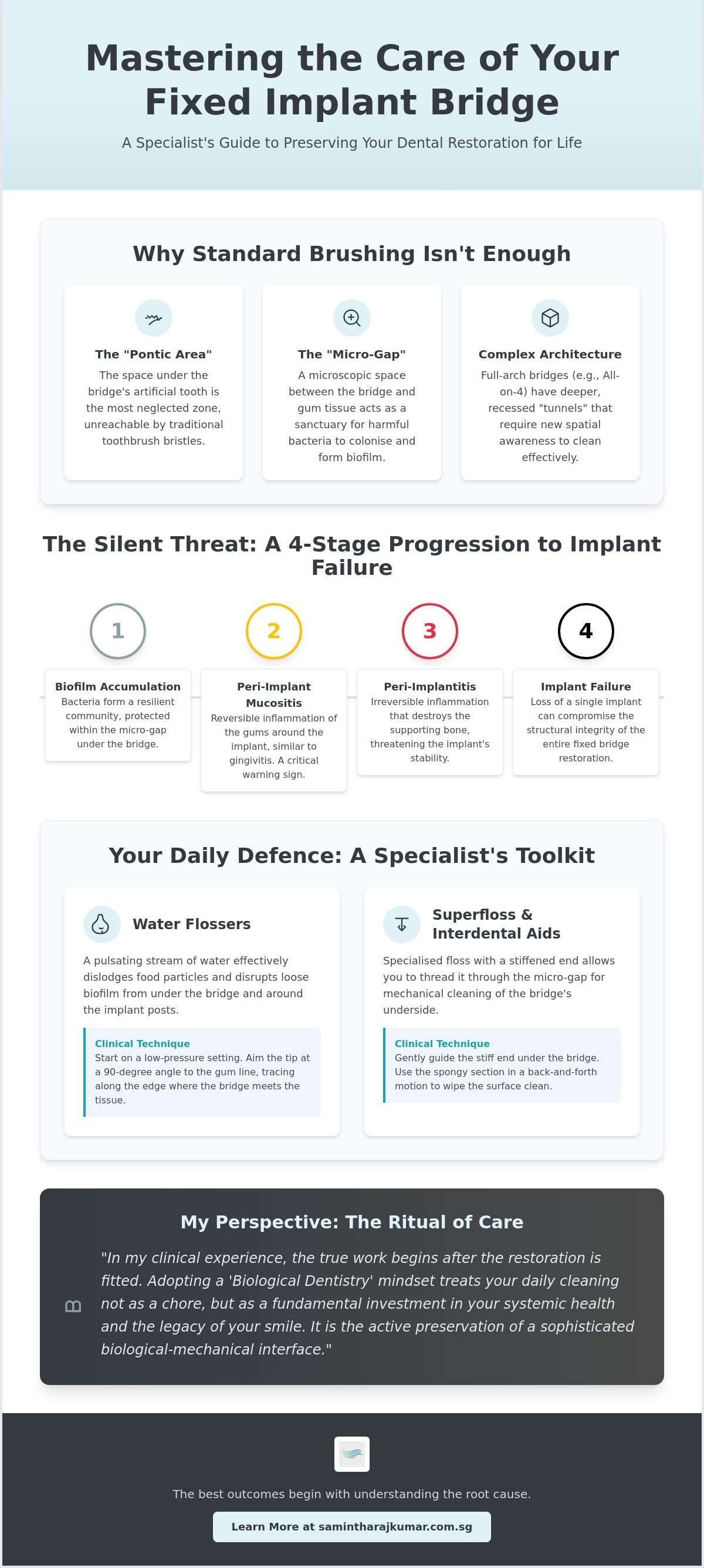
A fixed bridge is a marvel of modern engineering, yet it presents a unique anatomical puzzle for the patient. Unlike natural teeth, which are surrounded by a flexible periodontal ligament, an implant-supported prosthesis is rigidly anchored. This creates a structural environment where traditional brushing simply cannot reach. In my clinical experience, the pontic area, the space where the prosthetic tooth rests against the gum tissue, is the most neglected zone in oral care. Many patients focus on the visible surfaces, inadvertently leaving the underside of the bridge vulnerable to debris.
To better understand the nuances of this process, watch this helpful guide on the practical steps involved:
When we utilise the "Teeth in a Day" protocol, the early stage of healing is particularly critical. During these first few weeks, the tissue is adapting to its new contours. Understanding how to clean under a fixed implant bridge during this phase requires a delicate balance; you must remove debris without disrupting the surgical site. This is where specialist guidance becomes invaluable. As a clinician and founder, I've seen that patients who master these early protocols enjoy significantly higher long-term success rates.
The "Micro-Gap" and Bacterial Colonisation
Even with the highest standards of precision milling, a microscopic space exists between the prosthetic and your gingival tissue. From a biological perspective, this "micro-gap" is a sanctuary for bacteria. Within hours, food particles and saliva interact to form a pathogenic biofilm. This self-organised bacterial community is resilient. If left undisturbed, it can trigger inflammation that threatens the bone supporting your implants. Consistent dental implant maintenance is the only way to disrupt this cycle before it hardens into calculus.
Unique Architecture of All-on-4 and Zygomatic Bridges
Full-arch rehabilitations, such as those using all on 4 dental implants or zygomatic protocols, introduce a complex "flange" or transition zone. This is the area where the artificial gum meets your natural tissue. Because these bridges often replace lost bone and soft tissue, the access points for cleaning are deeper and more recessed than with a single crown. You'll need to develop a new spatial awareness to navigate these "tunnels" effectively. Learning how to clean under a fixed implant bridge of this scale means identifying these specific entry points where bacteria tend to congregate, ensuring your restoration remains a foundation for health rather than a liability.
Understanding the Science: Biofilm and Peri-Implantitis
Biofilm is not merely a collection of food particles. From a biological perspective, it is a sophisticated, self-organised community of bacteria that adheres tenaciously to the surfaces of your implants. Unlike natural teeth, which are protected by the complex sensory and immune functions of the periodontal ligament, dental implants are fused directly to the bone. This lack of a biological "shock absorber" and its associated vascular supply means that once infection takes hold, bone loss can occur with alarming speed. Mastering how to clean under a fixed implant bridge is your primary defence against this process.
When hygiene is neglected, the initial stage is peri-implant mucositis. This is a reversible inflammation of the soft tissues surrounding the implant, similar to gingivitis. However, if the biofilm is not disrupted through a rigorous professional hygiene protocol and diligent home care, it progresses to peri-implantitis. At this stage, the inflammation begins to consume the supporting bone. Because a fixed bridge distributes the load across several anchors, the failure of a single implant due to bone loss can jeopardise the structural integrity of the entire restoration.
Titanium vs. Ceramic: The Surface Science
The material of your implant significantly influences bacterial interaction. In my clinical experience, bacteria interact differently with metal compared to biocompatible ceramic. I often advocate for ceramic dental implants because they naturally possess a lower plaque affinity. This means that biofilm finds it more difficult to colonise the surface, making your daily routine more effective. Regardless of the material, maintaining the integrity of the implant surface is critical. Harsh or abrasive tools can create microscopic scratches that act as breeding grounds for pathogens, making it even harder to manage how to clean under a fixed implant bridge effectively over time.
Clinical Consequences of Neglect
Identifying the early warning signs is essential for intervention. You should be vigilant for bleeding during cleaning, suppuration (the presence of pus), or a distinct "halitosis of the bridge" that persists despite brushing. These are not minor inconveniences; they are signals of biological distress. For those who have undergone a "Teeth in a Day" procedure, poor early-stage hygiene is one of the leading causes of preventable failure. Chronic inflammation under a bridge does not remain localised. It places a constant burden on your immune system, potentially affecting your systemic health. Precision in your daily ritual is the cornerstone of a lasting legacy of health. The best outcomes begin with understanding the root cause.
A Specialist’s Toolkit for Under-Bridge Hygiene
In my clinical experience, the most successful patients are those who view their hygiene tools as an extension of the surgical care they received. Understanding how to clean under a fixed implant bridge requires more than just a standard toothbrush; it demands a curated toolkit designed for the unique architecture of your prosthesis. We are not just cleaning teeth. We are preserving a surgical result that was designed to last a lifetime. This requires tools that can reach the "hygiene blind spots" without damaging the delicate peri-implant tissues.
The water flosser, or oral irrigator, is the gold standard for non-contact debris removal. It uses a pulsating stream of water to flush out bacteria from areas where physical floss might struggle to penetrate. For mechanical disruption, I recommend a combination of Superfloss and floss threaders. These tools allow you to navigate the prosthetic "tunnels" created by the implant posts. Additionally, interproximal brushes are essential for cleaning the vertical surfaces of the implants. It is vital that these brushes use plastic-coated wire; metal-on-metal contact can create microscopic scratches on the implant surface, which encourages bacterial adhesion.
Mastering the Water Flosser Technique
The 90-degree rule is fundamental for effective irrigation. You should aim the tip of the flosser at a right angle to the long axis of the tooth, right at the junction where the bridge meets the gum. I advise my patients to use low-to-medium pressure. High-pressure settings can potentially breach the delicate peri-implant seal, pushing bacteria deeper into the pocket rather than flushing them out. To enhance the effect, you can add an antimicrobial rinse to the reservoir. This creates a chemical-mechanical double action that is far more effective at disrupting resilient biofilm than water alone.
Manual Tools for Mechanical Debridement
While water flossers are excellent, mechanical friction is still necessary to polish the underside of the bridge. I often teach the "Shoeshine" technique. By using a thick, spongy floss like Superfloss, you can wrap it around the pontic and use a gentle back-and-forth motion to "buff" the surface. This is particularly effective for removing the sticky plaque that water alone might miss. For the gum line, specialised sulcus brushes with soft, tapered bristles are superior to standard brushes. I also recommend using non-abrasive gels rather than traditional whitening toothpastes. Many commercial pastes contain high levels of silica, which can dull the lustre of your high-end ceramic bridge over time. As a clinician and founder, I believe that the ritual of care is just as important as the surgery itself. The best outcomes begin with understanding the root cause of plaque accumulation and addressing it with precision.
My Perspective: The Ritual of Care and Innovation
As a clinician and founder, I've always maintained that the success of complex oral surgery is only fifty per cent dependent on my technical execution in the operating theatre. The remaining fifty per cent lies in the patient's commitment to the ritual of care. I don't view oral hygiene as a chore. Instead, I see it as a cornerstone of patient empowerment and a vital component of healthcare entrepreneurship. When you understand how to clean under a fixed implant bridge with precision, you are actively protecting an investment in your systemic health and long-term well-being.
My philosophy is rooted in "Biological Dentistry." This means we look beyond the teeth to understand how the oral environment influences the entire body. Chronic inflammation under a bridge is a systemic burden. By mastering your daily maintenance, you are cleaning for the body, not just the prosthesis. The transition from the surgical phase to "Total Rehabilitation" requires a profound shift in your daily ritual. It is no longer about simple brushing; it is about the meticulous management of a living interface between medical-grade materials and your natural tissues.
Beyond the Brush: A Founder’s Philosophy
I personally advocate for a "prestige" mindset when it comes to home care. Meticulous hygiene is the only way to ensure the longevity of complex oral surgery. In my clinical experience, patients who adopt this visionary approach to their health become their own first line of defence. They recognise that the beauty of their smile is sustained by the health of the foundation beneath it. As a mentor to my patients, I find that teaching these specialist protocols fosters a sense of pride and accountability that traditional dentistry often overlooks.
AI and the Future of Maintenance
Innovation is at the heart of everything I do. In my practice, we utilise AI-assisted diagnostics to help patients "see" their progress in ways that were previously impossible. By using high-resolution digital scans, we can identify exactly where your bridge requires more attention. This technology allows us to monitor bone levels and soft tissue health with microscopic accuracy over decades. The future of dental DSOs and large-scale clinical excellence relies on these sustainable hygiene outcomes. We are moving towards a model where AI helps us predict and prevent issues before they manifest physically. If you are ready to experience the future of restorative care, you can explore our specialist implant services to learn more about our approach to total oral rehabilitation. The best outcomes begin with a commitment to innovation and a deep understanding of the patient journey.
Long-term Protocols: Ensuring Total Rehabilitation Success
While your daily routine provides the foundation for health, professional intervention acts as the ultimate safeguard for your investment. In my clinical experience, a standard "general" cleaning is often insufficient for the complexities of a full-arch prosthesis. These sophisticated structures require a specialist review every six months to ensure the biological and mechanical components remain in harmony. Your commitment to mastering how to clean under a fixed implant bridge at home is the first step, but professional debridement is what secures the legacy of your smile.
From a biological perspective, professional maintenance involves more than just removing visible plaque. We utilise advanced debridement technologies, such as glycine air polishing powders and specialised ultrasonic tips, which are engineered to disrupt biofilm without scratching the implant surface. This level of precision is vital. It ensures that the microscopic areas you might miss while learning how to clean under a fixed implant bridge are thoroughly sanitised, preventing the onset of peri-implantitis before it can threaten your bone stability.
The Annual Specialist Maintenance Programme
As a clinician and founder, I believe in a proactive approach to maintenance that goes beyond the surface. Our annual programme includes high-resolution radiographic monitoring to assess bone density and implant stability over time. We also meticulously check the torque of the prosthetic screws. These components are subjected to immense functional forces during mastication and require periodic verification to ensure they remain secure. Furthermore, we place a high priority on measuring bite alignment. Even a minor shift in your occlusion can create stress points that lead to prosthetic fractures or bone loss, making regular adjustments a critical part of your long-term success.
Signs You Need an Immediate Consultation
Even with a rigorous routine, biological changes can occur that require immediate specialist attention. If you experience any of the following, do not wait for your scheduled review:
A persistent metallic taste or any unusual discharge around the implant site.
Any sensation of "play," clicking, or movement in the fixed bridge.
Sudden changes in facial volume, chewing comfort, or speech patterns.
The psychological impact of a clean, healthy smile is profound. It is about more than just functional excellence; it is about the emotional renewal that comes with total oral rehabilitation. When you know your implants are secure and your hygiene is impeccable, you can engage with the world with absolute confidence. Total rehabilitation is a journey that requires a partnership between the surgeon and the patient. The best outcomes begin with understanding the root cause.
Preserving the Future of Your Smile
Mastering how to clean under a fixed implant bridge is the final, essential step in your journey toward total oral rehabilitation. We've explored the biological necessity of disrupting biofilm and the precision required when navigating the unique architecture of your prosthesis with a specialist toolkit. As a clinician and founder of Nuffield Dental, I've dedicated my career to perfecting Zygomatic and All-on-4 protocols. I know that the longevity of these complex restorations depends entirely on the synergy between my surgical execution and your daily dedication to care.
By integrating AI-assisted diagnostics into our long-term maintenance programmes, we ensure that your health is monitored with microscopic accuracy over the coming decades. This visionary approach allows us to detect and address subtle biological changes before they become clinical challenges. Your commitment to this daily ritual isn't just about hygiene; it's about honouring the transformation you've achieved and protecting your systemic well-being. The best outcomes begin with understanding the root cause of health and maintaining it with discipline.
I'm confident that with these specialist techniques and a commitment to professional reviews, your restoration will serve as a beautiful foundation for health and confidence for many years to come.
Frequently Asked Questions
How often should I clean under my fixed implant bridge?
You should clean under your bridge at least twice a day, mirroring your standard brushing routine. From a biological perspective, biofilm begins to reorganise into a pathogenic state within hours of removal. Consistent disruption is the only way to prevent the chronic inflammation that leads to bone loss. In my clinical experience, the evening ritual is particularly critical as saliva flow decreases during sleep, reducing your natural oral defences.
Can I use a regular toothbrush to clean under the bridge?
While a regular soft-bristled toothbrush is excellent for the visible surfaces, it cannot reach the critical spaces beneath the prosthesis. Mastering how to clean under a fixed implant bridge requires specialised instruments like interproximal brushes or water flossers. These tools are designed to navigate the specific "tunnels" and gaps where food debris and bacteria aggregate, ensuring a level of hygiene that a standard brush simply cannot provide.
Is it normal for my gums to bleed when cleaning under the bridge?
Occasional bleeding is often a sign of peri-implant mucositis, which is an early, reversible stage of inflammation. It is not "normal" and should be viewed as a signal that your current hygiene technique needs refinement. If the bleeding persists for more than a few days despite improved care, it's essential to seek a specialist review. Persistent bleeding can indicate that bacteria have colonised the deeper pockets around the implant.
What happens if I cannot get floss under my bridge?
If you struggle to navigate floss through the prosthetic gaps, you should never force it, as this can damage the delicate gum seal. Instead, I recommend using a dedicated floss threader or a water flosser on a low-pressure setting. These tools are specifically engineered to bypass tight contacts. If access remains impossible, it may indicate a need for a prosthetic adjustment to ensure the "hygiene blind spots" are accessible for daily maintenance.
Do I still need professional cleanings if I use a water flosser every day?
Professional cleanings remain mandatory regardless of how diligent your home care is. While a water flosser is exceptional at removing soft debris, it cannot remove hardened calculus or provide the deep debridement required for complex bridges. In my clinical experience, our specialist reviews use glycine powders and AI-assisted diagnostics to monitor bone levels, providing a level of preventive care that home tools cannot replicate.
Can poor cleaning under a bridge cause the implants to fall out?
Neglecting how to clean under a fixed implant bridge is one of the leading causes of late-stage implant failure. Chronic bacterial colonisation leads to peri-implantitis, a condition that aggressively consumes the bone supporting your implants. Without sufficient bone anchorage, the implants will eventually lose stability and may fall out. This is why I view daily hygiene as a fundamental pillar of total oral rehabilitation and long-term success.
Are there specific mouthwashes I should avoid with dental implants?
I generally advise patients to avoid mouthwashes with high alcohol content or those that are highly acidic. Alcohol can lead to dry mouth, which reduces the protective qualities of your saliva and encourages bacterial growth. From a biological perspective, a neutral pH environment is ideal for implant health. I prefer antimicrobial rinses specifically formulated for post-surgical care or those that support a healthy oral microbiome without causing irritation.
How do I know if I have peri-implantitis under my bridge?
Early peri-implantitis is often painless, which makes it particularly dangerous. You should look for persistent redness, swelling of the gums, or a foul taste that originates from under the bridge. More advanced signs include suppuration, which is the presence of pus, or any noticeable movement in the bridge itself. Because bone loss occurs beneath the surface, regular radiographic monitoring in a specialist setting is the only definitive way to confirm its presence.

Comments