
How to Regain Confidence in Your Smile: A Specialist Surgeon’s Perspective on Total Rehabilitation
- Dr Samintharaj Kumar

- Jun 28
- 13 min read
A smile is not merely a cosmetic feature; it is the structural foundation of your facial identity and a vital indicator of your biological health. In my clinical experience, many patients arrive at my practice feeling that their dental situation is hopeless, burdened by the quiet anxiety of missing teeth or failing restorations. If you have found yourself hiding your mouth during a conversation or avoiding certain foods, you are likely searching for how to regain confidence in your smile without the fear that the results will be temporary or unnatural. I understand that this journey is as much about emotional renewal as it is about surgical precision.
In this article, I will share my perspective as a specialist surgeon on the transformative power of total oral rehabilitation. We will explore how advanced protocols like ceramic implants and zygomatic solutions go beyond simple aesthetics to restore lost facial volume and functional excellence. From a biological perspective, we'll examine why a biocompatible approach is essential for long-term success. By the end of this guide, you'll understand the clinical pathways available to move from a place of hesitation to a life of full, uninhibited social engagement.
Table of Contents
Understanding the Biological Impact of a Hidden Smile
In my clinical experience, "smile confidence" is frequently misunderstood as a purely aesthetic desire. Clinically, I define it as the absence of cognitive load during social interaction. When you are constantly monitoring your lip position or calculating the angle of your head to hide a gap, you aren't truly present. True confidence is the biological freedom to express emotion without a secondary "filter" of shame. This isn't just about vanity; it's about the profound psychological health that comes from authentic self-expression and the ability to connect with others without hesitation.
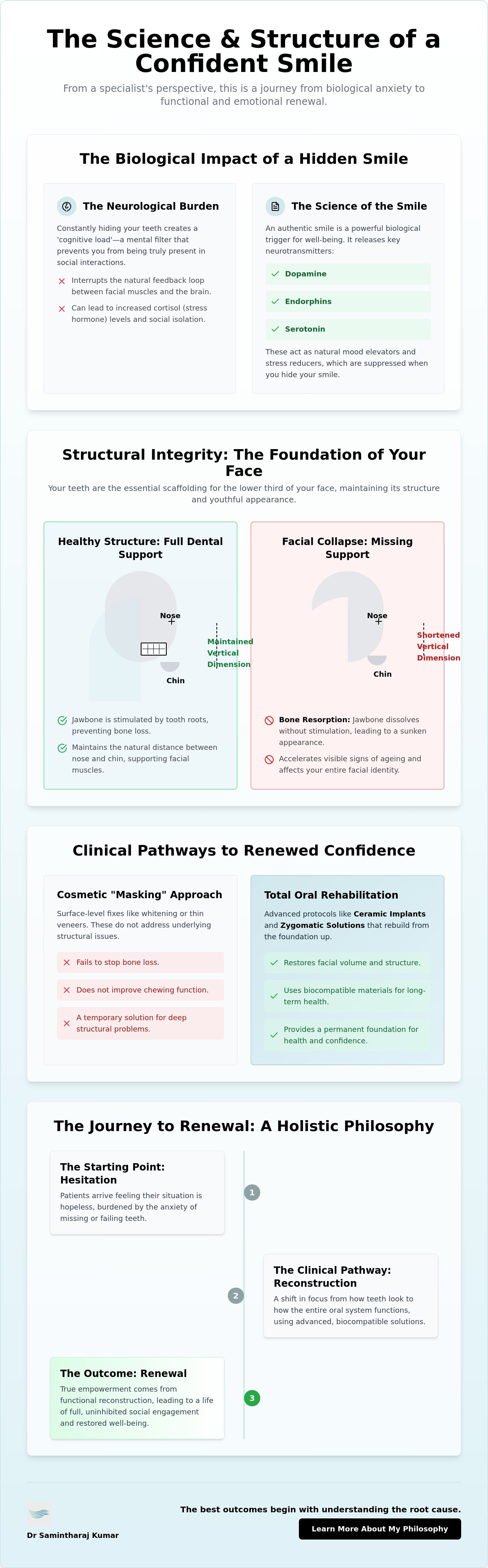
This mental filter creates a significant neurological burden. When we suppress a smile due to dental anxiety, we interrupt a natural feedback loop between the facial muscles and the brain. This can lead to increased cortisol levels and a sense of social isolation, which often impacts professional performance and personal relationships. Many patients come to me asking how to regain confidence in your smile because they've realised that hiding is no longer a sustainable way to live. They've found that the effort required to conceal their teeth is more exhausting than the prospect of surgery itself.
To better understand the mechanics of an authentic smile and how it influences your social presence, watch this helpful video:
The Science of the Smile: Neurotransmitters and Mood
From a biological perspective, the act of smiling triggers the release of dopamine, endorphins, and serotonin. These neurotransmitters act as natural stress reducers and mood elevators. When you "mask" dental imperfections, you deprive your nervous system of these beneficial chemical signals. The brain interprets this lack of facial movement as a lack of positive stimulus, potentially deepening feelings of anxiety. In a clinical context, I distinguish between the "social smile," which is a conscious muscular gesture, and the "emotional smile," which is an involuntary, full-face expression of genuine joy that involves the eyes and the deeper facial muscles.
When "Cosmetic" is Not Enough: The Need for Rehabilitation
Many people believe that surface-level Cosmetic dentistry procedures, like simple whitening or thin veneers, will solve their confidence issues. However, if the root cause is bone loss, tooth decay, or structural instability, a cosmetic "mask" won't suffice. As a clinician and founder, I've seen that true empowerment comes from functional reconstruction. You might notice your lack of confidence is structural if you struggle with chewing, experience jaw pain, or if your facial profile has begun to change due to tooth loss. Moving from anxiety to clinical empowerment requires a shift in focus from how your teeth look to how your entire oral system functions. A rehabilitated smile is one that is built to last, providing a foundation that supports both your health and your self-esteem for decades.
Structural Integrity: Why Your Smile is the Foundation of Your Face
From a biological perspective, your teeth provide the essential scaffolding for the lower third of your face. When we discuss how to regain confidence in your smile, we must look beneath the surface at the underlying bone and tissue. Many patients don't realise that their teeth are responsible for maintaining the "vertical dimension" of their face. Without this support, the distance between the nose and the chin begins to shorten, leading to a process known as facial collapse. This isn't just a dental issue; it's a structural change that affects your entire facial identity.
This collapse is driven by bone resorption. Bone resorption is the biological process where the jawbone, no longer stimulated by natural tooth roots, begins to dissolve and be reabsorbed by the body, significantly accelerating the visible signs of ageing. Traditional dentures often fail to address this because they merely sit on the gums. They don't stop bone loss; in fact, the pressure they exert can sometimes speed it up. This leads to instability and a constant fear of the prosthetic slipping, which is the absolute opposite of true confidence.
The Relationship Between Jaw Structure and Facial Aesthetics
As the jawbone recedes, the soft tissues of the face lose their primary support system. This often results in the thinning of the lips and a characteristic sunken appearance around the mouth and cheeks. In my clinical experience, I frequently discuss how dental structure affects face shape as a key pillar of rejuvenation. It's about more than just teeth. It's about restoring the architectural integrity of the face. Proper bite alignment is equally critical, as it ensures facial symmetry and prevents the jaw from shifting into an aged, protruded position. This is why understanding how to regain confidence in your smile requires a focus on what lies beneath the gum line.
Preventing Facial Collapse with Dental Implants
Dental implants are the only restorative solution that mimics the function of natural tooth roots. By integrating with the bone, they provide the necessary stimulation to keep the jaw healthy and strong. This structural restoration allows you to experience the full physical and psychological benefits of smiling without the underlying worry of structural failure. Maintaining this vertical dimension is the most effective way to achieve a youthful, natural appearance that lasts. As a clinician and founder, I believe the best outcomes begin with understanding the root cause, and a comprehensive clinical evaluation is the first step toward lasting restoration.
Modern Restorative Solutions: Ceramic Implants vs Traditional Protocols
When patients ask me how to regain confidence in your smile, they often expect a discussion about aesthetics. However, the choice of material and surgical protocol is what determines if that confidence remains for a lifetime. In my clinical experience, the shift toward biocompatibility has redefined our standards of care. We are no longer just replacing teeth; we are integrating medical-grade components into a living biological system. This requires a meticulous approach to material selection and a deep understanding of how the body responds to foreign objects.
The transition from traditional methods to advanced rehabilitation involves moving away from "quick fixes" like removable veneers. These temporary solutions fail to address the underlying health of the gingiva and bone. True restoration involves choosing systems that support long term tissue health and provide a seamless aesthetic integration with your natural features.
The Biological Advantage of Ceramic Implants
From a biological perspective, the integration of ceramic dental implants represents a significant leap forward in oral surgery. While titanium has been the industry standard for decades, zirconia (ceramic) offers a unique advantage in soft tissue response. Ceramic is chemically inert, meaning it doesn't corrode or trigger the same inflammatory responses sometimes seen with metal alloys. This is particularly vital for patients with metal sensitivities or those who prioritise a holistic approach to their healthcare. The gingival tissue tends to adhere more naturally to zirconia, which reduces plaque accumulation and creates a more lifelike appearance at the gum line.
Teeth in a Day: Restoring Function and Form Rapidly
One of the most transformative advancements in my practice is the All-on-4 protocol. This teeth in a day procedure explained simply involves placing four strategic implants to support a full arch of fixed teeth. It allows us to bypass the traditional six month waiting period, providing immediate functional and aesthetic results. This immediate loading protocol significantly reduces the emotional burden of the patient journey. It's important to note that while this is a rapid solution, success depends on precise AI-assisted diagnostics and surgical mastery to ensure the implants are placed in areas of maximum bone density.
Solutions for Severe Bone Loss
I often meet patients who have been told by other clinicians that they "cannot have implants" due to severe bone resorption. In these complex cases, we look toward Zygomatic and Pterygoid implant systems. These advanced protocols involve anchoring implants into the cheekbone or the stable bone at the back of the jaw. As a specialist surgeon, I view these not as "hopeless" cases, but as opportunities for advanced surgical engineering. These systems restore hope for patients who thought they were destined for ill-fitting dentures. By utilising the stable bone structure of the mid-face, we can provide a fixed, permanent solution that allows you to discover how to regain confidence in your smile regardless of previous bone loss.
My Perspective: A Holistic Approach to Smile Rejuvenation
In my clinical experience, a smile makeover is a profound undertaking that extends far beyond the margins of the teeth themselves. As a clinician and founder, I have developed a philosophy that prioritises the biological health and facial harmony of the individual. When patients ask me how to regain confidence in your smile, I explain that we are not merely fixing a dental problem; we are conducting a symphony of clinical and aesthetic elements. My perspective is rooted in the belief that we must treat the person, not just the oral cavity. This holistic approach ensures that the results are not only functional but deeply integrated into your unique facial architecture.
From a biological perspective, I ensure that every material we use, from ceramic implants to restorative composites, is chosen for its compatibility with your body's natural systems. This minimises inflammation and promotes long term well-being, which is the true foundation of lasting confidence. I don't believe in applying a one size fits all solution. Instead, I look for the intersection of technology and human centric care to create a result that feels as natural as it looks.
The Synergy of Dental and Facial Aesthetics
Achieving a natural result requires a deep understanding of the relationship between the lips, gums, and teeth. A new set of teeth can look technically perfect but feel "off" if they don't support the soft tissues of the face correctly. This is why I often integrate facial aesthetic rejuvenation into my treatment plans. By addressing lost volume in the lips or refining the perioral area, we create a frame that truly showcases the dental work. I often use cosmetic dentistry in Singapore as a framework for functional beauty, ensuring that every aesthetic choice serves a biological purpose.
AI and Innovation in Modern Implantology
As a visionary in the field, I have made significant investments in AI-assisted diagnostics to remove the guesswork from complex surgeries. We use AI for precise surgical planning, allowing us to map out the exact placement of implants before the patient even enters the theatre. This technology offers several key benefits:
Enhanced predictability of surgical outcomes and aesthetic alignment.
Significant reduction in actual surgical time and patient discomfort.
Faster recovery periods due to minimally invasive, guided techniques.
Strict adherence to the highest international protocols and global standards.
This commitment to innovation is not just about the tools; it's about providing a sense of security. When you know that your surgeon is using the most advanced data-driven methods available, the anxiety associated with complex procedures begins to fade. If you are ready to explore a comprehensive approach to your care, starting with a detailed diagnostic consultation can provide the clarity you need to move forward with certainty.
The Journey to Renewal: Long-term Impact on Quality of Life
The final stage of any total rehabilitation isn't the placement of the final crown; it's the moment a patient stops thinking about their teeth altogether. In my clinical experience, the most profound transformations occur when a person moves from a state of constant self-vigilance to one of effortless social presence. Learning how to regain confidence in your smile is a journey that begins with a clinical diagnosis but ends with a renewed sense of self. It's about reclaiming the parts of your life that were previously restricted by dental shame or functional failure.
Patients often ask what they should expect during the recovery and maintenance phase. While advanced protocols like Teeth in a Day significantly shorten the timeline, true healing is a biological process that requires patience and meticulous care. From a biological perspective, we are fostering a long-term relationship between your body and the biocompatible materials we've integrated. This phase is not just about physical healing; it's about adapting to a new standard of functional excellence that will serve you for decades. As a clinician and founder, I prioritise a follow-up structure that ensures your investment is protected and your health is monitored with the same precision as the initial surgery.
Life After Rehabilitation: Functional Excellence
The impact of a stable, functional bite on systemic health is significant. When you can eat a varied diet without restriction, your nutritional intake improves, and your digestive system functions more efficiently. Beyond the physical, there's the simple, unadulterated joy of laughing without covering your mouth or speaking clearly during a professional presentation. This psychological shift from "hiding" to "engaging" is where the true value of our work lies. It's a restoration of your place in the world, allowing you to participate in life's milestones with a sense of pride rather than hesitation.
Choosing the Right Specialist for Your Journey
Total oral rehabilitation is a complex surgical and restorative undertaking that requires a multi-disciplinary approach. When you're researching how to regain confidence in your smile, it's vital to choose a specialist clinic that adheres to global standards and international protocols. For instance, Aesthetic Smiles represents the type of modern practice that focuses on combining advanced technology with individualized patient care. During a consultation, you should feel empowered to ask about the clinician's experience with complex cases and their philosophy on long-term maintenance. You deserve a partner who values legacy and the transformative power of modern medicine over immediate, transactional results.
As a clinician and founder, I believe that the journey to a new smile is one of the most significant investments you can make in your well-being. It is an act of self-care that pays dividends in every social and professional interaction you'll have for the rest of your life. The best outcomes begin with understanding the root cause, and the right diagnosis changes everything.
Embracing the Future of Your Dental Health
We've explored how total rehabilitation is a marriage of biological integrity and surgical precision. It's clear that true confidence isn't found in a temporary fix; it's built on a foundation of bone health, biocompatible materials, and facial harmony. As a specialist in Zygomatic and Ceramic Implantology, I've dedicated my career to advancing these protocols. My work as the founder of Nuffield Dental Holdings and an ambassador for global biological dentistry standards is driven by a single goal: providing patients with a permanent, functional legacy.
Understanding how to regain confidence in your smile requires looking beyond the surface to the architectural root of the issue. Whether we're utilising AI-assisted diagnostics or advanced ceramic systems, the objective remains the same: a life lived without restriction. The journey from dental anxiety to social freedom is possible through meticulous planning and a patient-centered philosophy that prioritises your long-term well-being.
The best outcomes begin with understanding the root cause. Explore the possibilities of total rehabilitation with Dr Samintharaj Kumar.
Frequently Asked Questions
How long does it take to regain full confidence after dental implant surgery?
Full psychological confidence often returns the moment you see your new reflection, though biological integration typically takes three to six months. In my clinical experience, the initial phase provides the immediate social freedom patients crave. However, true confidence matures as you realise the stability of the restoration during daily activities. We monitor this progress closely to ensure your transition from surgery to a full social life is seamless and secure.
Can I get a new smile in a single day if I have missing teeth?
Yes, the Teeth in a Day protocol allows us to provide a fixed, functional set of teeth in a single clinical session. By using four or more strategically placed implants, we can support a full arch immediately. This approach is transformative for those wondering how to regain confidence in your smile without waiting months for traditional healing. While the procedure is rapid, it requires meticulous AI-assisted planning to ensure long-term success.
Are ceramic dental implants better than titanium for a natural look?
Ceramic dental implants are often preferred for their superior biocompatibility and lifelike light transmission. Unlike titanium, zirconia is white and opaque; this prevents the grey shadow sometimes visible at the gum line in patients with thin gingival tissue. From a biological perspective, ceramic is chemically inert and promotes healthier gum attachment. This makes it an excellent choice for achieving a natural aesthetic while maintaining the highest standards of systemic health.
What should I do if I have been told I have too little bone for implants?
You should consult a specialist surgeon experienced in Zygomatic dental implants. Many patients are told they lack sufficient bone because general protocols rely solely on the jawbone. Specialist techniques involve anchoring implants into the cheekbone or other stable facial structures. This advanced engineering allows us to treat cases where traditional implants would fail. It is often the definitive answer for those seeking how to regain confidence in your smile after severe bone resorption.
How does a smile makeover affect my overall facial appearance?
A smile makeover provides the necessary scaffolding to restore lost facial volume and support the soft tissues. When teeth are missing or damaged, the lower third of the face can appear sunken, leading to premature ageing. By restoring the correct vertical dimension and tooth position, we can subtly lift the lips and cheeks. This structural rejuvenation creates a more youthful, balanced profile that complements your new dental aesthetics for a harmonious result.
Is the process of regaining my smile painful?
The process is designed to be as comfortable and stress-free as possible through advanced sedation and minimally invasive techniques. In my practice, we prioritise patient comfort to lower the emotional barriers often associated with oral surgery. Most patients report only mild pressure during the procedure and manageable tenderness during the initial healing phase. We provide comprehensive post-operative care plans to ensure your journey toward a renewed smile is a calm experience.
How do I maintain my new smile for the long term?
Maintaining your new smile requires a combination of diligent home care and regular professional maintenance at a specialist clinic. While implants don't decay, the surrounding gum and bone must remain healthy to ensure long-term stability. I recommend professional cleanings twice a year and annual specialist reviews to monitor the integrity of the restorations. Protecting your investment ensures that the functional and aesthetic benefits of your total rehabilitation last for a lifetime.
What is the difference between a general dentist and a specialist surgeon for a smile makeover?
A specialist surgeon has extensive post-graduate training in complex maxillofacial procedures and implantology. While a general dentist handles routine care, a specialist is equipped to manage severe bone loss, complex surgical planning, and biological integration challenges. As a clinician and founder, I lead a multi-disciplinary team that follows international protocols. This ensures that every aspect of your rehabilitation, from AI diagnostics to final surgery, is managed with a higher tier of expertise.


Comments