
Life After Full Mouth Dental Implants: A Specialist’s Perspective on Total Rehabilitation

What if the most significant change following surgery isn't how you look, but how you feel about the simple act of living? In my clinical experience, many patients approach me with deep-seated concerns regarding life after full mouth dental implants. You might worry that the recovery timeline will be unmanageable or that you'll never truly enjoy your favourite foods again. It's a common anxiety, and it's one I treat with the utmost seriousness. As a clinician and founder, I believe that total rehabilitation should be a biological and psychological renaissance rather than a source of stress.
I've written this guide to provide clarity on the journey ahead, from the initial healing phase to the long-term maintenance of your restored smile. You'll discover the science behind osseointegration, the reality of the speech transition, and the peace of mind that comes with a hygiene routine designed for longevity. By understanding the specialist’s perspective, you can move forward with the confidence that your functional excellence is being built on a foundation of global clinical standards and meticulous care.
Key Takeaways
Navigate the critical first 72 hours by understanding how "Teeth in a Day" protocols balance immediate aesthetics with the body’s natural inflammatory response.
Discover why I prioritise ceramic dental implants for their superior biocompatibility and how they facilitate a seamless biological union with your jawbone.
Learn the sensory and functional steps to rediscovering a full diet and clear speech during your transition to life after full mouth dental implants.
Identify the non-negotiable professional maintenance and specialised home-care techniques essential for protecting the structural integrity of your total rehabilitation.
Table of Contents
The Immediate Transition: Navigating the First 72 Hours
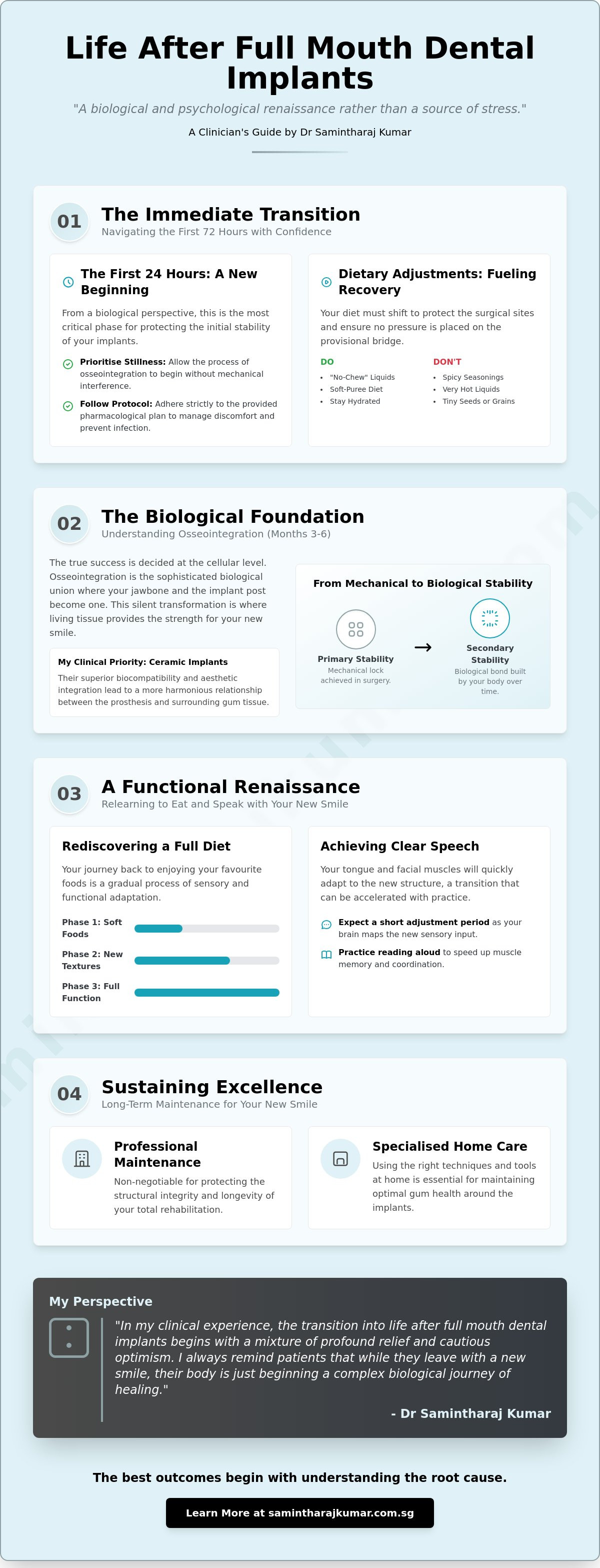
In my clinical experience, the transition into life after full mouth dental implants begins with a mixture of profound relief and cautious optimism. The "Teeth in a Day" reality means you leave the clinic with a provisional set of teeth that provides immediate aesthetic and functional restoration. It's a powerful moment for many of my patients, yet I always remind them that their body is just beginning a complex biological journey of healing. While you wake up with a new smile, the underlying tissues require a steady, disciplined environment to recover from the surgical procedure.
Managing the initial biological response is paramount during the first three days. You should expect some swelling and tenderness, which are natural signs of the body's inflammatory control mechanisms. I advocate for a proactive approach to recovery, where rest is treated as a vital part of the cellular healing process. By setting realistic expectations for these first 72 hours, you can approach your recovery with a sense of calm and security, knowing that these temporary sensations are the precursors to a permanent transformation.
To better understand the emotional and physical shift during this phase, watch this helpful video:
The First 24 Hours: A New Beginning
From a biological perspective, the first 24 hours are the most critical for long-term stability. This phase is about more than just comfort; it's about protecting the initial stability of the implants. I provide a precise pharmacological protocol that must be followed strictly to manage discomfort and prevent infection. When you transition from our surgical suite to your home, your primary focus should be on stillness. This allows the process of Understanding Osseointegration to begin without mechanical interference or unnecessary physical stress.
Dietary Adjustments in the Early Phase
During this early window, your diet must shift to protect the surgical sites. I recommend a "no-chew" liquid or soft-puree diet to ensure no pressure is placed on the provisional bridge. Hydration is equally important. It serves as a catalyst for tissue regeneration and helps flush out metabolic waste. Be mindful of "hidden" irritants like spicy seasonings, very hot liquids, or tiny seeds in smoothies. These can easily lodge in surgical sites and delay early healing. A gentle, disciplined approach to nutrition during these first few days sets the stage for a lifetime of functional excellence.
The Biological Foundation: Understanding Osseointegration
The true success of life after full mouth dental implants isn't determined in the operating theatre; it's decided at the cellular level. In my clinical experience, the most critical phase of recovery is the quiet period of osseointegration. This is the sophisticated biological union where your jawbone and the implant post become one. While the surgery provides the structure, it's the living tissue that provides the strength. As a clinician and founder, I prioritise ceramic dental implants for this very reason. Their superior biocompatibility and aesthetic integration often lead to a more harmonious relationship between the prosthesis and the surrounding gum tissue.
Between months three and six, a silent transformation occurs beneath the surface. New bone cells weave themselves into the microscopic topography of the implant. This cellular growth is influenced by your systemic health, nutrition, and blood flow. A patient with optimal vitamin D levels and good circulatory health will often see more robust bone density than one who is nutritionally deficient. Understanding the potential benefits and risks as outlined by the FDA helps set a realistic framework for this healing journey, ensuring you value the biological patience required for long-term success.
The Science of Bone Remodelling
Primary stability is what I achieve mechanically in the surgical suite. Secondary stability is the biological bond your body builds over time. The jawbone actually responds to the mechanical stimulation of the new implant posts, which helps prevent the bone atrophy commonly seen with traditional dentures. If your jawbone was insufficient at the start, a bone graft may have been necessary to ensure this foundation is secure. This process of remodelling is the cornerstone of the future of biological restoration.
Biological Dentistry and Implant Success
From a biological perspective, metal-free options like zirconia can reduce chronic inflammatory responses. This is particularly vital for patients with systemic conditions like diabetes, which can naturally slow the osseointegration timeline. I use advanced AI diagnostics to monitor this progress with precision, ensuring we only proceed to the final restoration once the foundation is biologically sound. This meticulous approach minimises the risk of failure and ensures that your new smile is built to last for decades. The best outcomes begin with understanding how your unique biology interacts with these advanced materials.
A Functional Renaissance: Relearning to Eat and Speak
In my clinical experience, the most rewarding phase of life after full mouth dental implants is the restoration of sensory joy. It's a functional renaissance that goes far beyond the simple mechanics of chewing. As a clinician and founder, I focus heavily on restoring the vertical dimension of the face. When we lose teeth, the distance between the nose and chin often collapses, leading to a prematurely aged appearance. By precisely engineering the height of your new smile, we restore the natural proportions of your face, which results in a subtle but profound aesthetic rejuvenation.
This phase is also about the return of flavour and texture. Many patients don't realise that traditional upper dentures cover the palate, which houses many of our taste receptors. With a fixed implant bridge, your palate remains open. You rediscover the nuances of your favourite meals. The American Academy of Periodontology notes that this return to a full, varied diet is one of the primary drivers for long-term systemic health improvements in implant patients.
The Culinary Transition
I always advise a disciplined, phased approach to reintroducing firm foods. While our "Teeth in a Day" protocol allows you to leave the clinic with a functional smile, the provisional bridge is designed for healing, not heavy lifting. You'll start with soft, nutritious foods like poached fish or well-cooked pasta. As we move toward the final permanent prosthetic, we gradually reintroduce crisp vegetables. The milestone of biting into a crisp apple is a celebration of biological success. It's a moment that signals your total rehabilitation is complete.
Mastering Your New Speech
Speech adaptation is a fascinating neurological journey. Your tongue and lips must recalibrate to the new positions of your teeth. You might find certain phonetic sounds, particularly "S" and "F," feel slightly different at first. This is entirely normal. I recommend practical exercises like reading a book aloud or even speaking in front of a mirror. This speeds up the brain's ability to map the new oral landscape. Because modern All-on-4 dental implants are fixed and contoured to mimic natural tooth roots, they feel significantly less intrusive than dentures. Most of my patients find their speech returns to a natural, confident rhythm within a few weeks of the final fitting.
My Perspective: The Psychological Shift and Emotional Renewal
In my clinical experience, the most profound change following total rehabilitation isn’t found in the mouth. It’s found in the patient’s eyes. When a person has lived with the silent burden of failing teeth, they carry a weight that affects every social interaction, every professional meeting, and every private moment of reflection. This constant vigilance is exhausting. Life after full mouth dental implants is, at its core, the end of a cycle of constant repair and the beginning of a permanent state of health. It is the moment the patient stops surviving and starts living again.
As a clinician and founder, I view every full mouth case as a life-altering partnership. We aren't just placing titanium or ceramic posts; we are restoring the fundamental confidence required to engage with the world. I've sat with patients who have avoided the dentist for decades due to deep-seated anxiety, only to see that fear evaporate once they realise they are no longer in a state of "dental emergency." We move from a state of reactive crisis management to one of proactive wellness and aesthetic excellence.
From Insecurity to Authority
I’ve watched patients who previously hid their mouths behind their hands transform into authoritative leaders in their professional lives. For years, they may have lived with the insecurity of a shifting bridge or the discomfort of failing natural teeth. This psychological burden often leads to a withdrawal from social opportunities. The relief that comes with a permanent, secure solution is transformative. I believe the right diagnosis changes everything for a patient’s self-worth. When we address the biological and functional root causes, we unlock a level of personal authority that many patients thought they had lost forever.
The Ripple Effect of Total Rehabilitation
The benefits of a restored smile extend far beyond the dental chair. Improved chewing efficiency directly impacts digestion and nutrient absorption, which supports systemic wellness and energy levels. When you can eat without pain, your relationship with food and social dining changes. I see this ripple effect in personal relationships too; the willingness to laugh freely is a powerful tool for human connection. We are seeing a global shift where dental implants in Singapore are setting new standards for this holistic, human-centred care. It is a visionary approach that prioritises the patient's long-term quality of life above all else.
The best outcomes begin with understanding the root cause of your dental concerns. If you are ready to move from a state of constant repair to a state of health, the right diagnosis changes everything.
Sustaining Excellence: Long-Term Maintenance of Your New Smile
In my clinical experience, the most successful patients are those who view their restoration as a lifelong partnership rather than a one-time event. Life after full mouth dental implants is not a "set and forget" solution; it is the beginning of a new relationship with your oral health. While these systems are engineered to last 20 to 30 years, their true longevity depends on the health of the living bone and soft tissue supporting them. I always encourage my patients to adopt a 10, 20, and 30-year vision for their health. We aren't just restoring your smile for today; we're building a functional foundation that should serve you well into your later decades.
Protecting this investment also means managing mechanical stressors. Many patients don't realise that habits like bruxism, or teeth grinding, can place immense pressure on implant components. As a clinician and founder, I often prescribe bespoke night guards to buffer these forces and ensure the structural integrity of the prosthetic remains uncompromised. This proactive approach to maintenance is what separates a standard result from a masterpiece of total rehabilitation.
Your Daily Maintenance Ritual
Traditional flossing is often insufficient for full arch restorations. I insist on the daily use of a water flosser, or oral irrigator, to effectively clean the interface between the bridge and the gum tissue. This tool is essential for removing biofilm from areas a toothbrush simply cannot reach. You must also transition to non-abrasive toothpastes. Many standard "whitening" formulations contain grit that can microscopiclly scratch the polished finish of your final teeth, making them more susceptible to staining over time. Understanding the importance of gum health is the first line of defence in preventing peri-implantitis, an inflammatory condition that can jeopardise the bone around your implants.
Irrigate: Use a water flosser twice daily to flush beneath the prosthetic.
Cleanse: Select non-abrasive, gel-based toothpastes to preserve the prosthetic's lustre.
Inspect: Monitor your gum tissue for any signs of redness or persistent tenderness.
Professional Oversight and the Future of Care
Professional maintenance appointments are non-negotiable for long-term success. During a specialist hygiene visit, we don't just clean the prosthetic; we verify the stability of every implant and the health of the surrounding bone. I use AI-assisted diagnostics to monitor your progress, allowing us to detect early signs of bone remodelling or biological changes with a level of precision that was previously impossible. This technology ensures that we stay ahead of potential issues before they become clinical problems. The best outcomes begin with understanding the root cause of any maintenance concern, ensuring your journey in life after full mouth dental implants remains one of health and confidence.
Embracing the Future of Your Restored Smile
Total rehabilitation is more than a clinical milestone; it's the beginning of a profound personal renewal. As a clinician and founder of Nuffield Dental, I've seen how life after full mouth dental implants restores not just the ability to eat and speak with ease, but the fundamental joy of human connection. We've explored the biological science of bone integration and the daily rituals required to protect your investment. Whether we are employing All-on-4 or specialised Zygomatic protocols, my commitment remains rooted in global standards of clinical excellence and patient-centred care.
Your journey towards health doesn't end when you leave the clinic; it evolves into a lifestyle of sustained wellness and confidence. By understanding the science and embracing the maintenance required, you ensure that your new smile remains a legacy of functional excellence for decades to come. The best outcomes begin with understanding the root cause. Contact us for a specialist consultation to begin your transformation with the clarity and security you deserve. Your future of health is built on a foundation of precision, innovation, and care.
Frequently Asked Questions
How long does it take to fully recover from full mouth dental implant surgery?
Complete biological recovery typically takes between three to six months. This is the time required for osseointegration, the process where your jawbone fuses with the implant posts. While the initial surgical healing phase and most discomfort usually subside within the first two weeks, you must remain disciplined with your soft-food diet until the bone has reached full maturity and stability.
Can I eat normally after getting full mouth dental implants?
You can return to a full, unrestricted diet once the final permanent bridge is securely fitted. During the first few months of life after full mouth dental implants, I recommend a soft-food protocol to protect the provisional restoration while the bone heals. Eventually, milestones like biting into a crisp apple or enjoying a steak become a natural part of your daily routine again.
Will my new teeth look and feel natural?
Your new teeth are engineered to mirror the aesthetics and function of natural dentition. I focus on restoring the vertical dimension of your face to ensure the results look harmonious and age-appropriate. Because the implants are fixed directly into the jawbone, they don't shift or click like dentures. Most of my patients report that they eventually forget the implants aren't their original teeth.
How do I clean and maintain my full mouth implants?
Maintenance involves a combination of meticulous at-home care and professional oversight. I advise the daily use of a water flosser to clean beneath the bridge, alongside brushing with a non-abrasive toothpaste. Professional hygiene appointments are non-negotiable for monitoring the health of the surrounding bone. These visits allow me to use AI-assisted diagnostics to ensure your restoration remains in peak condition for decades.
What happens if I grind my teeth (bruxism) with implants?
Bruxism can place excessive mechanical stress on the prosthetic components and the underlying bone. In my clinical experience, managing this is vital for protecting your investment. I typically prescribe a bespoke night guard to buffer these forces during sleep. This proactive measure prevents chipping of the ceramic material and ensures the long-term structural integrity of your total rehabilitation remains uncompromised.
Is the recovery process painful?
Most patients experience manageable tenderness and swelling rather than acute pain. I provide a precise pharmacological protocol designed to control inflammation and discomfort from the moment you leave the clinic. My priority is to replace anxiety with a sense of security. Most of my patients find they can return to light activities and work within just a few days of the procedure.
How long do full mouth dental implants typically last?
Dental implants are designed to be a permanent solution, often lasting 20 to 30 years or more with proper care. While the prosthetic bridge may require eventual maintenance due to natural wear, the implants themselves are intended to last a lifetime. Success rates are consistently high, ranging between 95% and 98% when global clinical protocols and meticulous hygiene are strictly followed.
What is the difference between All-on-4 and traditional full mouth implants?
All-on-4 uses four strategically angled implants to support a full arch of teeth, often bypassing the need for extensive bone grafting. Traditional full mouth restorations may use six or more implants and often require preparatory procedures like sinus lifts. I select the specific protocol based on your unique bone density and biological needs to ensure the most stable and predictable outcome for your smile.


Comments