
Maintaining the Biological Seal: A Surgeon’s Guide to Cleaning Zirconia Dental Implants
- Dr Samintharaj Kumar

- May 10
- 13 min read
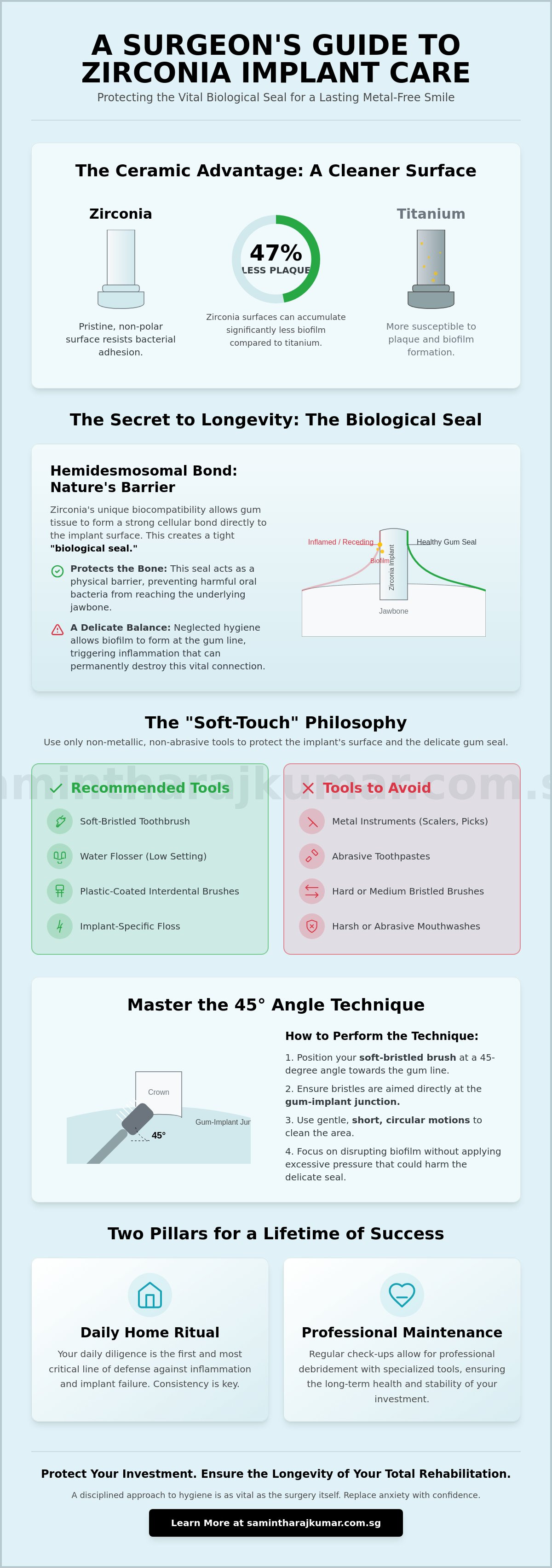
Did you know that zirconia surfaces may accumulate 47% less plaque compared to traditional titanium? In my clinical experience, this remarkable biological advantage often leads patients to believe their ceramic implants require less attention than natural teeth. However, the reality is that the longevity of your smile depends entirely on how you protect the delicate interface between the ceramic and your soft tissue. I understand the hesitation you might feel when cleaning zirconia dental implants. You want to maintain that pristine, metal-free aesthetic but fear using abrasive tools that could scratch the surface or compromise the vital gum seal.
In this guide, I'll share the specialised techniques and biological principles I've refined through years of surgical practice to help you preserve your investment. We'll examine the latest 2026 ADA maintenance protocols, including new standards for professional debridement and the specific non-abrasive tools required to prevent inflammation. By the end of this article, you'll have a clear, surgeon-approved routine that replaces anxiety with the confidence that your total rehabilitation is built to last for decades. The best outcomes always begin with understanding the root cause of health.
Key Takeaways
Understand the science behind the hemidesmosomal bond, the vital biological seal between your gum tissue and the zirconia surface that prevents infection.
Discover the "soft-touch" philosophy for cleaning zirconia dental implants, using non-metallic tools to avoid surface scratches and the risk of metal transfer.
Master my recommended 45-degree cleaning technique specifically designed to disrupt biofilm at the gum-implant junction without compromising the margin.
Learn why the low plaque affinity of high-performance bio-ceramics is a significant advantage for long-term health and how to leverage this property effectively.
Gain clinical insights into why professional maintenance and a dedicated home care ritual are essential for the longevity of your metal-free smile.
Table of Contents
Why Zirconia Dental Implants Require a Specific Maintenance Protocol
The Science of the Soft Tissue Interface: Why Hygiene Affects Longevity
Selecting the Right Tools: Non-Abrasive Care for Ceramic Surfaces
Step-by-Step: My Recommended Daily Routine for Zirconia Implant Care
My Perspective: Biological Dentistry and the Future of Implant Maintenance
Why Zirconia Dental Implants Require a Specific Maintenance Protocol
In my clinical experience, the transition to metal-free dentistry is often seen as a final destination. While a Dental implant crafted from zirconia is a masterpiece of material science, its longevity is a collaborative effort between the surgeon’s precision and the patient’s commitment to care. Zirconia is a high-performance bio-ceramic, distinguished by its exceptional biocompatibility and strength. One of the most compelling advantages of ceramic dental implants is their low plaque affinity. Statistics from 2025 show that zirconia surfaces can accumulate up to 47% less plaque than titanium, providing a cleaner environment for the surrounding tissues. However, this biological head-start doesn't eliminate the need for a rigorous maintenance protocol.
As a clinician and founder, I advocate for a philosophy of "Total Rehabilitation." This approach views the surgical placement of the implant as the beginning of a lifelong journey toward health, where daily hygiene is just as vital as the initial procedure. The primary goal of cleaning zirconia dental implants is to protect the soft tissue and prevent peri-implant mucositis. Left untreated, this inflammation can progress to bone loss, compromising the stability of the entire restoration. To better understand the practical side of this care, watch this helpful video:
The Problem: Biofilm and the Ceramic Surface
Even with a surface as smooth as polished ceramic, a microscopic layer known as biofilm will inevitably form. While zirconia’s non-polar surface makes it harder for bacteria to "stick," it isn't immune to the complex colonies of microbes that inhabit the oral cavity. Clinical consequences of neglected hygiene include the breakdown of the soft tissue attachment, leading to inflammation and eventual bone resorption. I often tell my patients at Nuffield Dental that "set and forget" is a dangerous myth in modern implantology. Without a disciplined approach to cleaning zirconia dental implants, even the most advanced ceramic system can fail due to preventable infection.
The Science: Why Zirconia is Different from Titanium
From a biological perspective, zirconia is fundamentally different from titanium because it is bio-inert and doesn't suffer from galvanic corrosion. This material promotes an incredibly tight gum attachment, often referred to as the "pink" aesthetic. This bond creates a protective ring around the neck of the implant. The biological seal is the mucosal barrier protecting the implant-bone interface. When we maintain this seal through proper hygiene, we ensure that the jawbone remains shielded from the bacterial challenges of the mouth. Zirconia’s unique surface properties allow for a more stable, long-term integration with the soft tissue than traditional metal alternatives.
The Science of the Soft Tissue Interface: Why Hygiene Affects Longevity
From a biological perspective, the true brilliance of zirconia lies in its relationship with your gingiva. While titanium is primarily valued for its bone-bonding capabilities, zirconia excels at creating a hemidesmosomal attachment. This is a sophisticated cellular bond where the gum tissue physically adheres to the ceramic surface, creating a protective "biological seal." In my clinical experience, this seal acts as the final gateway, preventing oral pathogens from reaching the underlying bone. However, this bond is delicate. If we aren't meticulous about cleaning zirconia dental implants, the accumulation of biofilm can trigger an inflammatory response that dissolves this cellular connection.
A healthy gum margin is your first line of defence. When the tissue is firm and tightly adapted to the ceramic, it creates a physical barrier against infection. At Nuffield Dental, I integrate AI-assisted diagnostics to monitor these soft tissue levels with extreme precision. These tools allow us to detect the earliest signs of mucosal recession or inflammation long before they're visible to the naked eye. Maintaining this interface is a key pillar of my treatment philosophy; it ensures that your total rehabilitation remains stable for decades. Understanding these fundamentals is essential, and the American Dental Association guide to dental implants provides excellent context on how these systems function within your oral ecosystem.
Understanding Peri-Implant Health
Distinguishing between healthy tissue and peri-implantitis is much simpler with ceramic systems. Because zirconia is white and translucent, we don't see the greyish "tattooing" of the gums that often occurs with metal. This allows for superior monitoring of "pink aesthetics." In a healthy state, the gums should be pale pink and show no bleeding upon probing. If the biological seal is breached, the tissue becomes crimson and swollen. Early intervention is crucial here; a professional assessment can often reverse inflammation before it compromises the bone. If you have concerns about your gum health, understanding the root cause is the first step toward a solution.
The Impact of Systemic Health on Zirconia Maintenance
As a clinician and founder, I view the mouth as a mirror of the body. Chronic inflammation around an implant doesn't stay localised; it contributes to the body's overall systemic load. This is why biological dentistry prioritises metal-free solutions. For the 0.6% of the population with confirmed titanium sensitivities recorded in 2026 research, zirconia isn't just an aesthetic choice but a health necessity. By eliminating metal, we reduce the risk of chronic immunological stress. This holistic approach ensures that your dental health supports your total wellness, rather than detracting from it. A clean, stable ceramic implant is a cornerstone of a healthy, high-performance lifestyle.
Selecting the Right Tools: Non-Abrasive Care for Ceramic Surfaces
In my clinical experience, patients often equate cleanliness with force. This is a misconception that can be particularly damaging to premium ceramic restorations. When cleaning zirconia dental implants, I advocate for a "soft-touch" philosophy. Aggressive scrubbing does not improve hygiene; instead, it risks irritating the delicate hemidesmosomal attachment I described earlier. Zirconia is incredibly durable, yet its aesthetic lustre depends on maintaining a smooth, unmarred surface. If you use tools that are too abrasive, you can create microscopic scratches that actually encourage biofilm to adhere more readily.
From a biological perspective, the most critical rule is the absolute avoidance of metallic cleaning instruments. Using stainless steel picks or even certain metal-core interproximal brushes can lead to "metal transfer." This occurs when the harder ceramic surface abrades the softer metal tool, leaving permanent dark streaks on your pristine white implant. This is not just an aesthetic issue; these metal particles can disrupt the biocompatibility of the site. For patients who have undergone full-arch rehabilitation with All-on-4 dental implants, selecting the correct tools is the difference between a lifetime of confidence and premature failure.
The Specialist’s Toolkit
I am often asked whether manual or electric brushes are superior. While a soft-bristled manual brush is effective, I believe a high-quality sonic electric toothbrush is the gold standard. The gentle vibrations disrupt biofilm without requiring the manual pressure that often leads to gum recession. For those with complex bridges or full-arch restorations, a water flosser is indispensable. It uses a targeted stream of water to flush out debris from the "sulcus"—the small space between the implant and the gum—where traditional floss cannot reach. If you prefer manual flossing, ensure you use specialised implant floss, which features a thick, spongy centre designed to gently wipe the ceramic surface clean.
What to Avoid
The choice of toothpaste is just as vital as the brush itself. I strictly advise my patients to avoid charcoal or whitening toothpastes. These products often have high Relative Dentin Abrasivity (RDA) values, often exceeding 100, which can dull the ceramic finish over time. Aim for a non-abrasive gel with an RDA value below 70. Similarly, steer clear of metal picks or hard plastic scrapers. These can traumatise the biological seal we worked so hard to establish during surgery. Finally, I recommend avoiding alcohol-based mouthwashes. The high alcohol content can dry out the mucosal tissues and irritate the gum margin, potentially compromising the tight seal that protects the underlying bone. The best outcomes begin with understanding that gentle, consistent care is always superior to abrasive intervention.
Step-by-Step: My Recommended Daily Routine for Zirconia Implant Care
In my clinical experience, the most successful patients treat their oral hygiene not as a chore, but as a mindful ritual of self-care. Establishing a consistent routine is the only way to protect the biological seal we have discussed. Cleaning zirconia dental implants requires precision rather than pressure. Before you begin, ensure your environment is well-lit and you have your non-abrasive toolkit ready. This preparation sets the stage for a thorough, effective session that preserves your total rehabilitation.
Step 1: The 45-Degree Technique. Place your soft-bristled brush at a 45-degree angle toward the gum line. Use small, circular motions to gently disrupt biofilm at the junction where the ceramic meets the tissue. This specific angle is vital for reaching the sulcus without traumatising the margin.
Step 2: Sub-Gingival Irrigation. Use your water flosser on a low-to-medium pressure setting. Trace the gum line around each implant, allowing the water to flush out debris from beneath the tissue. This step is particularly effective for ceramic systems as it cleans without physical abrasion.
Step 3: Precision Flossing. For single implants, use a spongy floss in a "C-shape" to wrap around the neck of the restoration. For bridge structures, utilise a floss threader to navigate beneath the pontic, ensuring no trapped food remains to irritate the gums.
Step 4: The Tongue Test. After rinsing, run your tongue over the ceramic surfaces. They should feel glass-smooth. Any "fuzzy" sensation indicates remaining biofilm that requires another gentle pass.
Morning and Evening Protocols
As a clinician and founder, I believe that the evening protocol is the most critical. During sleep, salivary flow decreases, which allows bacteria to proliferate more rapidly. A meticulous clean before bed ensures that your mouth remains in a neutral, healthy state overnight. While the morning routine focuses on refreshing your breath and starting the day with a confident smile, the evening session is your primary defence against peri-implantitis. Integrating these few minutes into your lifestyle ensures the long-term stability of your investment.
Cleaning After Surgery: The First 14 Days
The initial healing phase requires a specialised approach. During the first 14 days, the surgical site is forming its initial attachment, and aggressive cleaning must be avoided. I typically prescribe a gentle antiseptic mouthwash or warm salt-water rinses to keep the area sterile without physical contact. You should transition from this "passive" cleaning to "active" brushing only after your follow-up appointment, once I have confirmed that the soft tissue is sufficiently resilient. If you are currently in the healing phase and have questions about your progress, consulting your surgical team ensures you stay on the path to a seamless recovery.
My Perspective: Biological Dentistry and the Future of Implant Maintenance
As a clinician and founder, my journey has always been driven by a search for the "gold standard" in human health. I believe zirconia represents the pinnacle of functional aesthetics because it respects the body’s innate biological principles while providing unmatched durability. Throughout the growth of Nuffield Dental, I have prioritised building an institution that values legacy and long-term stability over immediate, transactional results. This means we don't just perform a surgical procedure; we curate a lifelong health journey. From a biological perspective, the future of cleaning zirconia dental implants is moving toward an era of unprecedented precision. I envision a future where AI-driven remote monitoring allows us to track your tissue health in real-time from your own home, ensuring the biological seal remains uncompromised between clinical visits.
The Philosophy of Total Rehabilitation
In my clinical experience, I view every implant as a life-changing transformation. It is more than just a replacement for a missing tooth; it is a restoration of confidence and systemic wellness. I believe a surgeon's ethical responsibility extends far beyond the operating theatre. We have a duty to educate and empower our patients to become stewards of their own health. This is why I advocate for a deep understanding of the "why" behind every hygiene step. The best outcomes begin with understanding the root cause of oral health issues, allowing us to prevent inflammation before it even starts. This proactive mindset is the hallmark of a visionary approach to biological dentistry.
Professional Maintenance at the Clinic
While a meticulous home routine is your daily defence, professional intervention remains a non-negotiable pillar of success. At our centres, we utilise specialist scaling and polishing techniques designed specifically for bio-ceramics. We employ Airflow® technology, which uses a controlled stream of air, warm water, and fine erythritol powder to disrupt biofilm. This method is superior because it cleans the "sulcus" effectively without the need for physical metal instruments that could mar the ceramic. Your dental clinic choice matters immensely for long-term maintenance. You require a team that is trained in international protocols and understands the nuances of cleaning zirconia dental implants. My commitment is to ensure that your restoration remains as functional and beautiful as the day it was placed. The right diagnosis and care protocol changes everything.
Securing the Future of Your Ceramic Smile
In my clinical experience, the longevity of a metal-free smile is not determined in the operating theatre alone. It is secured through the daily commitment you make to your health. We have explored how the unique hemidesmosomal attachment of zirconia creates a vital biological seal that protects your jawbone from infection. By adopting a "soft-touch" philosophy and the precise techniques for cleaning zirconia dental implants, you ensure this barrier remains intact. This approach, combined with the specialised protocols we use for All-on-4 and Zygomatic implants at Nuffield Dental, represents the pinnacle of modern biological dentistry in Singapore.
As a clinician and founder, I remain dedicated to leading-edge innovation that prioritises your long-term quality of life. My perspective is that a successful transformation is one that lasts for decades, supported by both surgical excellence and informed patient care. You now possess the specialist knowledge required to maintain the lustre and health of your ceramic restorations. The best outcomes begin with understanding the root cause. Explore our approach to ceramic dental implants. Your journey toward a permanent, healthy smile is a collaborative path I am honoured to walk with you.
Frequently Asked Questions
Can I use a normal toothbrush to clean my zirconia dental implants?
You can use a manual toothbrush provided it has soft bristles to avoid traumatising the delicate gum margin. In my clinical experience, a soft-bristled brush or a sonic electric brush is ideal for daily cleaning zirconia dental implants because it disrupts biofilm effectively without physical abrasion. Hard or medium bristles are too aggressive and can lead to tissue recession, which compromises the biological seal we aim to protect.
How often should I see a specialist for professional zirconia implant cleaning?
Most patients should schedule a professional cleaning every six months to maintain optimal health. However, for those with a history of periodontal disease or smokers, a 2025 international consensus suggests more frequent visits every 3 to 4 months. These specialist sessions at Nuffield Dental utilise Airflow® technology to remove microscopic deposits that at-home tools might miss, ensuring the long-term stability of your total rehabilitation.
Is a Waterpik better than traditional floss for ceramic implants?
A water flosser is often superior, especially for complex bridge structures or full-arch restorations. It uses targeted irrigation to flush out debris from the sulcus where traditional floss cannot easily reach. While spongy specialist floss is excellent for single implants, the non-contact nature of sub-gingival irrigation is gentler on the hemidesmosomal attachment, making it an indispensable tool for preserving the biological seal around ceramic systems.
What happens if I don’t clean my zirconia implants properly?
Neglecting hygiene leads to peri-implant mucositis, an inflammatory condition of the surrounding gums. If this inflammation is left untreated, the biological seal is breached, allowing bacteria to reach the jawbone and cause peri-implantitis. A 2026 retrospective analysis highlights that while zirconia has high survival rates, preventable infection remains the primary cause of bone loss. Consistent cleaning zirconia dental implants is the only way to avoid these clinical consequences.
Will my zirconia implants stain if I drink coffee or red wine?
Zirconia is a non-porous bio-ceramic that is exceptionally resistant to permanent staining from coffee, tea, or red wine. Unlike natural tooth enamel, the material doesn't absorb pigments. However, a layer of biofilm can still form on the surface and pick up external stains over time. Maintaining a disciplined daily routine ensures your implants retain their pristine, aesthetic lustre and look as seamless as the day they were fitted.
Can I use mouthwash with my ceramic dental implants?
You can use mouthwash, but it's vital to choose an alcohol-free, pH-balanced formula. Alcohol-based rinses can dry out the mucosal tissues and irritate the sensitive junction where the gum attaches to the ceramic. From a biological perspective, I recommend gentle antiseptic rinses or simple warm salt-water solutions, particularly during the first 14 days of healing. This keeps the site sterile without disrupting the early stages of soft tissue integration.
Is it normal for the gums around my zirconia implant to bleed slightly during cleaning?
Bleeding is not considered normal and usually indicates the presence of early inflammation or mucositis. While it may happen occasionally if you use too much pressure, persistent bleeding is a signal that biofilm is irritating the tissue. If you notice bleeding for more than 48 hours, I recommend a specialist consultation. Early intervention allows us to disrupt the bacterial colonies and restore the health of the gum margin before bone loss occurs.
How do I know if the biological seal around my implant is healthy?
A healthy biological seal is evidenced by gums that are firm, pale pink, and show no signs of bleeding or swelling during your routine. The tissue should be tightly adapted to the neck of the zirconia implant without any visible recession. In my clinical experience, the most reliable way to confirm health is through AI-assisted diagnostics during your regular check-up, which can detect subtle changes in tissue density that aren't visible to the eye.


Comments