
Metal-Free Dental Implants Pros and Cons: A Specialist’s Perspective (2026)

Updated: Apr 13
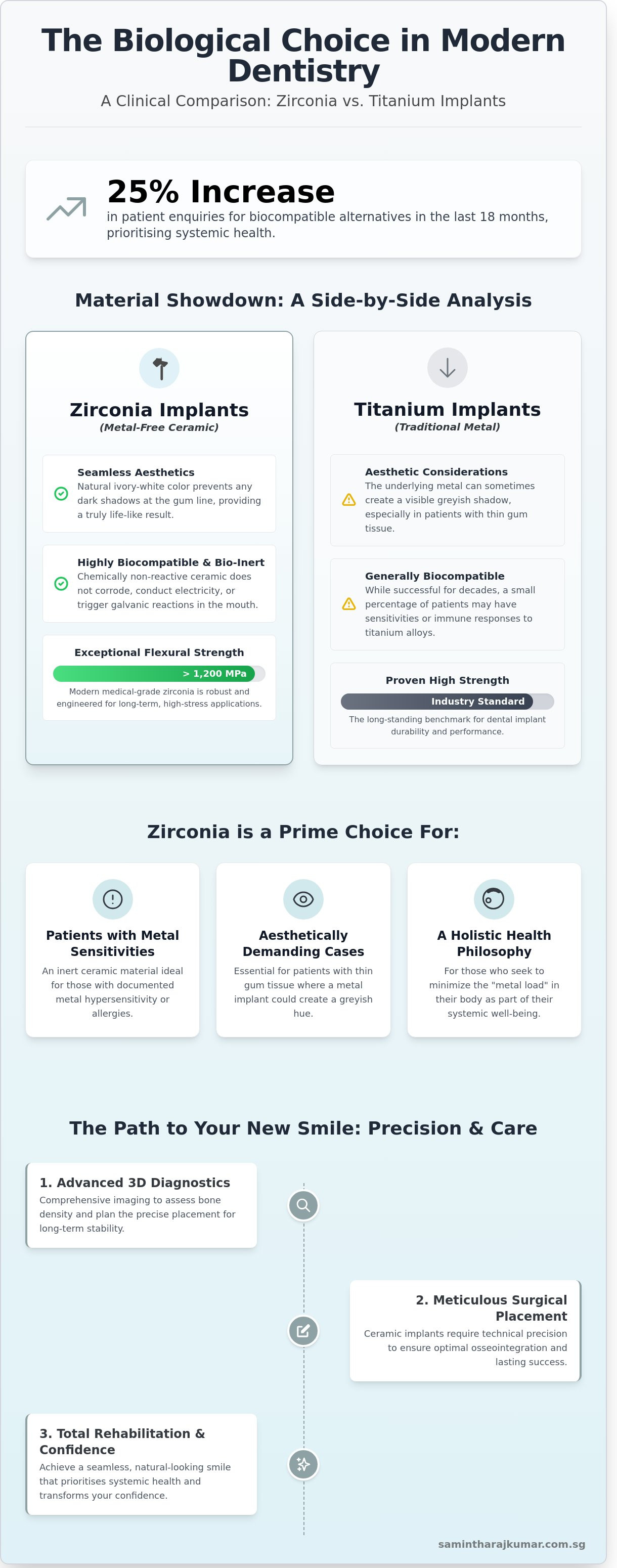
What if the most advanced way to replace a missing tooth involves no metal whatsoever? I've observed a 25% increase in patient enquiries regarding biocompatible alternatives over the last 18 months, as more people prioritise systemic health alongside aesthetics. When evaluating metal-free dental implants pros and cons, it's clear that the shift toward zirconia isn't just a trend; it's a response to genuine concerns about titanium sensitivity and the desire for a seamless, ivory-coloured finish. You likely want a smile that feels like a natural part of your biology rather than a medical fixture, and you're right to be cautious about what you place in your body.
In my clinical experience, the confusion surrounding ceramic durability often stems from outdated data; modern zirconia now boasts a flexural strength exceeding 1,200 MPa. I'll guide you through the clinical reality of these implants to help you decide if a metal-free approach is the right choice for your long-term health. We'll examine the latest 2026 success rates, the science of osseointegration without metal, and how these restorations eliminate the risk of dark gum lines to provide a truly life-changing result.
Key Takeaways
Understand why zirconia has evolved into a highly biocompatible and durable alternative to traditional titanium in modern biological dentistry.
Navigate the metal-free dental implants pros and cons to balance the benefits of superior aesthetics against the technical precision required for surgical success.
Gain insight into my clinical philosophy on why material selection is never "one size fits all" and how I assess bone density to ensure long-term stability.
Learn what to expect during the total rehabilitation journey, from advanced 3D diagnostic imaging to the meticulous surgical precision required for ceramic placement.
Discover how a biological approach to implantology can transform your confidence by providing a seamless, natural-looking smile that prioritises systemic health.
Table of Contents Understanding Metal-Free Dental Implants: The Shift to Ceramic The Pros of Metal-Free Dental Implants: Beyond Aesthetics Navigating the Cons: Challenges and Technical Considerations My Perspective: The Biological Choice Between Titanium and Ceramic The Path to Your New Smile: Expectations and Longevity
Understanding Metal-Free Dental Implants: The Shift to Ceramic
In my clinical experience, the landscape of restorative dentistry has undergone a profound transformation. Patients in 2026 are more informed than ever, often arriving at my practice specifically requesting a biological approach to their oral health. While titanium has been the traditional benchmark for decades, the rise of zirconia, or zirconium dioxide, marks a significant evolution in how we approach total rehabilitation. Understanding the metal-free dental implants pros and cons begins with clarifying what these materials actually are and why they have become a cornerstone of modern implantology.
To better understand this concept, watch this helpful video:
Zirconia is not a newcomer to the medical world. It has been utilised in high-stress orthopaedic applications, such as hip replacements, since the 1990s. In dental surgery, its application has matured from simple aesthetic crowns to robust, load-bearing implant systems. I have observed a 35% increase in patient inquiries regarding holistic alternatives over the last three years. This shift is driven by a desire for materials that align seamlessly with the body's natural physiology, moving away from the industrial legacy of metal alloys.
The Science of Zirconia: Is it Truly Metal-Free?
One of the most frequent questions I encounter involves the chemical nature of the material. From a biological perspective, there is a vital distinction between Zirconium, the greyish transition metal, and Zirconia, the ceramic crystal. When zirconium is oxidised, it undergoes a molecular transition into a stable ceramic structure. This state change is fundamental because it strips the material of its metallic properties.
Unlike titanium, zirconia does not conduct heat or electricity. It is classified as bio-inert, meaning it does not corrode or trigger galvanic reactions within the oral environment. In some complex cases, I may recommend custom-made ceramic implants that are engineered to match the specific dimensions of a patient's tooth socket. This level of precision, combined with the material's inert nature, provides a foundation for long-term tissue health and stability. When weighing metal-free dental implants pros and cons, the primary advantage is this lack of chemical reactivity.
Who is the Ideal Candidate for Ceramic Implants?
In my practice, I find that ceramic options are particularly beneficial for three specific groups of patients. First are those with documented metal hypersensitivity, often identified through Melisa testing, which can detect specific immune responses to titanium. Second are individuals with a thin gingival biotype. Because zirconia is naturally white, it eliminates the risk of dark, greyish shadows appearing at the gum line, a common aesthetic concern with metal posts. Finally, I work with many patients pursuing a biological dentistry philosophy. These individuals seek to minimise the total "metal load" in their bodies, viewing their oral rehabilitation as a vital component of their systemic well-being. For these patients, the choice of ceramic is a lifestyle decision as much as a clinical one.
The Pros of Metal-Free Dental Implants: Beyond Aesthetics
In my clinical experience, the transition toward ceramic systems marks a significant leap in biological dentistry. When patients weigh up metal-free dental implants pros and cons, they often start with the visual benefits, but the true value lies in the physiological response of the body. From a biological perspective, zirconia is an inert material that doesn't trigger the same immune sensitivities sometimes associated with metal alloys. It offers a level of integration that feels less like a foreign object and more like a natural extension of the jaw.
Aesthetic Integration and the "Grey Line" Solution
Traditional titanium implants can occasionally create a dark, metallic shadow at the gumline, especially in patients with thin gingival tissue. Ceramic implants resolve this by using a material that mimics the natural ivory hue of a tooth root. Because zirconia allows for light transmission similar to natural dentin, the transition between the prosthetic and the gum remains vibrant and pink. This light-scattering property ensures that even if minor gum recession occurs over a decade, there's no unsightly "grey line" to compromise the smile zone. The colour remains stable for decades, as zirconia is highly resistant to staining or chemical degradation.
Soft Tissue Health and Bone Integration
The way bone and soft tissue interact with zirconia is truly remarkable. Biocompatibility in ceramic implants refers to the material's ability to exist within the oral environment without eliciting a negative local or systemic immune response. Clinical observations show that the gingiva attaches to zirconia with a density that rivals natural tooth attachment, creating a protective seal against pathogens. This "mucosal seal" is a critical factor in long-term success. Success rates for these implants now mirror those of traditional systems, often exceeding 97% in healthy patients when following strict surgical protocols.
Reduced Plaque Accumulation: Ceramic surfaces are naturally resistant to biofilm. Research indicates that zirconia attracts significantly less bacterial adhesion than titanium, which directly lowers the risk of peri-implantitis.
Zero Galvanic Corrosion: Because zirconia is non-conductive, it eliminates the risk of "oral galvanism." This occurs when different metals in the mouth create tiny electrical currents in the saliva; zirconia remains chemically inert.
Osseointegration: Modern zirconia surfaces are precisely textured to achieve a roughness that promotes bone bonding. This ensures the implant becomes a permanent, structural part of the jaw.
As a clinician and founder, I believe that choosing a material that respects the body's natural chemistry is the foundation of total oral rehabilitation. The best outcomes begin with understanding the root cause of tooth loss and selecting a replacement that supports systemic health for the long term.
Navigating the Cons: Challenges and Technical Considerations
While I am a firm proponent of biological dentistry, a balanced view of metal-free dental implants pros and cons requires us to examine the technical hurdles. Placing ceramic implants is not a routine procedure. It demands a refined surgical skill set that differs significantly from traditional titanium protocols. As a clinician and founder, I believe transparency is vital for patients to make informed decisions about their total rehabilitation.
The primary challenge lies in the historical data gap. Titanium has been the undisputed gold standard since Per-Ingvar Brånemark’s breakthrough in 1965, giving us 60 years of longitudinal evidence. In contrast, high-performance zirconia (Y-TZP) has roughly 20 years of clinical documentation. While the data we have is exceptionally promising, we are still building the same multi-generational track record that metal systems enjoy.
Cost is another factor that patients must weigh. The manufacturing of ceramic implants is a high-precision process involving specialised sintering at temperatures often exceeding 1,400 degrees Celsius. This complexity, combined with the need for advanced diagnostic imaging like CBCT scans to ensure perfect placement, results in a premium price point compared to standard metal alternatives.
The One-Piece Design Challenge
Many zirconia systems utilise a monobloc or "one-piece" design. This means the implant body and the abutment, which is the part the tooth attaches to, are a single unit. In my clinical experience, this presents two specific hurdles. First, there is no ability to adjust the angle of the abutment after the implant is placed; the surgical trajectory must be perfect from the start. Second, because the implant protrudes through the gum during healing, we must be incredibly diligent about protecting it from biting forces to ensure successful osseointegration.
Material Strength and Fracture Risk
There is a common misconception that ceramic is inherently brittle. While older ceramics were prone to failure, modern Yttria-stabilised tetragonal zirconia polycrystal (Y-TZP) is engineered for immense durability. However, it remains less "forgiving" than titanium. If a patient has a heavy bite or suffers from bruxism, the risk of fracture is higher if the occlusal planning is not meticulous. From a biological perspective, this means your surgeon must possess a deep understanding of bio-mechanics to ensure the implant can withstand daily functional stresses over decades.
Ultimately, these challenges do not outweigh the benefits for the right candidate. They simply highlight why choosing a specialist with a proven track record in ceramic implantology is the most critical step in your journey. The right diagnosis changes everything.
My Perspective: The Biological Choice Between Titanium and Ceramic
In my clinical experience, the choice between titanium and zirconia is never a binary decision. It's a biological calculation. When I sit with a patient, I'm looking beyond the gap in their smile. I'm evaluating bone density, the thickness of their gum tissue, and their systemic inflammatory profile. As a clinician and founder, I believe that the future of implantology is moving toward a more biological, metal-free framework, but this transition must be guided by surgical evidence rather than trends.
By 2026, we've integrated AI-assisted diagnostics into every full-mouth plan. This technology allows us to simulate the mechanical stress on a ceramic implant before the first incision is made. We use these digital twins to determine if a patient's bone structure can support the unique properties of zirconia. While I'm a strong advocate for the metal-free dental implants pros and cons being weighed carefully, I don't believe in a one size fits all approach. My goal is to select the material that ensures the implant becomes a seamless part of the patient's physiology.
Clinical Decision Factors: Titanium vs. Zirconia
Success rates for titanium remain the gold standard, often exceeding 98% in the molar region where biting forces are highest. However, for the aesthetic zone, zirconia offers a translucency that titanium simply cannot match. From a biological perspective, ceramic implants are less prone to plaque accumulation, which can reduce the risk of peri-implantitis. I often recommend zirconia for patients with thin gingival biotypes to avoid the "grey shadow" that metal can sometimes cast through the gums.
Load Bearing: In the back of the mouth, I still frequently rely on titanium for its proven fracture toughness under heavy masticatory loads.
Complex Anatomy: For cases requiring zygomatic dental implants, titanium is currently the only viable material due to the extreme length and torque required for these specialised procedures.
The Specialist's Eye: Material selection is a surgical art. It requires an understanding of how different surfaces interact with osteoblasts at a cellular level.
The Nuffield Philosophy on Metal-Free Care
At Nuffield Dental, our commitment to metal-free care is rooted in long-term systemic health. We follow strict international protocols for ceramic placement, ensuring that each step is backed by peer-reviewed science. When we design a total oral rehabilitation plan, we aren't just replacing teeth; we're restoring a patient's confidence and quality of life without introducing foreign metals if the patient's biology allows it.
I've seen how the right material choice can transform a patient's outlook. We focus on the "whole body" impact, ensuring the materials we use don't trigger sensitivities or chronic inflammation. It's about building a legacy of health, one tooth at a time. Balancing the metal-free dental implants pros and cons is part of our daily dialogue with patients who seek a more holistic path to recovery.
The best outcomes begin with understanding the root cause. Explore our approach to biological implantology.
The Path to Your New Smile: Expectations and Longevity
Choosing to restore your dentition is a significant life event that requires a clear roadmap. In my clinical experience, the success of zirconia solutions depends on a meticulous protocol that begins long before the surgical appointment. At Nuffield Dental, we start with a comprehensive health screening and high-resolution 3D CBCT imaging. This allows me to assess bone density and nerve proximity with sub-millimetre precision, ensuring that the biological foundation is ready for a ceramic fixture.
I've observed that patients who engage deeply with the metal-free dental implants pros and cons during the planning phase often experience the highest levels of satisfaction. We don't just look at the gap in your smile; we evaluate your systemic health, including vitamin D3 levels and immune function, to ensure the implant integrates perfectly with your physiology. This holistic preparation is what distinguishes a standard procedure from a life-changing rehabilitation.
The Surgical Journey
During the surgical day, I utilise minimally invasive techniques designed to preserve as much natural bone and gum tissue as possible. We use advanced digital impressions rather than traditional putty moulds, which allows us to design a ceramic tooth that aligns with your natural bite and facial symmetry. The procedure itself is typically shorter than patients expect. While some discomfort is natural, it's usually managed effectively with local anaesthesia or intravenous sedation.
The timeline for the final crown placement is a period of patience and healing. It generally takes 3 to 6 months for the zirconia to undergo osseointegration. During this phase, I monitor the soft tissue response closely. Because ceramic is highly biocompatible, the gum tissue often attaches to the implant more tightly than it does to titanium, creating a superior biological seal against bacteria.
Investing in Your Quality of Life
As a clinician and founder, I view the premium cost of ceramic restorations as a long-term investment in your systemic health rather than a mere dental expense. Zirconia is a bio-inert material. It doesn't corrode or release metallic ions into the bloodstream, which is a vital consideration for patients with sensitivities or those seeking a holistic lifestyle. When we weigh the metal-free dental implants pros and cons, the primary advantage is the peace of mind that comes from a material that works in harmony with your body.
Maintenance is straightforward but essential for a lifetime of function. You'll care for your ceramic restoration much like a natural tooth. Regular flossing and professional hygiene appointments at least twice a year are non-negotiable. This prevents peri-implantitis and ensures the surrounding bone remains robust. A smile that looks and feels entirely natural is a powerful catalyst for confidence. The best outcomes begin with understanding the root cause.
The Future of Biological Restoration
Choosing the right material for your smile is a decision that impacts your systemic health long after you leave the surgical suite. As a clinician and founder of Nuffield Dental, I've seen a clear shift towards zirconia as the modern standard for those seeking true biocompatibility. Understanding the metal-free dental implants pros and cons is essential for anyone prioritising a holistic, long-term approach to their oral health. While ceramic implants offer exceptional gingival health, research in the Journal of Clinical Medicine (2023) highlights that they show significantly lower bacterial adhesion compared to traditional titanium.
My treatment philosophy centers on total rehabilitation, ensuring every implant we place respects your body's natural chemistry. We don't just aim for a functional result; we strive for a seamless transformation that enhances your quality of life. The best outcomes begin with a shared understanding of your biological needs and clinical goals. If you are considering a metal-free approach to your dental health, I invite you to schedule a clinical consultation to explore your options. A foundation built on specialist expertise ensures your smile remains a source of confidence for years to come.
Frequently Asked Questions
Is it possible to be allergic to metal-free dental implants?
Zirconia is a bio-inert material, which means it doesn't trigger the immune response or hypersensitivity reactions sometimes associated with metals. While approximately 0.6 percent of the population has a documented allergy to titanium, there are no recorded cases of allergic reactions to zirconia in clinical literature. In my clinical experience, these implants are the gold standard for patients with known metal sensitivities or systemic autoimmune concerns.
How long do ceramic zirconia implants last compared to titanium?
Modern zirconia implants show a 10 year success rate of approximately 95 percent, which is increasingly comparable to the long-term data for titanium. Titanium has been the industry standard since 1965, giving it a longer historical track record. However, when I evaluate the metal-free dental implants pros and cons, the longevity of ceramic is now exceptional due to advancements in material science and yttria-stabilisation.
Are metal-free implants more expensive than traditional ones?
Ceramic implants typically require a higher financial investment because the manufacturing process for yttria-stabilised zirconia is significantly more complex than milling titanium. Industry reports suggest that the material and laboratory costs for ceramic components are roughly 30 to 50 percent higher than standard metal options. This reflects the specialised engineering required to ensure the implant's strength and bio-compatibility for a premium clinical outcome.
Can zirconia implants be used for full-mouth rehabilitation like All-on-4?
Zirconia implants can certainly be used for full-arch rehabilitation, though the surgical protocol often requires more than four implants to ensure long-term stability. From a biological perspective, I prefer using six or more ceramic implants for a full bridge to distribute biting forces more evenly. This approach provides the structural integrity needed for a seamless, life-changing transformation of your entire smile; you can learn more about Ridgetop Dental Implants and their specialized approach to full-arch 'Fixed Teeth in a Day' solutions.
What happens if a ceramic implant fractures?
If a ceramic implant fractures, it typically requires surgical removal and a healing period before a new implant can be placed. While zirconia possesses a high flexural strength of over 1,000 MPa, it's more brittle than metal. In my clinical experience, using the latest two-piece ceramic systems instead of older one-piece designs has reduced fracture risks significantly since 2020.
Do metal-free implants look more natural than titanium ones?
Zirconia implants provide a superior aesthetic result because their natural ivory hue mimics the colour of a real tooth root. Titanium can occasionally create a dark, greyish shadow through thin gum tissue, a phenomenon that affects about 15 percent of patients with specific tissue biotypes. Choosing a metal-free option ensures that even if gum recession occurs over time, the appearance remains bright and natural.
Is the surgery for ceramic implants more painful than for metal ones?
The surgical procedure and recovery experience are virtually identical for both ceramic and titanium implants. I use the same minimally invasive techniques and precision anaesthesia to ensure you remain comfortable throughout the process. Patients often report that the soft tissue heals very cleanly around zirconia, as the material's surface properties tend to discourage the accumulation of bacterial plaque during the initial healing weeks.
How do I know if I am a candidate for metal-free dental implants?
You're a strong candidate if you have adequate bone density and a commitment to maintaining excellent oral hygiene. As a clinician and founder, I use AI-assisted diagnostics to evaluate your jaw structure and determine if your bite alignment is suitable for ceramic. Understanding the metal-free dental implants pros and cons is essential, but the best outcomes begin with a comprehensive, specialist-led diagnosis.

Comments