
Overcoming Fear of Complex Dental Surgery: A Specialist Surgeon’s Perspective
- Dr Samintharaj Kumar

- Jun 29
- 11 min read
What if the most daunting aspect of your dental journey isn't the procedure itself, but the lingering anxiety that prevents you from seeking the care you need? I've seen many patients who feel trapped between the desire for a healthy smile and a deep-seated fear of the unknown. Overcoming fear of complex dental surgery often begins with a shift in perspective, moving away from the idea of a traumatic event and toward a meticulously planned biological restoration. You're likely worried about losing control under anaesthesia or the physical discomfort that follows a long day of surgery.
I agree that these concerns are valid, as your sense of safety is just as important as the clinical outcome. In this article, I'll share how clinical mastery, AI-assisted diagnostics, and a compassionate approach transform these procedures into a predictable path toward total rehabilitation. We'll explore modern pain management protocols and the precision of specialist expertise. By the end, you'll understand why the right diagnosis and a visionary approach to care can replace your apprehension with a profound sense of confidence.
Table of Contents
Understanding the Roots of Surgical Anxiety in Complex Cases
Many patients tell me they feel a palpable sense of dread before a major appointment. It's vital to distinguish between general nervousness and a deep-seated surgical phobia. While Understanding Dental Fear and Anxiety is the first step, we must acknowledge that complex cases carry a heavier psychological weight than routine check-ups. Surgical anxiety is a rational response to a perceived loss of control that can be mitigated through education and precise clinical planning.
In my clinical experience, procedures such as Zygomatic dental implants trigger unique responses because they involve bone-level intervention. These are not simple adjustments; they are transformative reconstructions. The complexity of full mouth rehabilitation often leaves patients feeling vulnerable. As a clinician and founder, I believe that the antidote to this vulnerability is transparency and a shared understanding of the surgical roadmap.
To help you begin processing these feelings, watch this helpful video on managing anxiety:
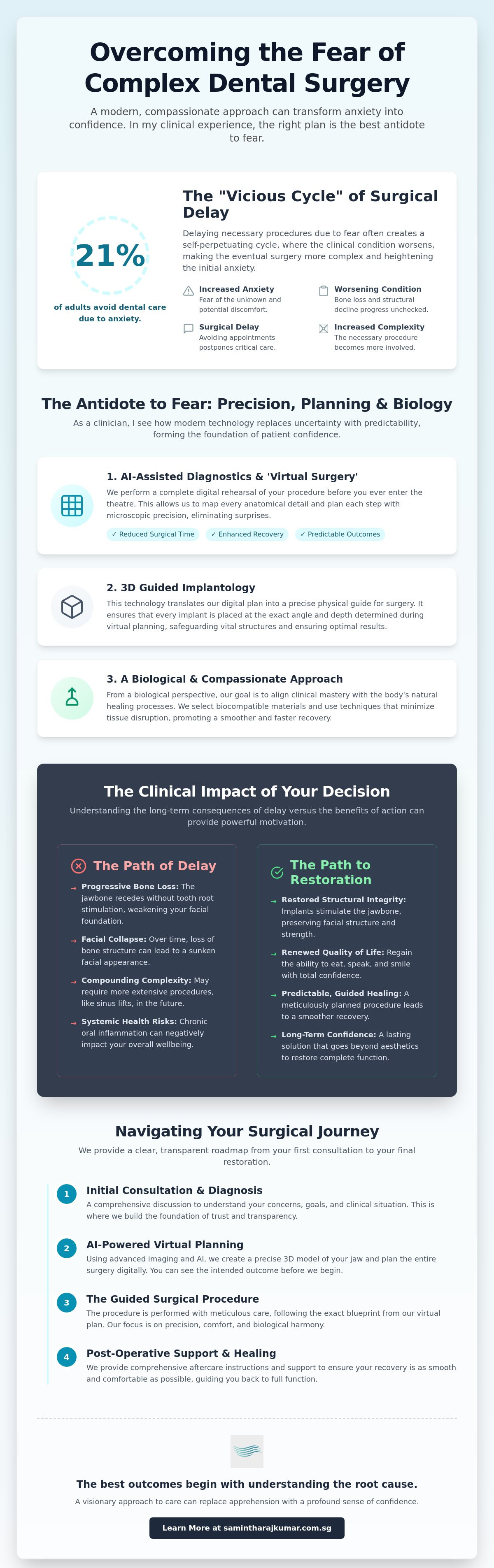
Recent data from 2025 indicates that approximately 21% of adults have avoided dental care due to anxiety. This avoidance often leads to a "vicious cycle" where the clinical condition worsens, making the eventual surgery more involved. Overcoming fear of complex dental surgery requires breaking this cycle early. By addressing the root of the anxiety, we can move toward a solution before the biological foundation of the mouth is compromised.
The Clinical Consequences of Surgical Delay
When fear prevents intervention, bone loss and facial collapse progress unchecked. From a biological perspective, the jawbone requires the stimulation of tooth roots or implants to maintain its density. Without this, the bone recedes, which often necessitates more complex procedures later, such as sinus lift surgery for dental implants. The relationship between oral health and systemic well-being means that chronic oral inflammation can eventually impact your overall health profile.
Common Triggers in Advanced Oral Surgery
Many patients are haunted by past traumatic experiences that colour their current decision-making. Sensory triggers, including the specific sounds or sights of a surgical theatre, can heighten the stress response. The sheer duration of a full mouth rehabilitation can also be a source of worry. I've found that when patients understand the precision of modern diagnostics, these triggers lose their power. Overcoming fear of complex dental surgery is about replacing the fear of the unknown with the confidence of a meticulously planned outcome.
The Science of Comfort: Modern Biological and Technical Innovations
In my clinical experience, the most profound shift in modern oral surgery hasn't just been in how we operate, but in how we prepare. We now utilise AI-assisted diagnostics to perform 'virtual surgery' long before a patient enters the clinical theatre. This digital rehearsal allows us to identify anatomical nuances and plan every incision with microscopic precision. From a biological perspective, this level of foresight is the most effective way to ensure a gentle surgical experience. By eliminating intraoperative surprises, we significantly reduce surgical time and, consequently, post-operative swelling and discomfort.
The integration of 3D guided implantology has changed the narrative of overcoming fear of complex dental surgery. It moves the procedure from a space of uncertainty into one of clinical predictability. We also prioritise biological dentistry by selecting materials and protocols that respect the body's natural healing response. When we align our technical mastery with the body's innate biology, the restorative process becomes a collaborative journey rather than a traumatic event. This meticulous approach ensures that the physical impact on the patient is minimised while the functional outcome is maximised.
Precision Planning as a Tool for Peace of Mind
Digital tools like CBCT scans and intraoral digital impressions have rendered traditional, uncomfortable putty moulds obsolete. These technologies provide a high-resolution, three-dimensional view of your oral structure, removing any guesswork from the process. This precision is what makes the teeth in a day procedure explained in my clinical protocols so effective. By consolidating stages and using advanced protocols like All-on-4, we reduce the total number of surgical interventions required, allowing for a more streamlined path to rehabilitation.
Advanced Sedation and Pain Management
Comfort is a spectrum, and we tailor our approach to meet your specific emotional and physical needs. For some, conscious sedation provides a relaxed, dream-like state while remaining responsive. For others, general anaesthesia in a controlled setting is the preferred route for total peace of mind. I always insist on a dedicated anaesthetist for complex cases to ensure constant monitoring of vital signs, including BMI and oxygen levels, in accordance with the latest 2026 clinical standards. Utilising evidence-based strategies for managing dental phobia ensures that modern local anaesthetics render the procedure entirely pain-free. The goal is simple: you should feel as secure as you are medically safe. Understanding your specific clinical needs is the first step toward a comfortable restoration.
My Perspective: Why Precision Diagnostics Are the Antidote to Fear
In my clinical experience, the most anxious patients are often the most satisfied once they understand the 'why' behind the procedure. Fear thrives in the shadows of the unknown. At Nuffield Dental, I've built a practice where transparency isn't just a policy; it's the foundation of every treatment plan. As Dr Samintharaj Kumar, I've found that overcoming fear of complex dental surgery is rarely about the physical sensation. It's about the psychological safety of knowing exactly what will happen. When I pull back the curtain and show a patient their digital twin, the anxiety begins to dissipate.
My philosophy is rooted in treating the person, not just the oral cavity. I take a holistic approach to dental and facial aesthetics because the two are inextricably linked. As a clinician and founder, I view every complex surgery as an opportunity for profound personal renewal. We aren't just fixing teeth. We're restoring the structural integrity of the face and, by extension, the patient's confidence. This perspective shifts the narrative from a medical necessity to a life-changing investment in one's future self. It's a journey from functional decline to aesthetic and emotional vitality. This commitment to structural integrity is a standard I admire in other medical fields; for example, Local Foot Doc provides expert podiatry care that mirrors this focus on patient-centered outcomes and physical well-being.
The Role of the Specialist Surgeon
Credentials and experience are paramount when facing complex implantology. During the initial consultation, my goal is to build a relationship of trust that goes beyond the clinical chart. Nuffield Dental is committed to global standards and international surgical protocols, ensuring every patient receives care on par with the world's leading medical institutions. This commitment to excellence allows me to stand behind every outcome with absolute confidence. It's about providing a level of expertise that makes the complex feel manageable and the outcome feel certain.
Innovation as a Path to Compassion
Investing in the latest technology is, at its heart, an act of patient care. A comprehensive review of dental anxiety management highlights how enhancing a patient’s sense of control can significantly lower stress. By using AI and robotics at Nuffield Dental, I can offer minimally invasive techniques that were once thought impossible. Maintaining a human connection in this high-tech environment remains my priority. The future of dental surgery lies in this intersection of clinical mastery and human empathy. The best outcomes begin with understanding the root cause, both biologically and emotionally.
Navigating the Surgical Journey: What to Truly Expect
The clinical roadmap begins with our first conversation. I ensure that every patient understands the rhythm of their care before the first instrument is lifted. This initial consultation is a deep dive into your history and functional goals. We discuss your clinical needs alongside your emotional concerns because I believe a patient who feels heard is a patient who feels safe. This is where we establish the psychological foundation for the procedure ahead.
Physical and mental readiness are the twin pillars of a successful procedure. Pre-surgical preparation involves specific physical protocols and psychological steps to take at home. I often suggest mental rehearsal techniques to my patients. From a biological perspective, your body's state of readiness is just as crucial as my surgical skill. This is how we begin overcoming fear of complex dental surgery by replacing uncertainty with a structured, predictable plan.
Demystifying the Procedure Day
A calm, rhythmic progression defines the day of your surgery. Upon arrival, our surgical nursing team acts as your anchor, guiding you through the final clinical checks. This team is highly trained in emergency response; to learn more about the professional standards required for such roles, check out First Medical Training. The transition into sedation is seamless and controlled. Following the April 2026 clinical standards, we monitor your vital signs and oxygen levels throughout the procedure. You will rest in our recovery suite under the watchful eye of our specialist team until you are ready to return home.
Managing the Recovery Phase
A structured recovery programme ensures a comfortable and rapid return to function. It is normal to experience some swelling; this is simply your body's biological response to healing. Tailored lifestyle adjustments during the healing weeks are essential for long-term success. In my clinical experience, patients who adhere to our soft-food diet and rest protocols see the most efficient results. Follow-up appointments allow us to monitor your progress and ensure the integrity of your restoration. The best outcomes begin with understanding the root cause.
Beyond the Procedure: Restoring Confidence and Function
The psychological transition from a cautious patient to a thriving individual is the ultimate reward of our clinical work. Overcoming fear of complex dental surgery culminates in this profound moment of personal renewal. It isn't just about restoring a smile; it's about reclaiming the freedom to eat, speak, and live without the constant weight of self-consciousness. In my clinical experience, this shift in confidence is often the most life-changing aspect of the entire journey.
Structural rejuvenation provides the biological foundation for this new-found confidence. By preventing facial collapse with dental implants, we protect the jawbone from natural resorption and maintain the integrity of your facial tissues. This intervention preserves your natural face shape and prevents the prematurely aged appearance that follows tooth loss. From a biological perspective, we are restoring the scaffolding of the face to ensure long-term functional excellence.
The Long-term Impact on Quality of Life
Functional aesthetics represent the vital intersection where health meets beauty. Modern implants are a lifetime investment in your well-being, offering a degree of durability that traditional prosthetics cannot match. The joy of functional restoration is felt in the simplest moments, such as enjoying a meal with friends or smiling without hesitation in a photograph. This lasting impact on your quality of life is the recurring thematic anchor of my practice.
Choosing the Right Environment for Your Care
A specialist-led clinical setting is essential for managing the complexities of full mouth rehabilitation. When choosing a dental clinic in 2026, it's vital to look for a multi-disciplinary team that prioritises innovation and global standards. The journey to health is a partnership between patient and surgeon, built on mutual trust and clinical mastery. The best outcomes begin with understanding the root cause and committing to a path of excellence.
A Vision for Your Restored Quality of Life
We've explored how the intersection of AI-assisted diagnostics and advanced sedation protocols transforms the surgical experience from a source of dread into a predictable clinical event. My philosophy remains clear: precision is the ultimate antidote to anxiety. By replacing the unknown with a meticulously planned digital roadmap, we move from a place of vulnerability to one of absolute certainty. As the founder of Nuffield Dental and a specialist in Zygomatic and All-on-4 protocols, I've dedicated my career to refining these pathways for patients across my clinical presence in Singapore and London.
Overcoming fear of complex dental surgery is a shared journey that begins the moment you feel heard and understood. It's about more than just clinical outcomes; it's about reclaiming the structural harmony of your face and the confidence to live without restriction. The right diagnosis changes everything. Begin your journey toward total oral rehabilitation with a personal consultation. You deserve a future defined by health, functional excellence, and a renewed sense of self.
Frequently Asked Questions
Is complex dental surgery painful?
In my clinical experience, the procedure itself is entirely pain-free. We utilise advanced local anaesthetics and sophisticated sedation techniques to ensure you don't feel any discomfort during the surgery. From a biological perspective, managing the inflammatory response post-operatively is the key to a comfortable recovery. We provide a structured pain management programme to handle any minor tenderness that occurs as your tissues begin the healing process.
What is conscious sedation and how does it feel?
Conscious sedation is a state of deep relaxation that allows you to remain responsive to my instructions while feeling completely detached from the clinical environment. Most patients describe it as a dream-like sensation where time passes very quickly. It's an excellent tool for overcoming fear of complex dental surgery because it effectively mutes the sensory triggers, such as sounds and sights, that often cause anxiety.
How long does it take to recover from a full mouth rehabilitation?
Initial soft tissue healing typically occurs within seven to fourteen days. During this window, you may experience minor swelling, which we manage through specific post-operative protocols. While you can usually return to light activities within a few days, the deeper biological process of osseointegration, where the bone bonds with the implants, takes several months. We monitor your progress through regular follow-up appointments to ensure a seamless transition to your final restoration.
Can I be completely 'put to sleep' for my dental surgery?
Yes, we offer general anaesthesia for patients who prefer to be completely unconscious during their procedure. This is often the ideal choice for extensive full mouth rehabilitations or for those with profound surgical phobias. As a clinician and founder, I ensure these cases are performed in a controlled environment with a dedicated anaesthetist. This specialist presence allows for constant monitoring of your vital signs, ensuring the highest standards of clinical safety.
What happens if I have a severe gag reflex or extreme phobia?
A severe gag reflex or extreme phobia shouldn't prevent you from receiving the care you need. Intravenous sedation or general anaesthesia effectively suppresses the gag reflex and allows you to remain calm throughout the procedure. In my clinical experience, patients with these challenges find that the right sedation protocol completely removes the physical and emotional barriers to treatment. We tailor the approach to your specific triggers to ensure a dignified, stress-free experience.
How do I know if I am a candidate for complex implants like Zygomatic or All-on-4?
Candidacy is determined through a comprehensive assessment using CBCT scans and AI-assisted diagnostics. If you have significant bone loss in the upper jaw, Zygomatic dental implants may be the appropriate solution, as they anchor into the cheekbone. All-on-4 is often ideal for those needing total oral rehabilitation with limited bone volume. During your consultation, I'll review your digital twin to explain which protocol offers the most predictable path to restoration.
What are the risks of avoiding surgery when it is clinically necessary?
Delaying necessary surgery often leads to progressive bone resorption and facial collapse. From a biological perspective, missing teeth cause the jawbone to atrophy, which can eventually make overcoming fear of complex dental surgery more difficult as the clinical situation worsens. Chronic oral infections can also impact systemic health, potentially affecting your cardiovascular system. Addressing the root cause early is the most effective way to preserve your structural integrity and long-term well-being.
How does Dr Samintharaj Kumar ensure patient safety during complex procedures?
I ensure patient safety by adhering to stringent international surgical protocols and employing a dedicated, multi-disciplinary team. We utilise the latest 2026 ADA guidelines for sedation, which include precise monitoring of BMI, oxygen saturation, and weight-based dosing. As a clinician and founder, I take personal accountability for the clinical environment, ensuring that every piece of technology and every member of my team serves the goal of your total safety and comfort.


Comments