
Same day teeth replacement: How implants work and heal

A tooth can be replaced in a day, but healing takes longer. What to expect with same-day teeth replacement is usually an implant placed during the same appointment as an extraction, followed by a temporary tooth or bridge while the implant integrates with the jawbone. In my clinical experience, understanding that distinction helps patients approach treatment with clearer expectations.
It’s understandable to hope that faster treatment also means a simpler recovery. It helps to consider both the immediate result and the healing that follows. This article explains how treatment works, what recovery can involve, and how the plan differs for a single tooth, a bridge or a full arch. It also covers factors that shape suitability, showing why careful diagnosis matters as much as the day of surgery.
Table of Contents
How Do One Day Dental Implants Work?
The steps are extraction, implant placement and, when stability allows, fitting temporary teeth. Knowing what to expect with same day teeth replacement starts with understanding that a visible replacement may be fitted immediately, while healing continues afterwards.
Same-Day Implant Treatment Steps
Same-day implant treatment brings tooth removal, implant placement and a temporary restoration into a planned sequence. Imaging helps assess the jawbone and guide implant position. The dentist removes the tooth, places the implant, then fits a temporary crown or bridge if the implant is stable enough. This may restore appearance on the day, while the temporary restoration serves during healing. The appointment is planned in advance, with the tooth’s position and intended restoration guiding the surgical approach.
Immediate Placement After Extraction
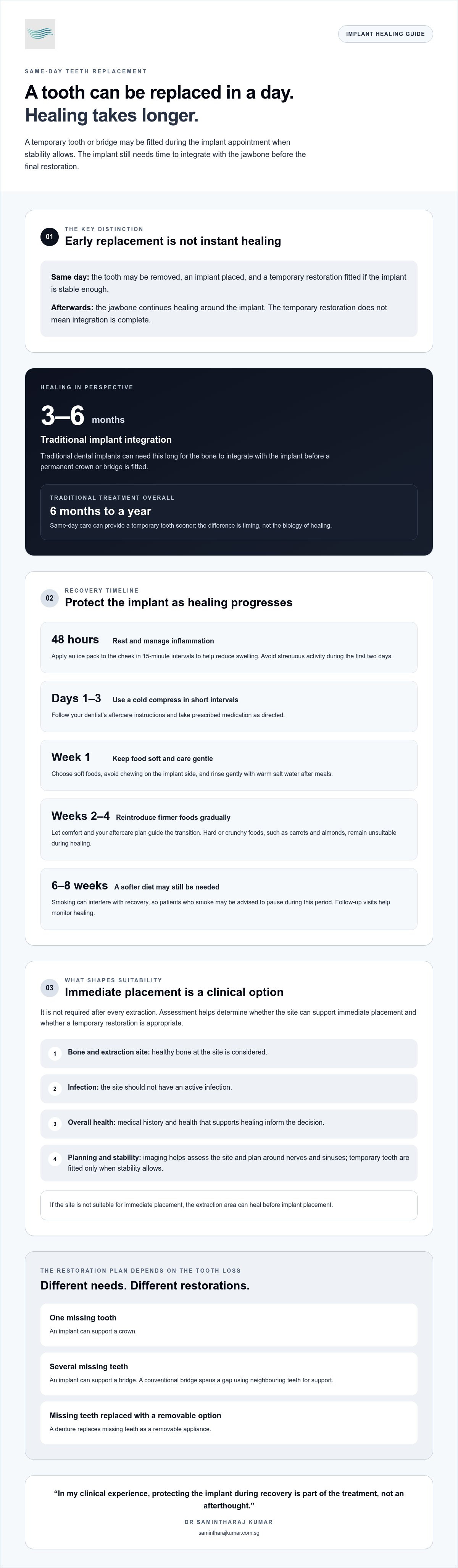
Immediate placement means inserting an implant into the jaw during the same appointment as tooth extraction. It may be considered when the bone at the extraction site is healthy, there’s no active infection, and overall health supports healing. 3D imaging helps assess the site and plan around structures such as nerves and sinuses. If the site isn’t suitable, the extraction area can heal before implant placement. Same-day placement is a clinical option, not a requirement after every extraction.
Healing and Osseointegration
Osseointegration is the process in which the jawbone heals around and integrates with the implant. Traditional dental implants can need three to six months for this process before a permanent crown or bridge is fitted. In a staged approach, the implant heals for a few months before an abutment is attached. Another few months may pass before the crown is fitted. A temporary tooth does not mean the implant has finished healing.
Benefits of Same-Day Implants
A temporary restoration can reduce the time spent with a visible gap after extraction and may mean fewer dental visits than a traditional sequence. It can also improve appearance and provide some tooth function sooner. These benefits relate to early replacement, not faster bone integration. Immediate use can place added stress on healing bone, so the dentist plans the restoration and its contact with opposing teeth carefully.
How Implants Compare With Dentures and Bridges
An implant sits in the jawbone and can support a crown for one missing tooth or a bridge for several teeth. A conventional bridge spans a gap using neighbouring teeth for support. A denture replaces missing teeth as a removable appliance. Traditional implant treatment can take six months to a year overall, while same-day care can provide a temporary tooth sooner. The final restoration still follows healing and integration, so the difference is timing, not the biology of treatment.
Recovery and returning to eating and speaking normally
After same-day implant surgery, recovery involves managing swelling, protecting the implant and gradually returning to normal eating. The first week focuses on gentle care, while the jawbone continues healing over the following weeks.
Recovery Symptoms and First-Days Aftercare
Some discomfort and swelling can follow implant placement, and prescribed medication can help manage discomfort. During the first 48 hours, rest and inflammation management matter; apply an ice pack to the cheek in 15-minute intervals to help reduce swelling. Avoid strenuous activity during those first two days.
During days 1-3, use a cold compress in short intervals. For the first week, choose soft foods, avoid chewing on the implant side, and rinse gently with warm salt water after meals. These steps help protect the surgical area while it begins to heal.
Recovery Timeline
Recovery unfolds in stages rather than ending when you leave the dental clinic. The first week centres on soft foods and careful cleaning. During weeks 2-4, firmer foods can be added as you feel ready, while hard or crunchy choices, such as carrots and almonds, remain unsuitable during healing.
A softer diet may be needed for 6-8 weeks after surgery. Smoking can interfere with recovery, so patients who smoke may be advised to pause during this period. Follow-up appointments give the dentist an opportunity to monitor healing and assess the condition of the implant site.
Eating and Speaking During Recovery
Eating normally returns gradually, not on the day a temporary crown or bridge is fitted. Begin with soft foods during the first week, and avoid putting chewing pressure on the implant side. As the jawbone heals, firmer foods can be reintroduced during weeks 2-4, guided by comfort and the aftercare plan.
Speech can also feel different at first, particularly with a new temporary tooth or bridge. Allow time to adjust, and follow the dentist’s instructions on using the restoration while healing continues. Normal eating and speaking are possible after the mouth heals, but the transition should respect the implant’s healing phase.
In my clinical experience, protecting the implant during recovery is part of the treatment, not an afterthought. Keep scheduled follow-up visits, follow the advice for your specific condition, and raise concerns about discomfort or swelling with your dental team. A thoughtful implant recovery plan supports healing while helping you return to everyday routines at a measured pace.
Treatment process and temporary crown
The restoration plan includes both the tooth used during healing and the design intended for longer-term use. Understanding how each is prepared helps explain why the temporary result may differ from the final one.
Temporary and Permanent Restorations
A temporary restoration is an interim design, while the permanent crown or bridge is the definitive restoration planned for the implant. This distinction shapes expectations about appearance: an immediate restoration may be less aesthetic than the final version. The temporary tooth serves during treatment rather than representing the completed restorative result.
The permanent restoration is considered once integration has been assessed. Its design can then be matched to the clinical result and intended replacement. This means the first visible tooth and eventual crown may not look identical. Temporary and permanent restorations are separate stages of the treatment plan, not interchangeable versions of the same finished tooth.
Temporary Restoration Types
For a single implant, the temporary restoration is a crown; for multiple teeth, it may be a bridge. A full-arch patient may receive temporary teeth across the arch while implants heal. The form reflects the extent of the replacement, so the temporary restoration may be an individual tooth or part of a larger connected design.
Immediate restorations are often fabricated before surgery. This preparation defines the temporary tooth or set of teeth to be placed after the procedure. Patients should understand which restoration is planned, what area it replaces and how it differs from the final design. Clear expectations matter, particularly when the temporary version is less refined in appearance.
Temporary Restoration Longevity
Temporary teeth are durable, but they are not intended to remain as permanent restorations. Their use is tied to the treatment phase, while the permanent crown or bridge is planned separately. This distinction helps patients understand that a temporary restoration is not the final endpoint, even when it provides a visible replacement after surgery.
The temporary restoration serves during the transition to the definitive design. Its expected use depends on the treatment sequence and the implant’s progress. At review appointments, the restoration and healing can be considered together as planning advances. Understanding the temporary stage’s specific role helps set realistic expectations for appearance and the eventual final restoration.
Patients benefit from understanding what each restoration is designed to do. The temporary tooth is part of a considered treatment sequence, while the definitive crown or bridge completes the restorative plan.
Treatment suitability and technique sensitivity
Same-day implant treatment depends on bone support, oral health and surgical planning. The appointment also considers how the restoration will function during healing.
Treatment Suitability and Technique
Suitability is assessed by examining the extraction site, gums, jawbone and medical history. Healthy bone, no active infection and overall health that supports healing are important considerations. Smoking and health conditions that affect healing also influence planning.
Technique matters because the implant needs stability while bone integrates around it. A front tooth can experience lighter chewing forces than a back tooth, affecting how the temporary restoration is designed and loaded. If the extraction site needs time to heal, staged implant placement protects the treatment plan rather than forcing an immediate procedure.
Imaging and 3D Treatment Planning
Radiographs assess the quality and quantity of bone at the implant site. 3D imaging adds a view of jawbone volume and helps map placement around structures such as nerves and sinuses. These images support decisions about implant position and the restoration planned for the site.
Planning also connects the surgical position with the intended tooth shape and bite. For example, a temporary crown can be designed to avoid contact with opposing teeth. This reduces unnecessary pressure on the implant during healing and shows why imaging and restoration planning belong in the same clinical process.
Comparing Treatment Timelines
Same-day treatment places an implant and temporary restoration during one appointment when conditions support immediate placement and loading. The visible replacement can be immediate, but integration still takes time. A final crown can be considered after healing, often around 2-4 months after implant placement.
Traditional implant treatment separates placement and restoration into stages, allowing the implant to heal before the final crown or bridge is attached. The difference is the timing of the temporary tooth, not whether healing is required. The surgical approach follows the site’s condition and the stability achieved.
Costs and coverage. Treatment cost depends on the case, including implant and restoration requirements, imaging and any additional procedures. A price is provided after a quote request. Insurance coverage for same-day extraction and implants varies, so benefits depend on the individual policy. Financing details can be discussed as part of the treatment conversation.
In my clinical experience, the right sequence comes from combining the scan findings with the patient’s oral health and healing needs. This is where precision matters: the aim is to restore the tooth without asking the implant to bear more force than its healing stage allows.
Single-tooth, bridge, and full-arch replacement
The number of missing teeth shapes the restoration, implant arrangement and temporary teeth used during healing. A single-tooth replacement, an implant-supported bridge and a full-arch restoration address different needs, so consultation starts by mapping the gap and remaining teeth.
Replacing One Tooth
For one missing tooth, an implant can support an individual crown without using neighbouring teeth as bridge supports. If the extraction site has healthy bone, no active infection and conditions for stable placement, immediate implant placement may be considered. The replacement fitted that day is generally temporary; the permanent crown follows integration and healing.
Position affects planning. A front tooth may experience lighter chewing forces than a back tooth, which can influence whether immediate placement and a temporary crown are suitable. The dentist also considers the bite, bone at the site and gumline appearance. These factors guide the surgical position and the temporary tooth’s shape.
Replacing Several Teeth With a Bridge
A bridge replaces a row of missing teeth, using dental implants for support rather than relying only on neighbouring teeth. Implant positions must support the span and manage forces across it. With a same-day approach, a temporary bridge may connect implants during healing, helping limit movement while the jawbone integrates around them.
This option can suit a continuous gap, while separate missing teeth may call for a different design. A bridge is not simply several individual crowns placed side by side. Consultation considers the gap’s length, available bone and how the proposed teeth meet the opposing bite.
Full-Arch Replacement
When most or all teeth in an arch need replacement, a full-arch restoration can be supported by four to six implants. The All-on-Four concept uses four implants to support a complete arch. Temporary teeth can provide a full row during healing, with the final restoration fitted after integration.
Compared with dentures, an implant-supported full arch is attached to implants rather than being a removable appliance. This changes how the teeth are supported and how treatment is planned. The choice depends on the remaining teeth, jawbone, oral health and desired restoration, not simply the number of teeth missing.
The practical distinction: one implant replaces one tooth, a bridge spans several teeth, and a full-arch restoration replaces an entire row. Immediate replacement depends on site conditions and implant stability. To consider how these options relate to your treatment goals, explore tooth-replacement planning.
Dr Samintharaj Kumar: Ceramic Dental Implants
Dr Samintharaj Kumar offers Ceramic Dental Implants for patients considering implant-based tooth replacement. The right approach depends on the number of teeth involved, jawbone support, oral health and the restoration needed. A single missing tooth, a full arch and significant bone loss each call for different treatment planning.
I also offer Dental Implants, All on 4/ Teeth in A Day and Zygomatic Dental Implants. These options address different clinical needs, so understanding your diagnosis is the first step towards choosing a suitable plan. The aim is to balance restoration, healing and long-term function rather than focus only on how quickly teeth can be placed.
If you’re considering replacement options, contact Dr Samintharaj Kumar or visit samintharajkumar.com.sg to discuss your needs.
Make Your Next Step an Informed One
Planning tooth replacement is an opportunity to look beyond the immediate gap and consider how your bite, comfort and confidence fit together. Understanding what to expect with same-day teeth replacement can help you have a more focused conversation about your priorities, healing and the restoration that suits your needs.
In my clinical experience, good decisions begin with a clear diagnosis and an honest discussion of what treatment involves. The right plan should account for your oral health and the long-term function you want to protect, not just the speed of the first stage. If you’re ready to discuss your situation, you can contact Dr Samintharaj Kumar and explore the next step with care.
A thoughtful conversation can turn uncertainty into a clearer path forward. Your treatment journey should begin with understanding and progress at a pace guided by sound clinical judgement.
Frequently Asked Questions
Who is a good candidate?
A good candidate has healthy gums, sufficient jawbone at the planned implant site, no active infection there and overall health that supports healing. A dentist also considers medical history, smoking and tooth position. For example, a front tooth may face lighter chewing forces than a back tooth. These details help determine whether immediate placement is suitable or a staged approach better protects healing.
Can you really get a tooth pulled and an implant the same day?
Yes. A tooth can be extracted and an implant placed in the same appointment, with a temporary tooth fitted when implant stability allows. The temporary restoration is not the final crown. The implant still needs to integrate with the jawbone before the permanent tooth is attached. You may leave with a replacement in place, while treatment continues through healing and later restoration.
Is The Process Costly?
The cost depends on the treatment plan, including how many implants are needed, the type of restoration, case complexity and whether additional procedures are required. Imaging and the needs of a full-mouth restoration can also affect the overall plan. A price is provided after a quote request. Insurance coverage for same-day extraction and implants varies by policy, so reimbursement depends on your specific benefits.
Is Your Jawbone Strong Enough for an Implant?
Jawbone suitability is assessed through radiographs and imaging that show bone quality and quantity at the proposed site. The dentist also considers the planned implant position and nearby structures, such as nerves or sinuses. If bone density is inadequate, bone grafting may be recommended as part of treatment planning. A scan provides useful detail, alongside assessment of oral health and gum condition.
Are There Any Downsides to Same-Day Implants?
Same-day treatment places additional demands on the healing implant because an immediate restoration can transmit force to the bone. Implant movement and infection are possible risks of extraction and implant surgery. The temporary crown or bridge may also look less refined than the final restoration. Following the recommended eating plan and attending follow-up appointments help protect the implant while the dental team monitors healing.
Health Over Age: Who Qualifies?
Assessment focuses on oral health, bone support and medical conditions that affect healing, rather than age alone. Healthy gums and a jawbone able to support the implant are important considerations. A dentist reviews medical history and factors such as smoking before planning surgery. An uncontrolled condition that interferes with healing, for instance, can affect suitability even when the extraction site appears healthy.
How Much Faster Are One Day vs Traditional Implants?
Same-day treatment can place an implant and temporary restoration in one appointment, instead of waiting several months for a tooth after implant placement. Traditional treatment can take six months to a year overall. The shorter initial timeline does not remove the healing stage: the final crown or bridge follows once integration has progressed. The main difference is how soon a temporary replacement is fitted.
How soon can I return to normal activities?
Many patients can resume daily activities within a day or two after extraction and implant placement. Plan for rest during the first 48 hours and avoid strenuous activity during that period. Returning to work or routine tasks doesn’t mean the implant is ready for normal chewing. Follow the prescribed aftercare and keep follow-up appointments so healing can be monitored as you return to everyday life.


Comments