
What Does Full Mouth Rehabilitation Involve? A Specialist Surgeon’s Perspective (2026)

What if the solution to a lifetime of dental frustration wasn't just another repair, but a complete biological and architectural reset? Living with chronic dental pain or the persistent difficulty of chewing isn't just a physical burden; it's an emotional one that often leads to social withdrawal and a deep-seated fear of complex surgery. I understand that when you ask what does full mouth rehabilitation involve, you aren't just looking for a technical checklist. You're seeking a way to reclaim your quality of life through a permanent solution that moves beyond the limitations of traditional dentures.
As a clinician and founder, I view this process as a sophisticated harmony of science and artistry. From a biological perspective, we aren't just fixing teeth; we're restoring a functional ecosystem. In this article, I'll take you through the comprehensive clinical, biological, and aesthetic stages of total oral reconstruction. You'll discover how we integrate AI-assisted diagnostics and advanced surgical protocols to ensure your journey results in natural-looking aesthetics and a lasting sense of security. In my clinical experience, the best outcomes always begin with understanding the root cause, and I'm here to provide that clarity.
Key Takeaways
Understand why total oral reconstruction requires a multidisciplinary approach that integrates periodontal health with advanced surgical precision.
Learn the clinical consequences of bone resorption and how addressing occlusal collapse is vital to protecting your remaining natural teeth.
Discover exactly what does full mouth rehabilitation involve through the lens of biological dentistry, prioritising biocompatible materials like ceramic implants.
Explore the digital planning phase, where AI-assisted diagnostics and architectural "wax-ups" ensure your final result is both functional and aesthetically natural.
Gain clarity on the long-term maintenance required to protect your clinical investment and sustain the life-changing benefits of a restored smile.
Table of Contents
Defining Full Mouth Rehabilitation: Beyond Simple Restorative Dentistry
The Biological Foundation: Why Total Rehabilitation Becomes Necessary
My Clinical Philosophy: Integrating Advanced Implantology and Biological Principles
The Patient Journey: What to Expect During the Rehabilitation Process
The Transformative Outcome: Restoring Function and Quality of Life
Defining Full Mouth Rehabilitation: Beyond Simple Restorative Dentistry
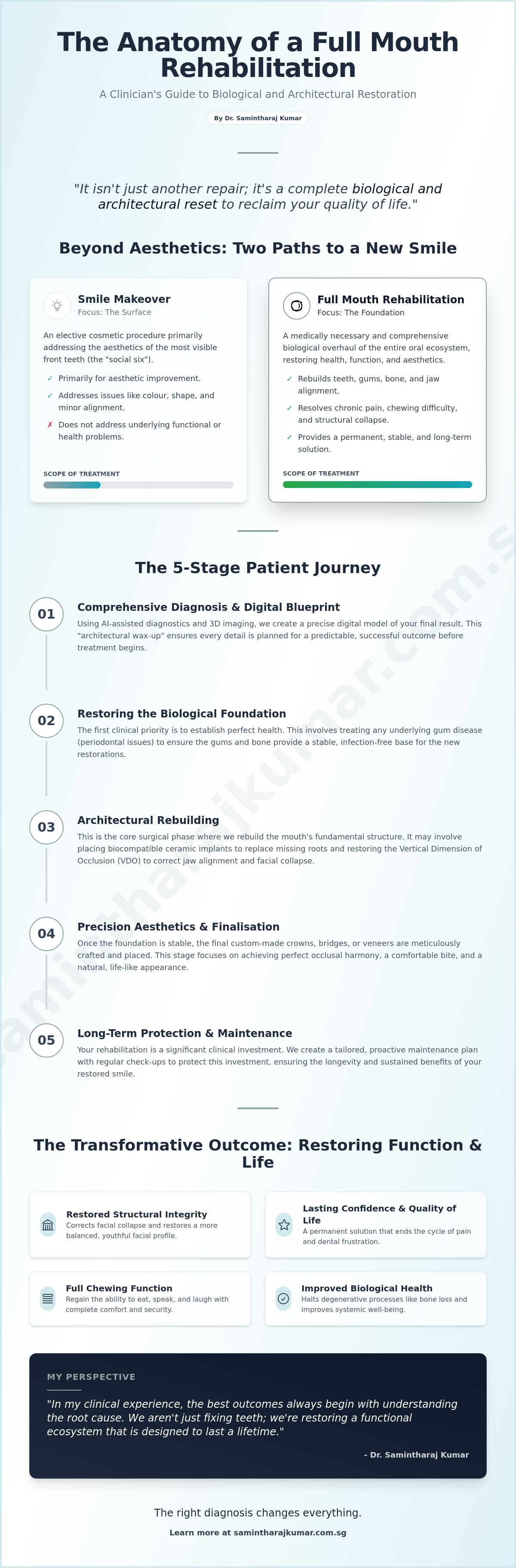
In my clinical experience, many people mistake a cosmetic smile makeover for a comprehensive rehabilitation. A makeover usually addresses the surface aesthetics of the front teeth. A true clinical reconstruction is an exhaustive biological overhaul. When patients ask me what does full mouth rehabilitation involve, I explain that we aren't just looking at the teeth. We're looking at the entire oral ecosystem. This includes the gums, the underlying bone structure, and the way the jaws interact. It's a holistic integration of periodontal, endodontic, and surgical disciplines. This process is often referred to as full mouth rehabilitation; it's a procedure that restores the mouth's fundamental architecture.
To better understand how we use technology to rebuild these structures, watch this demonstration of guided surgery:
As a clinician and founder, I believe every procedure must be bespoke. We don't apply a one-size-fits-all template. We tailor the reconstruction to a patient's biological age and specific systemic health needs. From a biological perspective, we must consider how new materials will interact with your living tissue. We aren't just placing crowns; we're managing forces and biological responses. Understanding what does full mouth rehabilitation involve requires a shift in perspective. We must move from seeing teeth as individual units to seeing them as a single, functional system. This level of precision is what distinguishes a specialist-led practice. It's about long-term stability and health.
The Distinction Between Aesthetics and Total Reconstruction
A smile makeover is often an elective choice. It focuses on the 'social six' teeth. In contrast, total reconstruction focuses on the foundation. One of the most critical elements I evaluate is the vertical dimension of occlusion (VDO). This is the distance between the upper and lower jaws when the teeth meet. If this dimension has collapsed due to wear or tooth loss, the structural integrity of the entire face is compromised. By restoring the VDO, we don't just improve the bite. We create a stable platform for superior aesthetic outcomes. Functional restoration naturally leads to a more youthful facial appearance.
Who Requires a Full Mouth Rehabilitation?
The need for this level of intervention usually arises from complex, compounding issues. In my clinical experience, the following scenarios often necessitate a comprehensive approach:
Patients with multiple missing teeth or those struggling with failing dental bridges.
Individuals suffering from severe attrition or 'tooth wear' caused by long-term bruxism or acid erosion.
Patients requiring restorative care after the successful treatment of oral cancer or significant traumatic jaw injuries.
The goal is always the same: a permanent return to function and confidence. The right diagnosis changes everything.
The Biological Foundation: Why Total Rehabilitation Becomes Necessary
From a biological perspective, the human mouth is a finely tuned mechanical system. When we discuss what does full mouth rehabilitation involve, we must look past the visible surfaces of the teeth and examine the underlying biology. In my clinical experience, many patients view missing or worn teeth as isolated incidents. However, the oral cavity functions as an ecosystem. When one component fails, it triggers a biological cascade that eventually compromises the entire structure. We aren't simply performing repairs; we're halting a degenerative process that affects your skeletal health and systemic well-being.
This comprehensive process of rebuilding and/or replacing all of the teeth is necessary because tooth loss is never static. It's a progressive condition. Beyond the immediate difficulty in chewing, a "bad bite" or occlusal collapse begins to destroy the remaining healthy teeth. They shift, tilt, and bear excessive loads they weren't designed to handle. This mechanical failure leads to fractures, further tooth loss, and eventually, a total breakdown of the dental arch. Addressing the root cause rather than just the symptoms is the only way to ensure a permanent solution.
The Cascade of Bone Loss and Facial Atrophy
The jawbone is a dynamic, "use it or lose it" tissue. It requires the mechanical stimulation of biting and chewing to maintain its density. When teeth are lost, that stimulation vanishes, and the body begins to resorb the bone. This leads to a loss of facial height and the appearance of premature ageing. In cases of severe resorption where traditional implants may not be viable, I often utilise Zygomatic implants to anchor the new restoration directly into the cheekbone. This allows us to bypass the need for extensive bone grafting while restoring the structural foundation of the face.
Occlusal Dysfunction and TMJ Considerations
A collapsed bite doesn't just affect the teeth; it places immense strain on the temporomandibular joints (TMJ). When the teeth don't meet correctly, the jaw muscles must overcompensate to find a stable resting position. This often results in chronic headaches, neck pain, and joint clicking. Achieving neuromuscular alignment is a cornerstone of my treatment philosophy. If you're experiencing these symptoms, consulting a TMJ specialist Singapore can provide the necessary insights into how your jaw function impacts your overall rehabilitation. A successful reconstruction must harmonise the teeth, muscles, and joints to ensure long-term comfort.
Restoring this balance is about more than just a beautiful smile. It's about your systemic health. Research increasingly links poor oral health to inflammatory conditions elsewhere in the body. By choosing a comprehensive path, you're investing in your total physical well-being. The right diagnosis changes everything.
My Clinical Philosophy: Integrating Advanced Implantology and Biological Principles
As a clinician and founder, I've always believed that technology should serve biology. When patients ask what does full mouth rehabilitation involve at a specialist level, they're often surprised to learn it's as much about digital engineering as it is about surgery. I leverage AI-assisted diagnostics to remove the traditional guesswork from complex reconstructions. By utilising high-resolution 3D CBCT imaging, I can map nerve pathways and bone density with sub-millimetre precision before we even begin. This meticulous planning isn't just about speed; it's about safety and ensuring the long-term viability of the restoration.
My Perspective: I lead Nuffield Dental with a philosophy of personal accountability. In complex cases, a founder-led approach ensures a continuity of care that is often lost in larger, generalist practices. I oversee the architectural planning of every case, ensuring that the biological principles we discuss are translated into clinical reality. This comprehensive dental treatment approach allows us to treat the mouth as a gateway to overall health, rather than a collection of isolated teeth.
Ceramic Implants and Biological Compatibility
Biological dentistry is the study of the mouth-body connection, acknowledging that oral health is inextricably linked to systemic wellness. In my practice, I frequently prioritise metal-free ceramic implants made from zirconia. From a biological perspective, zirconia offers superior tissue health and aesthetics compared to traditional titanium. It's highly biocompatible, meaning the surrounding gum tissue tends to respond with less inflammation. These metal-free solutions align perfectly with a holistic health philosophy, providing a restorative option that feels and functions like natural tooth structure without the presence of metal alloys.
The All-on-4 Protocol: A Paradigm Shift in Rehabilitation
For many, the most transformative aspect of modern dentistry is the All-on-4 dental implants system. This protocol represents a massive shift in how we approach total reconstruction. By strategically tilting four implants to maximise existing bone, we can often provide "Teeth in a Day" for suitable candidates. However, don't let the efficiency of the process mask the complexity involved. This technique requires significant surgical mastery to perform immediate loading safely. It's about balancing mechanical force with biological healing to give patients a functional, fixed set of teeth without the months of waiting traditionally associated with implants.
The best outcomes begin with understanding the root cause. By merging AI-driven precision with biological compatibility, we create restorations that don't just look natural but actually contribute to your long-term health.
The Patient Journey: What to Expect During the Rehabilitation Process
Understanding what does full mouth rehabilitation involve requires looking at the chronological timeline of care. In my clinical experience, the journey is as much a psychological transition as it is a physical one. We move from a state of dental instability to one of total functional security. This process is highly structured, ensuring that every biological and aesthetic variable is accounted for before we ever begin the surgical phase. As a clinician and founder, I prioritise a transparent roadmap so that my patients feel in control of their transformation at every stage.
Phase 1: Precision Planning and Diagnostics
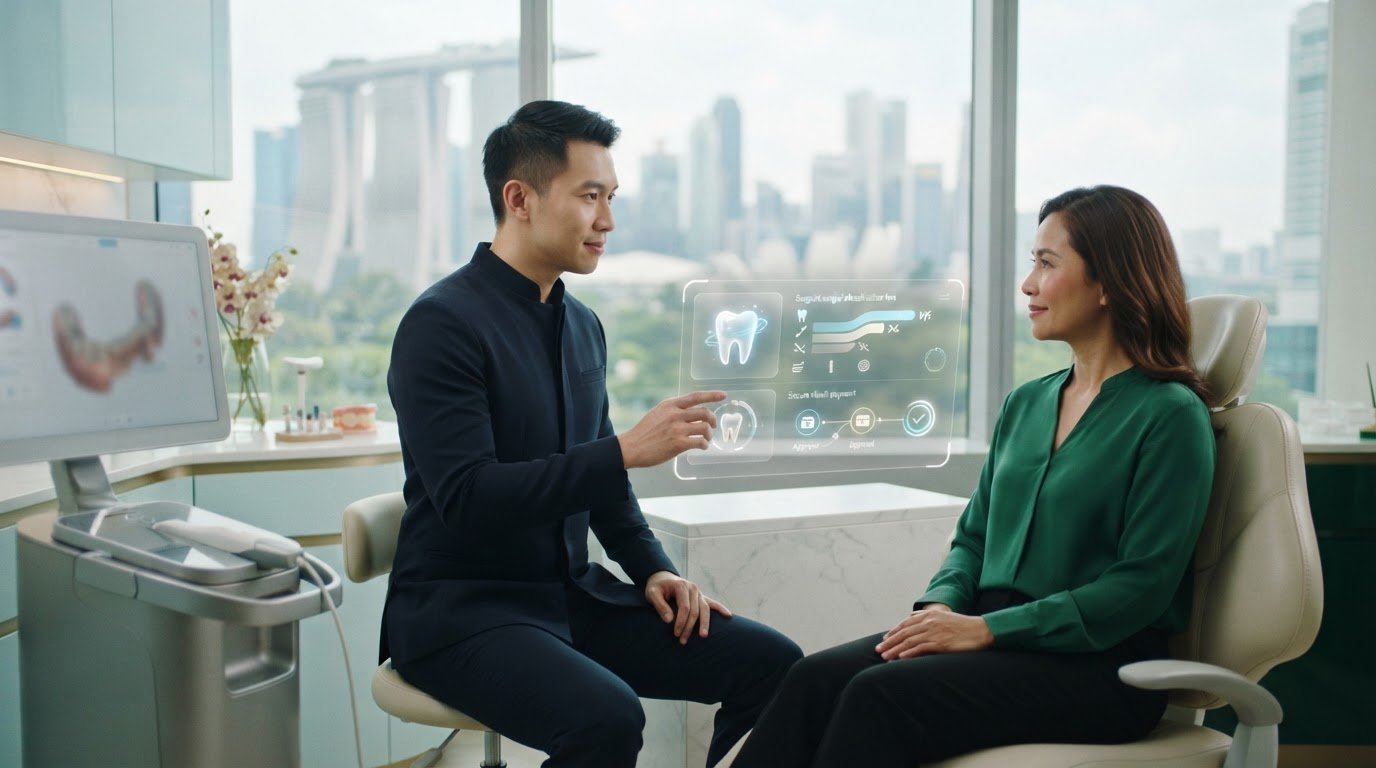
We spend a significant amount of time in the digital planning phase because precision here dictates the success of the outcome. This stage involves 3D CBCT scans, digital impressions, and a detailed facial analysis. I use AI-driven software to predict long-term wear patterns and ensure absolute bite stability. One of the most rewarding parts of this phase is the digital "wax-up". This architectural blueprint allows us to design your new smile on screen. You can see the projected results and provide feedback on the aesthetics before any clinical work begins. From a biological perspective, this ensures the new teeth harmonise with your unique facial proportions.
Phase 2: Surgical Execution and Immediate Function
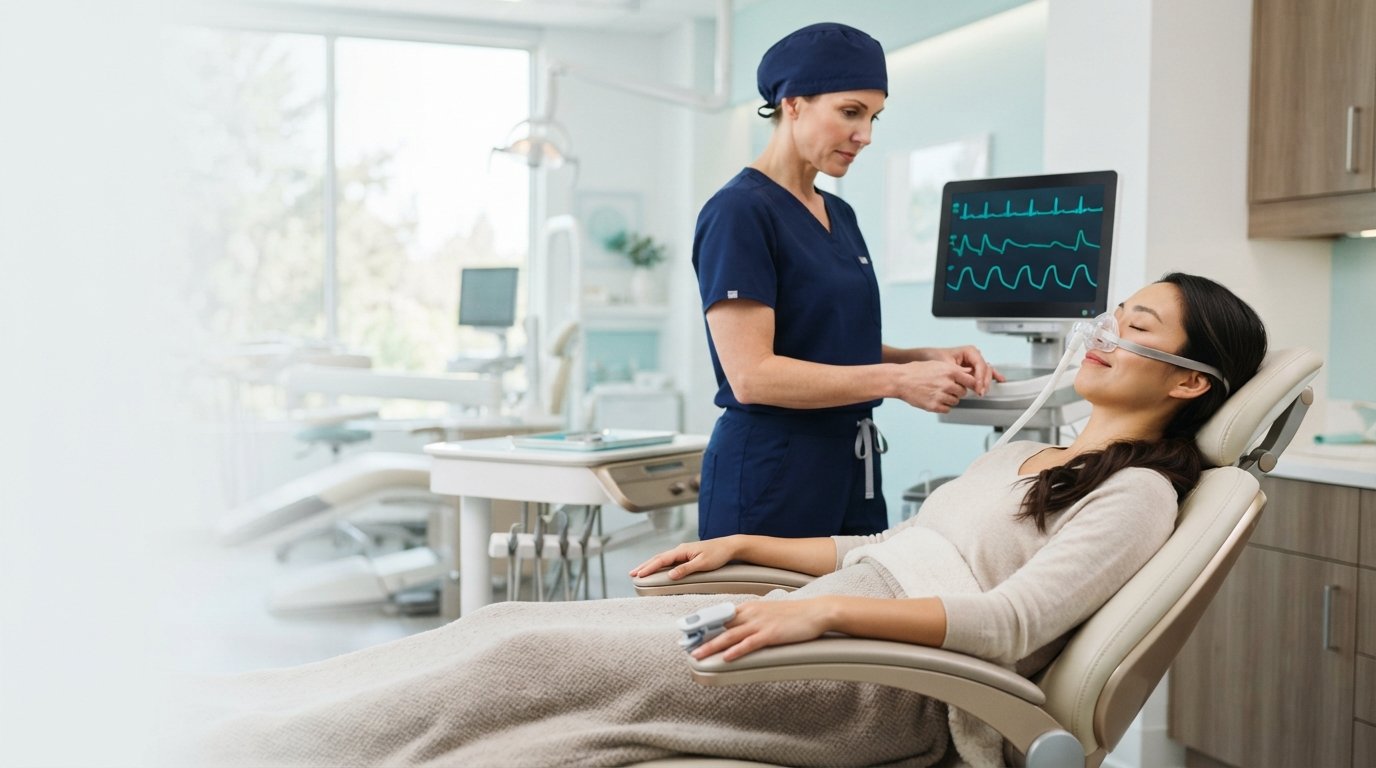
On the day of surgery, our primary focus is your comfort and safety. We manage this through advanced sedation techniques, creating a calm environment for complex procedures like full arch replacements. In some instances, the clinical path requires clearing the field of compromised structures. This might include specialised wisdom tooth extraction if those teeth interfere with the placement of implants or the stability of the new bridge. Once the implants are securely positioned, we often provide a fixed provisional bridge. This allows for immediate function, meaning you leave the clinic with a stable set of teeth while the biological process of osseointegration occurs.
The provisional phase is a critical "test drive" for your new smile. During these few months, we monitor how you chew, speak, and feel. It's a period of refinement where we can adjust the bite or the tooth shapes to ensure perfection. Once we are satisfied with the functional and biological response, we move to the final restoration. This involves the delivery of permanent, high-strength ceramic bridges. These restorations are designed to be a lifelong solution, offering the durability of natural enamel and the beauty of a healthy, vibrant smile. The best outcomes begin with understanding the root cause.
Every step of this journey is designed to replace anxiety with confidence. By the time we reach the final delivery, the goal is for you to have forgotten the pain and social anxiety that brought you to the clinic. You aren't just getting new teeth; you're reclaiming your lifestyle.
The Transformative Outcome: Restoring Function and Quality of Life
As a clinician and founder, my ultimate goal is to leave a legacy of health that extends far beyond the clinical chair. We have explored the technical and biological answers to what does full mouth rehabilitation involve, but the true measure of success is the profound impact on a patient's daily existence. Restoring the oral ecosystem is about more than just teeth. It is about the intersection of facial rejuvenation and dental aesthetics. When we rebuild the vertical dimension of the face, we provide the structural support that soft tissues often lose over time, resulting in a naturally refreshed and more youthful appearance.
The psychological shift I witness in my patients is perhaps the most rewarding aspect of my work. Chronic dental pain and the social anxiety caused by missing teeth often lead to a quiet withdrawal from life's pleasures. Total reconstruction replaces that hesitation with a renewed sense of security. You are no longer just a patient undergoing a procedure; you are an individual reclaiming your social confidence and your ability to engage with the world without reservation. In my clinical experience, this emotional renewal is the foundation of a truly successful rehabilitation.
Life After Rehabilitation: A New Standard of Health
The functional benefits of a restored mouth ripple through your entire body. Restored chewing efficiency allows for a more varied and nutritious diet, which directly improves digestive health and systemic vitality. Patients often report a significant return of vocal clarity, as the new dental architecture provides the necessary support for proper phonetics. From a biological perspective, the long-term success rate of specialist-led implantology is exceptionally high, often exceeding 95 per cent when rigorous international protocols and biocompatible materials are utilised. This stability ensures that your investment in your health remains a permanent solution rather than a temporary fix.
Ensuring Longevity Through Specialist Care
Protecting your clinical investment requires a commitment to long-term maintenance. While the ceramic bridges and implants are incredibly durable, they still exist within a living biological environment. Regular professional maintenance is essential to prevent conditions such as peri-implantitis, an inflammatory process that can compromise the bone around an implant. Choosing the right dental clinic for your follow-up care is vital. You need a team that understands the specific engineering of your reconstruction and shares a commitment to your lifelong well-being.
The journey to a restored life is a partnership between the surgeon and the patient. By prioritising comprehensive restoration over quick repairs, we create a future where you can eat, speak, and smile with absolute certainty. The best outcomes begin with understanding the root cause.
Reclaiming Your Lifestyle Through Clinical Excellence
As a clinician and founder, I view the transition from dental instability to total oral health as one of the most significant journeys a patient can take. We have explored what does full mouth rehabilitation involve, moving from the foundational biological architecture to the precision of AI-assisted diagnostics. It's clear that this process is not merely a series of repairs. It is a calculated, visionary reset of your oral ecosystem. By adhering to international protocols and leveraging global affiliations, I ensure that every reconstruction is built on a legacy of clinical mastery.
From a biological perspective, our focus remains on long-term biocompatibility and functional excellence. This ensures your results are as durable as they are aesthetically natural. In my clinical experience, the most profound transformations occur when we stop treating symptoms and start rebuilding foundations. The future of your oral health is a choice for longevity and confidence. The best outcomes begin with understanding the root cause. Consult with Dr Samintharaj Kumar. I look forward to helping you rediscover the freedom of a healthy, functional smile.
Frequently Asked Questions
Is full mouth rehabilitation painful?
Full mouth rehabilitation is not painful because we utilise advanced sedation techniques and local anaesthesia to ensure you remain comfortable throughout the surgical phase. In my clinical experience, modern anaesthetic protocols allow us to perform even the most complex reconstructions with minimal discomfort. Post-operative recovery is managed with precise clinical care to ensure your transition to a healthy smile is as smooth as possible.
How long does a full mouth rehabilitation take to complete?
The timeline for a complete restoration typically ranges from three to nine months, depending on your biological healing rate and the complexity of the case. While some patients qualify for immediate function protocols like "Teeth in a Day", others require a provisional phase to test the new bite. This period allows the bone to fully integrate with the implants before we deliver the final, high-strength ceramic bridges.
What is the difference between full mouth reconstruction and a smile makeover?
A smile makeover is primarily an elective aesthetic improvement focusing on the surface of the teeth, whereas a reconstruction is a clinical necessity aimed at restoring the mouth's architecture. While a makeover addresses the "social six" teeth for appearance, a reconstruction involves the entire oral ecosystem. It ensures that your bite, jaw joints, and bone structure are biologically sound and functional.
Can I get full mouth rehabilitation if I have severe bone loss?
Yes, severe bone loss does not disqualify you from total oral reconstruction. I frequently utilise Zygomatic dental implants for patients with significant resorption, as these anchor into the cheekbone rather than the jaw. This advanced surgical protocol allows us to bypass the need for extensive bone grafting while providing a stable, permanent foundation for your new restorations.
How much does full mouth rehabilitation involve in terms of cost?
When considering what does full mouth rehabilitation involve financially, the total investment depends on the complexity of your surgical needs and the materials selected. Factors such as the number of implants required, the necessity of Zygomatic protocols, and the choice of ceramic materials all influence the final cost. Each case is a bespoke biological reset tailored to your specific health requirements.
Will my new teeth look natural?
Your new teeth will look entirely natural because we use digital facial analysis and AI-assisted diagnostics to design them. By creating a digital "wax-up", we ensure the size, shape, and shade of the ceramic restorations match your unique facial proportions. From a biological perspective, our goal is a smile that is indistinguishable from healthy natural teeth and harmonises with your facial features.
How long do the results of a full mouth rehabilitation last?
Full mouth rehabilitation is designed to be a permanent, lifelong solution when supported by regular professional maintenance. In my clinical experience, the longevity of the restoration depends on preventing peri-implantitis through meticulous oral hygiene. Choosing a specialist-led clinic for your follow-up care is essential to protecting your clinical investment and ensuring the health of the surrounding tissue for decades.
Can full mouth rehabilitation fix my jaw pain (TMJ)?
Total reconstruction can often alleviate chronic jaw pain by restoring your vertical dimension of occlusion and neuromuscular alignment. When we discuss what does full mouth rehabilitation involve, we include the correction of a collapsed bite that strains the temporomandibular joints. By harmonising the jaw joints and teeth, we provide a stable platform that often resolves long-standing joint discomfort and headaches.

Comments