
White Dental Implants and Aesthetics: A Specialist Surgeon’s Perspective on Ceramic Innovation (2026)
- Dr Samintharaj Kumar

- May 12
- 12 min read
What if the secret to a truly natural smile lay not just in the porcelain crown, but in the material hidden beneath your gum line? In my clinical experience, many patients feel a sense of anxiety that traditional metal components might eventually reveal a grey shadow through their gums. This concern is entirely valid, as the pursuit of white dental implants aesthetics is about more than just the tooth; it's about the harmony between the restoration and your living tissue.
I understand the hesitation that comes with choosing a permanent solution for your health. You want a result that feels as natural as it looks while avoiding the risks of metal sensitivities or corrosion. As a clinician and founder, I've seen how ceramic innovation is revolutionising the way we approach total rehabilitation. In this article, I'll share my perspective on the latest advancements in zirconia, which now boasts a 97.6% survival rate in long-term studies. We'll explore how these biocompatible materials promote superior gum health and why choosing a metal-free foundation is the most significant step toward a seamless, lifelong transformation.
Key Takeaways
Understand the evolution of Zirconia (Zirconium Dioxide) systems and why these high-performance bioceramics are the modern alternative to traditional metal implants.
Learn how to achieve the "Pink Aesthetic" by utilizing biocompatible materials that promote superior soft tissue attachment and long-term gum health.
Discover the specific clinical advantages of white dental implants aesthetics in the smile zone, ensuring a natural result without the risk of grey shadows.
Explore how AI-assisted diagnostics and 3D digital planning provide a level of precision and predictability that was previously unattainable in restorative surgery.
Gain insight into the "Total Rehabilitation" philosophy, where we treat the facial harmony and biological health of the patient rather than just the missing tooth.
Table of Contents
What Are White Dental Implants? Redefining Aesthetics with Ceramic Technology
The Biological Advantage: Superior Gum Health and the Pink Aesthetic
Ceramic vs. Titanium Implants: A Comparative Analysis for the Aesthetic Zone
The Clinical Journey: Total Rehabilitation and AI-Assisted Precision
My Perspective: Why the Best Outcomes Begin with Understanding the Root Cause
What Are White Dental Implants? Redefining Aesthetics with Ceramic Technology
In my clinical experience, the most profound shifts in restorative dentistry occur when we move beyond mere function to embrace true biological harmony. White dental implants represent exactly this kind of evolution. Unlike traditional systems, these are crafted from Zirconia, specifically Zirconium Dioxide, a high-performance ceramic that has redefined our approach to surgical care. When I speak about "white" implants, I am referring to the entire body of the dental implant, which mimics the natural colour of a tooth root rather than the industrial grey of metal.
As a clinician and founder, I've watched the industry transition from titanium as the sole "gold standard" toward these sophisticated bioceramics. This isn't just a cosmetic trend; it's a fundamental pillar of modern biological dentistry. By choosing a material that aligns with the body's natural chemistry, we can achieve results that are as durable as they are beautiful. It is the cornerstone of what we call total rehabilitation.
To better understand this concept, watch this helpful video:
The Science of Zirconia in Modern Implantology
The strength of these systems lies in their unique crystalline structure. Modern Zirconia is often yttrium-stabilised, which grants it an incredibly high fracture toughness, exceeding 1,000 MPa in some formulations. From a biological perspective, this material is entirely hypoallergenic. This is a critical factor for the growing number of patients who express concerns about metal sensitivities or potential corrosion over time. It's a stable, bio-inert material that the body accepts with remarkable ease, promoting a healthy integration with the jawbone.
Why Aesthetics Start Beneath the Gum Line
One of the most frequent pains I hear from patients is the fear of a "grey shadow" appearing at the gum line. This often happens with titanium when the gum tissue is thin, a common anatomical trait. Because white dental implants aesthetics rely on the material’s ability to reflect light similarly to a natural tooth root, that dark margin is effectively eliminated.
The goal of any specialist surgeon is to create a seamless transition between the implant, the abutment, and the final porcelain crown. When the foundation itself is white, the overlying soft tissue maintains a healthy, vibrant pink hue. This preservation of the "Pink Aesthetic" is what distinguishes a standard procedure from a truly visionary smile makeover. It's about ensuring that your smile looks authentic not just today, but for decades to come. The best outcomes begin with understanding the root cause of aesthetic dissatisfaction.
The Biological Advantage: Superior Gum Health and the Pink Aesthetic
A perfect smile is a composition. While many focus on the "White Aesthetic" of the teeth, as a specialist surgeon, I am equally concerned with the "Pink Aesthetic." This term describes the health, contour, and colour of the gingival tissues that frame your smile. Healthy gums are the foundation of longevity. If the soft tissue is compromised, even the most technically perfect restoration will eventually fail. This is where white dental implants aesthetics truly excel, as they provide a biological compatibility that traditional materials struggle to match.
From a biological perspective, the gums act as a protective gasket, sealing off the underlying bone from the bacteria of the oral environment. Research into Zirconia in Dental Implantology indicates that ceramic surfaces are significantly less hospitable to bacterial plaque than titanium. Plaque accumulation is a primary driver of inflammation. By choosing a material that naturally resists biofilm formation, we create an environment where the gums can thrive rather than just survive.
Soft Tissue Integration and Long-Term Stability
In my clinical experience, the gum response to zirconia is unparalleled. Unlike metal, which the body often treats as a foreign object to be walled off, ceramic allows for a high degree of soft tissue attachment. The gums don't just sit next to the implant; they form a tight, functional seal known as the biological width. This attachment is vital for preventing recession. When the gums "bond" effectively to the ceramic surface, the risk of peri-implantitis, a leading cause of implant failure, is dramatically reduced. It's about building a defence system that lasts a lifetime.
Preserving Facial Structure through Biological Health
Healthy soft tissue is the first line of defence for the underlying jawbone. When we maintain the integrity of the gums, we naturally preserve the bone density that supports our facial structure. This is a core principle of Cosmetic Dentistry in Singapore, where we prioritise functional health as the precursor to beauty. Ceramic implants prevent the long-term gum darkening often associated with metal leaching, ensuring your smile remains vibrant and youthful. As a clinician and founder, I believe that true transformation is only possible when we respect the body's biological requirements. The right diagnosis changes everything when it comes to the long-term health of your smile.
Ceramic vs. Titanium Implants: A Comparative Analysis for the Aesthetic Zone
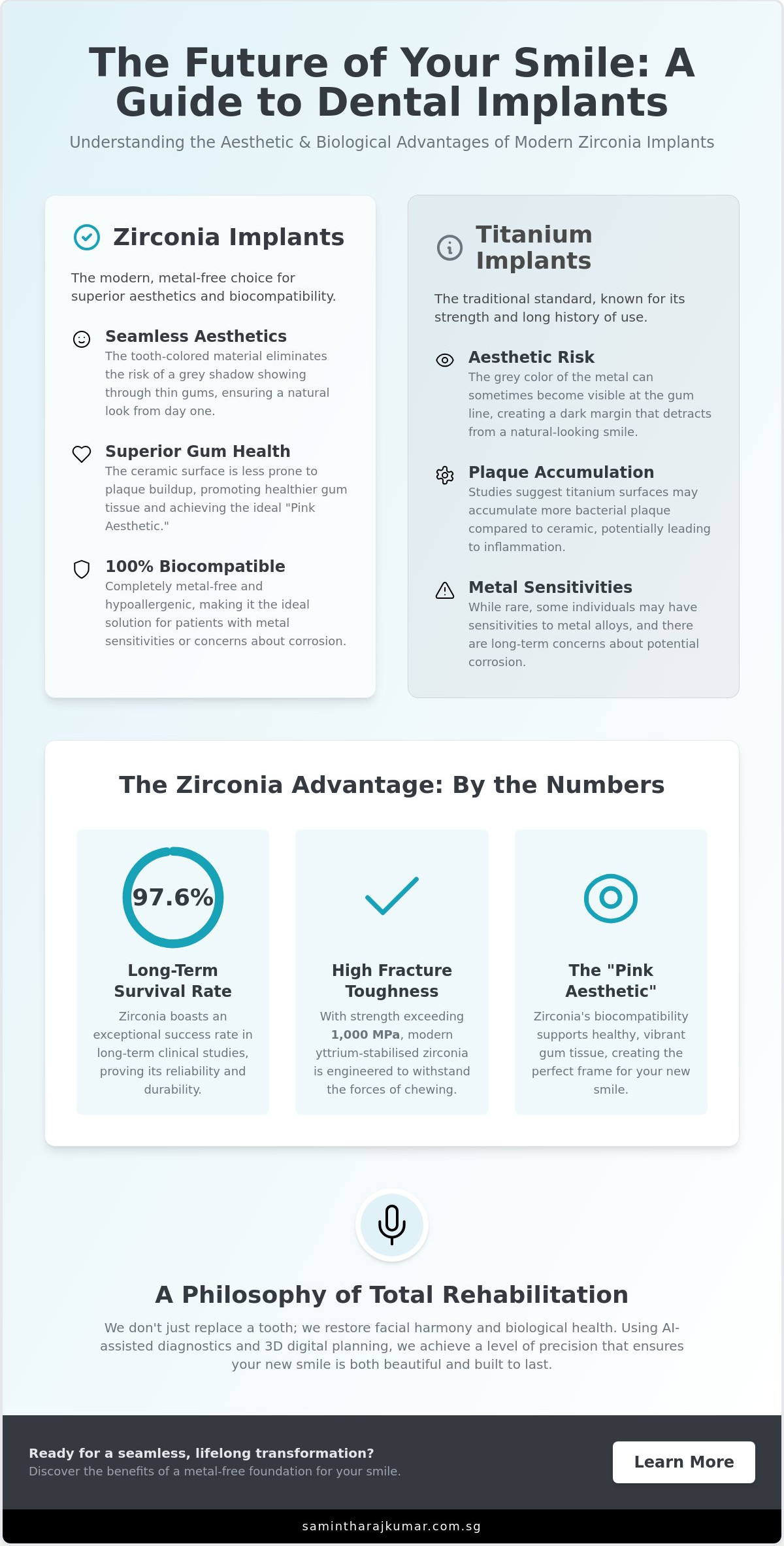
When selecting the foundation for a restorative procedure, I often compare the time-tested reliability of titanium with the innovative brilliance of zirconia. Titanium has a clinical track record spanning over 50 years, making it a dependable choice for many. However, for patients with high aesthetic demands, the material's industrial grey hue presents a significant challenge. In my clinical experience, the shift toward ceramic systems is driven by the need for a material that matches the biological and visual properties of natural teeth. As of 2026, clinical data confirms that modern zirconia implants achieve survival rates exceeding 95% in their first year, with long-term studies showing a 97.6% survival rate over 15 years.
From a biological perspective, ceramic offers a distinct advantage regarding oral chemistry. Unlike metal, zirconia is non-corrosive and does not trigger galvanic currents, which are small electrical impulses that can occur when different metals interact in the mouth. This bio-inert nature ensures that the environment surrounding the implant remains stable and free from metallic ions. By choosing white dental implants aesthetics, we aren't just choosing a colour; we're choosing a material that respects the body's complex physiology.
Material Performance and Clinical Longevity
A common misconception I encounter is the idea that ceramic is inherently brittle. While early iterations faced challenges, modern yttrium-stabilised zirconia has a flexural strength exceeding 1,000 MPa. This makes it incredibly resilient, even in high-pressure areas of the mouth. Furthermore, while some general practices only offer single-piece ceramic implants, as a specialist, I frequently utilise advanced two-piece systems. These provide the surgical flexibility needed for precise prosthetic alignment, ensuring the final result is both structurally sound and visually perfect. The myth of ceramic brittleness has been soundly addressed by these modern manufacturing standards.
The Aesthetic Zone Challenge
The "smile zone," or the front of the mouth, requires a meticulous approach to material selection. When a patient has a high lip line or thin gum biotype, the dark shadow of a titanium post can often be seen through the soft tissue. Ceramic avoids this "metal shine-through" entirely. Because the implant body is white, it mimics the light-reflecting properties of a natural tooth root, maintaining the vibrancy of the gums. This level of detail is a core component of Dental Implant Singapore protocols, where we focus on total oral rehabilitation. We don't just replace teeth; we restore the confidence that comes with a seamless, natural-looking smile. The best outcomes begin with understanding the root cause of aesthetic concerns.
The Clinical Journey: Total Rehabilitation and AI-Assisted Precision
As a clinician and founder, I have always maintained that the most successful surgical outcomes are decided long before we enter the theatre. In the pursuit of white dental implants aesthetics, precision is not just a goal; it is a clinical requirement. The nature of zirconia demands a meticulous approach to placement, as the material requires precise orientation to manage occlusal forces effectively. This is why my practice relies on a sophisticated digital workflow that integrates AI-assisted diagnostics with 3D imaging to map every millimetre of your dental anatomy.
Integrating these advanced ceramic systems into All-on-4 Dental Implants protocols allows us to provide full-arch rehabilitation that feels indistinguishable from natural teeth. By using high-translucency zirconia for the final bridge, we achieve a level of gum health that traditional acrylic or metal-reinforced options cannot match. It is a transformative approach to total rehabilitation that prioritises the patient's long-term biological well-being alongside immediate visual results.
Diagnostic Excellence and Guided Surgery
In my clinical experience, the use of CBCT scans and AI-guided planning has revolutionised the "aesthetic zone." AI algorithms analyse bone density and nerve proximity with a level of accuracy that enhances surgical predictability and safety. This technology allows for minimally invasive, flapless surgery in many instances, which significantly reduces post-operative discomfort. For patients seeking "Teeth in a Day," this digital foundation is essential. We can now plan and execute the placement of restorations with such accuracy that patients often walk out with their final smile within 24 hours, bypassing the traditional months of healing with temporary dentures.
Managing Complex Cases: Bone Grafting and Tissue Engineering
Not every patient begins their journey with the ideal bone volume. From a biological perspective, a ceramic implant requires a robust foundation of both bone and soft tissue to ensure long-term stability. When we identify deficiencies, we employ advanced tissue engineering and bone grafting techniques to rebuild the site. In 2026, preparatory procedures like bone grafting typically range from $500 to $3,000, depending on the complexity of the site. By combining these regenerative methods with white dental implants aesthetics, we ensure the underlying structure is as healthy as the visible result. The best outcomes begin with understanding the root cause of bone loss and addressing it with surgical mastery.
The right technology ensures a lifetime of confidence. Discover how our specialist-led innovation can transform your smile.
My Perspective: Why the Best Outcomes Begin with Understanding the Root Cause
Throughout my career as a specialist surgeon, I've observed a profound shift in how we define success in restorative dentistry. It is no longer sufficient to simply fill a gap in the dentition; we must restore the biological and aesthetic integrity of the entire oral ecosystem. In my clinical experience, the move toward biological dentistry is not merely a preference for "natural" materials. It is a commitment to the long-term health of the patient. When we discuss white dental implants aesthetics, we are talking about a material that behaves like bone and reflects light like a tooth. This is the essence of my "Total Rehabilitation" philosophy. We aren't just treating a single tooth; we are rehabilitating facial harmony and the patient's underlying quality of life.
From a biological perspective, the mouth is the gateway to the rest of the body. Introducing metals into this sensitive environment can sometimes lead to chronic inflammation or sensitivities that manifest years later. By choosing zirconia, we eliminate these variables. A successful rehabilitation is one where the patient forgets they ever had a procedure because the result feels, functions, and looks entirely authentic. This level of seamless integration is what I strive for in every complex case I manage.
The Founder’s Philosophy on Innovation
As a clinician and founder, I prioritise materials that offer my patients long-term peace of mind. At Nuffield Dental, our commitment to global standards means we don't just follow industry trends; we help set them. I personally oversee the selection of the advanced implant systems we use, ensuring they meet the rigorous criteria for both mechanical strength and biological compatibility. Innovation must always serve a purpose. In this instance, the purpose is to provide a metal-free solution that respects the body's physiology while delivering life-changing results. My goal is to build a legacy of excellence that prioritises the patient journey above all else.
The Future of Dental Aesthetics
I predict that metal-based restorations in the aesthetic zone will eventually become a thing of the past. As patient education improves, the demand for white dental implants aesthetics will continue to grow, driven by a desire for both health and beauty. People are increasingly aware that their dental choices impact their systemic well-being. They want solutions that are as clean and biocompatible as possible. The transformative power of a confident smile is immense. It changes how you speak, how you eat, and how you present yourself to the world. The best outcomes begin with understanding the root cause, and the right diagnosis changes everything.
Embracing the Future of Biological Restoration
In my clinical experience, the transition toward ceramic innovation is more than a technical preference. It represents a fundamental shift in how we respect the human body's biological requirements. We've explored how Zirconia systems eliminate the risk of grey shadows, ensuring that white dental implants aesthetics remain the gold standard for those seeking a truly natural smile. By prioritising the "Pink Aesthetic" and leveraging AI-assisted precision, we can now achieve restorative results that are as durable as they are beautiful.
As a clinician and founder of Nuffield Dental Holdings, my goal has always been to provide care that is as ethical as it is advanced. My training at the Malo Clinic and extensive work with complex Zygomatic and ceramic protocols have taught me that the most successful transformations are those rooted in total rehabilitation. We aren't just replacing teeth; we're restoring your long-term confidence and quality of life. Choosing the right path for your health is a significant decision that deserves a specialist's perspective and a commitment to global standards.
The best outcomes begin with understanding the root cause. Explore our approach to ceramic dental implants.
Frequently Asked Questions
Are white ceramic dental implants as strong as titanium ones?
Modern zirconia is exceptionally resilient and durable. In my clinical experience, yttrium-stabilised zirconia offers a flexural strength exceeding 1,000 MPa, making it comparable to titanium in terms of structural integrity. While titanium has a longer historical track record, ceramic innovation has progressed to a point where these implants are suitable for high-pressure areas of the mouth without the risk of brittleness seen in older generations.
Can white implants be used for full-mouth rehabilitation like All-on-4?
We certainly use ceramic systems for full-arch rehabilitation. Integrating these into All-on-4 protocols is a significant part of my practice at Nuffield Dental. By using zirconia, we can achieve white dental implants aesthetics across the entire jaw. This approach provides a seamless, metal-free foundation that supports a permanent bridge, offering patients a transformation that looks and feels entirely natural.
Will my insurance cover the cost of ceramic dental implants in Singapore?
Insurance coverage in Singapore is highly dependent on your specific policy. Most local plans categorise dental implants as a cosmetic or elective procedure, which often limits reimbursement. However, certain international health insurance or comprehensive corporate packages do offer partial coverage. My team can provide the necessary clinical documentation to help you clarify your specific benefits with your provider.
How long does the recovery process take for ceramic implants?
Initial soft tissue healing typically occurs within 10 to 14 days. The deeper process of osseointegration, where the bone bonds to the ceramic, usually requires three to six months. if we utilise AI-guided, flapless surgical techniques, the post-operative discomfort is often minimal. This allows many of my patients to return to their normal daily routines shortly after the procedure.
Are white dental implants truly 100% metal-free?
Zirconia implants are considered 100% metal-free from a biological perspective. While zirconium is technically a transition metal, once it's processed into zirconium dioxide, it becomes a ceramic. This chemical transformation makes the material bio-inert and hypoallergenic. It won't trigger metal sensitivities or cause the galvanic currents sometimes associated with mixed metals in the oral environment.
Can I get white dental implants if I have existing gum disease?
Active gum disease must be managed before any implant surgery can proceed. A healthy foundation is vital for the long-term success of white dental implants aesthetics. Once we've stabilised your periodontal health through specialised treatments, ceramic implants are an excellent choice. Their surface naturally resists plaque accumulation, which helps prevent the recurrence of inflammation in the future.
What happens if a ceramic implant fails compared to a metal one?
If a ceramic implant fails, the clinical management is quite similar to that of a metal system. Failure is uncommon, as modern studies show success rates above 95% in the first year. Because ceramic is so biocompatible, there's often less inflammation in the surrounding soft tissue if a complication occurs. This typically allows for a more predictable healing journey before we consider a replacement.
How do I maintain my white ceramic implants for a lifetime?
Maintenance is straightforward and mirrors the care of natural teeth. You should maintain a diligent routine of brushing and flossing combined with regular professional cleanings at our clinic. Ceramic surfaces are exceptionally smooth, which means they tend to accumulate less bacterial biofilm than titanium. This biological advantage makes it easier to keep your gums healthy and your restoration pristine for a lifetime.


Comments