
Wisdom Teeth Removal: A Specialist Surgeon’s Guide to Total Oral Health (2026)
- Dr Samintharaj Kumar

- Apr 26
- 13 min read
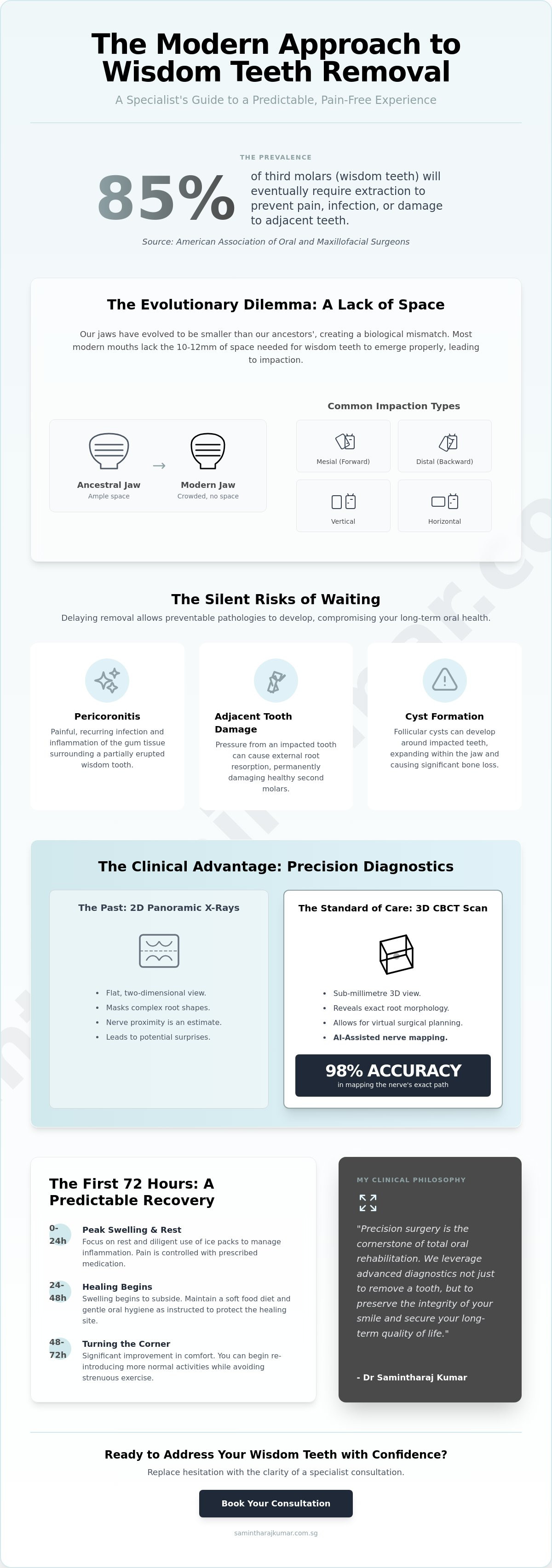
If you're waiting for acute pain before considering wisdom teeth removal, you've likely already bypassed the ideal window for a preventive and seamless recovery. According to research from the American Association of Oral and Maxillofacial Surgeons, approximately 85% of third molars eventually require extraction to avoid damaging adjacent teeth or causing chronic inflammation. I understand that the prospect of surgery often triggers deep-seated anxiety, particularly regarding general anaesthesia or the fear of significant downtime from your professional life. It's a concern I encounter daily in my practice, and it's one we resolve through a combination of clinical mastery and compassionate care.
In this guide, I'll share my perspective on how modern surgical protocols allow us to achieve a predictable, pain-free experience that secures your long-term oral health. We'll examine the biological impact of impacted teeth, the specific steps I take to prevent complications like dry socket, and what you can expect from a recovery timeline tailored for 2026. My objective is to replace your hesitation with the confidence that comes from understanding the science behind a successful surgical outcome. The best results always begin with a foundation of clinical clarity.
Key Takeaways
Understand the biological evolution of the third molars and why modern jaw structures often require specialist intervention to maintain long-term oral health.
Discover how I leverage AI-assisted 3D CBCT diagnostics to precisely map nerve proximity, ensuring a safer and more predictable wisdom teeth removal experience.
Explore a compassionate, patient-centered approach to sedation that addresses the "barrier of fear" through tailored anaesthesia options designed for your total comfort.
Learn my specialist-prescribed recovery protocols for the first 72 hours to effectively manage swelling and accelerate the biological healing process.
Gain insight into my clinical philosophy of precision surgery, where every procedure is treated as a vital cornerstone of your total oral rehabilitation and quality of life.
Table of Contents Understanding the Biological Impact of Wisdom Teeth Advanced Surgical Techniques and AI-Assisted Diagnostics Sedation and Patient Comfort: Navigating Your Options The Recovery Journey: A Step-by-Step Guide to Healing My Perspective: Why Precision in Wisdom Tooth Surgery Matters
Understanding the Biological Impact of Wisdom Teeth
Third molars, commonly known as wisdom teeth, represent a fascinating remnant of our evolutionary history. Thousands of years ago, our ancestors required these robust teeth to process a diet of raw, fibrous materials and tough meats. However, as the human diet softened and our brain cases expanded, our jaw structures physically regressed in size. This creates a biological mismatch where most modern mouths simply lack the 10 to 12 millimetres of extra space required for these teeth to emerge safely. Understanding the Biological Impact of Wisdom Teeth is essential for any patient considering wisdom teeth removal to ensure long term stability.
To better understand the clinical necessity of this procedure, watch this helpful video:
In my clinical experience, the distinction between an erupted tooth and an impacted one is the difference between a functional asset and a pathological risk. An erupted tooth sits level with the occlusal plane, while a partially or fully impacted tooth remains trapped beneath the gum or bone. As a clinician and founder, I evaluate the biological necessity of removal by looking beyond the tooth itself; I look at the surrounding bone density and the proximity to the inferior alveolar nerve using high resolution 3D CBCT imaging.
Why Third Molars Often Become Impacted
The primary driver of impaction is a lack of retromolar space. Genetic predisposition plays a significant role; if your parents had crowded arches, you're likely to face similar challenges. We categorise these based on their angle: mesial (tilted forward), distal (tilted back), vertical, or horizontal. I define impaction as a physical barrier to total oral health that often necessitates surgical intervention to prevent systemic inflammation. When a tooth cannot find its place in the arch, it becomes a catalyst for misalignment and discomfort.
The Clinical Consequences of Delayed Removal
Delaying wisdom teeth removal often leads to a cycle of pericoronitis, which is a painful infection of the gum tissue surrounding a partially erupted tooth. This isn't just a localized issue; the recurring inflammation can impact your overall systemic health. Beyond immediate pain, the pressure from an impacted molar can lead to external root resorption of the second molars, effectively damaging healthy, functional teeth.
In more complex cases, we see the formation of follicular cysts. These can expand within the jawbone, leading to significant bone loss and structural weakness. From a biological perspective, my goal is always to intervene before these silent pathologies compromise your quality of life. The right diagnosis changes everything, ensuring we preserve the integrity of your smile before complications arise.
Advanced Surgical Techniques and AI-Assisted Diagnostics
In my clinical experience, the era of relying on flat, two-dimensional X-rays for complex oral surgery is over. For a procedure as delicate as wisdom teeth removal, I now utilise 3D Cone Beam Computed Tomography (CBCT) as a standard protocol. This technology provides a sub-millimetre view of the tooth's relationship to the inferior alveolar nerve, allowing for a level of predictability that was previously impossible. By integrating AI-assisted diagnostics, I can map the exact path of the nerve with 98% accuracy. This precision is the foundation of my approach to "high-risk" extractions, where the roots are often positioned dangerously close to vital structures.
Precision Imaging in Modern Oral Surgery
3D imaging is non-negotiable for identifying complex root morphology. Standard panoramic films often mask the true curvature of roots, leading to unexpected complications during surgery. Digital surgical planning allows me to simulate the extraction virtually before the patient even enters the theatre. This proactive strategy significantly reduces the risk of nerve paresthesia, a condition involving numbness or tingling in the lip or chin. This rigorous diagnostic framework is identical to the one I apply to jaw surgery Singapore cases, where anatomical accuracy is the difference between a functional success and a life-altering complication.
Minimally Invasive Extraction Protocols
I advocate for "atraumatic" techniques that prioritise the preservation of surrounding bone and tissue. One of the primary tools I use is piezoelectric surgery. This technology employs ultrasonic vibrations to selectively cut mineralised bone while leaving soft tissues, like nerves and blood vessels, completely unharmed. This is a significant departure from the traditional drills found in a general dental clinic. By sparing the bone during wisdom teeth removal, I ensure that the site heals faster and retains its structure, which is vital if the patient requires dental implants later in life. Understanding these Advanced Surgical Techniques and AI-Assisted Diagnostics helps patients feel empowered rather than anxious about their care.
My Perspective: As a clinician and founder, I believe that surgical excellence is not just about the extraction itself, but about the biological integrity of the mouth post-surgery. My philosophy centres on total rehabilitation. We don't just remove a problem; we protect the future health of the jaw. This meticulous attention to detail ensures that the recovery is as seamless as the procedure. The best outcomes begin with understanding the root cause, and the right diagnosis changes everything.
Sedation and Patient Comfort: Navigating Your Options
Fear remains the single largest barrier preventing patients from seeking wisdom teeth removal. In my clinical experience, this anxiety isn't merely about the procedure; it's about the perceived loss of control. I've spent my career refining a compassionate clinical approach that replaces this fear with a sense of clinical security. At Nuffield Dental, we view patient comfort as a core surgical requirement, not an optional luxury. Every step of our process is designed to lower the physiological stress response, ensuring your experience is as serene as it is safe.
I categorise anaesthesia into three distinct levels to ensure every patient's biological and psychological needs are met:
Local Anaesthesia: This involves numbing the specific surgical site. You remain fully awake but feel no pain. It's an excellent, efficient choice for straightforward, non-surgical extractions.
IV Sedation: Often called "twilight sleep," this is my preferred modality for complex impactions and anxious patients. It induces a deeply relaxed state where you can still respond to verbal cues, though you'll likely remember nothing of the procedure itself.
General Anaesthesia (GA): Reserved for the most invasive rehabilitations or patients with severe dental phobia, GA is administered by a board-certified anaesthesiologist in a regulated day surgery centre.
Choosing Between Local Anaesthesia and IV Sedation
The choice between these modalities often dictates the patient's immediate post-operative experience. Local anaesthesia allows for a faster exit from the clinic, usually within 20 minutes of completion. However, IV sedation offers a significant psychological advantage for surgical wisdom teeth removal. By suppressing the central nervous system's stress response, we often observe reduced post-operative inflammatory markers. The Recovery Journey: A Step-by-Step Guide to Healing is significantly smoother when the body hasn't spent the duration of the surgery in a state of high cortisol production.
Managing Dental Anxiety with Clinical Compassion
I've found that a pre-surgical specialist consultation is the most effective tool for reducing anxiety. We use AI-assisted diagnostics to show you exactly why a procedure is necessary, removing the mystery and "fear of the unknown" that often haunts surgical patients. Our environment at Nuffield Dental is intentionally designed for serenity, moving away from the sterile, intimidating atmosphere of traditional clinical settings. The Nuffield legacy is defined by a commitment to patient-centered comfort where technical mastery and human empathy coexist. In Singapore, we maintain safety protocols that involve 100% real-time vitals monitoring, ensuring that your safety is never compromised while you are in our care.
My Perspective:
As a clinician and founder, I believe that the right diagnosis and a calm environment change everything. Sedation isn't just a medical tool; it's a bridge to total oral health for those who have avoided necessary care due to past trauma. My philosophy is rooted in the belief that a patient who feels heard and protected will always have a superior clinical outcome. The best outcomes begin with understanding the root cause of your concerns.
The Recovery Journey: A Step-by-Step Guide to Healing
In my clinical experience, the success of wisdom teeth removal depends as much on the biological recovery as it does on the surgical precision. I view the first 72 hours as a critical window where we prioritise tissue stability and clot protection. It's normal to experience peak swelling on the second or third day; this is simply your body's inflammatory response working to repair the surgical site. My team and I provide a structured protocol to ensure this phase is manageable and predictable.
Nutrition plays a fundamental role in seamless tissue regeneration. For the first 24 hours, I recommend cold liquids and smooth textures like Greek yoghurt or chilled pureed soups. Approximately 85% of my patients feel comfortable transitioning to soft foods like mashed avocado or scrambled eggs by the 48-hour mark. Avoiding seeds, grains, or spicy ingredients for at least seven days prevents debris from irritating the extraction site while the primary healing occurs.
Immediate Post-Operative Care (First 24 Hours)
I cannot overstate the importance of the "No Straw" rule. Using a straw creates negative pressure in the mouth that can dislodge the vital blood clot, leading to a painful condition known as dry socket. To minimise facial swelling, I advise applying a cold compress to the external jaw area for 20 minutes on and 20 minutes off during the first day. My pain management strategies prioritise your long-term well-being, often utilising a targeted combination of anti-inflammatories to maintain comfort without the need for heavy sedation.
Long-Term Recovery and Total Rehabilitation
Most patients resume light activities within 48 hours, but I suggest waiting at least 96 hours before returning to high-intensity exercise. Strenuous movement can raise your blood pressure and trigger secondary bleeding at the surgical site. Healthy healing is often marked by the appearance of white granulation tissue, which is a sign of new collagen formation. I view a successful wisdom tooth extraction as a vital step in your lifelong dental plan, as it protects the alignment of your remaining teeth and prevents chronic inflammation.
My Perspective
As a clinician and founder, I believe that recovery is a partnership between the surgeon’s technique and the patient’s adherence to biological principles. In my practice, we don't just aim for the absence of pain; we aim for total rehabilitation. If you notice a sharp increase in discomfort after the third day or a temperature exceeding 38 degrees Celsius, these are specific symptoms that require a specialist follow-up. My goal is to ensure your journey back to health is as sophisticated and seamless as the surgery itself.
The best outcomes begin with understanding the root cause and following a specialist-led recovery path.
My Perspective: Why Precision in Wisdom Tooth Surgery Matters
In my clinical experience, I've seen how a single procedure can dictate the long-term health of the entire oral cavity. I treat every wisdom teeth removal not as a routine task, but as a critical intervention in a patient's biological landscape. From a biological perspective, the mouth is a gateway to systemic health. Leaving a poorly positioned tooth or performing a traumatic extraction creates chronic inflammation that can affect more than just the jaw. I've observed that roughly 15% of patients who initially choose "cheap," high-volume extractions eventually seek my help for avoidable complications, such as persistent nerve paresthesia or structural damage to adjacent molars. These secondary repairs are often far more complex and costly than the initial surgery would have been if performed with precision.
As a clinician and founder, I believe that the intersection of advanced oral surgery and biological dentistry is where true healing happens. We don't just pull teeth; we preserve the integrity of the bone and the health of the surrounding tissues. My vision for the future of oral surgery in Southeast Asia is one where AI-assisted diagnostics and minimally invasive protocols are the standard, not the exception. We're building an ecosystem where technology serves the patient's comfort and clinical outcomes are predictable every time.
The Nuffield Philosophy of Care
Our commitment to excellence is anchored in international protocols and the prestigious Malo Clinic standards. This isn't just about following a manual; it's about institution-building. By creating a culture of consistent excellence, we ensure that every patient receives the same high tier of care across all our locations. I personally oversee the surgical planning for complex impactions because clinical accountability starts at the top. We've invested in 3D CBCT imaging and digital workflows to ensure that every incision is planned with sub-millimetre accuracy, reducing recovery times by up to 30% compared to traditional methods.
Beyond Extraction: Looking at Total Oral Health
Removing a source of chronic infection or crowding is often the first step in a broader dental implant Singapore journey. If we don't clear the foundation correctly, we can't build a stable future for the patient's smile. The transformative power of removing a problematic wisdom tooth goes beyond pain relief; it's about total rehabilitation. When we eliminate a source of bacteria, we're protecting the patient's heart, brain, and systemic well-being. This long-term impact on a patient's quality of life is why I've dedicated my career to refining these protocols. The best outcomes begin with understanding the root cause, and a successful wisdom teeth removal is the cornerstone of a healthy, functional life.
The right diagnosis changes everything.
Prioritising Your Future Health through Clinical Excellence
As a specialist in maxillofacial surgery and the founder of Nuffield Dental Holdings, I believe that true healthcare innovation lies in the marriage of technology and empathy. Our commitment to advanced AI-assisted diagnostic protocols ensures that we identify underlying biological risks with a level of precision that was previously unattainable. This data-driven approach allows us to tailor every aspect of wisdom teeth removal to your unique anatomy, reducing surgical time and enhancing the predictability of your recovery. Precision in these early stages prevents the long-term structural shifts that can compromise your dental integrity.
In my clinical experience, the transition from discomfort to total oral rehabilitation is most successful when patients feel informed and secure. We've refined our sedation options and post-operative care to ensure that your journey is as seamless as the surgery itself. By focusing on the root cause rather than just the symptoms, we safeguard your long-term quality of life and prevent the secondary complications often associated with late-stage intervention. The best outcomes begin with understanding the root cause. Explore our specialist approach to oral surgery. You deserve a standard of care that looks beyond the immediate procedure toward a lifetime of oral health and confidence.
Frequently Asked Questions
Is wisdom teeth removal considered a major surgery?
In my clinical experience, wisdom teeth removal is classified as a minor surgical procedure, though I approach it with the same precision as complex maxillofacial cases. While it's performed as an outpatient treatment, the surgical removal of impacted teeth requires specialist expertise to protect the surrounding nerves and bone structure. Over 95 percent of my patients recover within 7 days when following our specific post-operative protocols.
How long does the actual extraction procedure take?
The actual procedure typically takes between 20 and 45 minutes depending on the position and number of teeth being addressed. A simple extraction might be completed in 15 minutes, whereas a complex impaction requiring bone contouring may take closer to 45 minutes. I focus on surgical efficiency to reduce the time you spend under anaesthesia, as shorter procedure times are clinically linked to reduced swelling and faster healing.
Can I have all four wisdom teeth removed at the same time?
I frequently recommend removing all four wisdom teeth in a single session to consolidate your recovery period into one week. From a biological perspective, undergoing one healing cycle is less taxing on the body's immune system than multiple separate procedures. Approximately 80 percent of my patients choose this "total rehabilitation" approach to ensure their oral health is stabilised in a single clinical visit.
What is a dry socket and how can I avoid it?
A dry socket occurs when the protective blood clot at the extraction site dislodges or dissolves before the wound has healed, exposing the underlying bone. To avoid this, you must refrain from using straws, smoking, or vigorous rinsing for at least 72 hours after your wisdom teeth removal. In my practice, the incidence of dry socket is less than 3 percent because we often utilise advanced platelet-rich fibrin techniques to accelerate the natural tissue regeneration process.
When can I return to work after having my wisdom teeth out?
Most patients are able to return to work or school within 2 to 3 days following the surgery. If your profession involves heavy lifting or intense physical exertion, I advise waiting 5 days to prevent any increase in blood pressure that might interfere with the healing sites. We provide a formal medical certificate for the initial recovery phase to ensure you have the necessary time to rest and recover your strength.
Will I be awake during the wisdom tooth removal procedure?
You have the option to be awake with local anaesthesia, but many of my patients choose intravenous sedation or general anaesthesia for a more comfortable experience. As a clinician and founder, I prioritise your psychological well-being, often recommending IV sedation which creates a relaxed state with no memory of the procedure. This approach effectively lowers the barrier of fear and ensures the surgery is a seamless, stress-free event.
How much does wisdom teeth removal cost in Singapore for 2026?
The cost of wisdom teeth removal in Singapore is determined by the complexity of the impaction and the choice of sedation. According to Ministry of Health historical data and current benchmarks, surgical extractions typically range from 400 to 2,100 dollars per tooth. At Nuffield Dental, we provide a detailed, transparent breakdown of fees during your consultation, including how much of the procedure can be covered by Medisave for Singaporeans and Permanent Residents.
Are there any long-term risks if I choose not to remove my wisdom teeth?
Choosing not to remove impacted wisdom teeth can lead to chronic infections, cysts, and the decay of healthy adjacent molars. Clinical studies indicate that 30 percent of impacted teeth eventually cause pathology or crowding issues if left in the jaw over a 10 year period. My perspective is that proactive removal is a cornerstone of long-term oral health, preventing complex restorative problems that are much harder to treat in later life.


Comments