
All-on-4 Dental Implant Problems: Prevention & Revision
- Dr Samintharaj Kumar

- Aug 5
- 12 min read
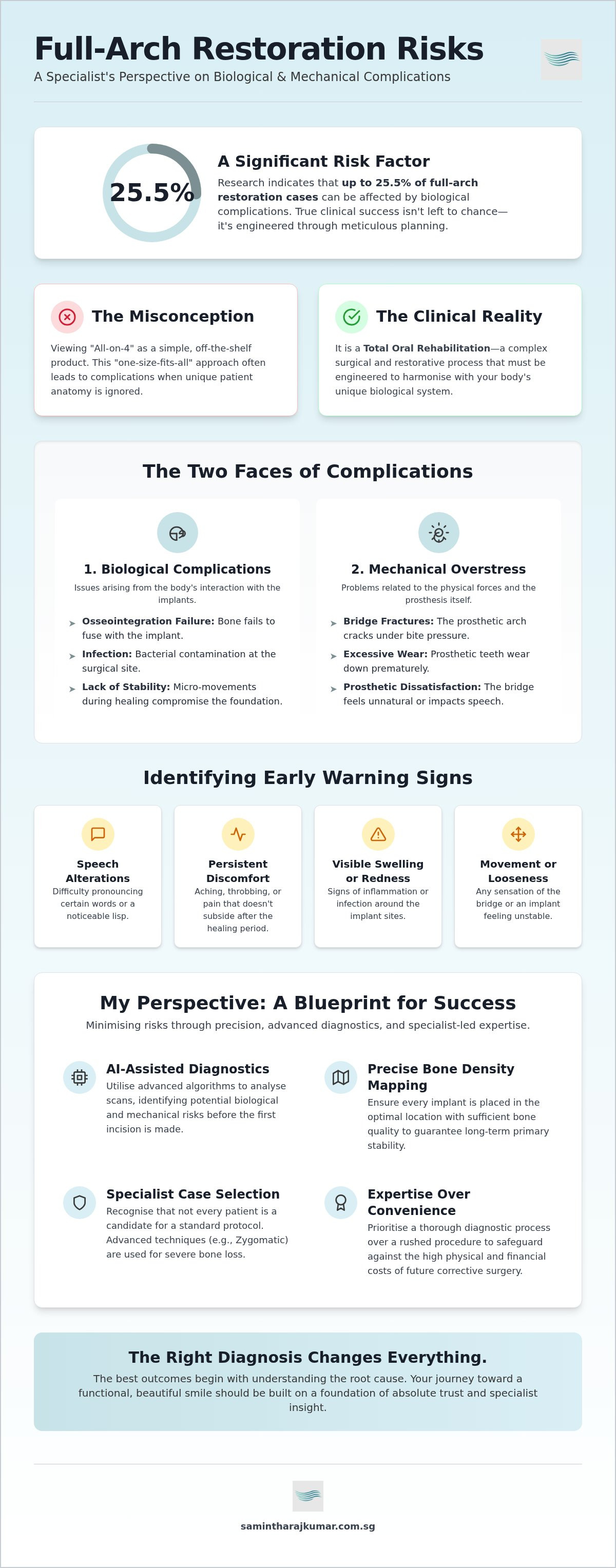
What if the success of your full-arch restoration depends less on the implants themselves and more on the biological environment they inhabit? In my clinical experience, many patients come to me with deep-seated anxiety regarding all on 4 dental implants problems, often fearing that a surgical failure is just a matter of time. It's understandable to feel concerned, especially when research indicates that biological complications can affect up to 25.5% of cases. However, true clinical success isn't left to chance. It's engineered through meticulous planning and a deep understanding of how your body interacts with the restoration.
I want to provide you with a clear understanding of the biological and mechanical risks of full-arch rehabilitation and how specialist expertise can safeguard your long-term outcome. We'll explore the science of why complications happen and distinguish between preventable and unpreventable risks. My goal is to provide you with a clear framework for choosing a qualified surgeon, replacing your anxiety with the quiet confidence that comes from specialist insight. The right diagnosis changes everything, and your journey toward a functional, beautiful smile should be built on a foundation of absolute trust.
Table of Contents
Understanding the Risks of Full-Arch Rehabilitation
When patients visit me for a consultation, they often speak of "All-on-4" as if it were a branded product they might buy off a shelf. This is a common misconception. In my clinical experience, the label is frequently misleading because it oversimplifies a complex surgical and restorative process into a catchy name. Many all on 4 dental implants problems don't actually stem from the titanium hardware itself, but from a failure to view the procedure as a total oral rehabilitation. We aren't just placing four screws in a jaw; we are reconstructing a functional biological system that must harmonise with your unique anatomy.
To better understand how we approach the longevity of these treatments and prevent complications, watch this helpful video:
It's vital to distinguish between a surgical complication, such as an implant failing to integrate, and prosthetic dissatisfaction, where the bridge looks or feels "wrong." While the implants are the foundation, the prosthesis is what you live with every day. If the diagnostic planning phase is rushed, the result is often a misalignment between the mechanical load of your bite and the biological capacity of your bone.
Short-Term vs. Long-Term Complications
In the immediate post-operative phase, the primary risks involve infection or a lack of primary stability. Understanding Dental Implants and how they interface with living tissue is essential for any patient. If the bone fails to grow around the implant, known as osseointegration failure, the foundation is lost. Long-term, however, we see more mechanical issues. These include bridge fractures or excessive wear on the prosthetic teeth. Beyond the physical, there's a significant emotional impact when a prosthesis doesn't feel natural or interferes with speech. These issues are often more distressing to patients than the clinical failure of a single implant.
The Importance of Case Selection
Not every patient is an ideal candidate for the standard protocol. From a biological perspective, factors like systemic health, smoking habits, and bone density play a decisive role in whether the surgery will succeed. As a clinician and founder, I've seen that the most significant all on 4 dental implants problems occur when a "one size fits all" approach is applied. For those with severe bone loss, we may need to pivot to more advanced all on 4 dental implants strategies, such as zygomatic or pterygoid protocols. Success is never an accident; it's the result of choosing the right procedure for the right patient. The best outcomes begin with understanding the root cause.
Why All-on-4 Complications Occur: The Biological and Mechanical Reality
To understand all on 4 dental implants problems, we must look beneath the gum line at the intersection of biology and engineering. While the procedure is often marketed as a straightforward mechanical fix, the reality is far more nuanced. Clinical success depends on a delicate dance between your body's healing capacity and the physical forces generated every time you chew. In my clinical experience, the most resilient restorations are those where the surgeon has accounted for the unique biological landscape of the patient's jawbone.
The Science of Osseointegration
Osseointegration is the functional connection between living bone and the surface of a load-bearing implant. This process is the cornerstone of modern implantology. It isn't merely about "screwing in" a post; it's about facilitating a biological environment where your jawbone accepts the titanium or ceramic as part of itself. When this bond fails, it's often due to micro-movements during the healing phase or a lack of primary stability. From a biological perspective, peri-implantitis remains a significant threat. This inflammatory condition, often caused by bacterial buildup, can lead to bone loss around the implant. A Systematic Review of All-on-4 Complications confirms that biological challenges are often the most persistent hurdles in long-term maintenance.
Mechanical Load and Bite Alignment
Mechanical load is the second half of the equation. If the bridge is poorly designed, it creates what we call the "cantilever effect." Imagine a diving board; if the extension of the bridge beyond the final implant is too long, the force of a bite acts as a lever, putting immense stress on the foundation. This overstress can lead to screw loosening, bridge fracture, or even total implant loss. The role of bone volume is critical here, as insufficient bone cannot support the necessary mechanical load of a full arch.
The alignment of your bite is paramount. If you have a collapsed bite, the vertical dimension of your face has changed over years of tooth loss. Simply placing teeth isn't enough; we must restore the structural harmony of your jaw. An imbalanced bite leads to uneven pressure, which is a frequent cause of mechanical failure. I believe that the best outcomes begin with understanding the root cause of these imbalances. Achieving a harmonious bite is what distinguishes a long-lasting restoration from one that requires constant repair. Selecting a surgeon who prioritises this diagnostic precision is the first step toward a secure, functional future.
Identifying the Warning Signs: From Speech Changes to Infection
Identifying all on 4 dental implants problems early is the difference between a simple clinical adjustment and a complex surgical revision. Often, patients ignore minor discomfort, assuming it's merely part of the "new normal" after a major procedure. In my clinical experience, this is a mistake. A well-integrated restoration should eventually feel like a natural extension of your body. If it remains a foreign object that interferes with your daily life, it's a signal that the biological or mechanical balance is off.
One of the most frequent complaints I address during revision consultations involves speech alterations. If you notice a persistent "whistling" sound or a lisp that doesn't resolve after the initial adjustment period, it's usually due to a poorly designed bridge. When the prosthesis is too bulky or positioned incorrectly, it disrupts the natural flow of air and the placement of the tongue. This bulkiness doesn't just affect your voice; it can also interfere with lip and face support, creating an unnatural facial profile that lacks the subtle nuances of your original smile.
Biological warning signs are equally critical and often more urgent. Persistent bad breath or an unpleasant, metallic taste in the mouth often signals the onset of peri-implantitis. This isn't just a hygiene issue. It's an inflammatory response to bacterial colonisation around the implant. A systematic review on All-on-4 complications highlights that while survival rates are high, technical and biological issues require vigilant monitoring to prevent total failure. Ignoring these subtle signs can lead to bone loss that eventually compromises the entire arch.
When Pain Becomes a Problem
It's normal to experience some soreness immediately following surgery. However, chronic inflammation is a different matter. In the upper jaw, pain can sometimes be mistaken for sinus pressure, while in the lower jaw, it may manifest as lingering nerve sensitivity. Persistent pain beyond the first 14 days warrants a specialist assessment. If discomfort lingers, it may indicate that the implants are under mechanical overstress or that the biological seal has been compromised. The best outcomes begin with understanding the root cause of the pain rather than simply managing the symptoms.
Prosthetic Instability and Mobility
If you feel your bridge moving, try not to panic. A loose bridge is often a mechanical issue, such as a loosened prosthetic screw, rather than a failed implant. However, these screws can fracture under daily chewing pressure if they aren't tightened promptly, leading to more significant all on 4 dental implants problems. You should also keep a close eye on your gum line. If you notice gum recession around the implant margins, it exposes the metal or ceramic components. This makes the area harder to clean and significantly increases the risk of infection. Early intervention is always the most predictable path to restoring your quality of life.
My Perspective: Minimising Risks Through Precision and Advanced Diagnostics
As a clinician and founder, I believe the best outcomes begin with understanding the root cause. Many all on 4 dental implants problems that I see in my practice are entirely preventable with the right diagnostic foresight. I don't believe in a "guess-and-check" approach to surgery. Instead, I use AI-assisted diagnostics to meticulously map bone density and nerve pathways before I make the first incision. This level of precision allows us to identify potential biological hurdles long before they become clinical failures, ensuring that the foundation we build is as resilient as the technology allows.
My philosophy is deeply rooted in biological dentistry. I prioritise biocompatibility, often incorporating ceramic dental implants or high-tier titanium systems that respect the body's natural healing processes. Total oral rehabilitation is more than a mechanical assembly; it's a biological integration. By focusing on the ecosystem of the mouth, we can significantly lower the risk of chronic inflammation and long-term instability. If you are seeking a path toward a lasting restoration, consulting with a specialist who understands these nuances is a vital first step.
The Role of Zygomatic and Pterygoid Implants
For patients with severe bone loss in the upper jaw, the standard protocol may be biologically unsuitable. In these cases, we bypass the need for extensive bone grafting by utilising Zygomatic and Pterygoid implants. These advanced systems anchor into the denser, stable bone of the cheekbone or the posterior jaw, providing immediate stability where standard implants might fail. It's essential to seek a surgeon who specialises in sinus lift surgery for dental implants and these complex alternatives, as the technical demands of these procedures require a higher tier of surgical expertise.
Revision Surgery: Fixing Failed Implants
Revision surgery is often more complex than the initial procedure. When I'm tasked with fixing failed implants, my first priority is removing the source of inflammation and restoring the bone foundation. It's a meticulous process of debridement and site preparation. While our "Teeth in a Day" philosophy aims for efficiency, it's always a carefully managed clinical process. For a second rehabilitation, I'm transparent with my patients about expectations. We aren't just replacing teeth; we're correcting a failure of the past to secure your future. This journey requires patience and a commitment to global standards of care to ensure the second outcome is the final one.
The Path to Total Rehabilitation: Choosing Expertise Over Convenience
Achieving a successful full-arch restoration is a life-altering milestone. When the procedure is executed with precision, the impact on your quality of life is profound, restoring not just the ability to eat and speak with ease, but also the self-assurance that comes with a stable, natural-looking smile. However, I often see patients who have been lured by the promise of convenience or lower costs, only to face significant all on 4 dental implants problems later. In my practice, I've observed that the cheapest option frequently becomes the most expensive after the costs of complex revision surgery and emotional distress are factored in. True value lies in the longevity of the result, which is always built on a foundation of specialist expertise and visionary care.
A successful, stable smile has a transformative power that extends beyond the dental chair. It is about emotional renewal and functional excellence. To ensure this outcome, you must look beyond the marketing labels and focus on the clinical mastery of the individual performing your surgery. The best outcomes are never a matter of luck; they are the result of uncompromising quality and a commitment to global standards of care.
Credentials to Look for in an Implant Specialist
Understanding the distinction between a generalist and a specialist is vital for your safety. While many dentists offer implants, a maxillofacial surgeon or a specialist in complex implantology possesses the advanced training required to manage difficult bone environments and potential complications. In my clinical experience, international protocols and high-tier affiliations with global medical networks are non-negotiable. As a clinician and founder, I ensure that Nuffield Dental adheres to these rigorous standards. We also prioritise a holistic approach to facial aesthetics, ensuring your new smile supports your facial structure and enhances your overall appearance rather than simply filling a gap.
Your Journey Toward Lasting Results
Your initial consultation is the most critical step in your journey. To gauge surgical precision, you should ask your clinician about their diagnostic process, specifically how they use technology to map your bone density and nerve pathways. Inquire about their success rates with "Teeth in a Day" and their experience with revision cases. Once your restoration is complete, the journey doesn't end. Long-term maintenance is essential. Adhering to annual checkup standards and professional cleaning protocols is what keeps a restoration functional for decades. If you are experiencing discomfort or noticed changes in your bridge, remember that early intervention is key. The right diagnosis changes everything.
Securing Your Clinical Outcome with Specialist Foresight
I've seen first-hand that most all on 4 dental implants problems aren't inevitable; they are often the result of missed biological cues or mechanical imbalances during the planning phase. By prioritising advanced AI-assisted surgical planning and a deep understanding of complex implantology, we can pre-empt these issues. As a clinician and founder, my commitment is to move beyond mere convenience toward a standard of total oral rehabilitation that stands the test of time. Whether your case requires traditional protocols or specialised zygomatic systems, the goal remains the same: a functional, natural-feeling restoration that enhances your life.
The journey to a stable smile shouldn't be defined by anxiety over failure, but by the security of being in expert hands. I believe that clinical excellence is a legacy built one patient at a time, through meticulous attention to detail and a patient-centred philosophy. The best outcomes begin with understanding the root cause. Explore our approach to Total Rehabilitation.
Your path to restoration is a personal one. I'm here to ensure it's a permanent success. The right diagnosis changes everything.
Frequently Asked Questions
Is it normal for All-on-4 implants to feel bulky at first?
Yes, it's common to experience a sensation of bulkiness during the initial adaptation period as your tongue and lips adjust to the new prosthesis. This feeling usually subsides within a few weeks as your brain habituates to the restoration. However, if the bulkiness feels excessive or interferes with your bite alignment after the first month, it may indicate a design issue that requires a specialist's review to ensure the bridge harmonises with your facial structure.
Can speech problems after All-on-4 be corrected?
Speech problems like whistling or lisping can absolutely be corrected through meticulous prosthetic refinement. These issues typically stem from the thickness or positioning of the bridge. In my clinical experience, adjusting the lingual contours or the vertical dimension of the restoration allows the tongue to move naturally again. Precision diagnostics help us identify exactly where the air flow is being disrupted to restore your natural voice and confidence.
What are the signs of peri-implantitis in a full-arch bridge?
The primary signs of peri-implantitis include persistent gum redness, bleeding during cleaning, and an unpleasant taste or bad breath. While these symptoms might seem minor, they often signal a biological response to bacterial buildup around the implant. Ignoring these signs can lead to bone loss, making it one of the more serious all on 4 dental implants problems that requires immediate clinical intervention to save the foundation.
How long does it take to know if an All-on-4 implant has failed?
You will typically know if an implant has failed to integrate within the first three to six months. This period, known as the osseointegration phase, is when the bone bonds with the implant surface. If you experience persistent pain, mobility, or swelling after the initial healing window, it's a sign the biological seal hasn't formed. Early detection through AI-assisted diagnostics allows us to pivot to a revision plan quickly to restore stability.
Can All-on-4 be done if I have significant bone loss?
Yes, full-arch rehabilitation is possible even with significant bone loss by utilising advanced protocols like Zygomatic or Pterygoid implants. These specialised systems anchor into denser bone structures outside the traditional jawbone area. From a biological perspective, this often removes the need for extensive bone grafting. It's a complex procedure that requires a surgeon with specific expertise in total oral rehabilitation to ensure long-term stability and functional excellence.
What happens if one of the four implants fails?
If one of the four implants fails, the structural integrity of the entire bridge is compromised due to the cantilever effect and uneven load distribution. In my practice, we don't simply ignore the loss. We must assess why the failure occurred and usually replace the implant or add a fifth support to restore balance. Leaving a bridge supported by only three implants significantly increases the risk of mechanical fracture and total failure.
Are ceramic implants a safer alternative for those worried about metal sensitivity?
Ceramic implants are an excellent, biocompatible alternative for patients with metal sensitivities or those prioritising a holistic approach to their dental health. These metal-free options offer high aesthetic appeal and a reduced risk of inflammatory responses in sensitive individuals. As a clinician and founder, I value these materials for their ability to integrate seamlessly with the body's natural tissues while providing the mechanical strength needed for a full-arch restoration.
How often should I have my All-on-4 bridge professionally cleaned?
You should have your All-on-4 bridge professionally cleaned at least twice a year by a specialist hygienist. These visits are essential for removing plaque from hard-to-reach areas beneath the bridge that home tools can't access. Regular maintenance is the most effective way to prevent all on 4 dental implants problems like infection. We also use these sessions to check the tightness of the prosthetic screws and ensure your bite remains perfectly aligned.


Comments