
Best Practices for Dental Implant Longevity: A Specialist Surgeon’s Perspective
- Dr Samintharaj Kumar

- Jun 26
- 12 min read
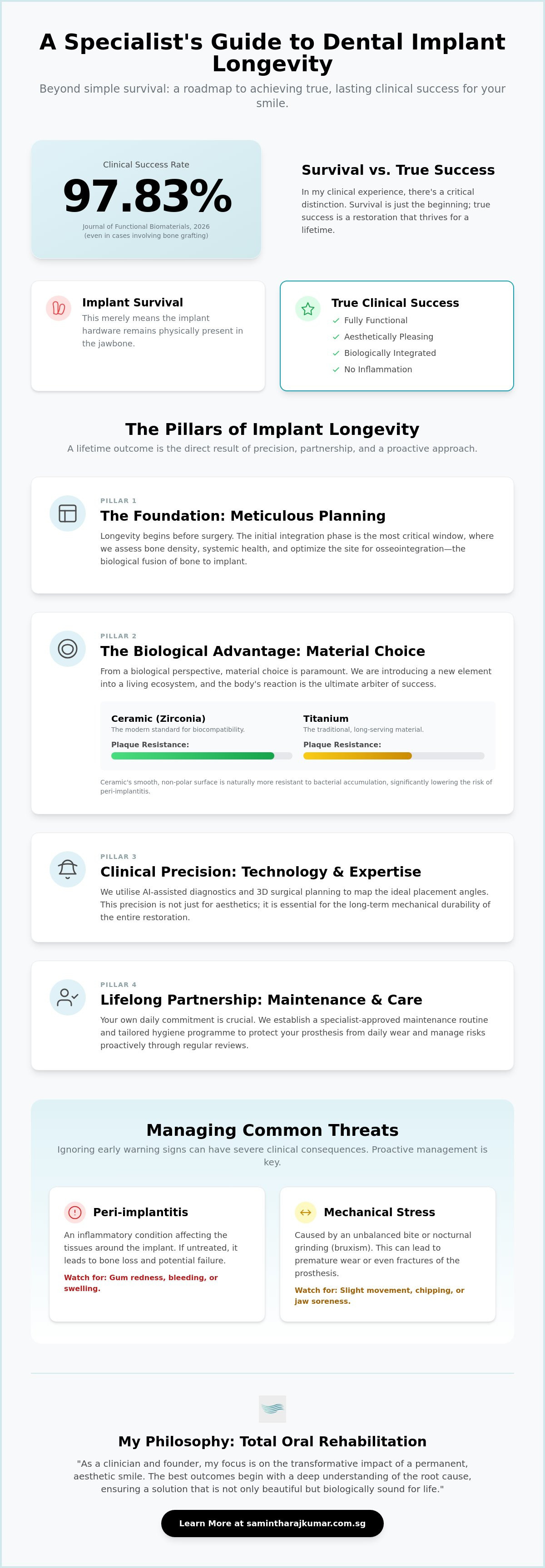
Did you know that clinical data from the Journal of Functional Biomaterials in 2026 highlights a dental implant success rate of 97.83%, even in cases involving bone grafting? While these figures are reassuring, I know that for many of my patients, the fear of failure or the stress of potential repair costs can still feel quite heavy. It's completely understandable to want absolute certainty regarding the best practices for implant longevity when you're investing in your health and your confidence.
In my clinical experience, ensuring your restoration remains a functional and aesthetic success for a lifetime depends on a precise partnership between surgical excellence and your own daily commitment. This article moves beyond basic hygiene to explore the sophisticated protocols we use at the specialist level. From a biological perspective, we'll examine how modern diagnostics and specific lifestyle habits work together to provide you with a clear, reliable roadmap for your long-term oral health. By understanding the specialist's role in this journey, you can move forward with total confidence in the durability of your smile.
Table of Contents
The Foundation of Success: Understanding Implant Longevity
In my clinical experience, many patients focus solely on the day of surgery. However, to ensure a smile that lasts, we must distinguish between simple implant survival and true clinical success. Survival merely means the hardware remains in the jaw. Success, conversely, requires the restoration to be fully functional, aesthetically pleasing, and biologically integrated without any signs of inflammation. Gaining a clear understanding of what dental implants are and how they interact with your unique anatomy is the first step toward a permanent solution.
Longevity begins long before the first incision is made. It starts with a comprehensive evaluation of bone density and systemic health markers. As a clinician and founder, I've seen that the initial integration phase is the most critical window. If we don't address underlying issues like bone volume or metabolic health early on, we risk the entire restoration. A "lifetime" outcome isn't just a marketing claim. It is the direct result of high-tier clinical precision and meticulous planning during the initial rehabilitation phase.
To better understand the importance of maintenance in this foundation, watch this helpful video:
The Biological Process of Osseointegration
From a biological perspective, the jawbone must fuse with the implant surface through a process called osseointegration. This creates a structural and functional connection that allows the implant to support a crown or bridge. Factors such as smoking, poor blood supply, or certain medications can disrupt this early healing and compromise long-term stability. I prioritise a biological approach, ensuring the surgical site is optimised for cellular growth before we proceed with placement. This careful preparation is one of the best practices for implant longevity that we uphold in our practice.
Identifying the Root Causes of Implant Failure
Peri-implantitis remains a significant threat to even the most well-placed implants. This inflammatory condition affects the soft and hard tissues surrounding the fixture. Without early intervention, it leads to bone loss and eventual failure of the restoration. Mechanical stressors are another common culprit. An unbalanced bite or nocturnal grinding can lead to premature wear or even fractures of the prosthesis. Ignoring early warning signs like gum redness, bleeding, or slight movement can have severe clinical consequences. Adhering to the best practices for implant longevity ensures these risks are managed proactively through regular specialist reviews and tailored hygiene programmes. The best outcomes begin with understanding the root cause of potential instability.
The Biological Advantage: Why Material Choice and Systemic Health Matter
From a biological perspective, the body’s reaction to implanted materials is the ultimate arbiter of success. We aren't simply performing a mechanical fix; we're introducing a foreign object into a living, breathing ecosystem. As a clinician and founder, I've observed that selecting the right material is a cornerstone of the best practices for implant longevity. While titanium has served the industry for decades, the rise of Ceramic Dental Implants has introduced a new standard for patients seeking superior biocompatibility and health-conscious restorations.
Zirconia, the primary component of ceramic implants, offers a distinct advantage in plaque management. Its smooth, non-polar surface is naturally resistant to bacterial accumulation compared to traditional metal. This reduced plaque affinity is vital because it lowers the risk of peri-implantitis, the leading cause of late-stage failure. When we minimize the bacterial load at the gumline, we provide the supporting bone with a much more stable environment to thrive.
Ceramic vs. Titanium: A Longevity Comparison
In my clinical experience, the choice between materials often comes down to the patient's specific immune profile. Titanium is robust, yet some individuals experience low-grade inflammation due to metal ion release or corrosion over time. Ceramic avoids these risks entirely. It's an ideal solution for patients with known autoimmune sensitivities or those who simply prefer a metal-free existence. Beyond the biological benefits, ceramic ensures aesthetic longevity. It eliminates the risk of a "grey line" appearing at the gum margin if the tissue recedes, maintaining a natural, vibrant appearance for years to come.
Beyond the hardware, we must consider the internal environment of the host. There's a profound link between gut health, systemic inflammation, and oral implant success. If the body is in a state of chronic stress or nutritional deficiency, the bone's ability to maintain its density around the implant is compromised.
Managing Systemic Factors for Lasting Results
Supporting the bone requires more than just expert surgery. It needs the right biological building blocks. I frequently discuss Vitamin D and calcium levels with my patients, as these are critical for the ongoing health of the jawbone. Systemic conditions like uncontrolled diabetes or habits like smoking can severely restrict blood flow to the implant site, significantly increasing the risk of complications. My philosophy on "Total Rehabilitation" involves looking at whole-body wellness as a prerequisite for dental success. We don't just treat the gap; we treat the person. The best outcomes begin with understanding the root cause of your health challenges, and specialist-led diagnostics are the most reliable way to ensure your journey starts on a firm foundation.
Clinical Precision: The Role of AI and Specialist Expertise
While material choice provides the biological foundation, the mechanical endurance of a restoration depends entirely on surgical precision. In my clinical experience, the placement angle of the fixture is the single most significant predictor of mechanical longevity. If an implant is even slightly misaligned, the lateral forces generated during chewing can lead to bone resorption or prosthetic fracture. Achieving this level of accuracy requires more than just steady hands; it demands the integration of advanced 3D surgical planning.
As a clinician and founder, I've seen how technology has transformed our field. Research from 2026 indicates that AI-driven planning has reduced complex treatment mapping from 45 minutes to just 8 minutes, while simultaneously shortening surgical time by up to 30%. By utilising AI-assisted diagnostics, we can virtually place the implant in a digital twin of your jaw before the procedure even begins. This structural foresight is essential for preventing facial collapse with dental implants, as we must account for the long-term changes in jawbone architecture to ensure a youthful, supported profile.
Advanced Protocols: All-on-4 and Zygomatic Implants
For patients facing total tooth loss or severe bone atrophy, standard protocols often fall short. This is where specialist expertise becomes a non-negotiable component of the best practices for implant longevity. Techniques like All-on-4 dental implants are engineered to distribute occlusal forces across four strategic points, allowing for "Teeth in a Day" without compromising stability. In cases of extreme bone loss in the upper jaw, Zygomatic implants provide a permanent solution by anchoring into the cheekbones. These complex rehabilitations require a board-certified specialist who understands the intricate relationship between engineering and anatomy.
The Impact of AI on Post-Surgical Monitoring
Our commitment to precision doesn't end when the surgery is over. We now use high-resolution digital scans to monitor the prosthesis for microscopic shifts that the human eye might miss. AI algorithms help us analyse these scans to detect early warning signs of peri-implantitis or mechanical stress before they become visible on traditional X-rays. This proactive stance allows for early intervention, which is far more effective and less costly than reactive repairs.
My Perspective: Why do I invest so heavily in global technology standards? It's because I view every implant as a legacy of my clinical mastery and a promise to my patients. As a leader in this space, I believe that combining human empathy with the uncompromising accuracy of AI is the only way to achieve truly transformative outcomes. The right diagnosis changes everything, and the best outcomes begin with understanding the root cause of structural challenges through the lens of modern science.
Daily Maintenance and Lifestyle Protocols for Permanent Results
While I leverage AI and clinical precision for the initial placement, the enduring success of your restoration depends on the discipline of your daily routine. Adhering to the best practices for implant longevity requires a transition from standard dental care to a specialist-approved hygiene protocol. In my clinical experience, the most common reason for late-stage failure isn't the hardware itself; it's the neglect of the soft tissues and the mechanical environment surrounding the prosthesis.
Generic advice to "brush and floss" is insufficient for complex rehabilitations. We must use tools designed for the unique architecture of a prosthetic bridge. Protecting your prosthesis from fracture is just as important as preventing infection. I advise my patients to treat their new teeth with respect. Avoid biting directly into exceptionally hard substances like ice, unpopped popcorn kernels, or hard sweets. These can cause microscopic fractures in the ceramic or acrylic components over time. If you have a history of bruxism, a custom-fitted night guard is an essential insurance policy. It acts as a shock absorber, protecting both the hardware and the supporting bone from the immense forces of nocturnal grinding.
Specific Tools for Complex Restorations
Interproximal brushes and water flossers: These are non-negotiable for All-on-4 systems. They allow you to clean the "basal" surface of the bridge where it meets the gum, a primary site for plaque accumulation.
Low-abrasive toothpastes: Standard whitening toothpastes often contain gritty particles that can dull the finish of ceramic crowns. I recommend pH-neutral, low-RDA (Relative Dentin Abrasivity) pastes to maintain the aesthetic lustre.
Electric toothbrush guidelines: While electric brushes are excellent, I advise using those with pressure sensors. Avoid aggressive pulsation; a gentle, oscillating motion is safer for the delicate gum-to-implant seal.
Lifestyle Adjustments for Oral Health
From a biological perspective, lifestyle choices directly influence the vascular health of your jawbone. Nicotine is perhaps the greatest threat to longevity. It causes vasoconstriction, which restricts blood flow to the implant site and impairs the body's ability to fight off minor infections. Even occasional smoking can compromise the long-term stability of the bone-to-implant bond. Similarly, excessive alcohol consumption can lead to xerostomia, or chronic dry mouth. Without the protective enzymes in saliva, the oral microbiome shifts toward a more pathogenic state, increasing the risk of peri-implantitis.
Maintaining a balanced bite is the final piece of the puzzle. Over time, your natural teeth may move slightly, but implants remain fixed. This can create "high spots" where the implant takes too much force. Regular occlusal adjustments during your professional cleanings ensure that the load remains evenly distributed. The best outcomes begin with understanding the root cause of potential wear, and our team is here to guide your maintenance. Learn more about our comprehensive implant care and how we support your journey to a permanent, healthy smile.
My Perspective: The Philosophy of Total Oral Rehabilitation
Reflecting on over a decade of performing complex implantology, I've come to realise that my work is about much more than the technical placement of fixtures. As a clinician and founder, I view every implant as a legacy of my clinical mastery and a testament to the trust my patients place in my hands. There is a profound emotional impact in witnessing a patient regain their confidence through a permanent, worry-free smile. This transformation is the heartbeat of my practice. I've seen first-hand how functional excellence leads to emotional renewal, and it's why I remain uncompromising regarding the quality of our clinical protocols.
In my clinical experience, longevity isn't a static goal but a dynamic process. It requires a surgeon who is not only a practitioner but an innovator and a mentor. The right diagnosis changes everything. By identifying the unique biological and mechanical challenges of each patient early on, we can create a treatment plan that withstands the test of time. This commitment to long-term care is what distinguishes a specialist-led approach from a generalist one. We don't just solve the problem of missing teeth; we provide a foundation for a lifetime of health.
A Vision for the Future of Implantology
The future of our field is incredibly bright, and I am committed to leading that charge. I am increasingly moving my practice toward 100% metal-free, biological dental solutions. From a biological perspective, this alignment with the body's natural chemistry is the most sustainable path forward. We are also integrating regenerative medicine into our bone grafting protocols, utilising advanced techniques to enhance the body's own healing potential. By building a comprehensive ecosystem of care through Nuffield Dental, I aim to ensure that our patients benefit from the intersection of AI-assisted diagnostics and human-centered empathy.
The Patient Journey Beyond the Surgery
I often tell my patients that the day of surgery is merely the beginning of our partnership. Annual checkups are a cornerstone of my treatment philosophy. These visits are not just about cleaning; they are about verification. We use these opportunities to ensure the best practices for implant longevity are being followed and to adjust the restoration as the natural oral environment changes. Empowering you through education and transparent communication is vital. When you understand the mechanics of your restoration, you can protect it more effectively.
The best outcomes begin with understanding the root cause of any dental concern. As we continue to innovate and expand our reach, my focus remains on the transformative power of modern medicine and the long-term well-being of those we serve. Your journey toward a restored smile is a path we walk together, prioritising precision, comfort, and a legacy of health.
Securing the Future of Your Restoration
Achieving a lasting result requires a synergy between clinical mastery and patient discipline. We've explored how best practices for implant longevity involve a deliberate choice of biocompatible materials, such as ceramic implant systems, and the uncompromising use of AI-assisted diagnostics for unparalleled surgical precision. As the founder of Nuffield Dental and a specialist in Zygomatic protocols, I remain dedicated to using these advanced tools to ensure every placement is structurally sound and aesthetically vibrant. By prioritising biological dentistry alongside meticulous home maintenance, you aren't just replacing teeth; you are investing in a legacy of personal health.
Success isn't merely found in the surgery itself but in the long-term partnership we build together. My commitment to your well-being extends far beyond the clinical setting, focusing on comprehensive restoration that enhances your quality of life for decades. The right diagnosis changes everything. The best outcomes begin with understanding the root cause. Discover our approach to total oral rehabilitation.
Your journey toward a confident, permanent smile is one we're honoured to guide. With the right expertise and a clear maintenance roadmap, your dental implants will remain a source of joy and functional excellence for a lifetime.
Frequently Asked Questions
Can dental implants really last 25 years or more?
Yes, dental implants are designed to be a permanent solution and can certainly last 25 years or more if you follow the best practices for implant longevity. In my clinical experience, success depends on a mix of surgical precision and patient commitment. Current data shows success rates between 92% and 97% over a decade, provided the initial osseointegration is successful and maintenance is consistent.
What are the first signs of dental implant failure I should look for?
The earliest indicators often involve changes in the soft tissue, such as persistent redness, swelling, or bleeding around the gum line. This condition, known as peri-implantitis, is a leading cause of bone loss. If you notice any discomfort during chewing or a sensation of movement in the prosthesis, it's vital to seek a specialist review immediately to prevent further clinical consequences.
Is it harder to clean ceramic implants than natural teeth?
No, ceramic implants are actually quite efficient to maintain. Zirconia has a non-polar surface that naturally resists bacterial plaque accumulation more effectively than traditional metal. While the cleaning process is similar to natural teeth, I advise using specific tools like water flossers or interproximal brushes to reach the delicate areas beneath the bridge where bacteria can hide and cause inflammation.
Does smoking always lead to dental implant failure?
While smoking doesn't guarantee failure, it significantly heightens the risk of complications by restricting blood flow to the bone and gum tissues. Nicotine causes vasoconstriction, which can prevent the implant from integrating properly with the jawbone. If you do smoke, I recommend a cessation programme before surgery to give your body the best chance at a permanent, successful outcome and a healthy recovery.
How often should I see a specialist for my implant maintenance?
I recommend that my patients attend a specialist review every six to twelve months. These visits go beyond standard cleanings; they allow us to perform occlusal adjustments and monitor for microscopic shifts. Adhering to these best practices for implant longevity ensures that we catch mechanical or biological stressors before they compromise the stability of your restoration or the health of the surrounding bone.
Can a failed dental implant be replaced?
Yes, a failed implant can almost always be replaced once the underlying cause of failure is addressed. This process usually involves removing the old fixture, allowing the site to heal, and performing bone grafting to restore the foundation. As a clinician and founder, I focus on understanding the root cause of the initial failure to ensure the subsequent restoration is a functional and aesthetic success.
Are there specific foods I should avoid permanently after getting implants?
There are no foods you must avoid permanently, but you should exercise caution with exceptionally hard substances. I advise my patients to avoid biting directly into items like ice, unpopped kernels, or hard sweets. These can cause the ceramic to chip or put excessive pressure on the supporting bone. It's about protecting your investment through sensible, long-term lifestyle choices and careful chewing habits.
How does my overall health affect the longevity of my dental implants?
Your systemic health is the foundation upon which your dental restoration sits. Conditions such as uncontrolled diabetes or severe Vitamin D deficiencies can impair bone metabolism and slow down the healing process. From a biological perspective, managing whole-body inflammation and maintaining a balanced diet are essential for ensuring the jawbone remains strong enough to support the implant for a lifetime of functional excellence.


Comments