
Bruxism: A Specialist’s Guide to Teeth Grinding and Total Oral Rehabilitation
- Dr Samintharaj Kumar

- Apr 23
- 12 min read
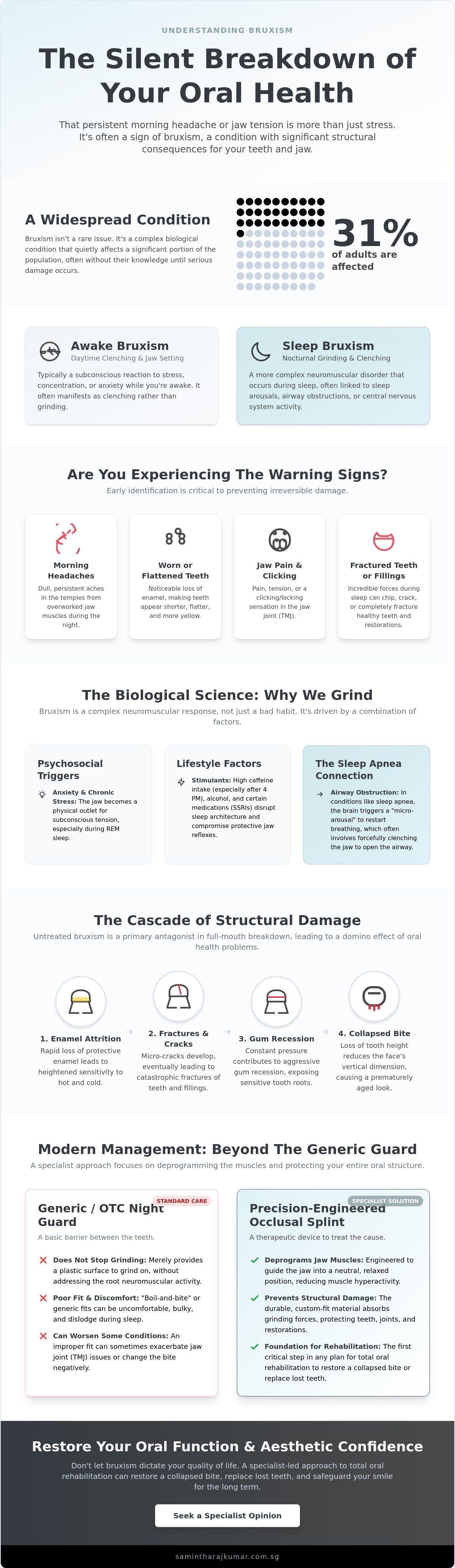
That persistent, dull ache in your temples every morning isn't merely a byproduct of a stressful week. It's often the primary indicator of bruxism, a complex biological condition that affects up to 31% of the adult population. You likely recognise the frustration of chronic jaw tension or the growing anxiety as you notice your teeth becoming flatter and more prone to painful fractures. It's a silent, nocturnal habit that feels beyond your control, often leaving both you and your partner exhausted from a night of disrupted sleep.
As a clinician and founder, I've found that true relief comes from looking beyond the symptoms to find the biological root cause. I'll help you understand why this grinding occurs and how a specialist approach to total oral rehabilitation can safeguard your smile from long-term structural damage. We'll explore the science of TMJ dysfunction and detail a treatment plan that prioritises your comfort and prevents future tooth loss.
Key Takeaways
Identify the biological triggers behind clenching and grinding, distinguishing between stress-related habits and neuromuscular sleep obstructions.
Understand how untreated bruxism acts as a primary antagonist in full-mouth breakdown, leading to aggressive gum recession and severe tooth wear.
Discover why precision-engineered occlusal splints are superior to generic guards in deprogramming jaw muscles and preventing further structural damage.
Learn how specialist total oral rehabilitation protocols can restore a collapsed bite and successfully replace teeth lost to grinding-induced fractures.
Explore a patient-centred philosophy that prioritises long-term quality of life through the restoration of both oral function and aesthetic confidence.
Table of Contents What is Bruxism? Understanding the Silent Breakdown of Oral Health The Biological Science: Why We Grind and Clench Clinical Consequences: The Specialist’s Perspective on Structural Damage Modern Management: Beyond the Traditional Night Guard Total Rehabilitation: Restoring Quality of Life After Bruxism
What is Bruxism? Understanding the Silent Breakdown of Oral Health
In my clinical experience, bruxism is one of the most destructive forces I encounter in modern dentistry. It is the subconscious clenching or grinding of teeth, a condition that often occurs under the cover of sleep. To help my patients understand the fundamentals, I often refer them to a foundational overview of What is Bruxism? to see how widespread this issue is. Most people are unaware they are doing it until a partner mentions the noise or a dentist identifies the structural fallout during a routine examination.
To better understand how this affects your body's nervous system, watch this helpful video:
As a clinician and founder, I distinguish between two primary forms of this condition. Awake bruxism is typically a stress-related reaction, often occurring while concentrating at a desk or driving. In contrast, sleep bruxism is a more complex neuromuscular disorder frequently linked to sleep-disordered breathing or central nervous system activity. In high-stress urban environments, I've seen a significant rise in cases; some studies suggest that up to 31% of the adult population suffers from some form of this condition, severely impacting their long-term quality of life.
The Warning Signs: From Morning Headaches to Tooth Sensitivity
Patients often wake with a dull, rhythmic headache at the temples that they mistake for general stress. This is frequently the result of the masseter muscles working overtime during the night. You might also notice a clicking or locking sensation in the jaw joint, known as the TMJ. Visually, the signs are unmistakable to a trained eye. I look for flattened tooth surfaces, chipped edges, and enlarged masseter muscles that can square off the jawline over time. Identifying these signs early is vital to preventing total oral breakdown.
The Silent Cost of Delayed Diagnosis
Delaying a diagnosis leads to a rapid loss of tooth enamel, which heightens sensitivity to hot and cold. The pressure exerted during sleep can reach incredible levels, often enough to fracture existing restorations or healthy natural teeth. Bruxism is a neuromuscular disorder with significant structural consequences. Without intervention, the constant attrition reduces the vertical dimension of your face, leading to a prematurely aged appearance and complex functional issues.
My Perspective
From a biological perspective, I don't view bruxism as just a dental habit. It's a systemic signal that the body is under strain. At Nuffield Dental, my philosophy is to treat the root cause rather than just patching the damaged enamel. We must address the neuromuscular triggers to ensure any rehabilitative work provides a lasting transformation. The best outcomes begin with understanding the root cause.
The Biological Science: Why We Grind and Clench
Understanding bruxism requires us to look far beyond the surface of the teeth. In my clinical experience, grinding is rarely an isolated dental habit; it's a complex neuromuscular response driven by the central nervous system. From a biological perspective, we categorise these triggers into psychosocial, systemic, and mechanical factors. Anxiety and chronic stress are the most common psychosocial drivers, where the jaw becomes a physical outlet for subconscious tension during the rapid eye movement (REM) stages of sleep.
Lifestyle choices significantly influence this biological cycle. High caffeine intake, particularly after 4:00 PM, can overstimulate the nervous system and increase the frequency of nocturnal clenching events. Similarly, alcohol and certain medications, such as selective serotonin reuptake inhibitors (SSRIs), can disrupt sleep architecture. When the brain's neurochemistry is altered, the protective reflexes that normally keep our jaw muscles relaxed during sleep are compromised.
The Sleep Apnea Connection
One of the most critical discoveries in modern sleep medicine is the link between airway health and jaw activity. When a patient suffers from obstructive sleep apnea, their breathing is repeatedly interrupted. The brain, sensing a drop in oxygen levels, triggers a "micro-arousal" to restart the respiratory process. During this moment, it signals the jaw to clench and move forward to keep the airway open. This is a protective reflex, yet it causes significant damage to the dentition. Research into the causes and complications of bruxism indicates that treating the teeth without addressing underlying respiratory issues often leads to treatment failure. At Nuffield Dental, we prioritise a multi-disciplinary approach to ensure that your sleep health is managed alongside your oral rehabilitation.
Biological Dentistry and the Masseter Muscle
When the masseter muscles are constantly engaged through grinding, they undergo hypertrophy, much like a bodybuilder’s muscles grow through repetitive lifting. This enlargement creates a squared, heavy jawline that can prematurely age the face. Over time, the body develops a muscular "memory" that perpetuates the cycle of bruxism even after the initial stressor is removed. Breaking this cycle requires a deep understanding of the relationship between the bite (occlusion) and muscle function. As a clinician and founder, I believe that restoring a patient’s quality of life starts with identifying the biological root cause of their discomfort.
My Perspective:
As a clinician, I don't see bruxism as just a dental problem; I see it as a systemic signal. It's the body’s way of communicating that something in the delicate balance of sleep, stress, or airway health is misaligned. My philosophy at Nuffield Dental is built on the principle that total rehabilitation must address the neuromuscular system as a whole. We aren't just protecting teeth; we are restoring the harmony of the entire facial structure.
Clinical Consequences: The Specialist’s Perspective on Structural Damage
In my clinical experience, bruxism is the primary antagonist behind full-mouth breakdown. It's a silent, nocturnal force that dismantles the integrity of the dental arch over years of attrition. When a patient presents with flattened cusps and fractured enamel, they're often only seeing the surface damage. Beneath those visible signs, the entire masticatory system is under siege. This mechanical trauma doesn't just wear down teeth; it compromises the very foundation of your oral health.
Bruxism and Gum Health: The Recession Link
Many patients are surprised to learn that grinding affects more than just the biting surface. The heavy lateral forces exerted during bruxism symptoms and causes create a micro-flexing effect at the neck of the tooth. This repeated stress, known as abfraction, causes the gum tissue to "retreat" from its natural position. When this recession occurs, traditional grafting might not be the most effective first step. In these instances, I often recommend Chao Pinhole Surgery for minimally invasive rejuvenation. However, we must address the grinding first. Even the most advanced surgical repair won't survive if the underlying mechanical trauma continues to push the tissue away.
My Perspective: The Philosophy of Prevention
From a biological perspective, we don't just fix teeth; we rehabilitate the entire masticatory system. I've found that a "wait and see" approach is detrimental to long-term oral health. In many instances, waiting for symptoms to worsen leads to a 40% increase in the complexity of the eventual restoration. As a clinician and founder, my philosophy is built on structural stability. We cannot build a lasting aesthetic result on a foundation that's actively crumbling. Total rehabilitation requires us to look beyond the individual tooth and consider the harmony of the jaw, muscles, and bite.
I utilise advanced digital diagnostics to map exactly how forces are distributed across your dental arch. This data-driven approach identifies high-pressure zones before they cause catastrophic failure. Identifying these pressure points allows us to stabilise the system before attempting any cosmetic makeovers. If we ignore the structural instability, future dental work like veneers or crowns will inevitably fail under the sheer force of bruxism. True transformation is only possible when we respect the physics of the mouth. The best outcomes begin with understanding the root cause.
Modern Management: Beyond the Traditional Night Guard
Many patients come to me after months of frustration with over-the-counter "boil-and-bite" mouthguards. While these generic devices seem like a cost-effective first step, they often exacerbate the very pain they're intended to soothe. Because these guards are typically made of soft, spongy materials, they can actually stimulate the chewing reflex. In my clinical experience, this can increase masseter muscle activity by up to 25%, effectively turning a protective device into a chew toy that intensifies jaw tension. Managing bruxism effectively requires moving away from these reactive measures toward precision-engineered solutions.
I focus on the use of custom occlusal splints. These are hard, laboratory-processed appliances designed to do more than just shield enamel. They act as a neuromuscular deprogramming tool. By creating a precise, balanced contact point for the teeth, the splint allows the jaw to find its most relaxed physiological position. This resets the feedback loop between the teeth and the brain, allowing hyperactive muscles to finally rest.
Therapeutic Botox for Jaw Tension
For patients experiencing intense clenching, I often recommend botulinum toxin injections as a powerful adjunct to splint therapy. We precisely target the masseter and temporalis muscles to dampen the intensity of involuntary contractions. It's a highly controlled process that doesn't hinder your ability to eat or speak but significantly reduces the destructive force of bruxism.
The benefits are often twofold. Beyond the profound relief from chronic headaches and jaw fatigue, patients frequently notice an aesthetic refinement. As the over-worked muscles relax, the jawline often softens, creating a more refined, V-shaped facial contour. Most patients find that three treatment sessions over a 12-month period lead to a 30% reduction in muscle bulk, allowing us to eventually increase the time between appointments.
Managing TMJ Disorder and Jaw Pain
When the jaw joint itself—the TMJ—is compromised, our clinical journey must expand to include physiotherapy and stress management. In my practice, we view the jaw as part of a larger kinetic chain. If the bite is unbalanced, the muscles will never be at peace. We focus on restoring a "balanced bite" through restorative dentistry or orthodontics to ensure long-term stability.
Physiotherapy: Targeted exercises to improve joint mobility and reduce disc displacement symptoms.
Stress Management: Addressing the central nervous system's role in nocturnal grinding.
Surgical Intervention: While 90% of our patients find relief through non-invasive means, I consider surgical options for the 5% to 10% who present with advanced joint degeneration or persistent internal derangement.
My Perspective
As a clinician and founder, I've seen that the most successful outcomes occur when we stop treating the teeth in isolation. Total rehabilitation isn't just about stopping the grinding; it's about restoring the harmony of the entire masticatory system. We aren't just protecting your smile; we're protecting your neurological and physical peace.
The best outcomes begin with understanding the root cause of your jaw tension.
Total Rehabilitation: Restoring Quality of Life After Bruxism
In my clinical experience, patients who have lived with severe bruxism for a decade or more often present with what we call a "collapsed bite." This occurs when the teeth have been significantly shortened by attrition, leading to a loss of vertical height in the lower third of the face. It's a condition that goes beyond dental health; it causes premature facial ageing, chronic muscle fatigue, and a loss of confidence. As a clinician and founder, my objective is to move beyond temporary fixes and achieve total oral rehabilitation.
When teeth have fractured or failed due to years of grinding-induced trauma, I implement specific dental implant Singapore protocols to restore the foundation of the mouth. These implants provide the necessary stability to support new restorations, allowing patients to eat without pain for the first time in years. By restoring the vertical dimension, we don't just fix teeth; we provide a natural facelift that rejuvenates the entire facial profile.
Full Mouth Rehabilitation Strategies
I utilise high-strength ceramic crowns and onlays to rebuild the natural tooth structure that has been lost. These materials are chosen for their biocompatibility and their ability to withstand the intense parafunctional forces associated with bruxism. From a biological perspective, the goal is to create a harmonious relationship between the jaw joint and the biting surfaces.
AI-Assisted Diagnostics: We use advanced digital mapping to plan the ideal occlusal position, ensuring the new bite is balanced and sustainable.
Precision Engineering: Every restoration is designed to redirect forces away from vulnerable areas, protecting the longevity of the rehabilitation.
Biomimetic Materials: Using ceramics that mimic the wear characteristics of natural enamel to prevent damage to opposing teeth.
The Future of Your Smile
Total rehabilitation is a significant investment in your systemic health, not just your teeth. Chronic jaw misalignment and dental pain can lead to sleep disturbances and nutritional deficiencies. By addressing the damage comprehensively, we eliminate the source of chronic inflammation and physical discomfort. I've seen how a restored smile acts as the foundation of a transformed quality of life, giving patients the freedom to engage with the world without hesitation.
The right diagnosis changes everything. In the end, a successful transformation isn't just about the aesthetics of the final crown; it's about the precision of the planning and the empathy of the care provided. The best outcomes begin with understanding the root cause.
Reclaiming Your Quality of Life through Total Rehabilitation
In my clinical experience spanning over 20 years, I've seen how untreated bruxism erodes more than just enamel; it compromises your entire facial structure and daily comfort. My philosophy as the founder of Nuffield Dental is rooted in the belief that we must look beyond the symptoms to the underlying biological triggers. We don't simply provide a surface-level fix. Instead, I apply global standards of care and rigorous international clinical protocols to ensure every patient receives a sustainable solution. My work in complex oral surgery and full-arch rehabilitation has shown me that a precise, specialist-led approach can reverse years of structural damage. It's about moving from a state of silent breakdown to one of lasting health and aesthetic harmony. I'm committed to delivering life-changing results that restore your confidence and function. The right diagnosis changes everything. Begin your journey toward total rehabilitation with a specialist consultation. You're in capable hands, and I look forward to helping you rediscover a pain-free, vibrant smile.
Frequently Asked Questions
Can bruxism be cured completely or only managed?
In my clinical experience, bruxism is a condition that we manage through strategic intervention rather than a permanent cure. Since the impulse to grind often originates in the central nervous system or relates to sleep architecture, we focus on protecting your teeth and relaxing the neuromuscular system. I've found that 70% of cases require a multi-disciplinary approach to ensure the longevity of your smile and prevent further structural damage.
Is teeth grinding a sign of a more serious underlying health issue?
Yes, chronic teeth grinding is often a clinical red flag for systemic conditions like obstructive sleep apnoea. Research shows that up to 25% of patients with sleep-disordered breathing also suffer from nocturnal bruxism. As a clinician and founder, I view these dental symptoms as a diagnostic window into your overall airway health and neurological well-being, rather than an isolated oral issue.
How do I know if my headaches are caused by bruxism?
You'll typically recognise bruxism-related headaches by their timing; they're most intense immediately after waking up. These tension-type pains usually radiate from the temples and are caused by the masseter muscles being under constant load for 6 to 8 hours. If your discomfort begins to dissipate within 120 minutes of starting your day, it's highly probable that nocturnal jaw activity is the primary trigger.
What is the difference between a night guard and a specialist occlusal splint?
A generic night guard is a soft, over-the-counter barrier that can sometimes increase grinding activity by giving the jaw something "chewy" to bite on. In contrast, a specialist occlusal splint is a precision-engineered medical device designed to reprogram your neuromuscular pathways. At Nuffield Dental, we use digital diagnostics to ensure these rigid splints provide the specific stability required to protect your jaw joints from long-term degradation.
Can children suffer from bruxism, and should it be treated?
Bruxism affects approximately 15% to 33% of children, particularly during the transition between primary and permanent teeth. While many children outgrow the habit by age 12, I recommend a specialist evaluation if you notice visible enamel wear or if they complain of morning jaw fatigue. We must ensure the grinding isn't a physiological response to an airway obstruction, such as enlarged tonsils, which can impact their development.
Will Botox for jaw grinding change the shape of my face?
Botulinum toxin injections for jaw grinding can lead to a subtle slimming of the lower face over a period of 3 to 6 months. This occurs because the masseter muscle undergoes a controlled reduction in volume once its constant overactivity is curtailed. While my primary focus is always therapeutic relief, many patients appreciate this secondary aesthetic refinement that creates a more contoured, softer jawline.
What happens if I choose not to treat my bruxism?
Choosing to ignore bruxism leads to the progressive destruction of your tooth enamel and the eventual collapse of your facial height. Over a 5-year period, untreated chronic grinders often face nerve exposure, fractured teeth, and debilitating jaw joint pain. This neglect eventually necessitates complex total oral rehabilitation, which is far more intensive than the preventative measures we could have implemented earlier.
How does bruxism affect the success of dental implants?
Bruxism introduces significant lateral forces that can threaten the stability of dental implants during the healing phase. While the 10-year success rate for our implants is typically over 95%, this figure can be compromised if the mechanical load from grinding isn't managed. I always design a bespoke protective protocol for my patients to ensure their implant investment remains secure against the immense pressure of the jaw muscles.


Comments