
Ceramic vs Titanium Implants: A Surgeon’s Perspective on Biological Harmony

What if the "gold standard" of dental restoration isn't actually the best fit for your body's unique chemistry? For over fifty years, titanium has dominated the market, yet I've seen an increasing number of patients who are rightfully concerned about metal sensitivities and the subtle grey shadows that can appear at the gum line. When weighing the choice between ceramic vs titanium implants, the decision shouldn't just be about replacing a missing tooth. It's about achieving a state of biological harmony that supports your health for decades to come.
I understand that the prospect of oral surgery often brings a mix of anxiety and hope. You want a permanent solution that feels natural, looks impeccable, and doesn't compromise your systemic health. In my clinical experience, the shift towards metal-free zirconia isn't just a trend; it's a fundamental evolution in how we approach patient-centred care. In this article, I'll share my perspective on the scientific differences between these materials. We'll examine success rates, aesthetic outcomes, and the physiological impact of each, giving you the clarity needed to make an informed decision for your long-term well-being.
Table of Contents
The Evolution of Dental Implant Materials
Dental implants have fundamentally changed the way we approach oral rehabilitation. We no longer simply fill a gap; we restore a person's ability to eat, speak, and smile with absolute confidence. For decades, titanium has been the foundation of this progress. Its legacy began with the discovery that bone could actually fuse with metal, a breakthrough that turned a temporary fix into a lifelong solution. As a clinician and founder, I've watched this field evolve from basic tooth replacement to a sophisticated discipline focused on "biological harmony."
While titanium remains a reliable workhorse, the shift towards ceramic materials like zirconia is gaining significant momentum. This isn't just about aesthetics. It's about a growing understanding of how different materials interact with our bodies over time. From a biological perspective, the mouth is the gateway to your systemic health, and the choice between ceramic vs titanium implants is a strategic decision that impacts your long-term well-being.
What is Osseointegration?
The success of any implant depends on a biological process called osseointegration. This is the remarkable phenomenon where your living bone tissue grows directly onto the implant surface, creating a permanent, structural bond. Without this fusion, an implant cannot withstand the daily pressures of chewing. While titanium was the first material to demonstrate this capability, The Evolution of Dental Implant Materials has shown that zirconia ceramics are equally capable of facilitating this bond.
In my clinical experience, both materials are highly successful, but they interact with the surrounding tissue differently. Titanium creates a robust mechanical connection. Zirconia, being a bio-ceramic, offers a surface that bone cells seem to embrace with minimal irritation. This high level of biocompatibility is why many patients now prefer a metal-free alternative that mimics the natural properties of a tooth root.
Why Material Choice Matters for Total Rehabilitation
When we evaluate a dental implant Singapore success rate, we must look beyond the initial surgery. We have to consider how the material affects the gums and bone years down the line. Material choice is a critical factor in maintaining the "soft tissue seal" around the implant, which acts as a barrier against bacteria. Ceramic materials often show lower plaque accumulation compared to metals, which can lead to healthier gum margins and better long-term stability.
Choosing between ceramic vs titanium implants also involves looking at your medical history. For patients with known metal sensitivities or those who follow a holistic lifestyle, ceramic provides peace of mind. It's about finding a foundation that integrates naturally with your body's unique chemistry, ensuring that your restoration supports your overall health rather than adding to your body's total toxic load. The best outcomes always begin with a deep understanding of these biological nuances.
Titanium Implants: Strength and the Legacy of Clinical Success
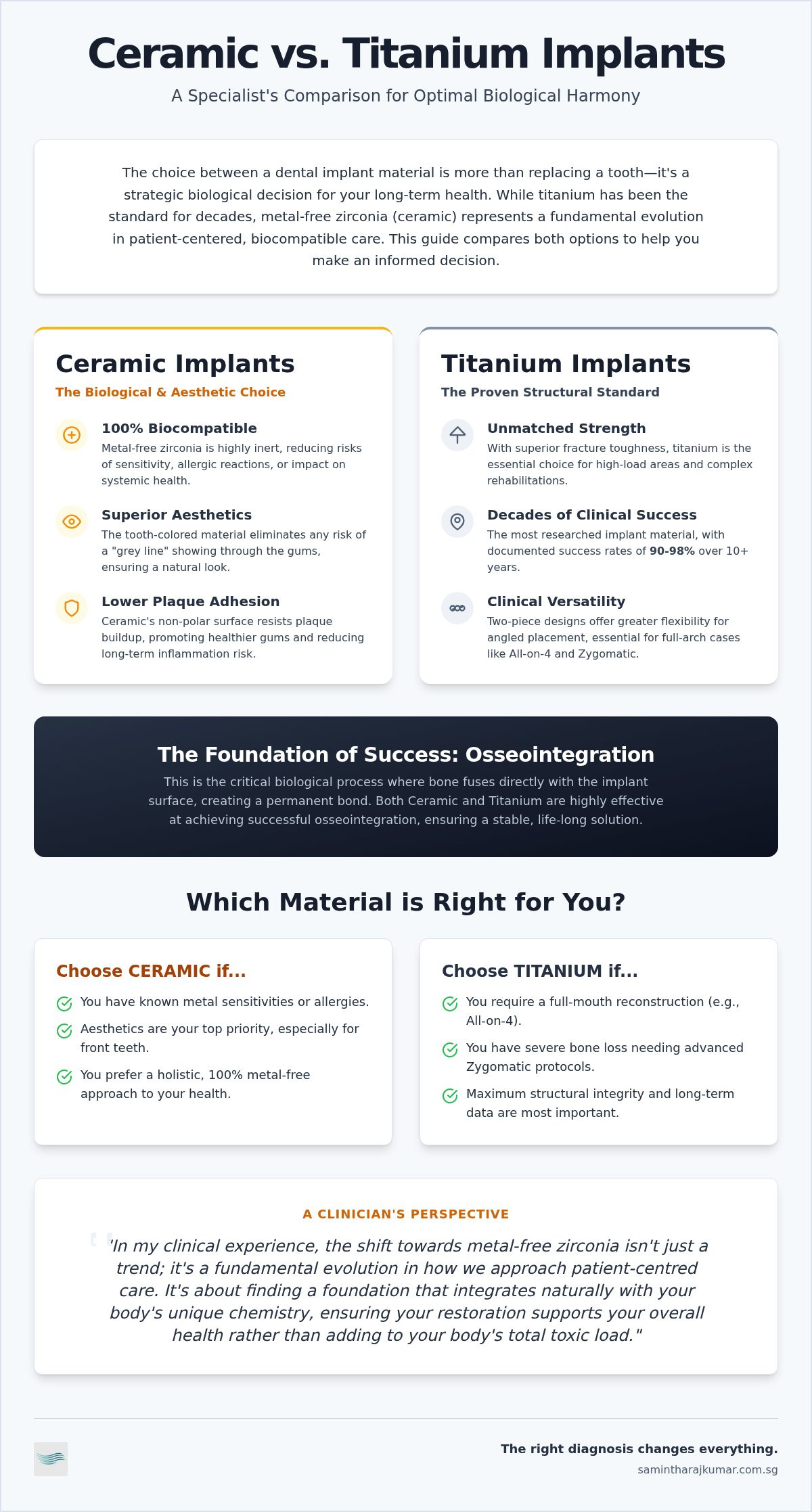
Titanium has earned its place as the bedrock of modern implantology through decades of documented success. While we often discuss ceramic vs titanium implants in terms of aesthetics, the mechanical properties of titanium alloys remain unsurpassed for high-load scenarios. In my clinical experience, titanium's fracture toughness and ductility make it the essential choice for full-arch restorations where structural integrity is paramount. It's a material that has been tested by time, showing success rates between 90% and 98% over a ten-year period.
This material is particularly vital for advanced surgical protocols, such as Zygomatic and Pterygoid systems. These systems anchor implants into denser bone structures to support patients with severe bone loss, requiring a metal foundation that can withstand significant force. The versatility of the two-piece design also allows for greater clinical flexibility, enabling us to adjust the angle of the replacement teeth with precision. While some patients worry about metal ion release or corrosion, modern medical-grade titanium is designed to be highly resistant to the oral environment.
Mechanical Reliability in Full Mouth Reconstruction
For patients undergoing All-on-4 dental implants, titanium provides the necessary structural resilience to handle the intense forces of chewing. It's the primary material I rely on for immediate load "Teeth in a Day" procedures. The ability to load these implants safely depends on their mechanical strength. Titanium's high fatigue resistance ensures that the foundation of your new smile remains stable, even under demanding functional requirements.
Understanding Titanium Sensitivity
Despite its success, I recognise that some patients have valid concerns about metal biocompatibility. True titanium allergies are rare, affecting approximately 0.6% of the population according to a 2022 report in the Journal of Prosthetic Dentistry. However, when they occur, they're significant. Symptoms might include chronic inflammation, redness around the gums, or unexplained implant failure.
As a clinician and founder, I believe in thorough pre-surgical screening. If you have a history of multiple metal sensitivities, I often recommend biocompatibility testing before we proceed. This ensures we select the material that aligns perfectly with your systemic health. Understanding the root cause of your concerns allows us to build a treatment plan based on trust and biological safety. A precise diagnosis ensures the best long-term outcome.
Ceramic Dental Implants: The Biological and Aesthetic Frontier
Ceramic dental implants, specifically those crafted from zirconia, represent a significant leap in material science. While titanium is a metal alloy, zirconia is a high-performance bio-ceramic. It combines the structural integrity required for functional loading with the chemical inertness needed for true biological harmony. In my clinical experience, patients weighing the choice between ceramic vs titanium implants often seek a solution that feels like a natural extension of their own body. Zirconia is non-corrosive and non-conductive, making it the premier choice for those prioritising a metal-free, holistic approach to their healthcare.
From a biological perspective, the primary appeal of ceramic lies in its interaction with living tissue. Unlike metals, which can occasionally trigger low-level inflammatory responses, zirconia is exceptionally biocompatible. This material doesn't just sit in the bone; it integrates with a level of "quietness" that supports the body's natural state. For patients focused on reducing their total systemic toxic load, ceramic offers profound peace of mind without compromising on the success rates they expect from modern medicine.
The Science of Soft Tissue Integration
The health of the gums is just as critical as the stability of the bone. One of the most compelling reasons I recommend ceramic is the way soft tissue responds to it. Research, including a 2023 systematic review, indicates that zirconia implants tend to exhibit lower plaque accumulation compared to titanium. This is a vital distinction. Bacteria find it much harder to adhere to the smooth, non-polar surface of a bio-ceramic.
By maintaining a lower bacterial load at the gum line, we can significantly reduce the risk of peri-implantitis, which is the leading cause of implant failure. Furthermore, zirconia allows for the formation of a "biologic width" that closely mimics the natural attachment of a tooth to the gum. This creates a superior soft-tissue seal, protecting the underlying bone and ensuring the long-term stability of the restoration. When comparing ceramic vs titanium implants, this superior tissue response is often the deciding factor for my patients.
Aesthetic Excellence in the Smile Zone
In the "smile zone," where every detail matters, ceramic provides an unparalleled advantage. Titanium, due to its dark grey hue, can sometimes cast a faint shadow through thin gum tissue, creating a "grey line" that detracts from a natural appearance. Zirconia is tooth-coloured and possesses light-transmitting properties that mimic natural dentin. This makes it a cornerstone of high-end cosmetic dentistry.
I particularly recommend ceramic for patients with thin gum biotypes. Because the implant itself is white, the surrounding gums retain their natural pink, healthy glow. This light-transmitting capability ensures that your restoration looks vibrant and lifelike in any lighting condition. As a clinician and founder, I believe that functional excellence and aesthetic perfection should go hand in hand. Ceramic implants allow us to achieve a level of visual harmony that was previously difficult to reach with traditional metal foundations.
My Perspective: Why I Prioritise Material Biocompatibility
From a biological perspective, I've always viewed the mouth as the primary gateway to the body. It isn't an isolated compartment; it's a dynamic environment that directly influences your systemic health. My philosophy on "Biological Dentistry" is rooted in this connection. When I evaluate the choice between ceramic vs titanium implants, my goal is to reduce the body's total toxic load. We live in an increasingly complex world where our immune systems are constantly challenged. Choosing a material that is chemically inert and highly biocompatible is a strategic decision to support your long-term vitality.
I believe the future of implantology is moving toward metal-free solutions. This shift is driven by both patient demand and our deepening understanding of cellular health. To ensure we make the right choice for every individual, I integrate AI-assisted diagnostics into my practice. These tools allow us to analyse bone density and predicted tissue integration with a level of precision that was previously impossible. It's not just about replacing a tooth; it's about engineering a successful, harmonious biological outcome that respects your body's unique chemistry.
Galvanism and the Oral Environment
One aspect of material choice that is often overlooked is oral galvanism. This is essentially a "battery effect" that can occur when multiple different metals are present in the mouth. Saliva acts as an electrolyte, potentially creating small electrical currents between metal restorations. In my clinical experience, this can lead to a metallic taste, oral discomfort, or even unexplained headaches for sensitive individuals.
Ceramic implants completely eliminate this risk. Because zirconia is a non-conductive bio-ceramic, it doesn't participate in these electrical interactions. I've seen numerous cases where switching to ceramic foundations has led to a noticeable improvement in a patient's overall oral comfort and sense of well-being. It's a subtle but profound difference that highlights why material purity matters so much in a modern clinical setting.
Innovation and Global Standards
As a clinician and founder, I've made it my mission to ensure Nuffield Dental remains at the forefront of global standards. I maintain high-tier affiliations with international medical networks to track the latest advancements in material safety and surgical protocols. We don't just follow trends; we pioneer advanced implant protocols that prioritise the patient's long-term health journey.
My commitment is to use only the highest grade, clinically-proven bio-ceramics available. Every material we select undergoes rigorous vetting to ensure it meets our uncompromising standards for quality and safety. I believe that true innovation should always be anchored in personal care and clinical mastery. The best outcomes begin with understanding the biological impact of your treatment.
Choosing the Right Foundation for Total Oral Rehabilitation
Determining the ideal foundation for your smile is a nuanced process that I approach with meticulous care. When deciding between ceramic vs titanium implants, I evaluate several key clinical markers to ensure the solution aligns with your anatomy and lifestyle. Bone density is a primary consideration; while ceramic is exceptionally strong, titanium's mechanical resilience is often preferred for posterior regions where biting forces are highest. Conversely, if you have a thin gum biotype or high aesthetic demands for your front teeth, ceramic becomes the clear frontrunner to ensure a vibrant, natural result.
Your medical history also dictates the path we take. For patients with autoimmune conditions or multiple metal sensitivities, ceramic offers a biologically "silent" alternative that doesn't provoke the immune system. Beyond the immediate restoration of teeth, our choice of material plays a significant role in preventing facial collapse. By selecting a material that promotes stable, long-term bone maintenance, we preserve the underlying scaffolding of the face, which is essential for maintaining a youthful, structured appearance as you age.
The Clinical Consultation Process
In my clinical experience, a successful outcome is always rooted in a comprehensive oral surgery assessment. We don't guess; we plan with absolute precision. I utilise advanced 3D CBCT imaging to map your jaw structure in three dimensions. This allows me to visualise the exact bone volume available and simulate the placement of different implant types before the surgery even begins.
This personalised treatment plan is particularly vital for complex cases involving full-mouth rehabilitation. We consider the trajectory of every force and the health of every millimetre of soft tissue. As a clinician and founder, I believe that this level of diagnostic rigour is what separates a standard procedure from a life-changing restoration. We take the time to understand your unique biological profile so that the final result feels integrated, comfortable, and permanent.
Conclusion: The Best Outcomes Begin with Understanding
Ultimately, both ceramic and titanium have a respected place in modern implantology. There is no universal "best" material, only the material that is best for you. Whether we utilise the time-tested strength of titanium for a complex Zygomatic case or the premium biocompatibility of zirconia for a metal-free smile makeover, the goal remains the same: total oral harmony.
A well-executed dental restoration has the power to transform not just your smile, but your entire quality of life. It restores the simple joys of eating without discomfort and the confidence of speaking without hesitation. From a biological perspective, the right choice today is an investment in your systemic health for the decades to follow. I've seen first-hand how the marriage of clinical mastery and innovative materials can create a legacy of health. The right diagnosis changes everything.
Securing Your Long-Term Biological Health
As a clinician and founder, I believe that the success of any oral rehabilitation is measured by its harmony with your body over decades. My work as Dr Samintharaj Kumar has always been driven by a specialist focus on ceramic dental implants and their role in biological dentistry. Choosing between ceramic vs titanium implants is a significant decision that requires a deep understanding of your unique biological profile. While titanium continues to provide the essential structural foundation for complex full-arch cases, ceramic offers a premium, metal-free alternative that prioritises soft tissue health and impeccable visual results. I remain committed to ensuring every patient at Nuffield Dental benefits from global standards of care and the most advanced bio-ceramic materials available today.
The best outcomes begin with understanding the root cause. Explore our approach to dental implants and discover how we can help you achieve a state of lasting health and confidence. Your journey toward a restored smile shouldn't be a source of anxiety; instead, it's an opportunity for emotional renewal and functional excellence. I've seen first-hand how the marriage of clinical mastery and innovative materials can create a legacy of health. Your future well-being starts with the right foundation.
Frequently Asked Questions
Are ceramic implants better than titanium?
Material choice isn't a binary "better or worse" but a strategic decision based on your health profile. Titanium remains the global gold standard for structural strength, while ceramic is the premium choice for those prioritising biocompatibility. In my clinical experience, ceramic is often superior for patients with thin gums or metal sensitivities. The right choice between ceramic vs titanium implants depends on a thorough assessment of your bone density and aesthetic goals.
Do ceramic implants break more easily than titanium?
Modern zirconia implants are highly resistant to fracture due to advancements in yttria-stabilised materials. While titanium is a more ductile metal that can slightly flex under pressure, zirconia is a rigid bio-ceramic. Historically, older ceramic designs were more prone to cracking, but current manufacturing processes have made them incredibly durable. For most standard cases, the strength of a ceramic implant is more than sufficient to withstand daily biting forces without risk.
Can I have a ceramic implant if I need an All-on-4 procedure?
Titanium is typically the preferred material for complex full-arch rehabilitations like the All-on-4 protocol. This is because full-mouth restorations require a foundation that can handle immense mechanical loads across multiple bridge spans. While ceramic options are emerging for full-arch cases, the versatility and long-term track record of titanium alloys make them the primary choice for these specific surgical systems. We always prioritise the material that ensures the highest structural integrity for your new smile.
How long do ceramic dental implants last compared to titanium?
Both materials demonstrate exceptional long-term survival rates when placed by an experienced surgeon. Titanium has over fifty years of clinical data, showing success rates between 90% and 98% over a ten-year period. Recent studies on zirconia implants are equally promising, with some 15-year follow-ups reporting survival rates of approximately 98.69%. Provided you maintain excellent oral hygiene and attend regular clinical reviews, both ceramic and titanium are designed to be permanent, lifelong solutions.
Are there any downsides to choosing ceramic implants?
The primary considerations when choosing ceramic are the higher cost and the slightly shorter history of clinical data compared to titanium. Additionally, some ceramic designs are one-piece units, which requires absolute precision during surgical placement as the angle cannot be adjusted later with an abutment. However, as a clinician and founder, I mitigate these factors by using advanced 3D imaging and AI-assisted diagnostics to ensure the most accurate placement and predictable biological outcome for every patient.
Is it possible to be allergic to titanium implants?
True titanium hypersensitivity is rare, affecting roughly 0.6% of the population. While most patients tolerate titanium well, some individuals experience chronic inflammation, redness, or unexplained implant failure due to metal sensitivities. For these patients, ceramic implants provide a vital, metal-free alternative. From a biological perspective, zirconia is completely inert and does not trigger the same immune response, making it the safest option for those with confirmed metal allergies or holistic health concerns.
How much more do ceramic implants cost in Singapore?
Ceramic options are generally more expensive than traditional titanium due to the complex manufacturing processes required to create high-strength zirconia. Industry data suggests a cost difference of approximately 5% to 20% between the two materials. This premium reflects the aesthetic and biocompatibility benefits that ceramic provides. While I don't provide specific pricing here, I believe it's important to view the choice of ceramic vs titanium implants as a long-term investment in your systemic health and confidence.
Can I replace my existing titanium implants with ceramic ones?
Replacing a healthy, integrated titanium implant with a ceramic one isn't typically recommended unless there is a clinical reason to do so. Removing an integrated implant is a complex surgical procedure that often involves some bone loss and may require subsequent bone grafting. However, if your existing implant is failing or causing systemic health issues like galvanism, we can discuss a transition to ceramic. The best outcomes always begin with a precise diagnosis of the underlying issue.


Comments