
Healing Process for Immediate Implants: A Surgeon’s Guide to Total Rehabilitation
- Dr Samintharaj Kumar

- Jun 14
- 12 min read
What if the most critical phase of your dental restoration isn't the surgery itself, but the silent biological "handshake" that happens in the weeks following your procedure? I often see patients who are eager for the aesthetic results of "Teeth in a Day" but remain deeply unsettled by the prospect of the recovery journey. You might be worried about the risk of rejection; perhaps you're simply confused about how to manage your diet while your body adapts to its new foundation. It's a significant transition, and your concerns are a reflection of how much you value your long-term health.
In my clinical experience, the healing process for immediate implants is a sophisticated biological dance between mechanical stability and cellular integration. My goal is to demystify this period for you. By exploring the specific stages of osseointegration and the protocols we use to ensure success, I'll provide you with a clear roadmap for returning to normal function. We will look at how modern surgical techniques and careful pain management can transform a complex recovery into a predictable path toward a restored, confident smile.
Key Takeaways
Understand how primary stability provides the mechanical foundation for "Teeth in a Day" and why this initial grip is vital for long-term success.
Learn to navigate the first 72 hours of the healing process for immediate implants, focusing on clot stabilisation and managing early inflammation.
Prepare for the biological "stability dip" between weeks two and eight, a period where bone remodelling requires meticulous attention to soft tissue health.
Master the "Soft Food Rule" to ensure your new smile is protected from excessive mechanical load during the critical osseointegration phase.
Gain insight into how surgical precision and biological dentistry work together to achieve total rehabilitation and a restored quality of life.
Table of Contents
What is the Healing Process for Immediate Implants?
In my clinical experience, patients are often surprised to learn that the healing process for immediate implants begins the moment the titanium or ceramic post engages with the jawbone. This protocol, frequently referred to as "Teeth in a Day," allows us to attach a functional prosthesis shortly after the surgical phase. It's a transformative approach to restorative dentistry, but it relies on a delicate balance between engineering and biology. We aren't just placing a tooth; we're initiating a complex physiological response that requires precise management.
To achieve a predictable outcome, we must distinguish between functional healing and biological healing. Functional healing refers to your ability to smile and speak with your new teeth almost immediately. Biological healing, or osseointegration, is the internal fusion of bone to the Dental implant surface. As a clinician and founder, I follow strict international protocols to ensure these two paths align, providing a foundation that is as durable as it is aesthetic.
To better understand this concept from a patient's perspective, watch this helpful video:
Primary vs. Secondary Stability
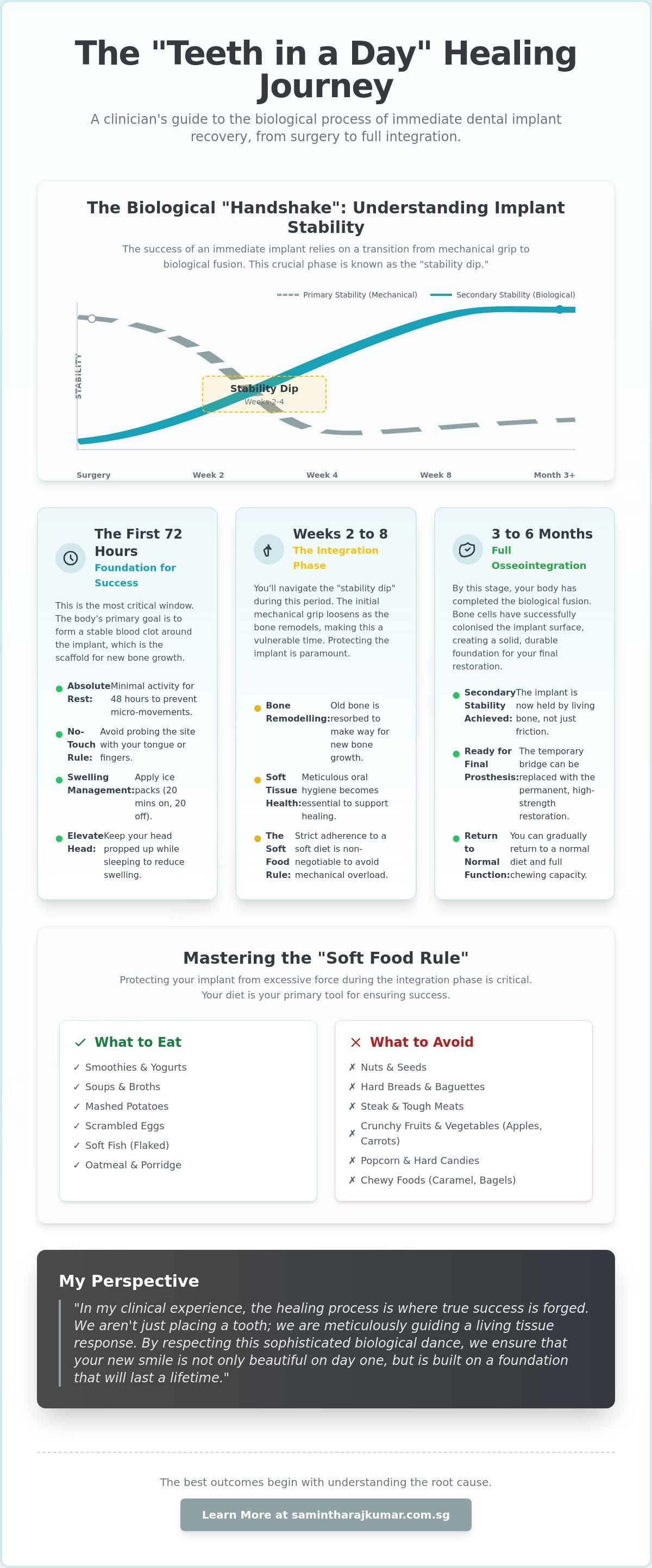
From a biological perspective, the success of an immediate load depends on primary stability. This is the initial mechanical grip achieved through friction between the implant and the bone. However, a phenomenon known as the "stability dip" typically occurs between weeks two and four. During this window, the initial mechanical tightness decreases as the surrounding bone begins to remodel, but the new bone hasn't yet matured enough to provide secondary stability. I use specialised surgical techniques to bridge this critical gap, ensuring the implant remains secure while your body transitions from mechanical friction to biological fusion.
The Biological Integration Timeline
The complete integration of an implant usually requires a window of three to six months. This timeline is non-negotiable because bone cells need time to colonise the implant surface. The first 24 hours are particularly vital. The formation of a stable blood clot around the site sets the stage for cellular migration and eventual bone growth. Understanding how the teeth in a day procedure explained facilitates this process helps patients appreciate the precision required. We're guiding a living tissue response to ensure your restoration lasts a lifetime.
The First 72 Hours: Establishing a Foundation for Success
In my clinical experience, the first 72 hours following surgery represent the most critical window for long-term success. During this time, the body initiates the complex process of osseointegration, where bone cells begin to interact with the implant surface. It's not merely about waiting for the anaesthesia to wear off; it's about actively managing the environment to allow for clot stabilisation. I often describe this phase to my patients as "setting the concrete." Any disturbance now can have lasting consequences for the structural integrity of the final restoration.
I strictly recommend absolute rest for the first 48 hours. This isn't just about comfort. From a biological perspective, we must prevent micro-movements. If the implant is subjected to even tiny shifts before it has bonded, the body may form fibrous tissue instead of bone, leading to potential failure. The healing process for immediate implants relies on this initial stillness. You must also adhere to a "no-touch" rule; don't use your tongue or fingers to check the surgical site or the temporary bridge. Let the biology do its work undisturbed.
Managing Swelling and Discomfort
Inflammation is a natural response to surgery, but it must be controlled to facilitate healing. I advise applying ice packs in a cycle of 20 minutes on and 20 minutes off during the first two days. This helps constrict blood vessels and limit fluid buildup. When you sleep, keep your head elevated with extra pillows to reduce hydrostatic pressure at the surgical site. My treatment philosophy involves a proactive medication schedule. Don't wait for pain to arrive before taking relief. By following a fixed protocol, we keep inflammatory markers low and ensure your comfort remains steady. The best outcomes begin with understanding the root cause of discomfort, and comprehensive clinical planning ensures every detail of your recovery is accounted for.
Initial Oral Hygiene Protocols
Maintaining a clean environment is vital, yet we must be incredibly gentle. Do not rinse vigorously or spit for the first 24 hours. These actions create negative pressure in the mouth that can dislodge the protective blood clot, leading to a "dry socket" or delayed healing. After the first day, you'll begin using a prescribed antiseptic mouthwash, but do so by tilting your head from side to side rather than swishing. You can gently brush the non-surgical areas of your mouth, but keep your toothbrush far away from the new implants. This careful approach protects the delicate tissue as the healing process for immediate implants moves into its next phase.
Weeks 2 to 8: The Soft Tissue and Bone Integration Phase
Once the initial inflammatory phase subsides, we enter what I consider the most nuanced stage of the recovery. Between weeks two and eight, the body is busy dismantling the old bone around the implant to make way for new, mineralised tissue. In my clinical experience, this is the period where the "stability dip" occurs. It's a biological transition where the initial mechanical tightness of the implant decreases before the new bone has fully matured. This is why the healing process for immediate implants requires such careful monitoring during this specific window. We are essentially waiting for the body's natural cellular activity to catch up with the mechanical stability we created during surgery.
From a biological perspective, the health of your soft tissue (the gums) is just as critical as the bone itself. The gingival margin acts as a biological seal, protecting the underlying implant from oral bacteria. This is where the choice of materials becomes paramount. While titanium has long been the standard, I often advocate for ceramic dental implants due to their superior biocompatibility. Ceramic surfaces tend to attract less plaque and foster a healthier attachment of the gum tissue, which is a significant advantage in maintaining long-term health and preventing complications.
The Role of Biocompatible Materials
Choosing metal-free options isn't just about aesthetics; it's about the biological response. Ceramic implants interact seamlessly with the gingival margin, creating a tight seal that mimics the natural bond of a tooth. This material choice significantly reduces the risk of peri-implantitis, an inflammatory condition that can threaten the stability of the restoration. In complex oral surgery, the goal is always to minimise biological stress. Ceramic materials provide a clear advantage in achieving this, as they are chemically inert and highly resistant to corrosion within the oral environment.
What to Expect at Your First Review
During your first post-operative review, usually around the two-week mark, I focus on the integrity of the soft tissue closure. We will remove any remaining sutures and assess how well the gums are adapting to the immediate load prosthesis. This is also a time to verify stability and ensure no micro-shifts have occurred. If necessary, I may slightly adjust the bite of the temporary bridge to ensure the forces are distributed evenly across the arch. Understanding the dental implant surgery process helps patients appreciate that these adjustments are a normal, proactive part of ensuring the healing process for immediate implants remains on track. I also look for "silent" warning signs, such as subtle changes in tissue colour or texture, that might escape an untrained eye but are vital for early intervention.
Adapting to Your New Smile: Diet and Function
While the aesthetic transformation of "Teeth in a Day" is instantaneous, the mechanical reality of your jawbone requires a more patient approach. In my clinical experience, the most common threat to the healing process for immediate implants isn't infection, but excessive force. During the first few months, your implants are in a state of flux as they transition from mechanical to biological stability. This is why I insist on the "Soft Food Rule": if you can’t easily cut your meal with a plastic fork, it shouldn't be on your plate. By following this principle, you protect the delicate interface where bone meets titanium or ceramic, ensuring that micro-movements don't jeopardise the long-term success of your restoration.
I often tell my patients that successful rehabilitation is a partnership between the surgeon’s precision and the patient’s discipline. Adapting to speaking and chewing with a new prosthesis is a gradual process that involves both physical healing and neurological recalibration. Your brain needs time to map the new positions of your teeth and adjust your bite force accordingly. Rushing this adaptation period can lead to unnecessary stress on the healing bone, which is why a structured roadmap is essential for every patient I treat.
The Nutritional Roadmap
Dietary restrictions are not about limiting your lifestyle; they are about safeguarding your investment. I recommend a phased approach to nutrition to support the healing process for immediate implants:
Weeks 1–2: Focus entirely on liquids and ultra-soft foods. Smoothies, blended soups, and yoghurts are ideal. This period is about minimising all mechanical stress.
Weeks 3–12: You may transition to soft solids. Think of foods like well-cooked pasta, flaky fish, and scrambled eggs.
The 3-Month Rule: Crunchy, sticky, or tough foods, such as nuts, crusty bread, or steak, are strictly non-negotiable for at least 90 days. These textures create lateral forces that can disrupt osseointegration.
Speech and Phonetic Adaptation
It's perfectly normal to experience slight changes in your speech initially. Full mouth rehabilitation alters the landscape of your mouth, which can affect phonetic sounds like "S" and "F." From a biological perspective, your tongue and lips are learning to navigate new boundaries. To speed up this adaptation, I suggest simple reading exercises. Spend ten minutes a day reading aloud from a book or newspaper. This practice helps your brain and oral musculature synchronise with the new prosthesis more quickly. Most patients find their speech returns to complete normalcy within a few weeks as the brain completes its phonetic re-mapping. If you are ready to begin your journey toward a functional and aesthetic restoration, consult with our specialist team at Nuffield Dental to discuss your personalised treatment plan.
My Perspective: The Long-Term Vision of Healing
As a clinician and founder, I've always maintained that healing is far more than just the absence of pain. It represents a profound restoration of total health and the reclamation of one's personal identity. When we guide a patient through the healing process for immediate implants, we aren't just managing a surgical site; we're overseeing a biological transformation. This journey requires a meticulous blend of innovation and empathy. In my clinical experience, the synergy between AI-assisted diagnostics and surgical precision is what distinguishes a standard procedure from a life-changing intervention. We use these tools to map out a future where your smile is both resilient and beautiful.
I view every case as an opportunity to build a lasting legacy of health. The biological success we strive for isn't an accident. It's the result of a commitment to global standards and a deep understanding of how the human body responds to modern materials. From a biological perspective, the way we manage the initial phases of recovery dictates the longevity of the final result. We're not just looking for a short-term fix; we're looking for a solution that serves you for decades to come.
A Philosophy of Precision
The right diagnosis at the start changes everything. At Nuffield Dental, I insist on looking at the entire facial structure rather than focusing solely on the gap in a patient's smile. This holistic diagnostic approach allows us to plan for a restoration that supports the natural contours of your face and preserves your bone health. By integrating AI-assisted diagnostics, we can identify potential challenges before they even arise. This level of foresight is essential for maintaining the high standards I've set for my practice. It ensures that every patient benefits from international protocols that are designed to minimise risk and maximise aesthetic outcomes. It's a quietly premium experience that prioritises your long-term well-being over immediate convenience.
Life After Full Integration
The transition from a temporary bridge to your final, permanent restoration is a milestone of emotional renewal. It's the moment where the full functional excellence of our work is realised. However, it's vital to remember that the success rate of teeth in a day is heavily influenced by your ongoing commitment to oral health. The healing process for immediate implants doesn't truly end with the final fitting. It continues through regular, annual checkups and a disciplined hygiene routine. I often tell my patients that I provide the foundation, but they provide the care that keeps it standing. This partnership is what ensures that the transformative power of modern medicine remains a permanent part of your life. The best outcomes begin with understanding the root cause.
A Future Defined by Functional Excellence
Total rehabilitation is a meticulous journey that bridges the gap between sophisticated surgical engineering and your body's natural resilience. We have explored how the healing process for immediate implants relies on a delicate balance of mechanical stability and biological integration. By respecting the nutritional roadmap and the "no-touch" rule during those critical early weeks, you ensure that your restoration remains a lifelong success. As a clinician and founder, I believe that achieving functional excellence requires both advanced AI-assisted diagnostic standards and a deep commitment to patient-centred care.
My work at Nuffield Dental is rooted in global standards, particularly when managing complex Zygomatic and All-on-4 protocols. I'm dedicated to providing a level of surgical precision that honours the transformative impact of a healthy smile. The right diagnosis changes everything. Begin your journey to total rehabilitation with Dr Samintharaj Kumar.
Your future of functional health and renewed confidence starts with a single, informed decision. The best outcomes begin with understanding the root cause.
Frequently Asked Questions
How much pain should I expect during the healing process for immediate implants?
You should expect moderate discomfort rather than severe pain, as we use advanced local anaesthesia and sedation during the procedure. In my clinical experience, most patients find the sensation manageable when they follow a proactive medication schedule during the initial 72 hours. While some swelling and tenderness are natural, persistent or escalating pain is not typical. The healing process for immediate implants is designed to be as comfortable as possible through meticulous surgical planning.
Can I smoke during the recovery phase of my dental implants?
I strongly advise against smoking for at least two weeks before and several months after your surgery. From a biological perspective, nicotine constricts blood vessels and significantly reduces the oxygen supply to the healing tissues. This interference can jeopardise the osseointegration process, increasing the risk of implant failure. To protect your investment and ensure long-term health, it's vital to maintain a smoke-free environment during this critical window.
What happens if the immediate implant does not fuse with the bone?
If an implant fails to fuse, a condition known as non-integration, the fixture must be gently removed to allow the site to heal. We will then investigate the underlying cause, which could range from insufficient bone density to early mechanical stress. Once the tissue has recovered and we've adjusted our clinical approach, it's often possible to successfully place a new implant. The best outcomes begin with understanding the root cause of any integration issues.
How soon can I return to work after a "Teeth in a Day" procedure?
Most patients can return to non-strenuous work within two to three days after the procedure. As a clinician and founder, I recommend scheduling your surgery toward the end of the week to allow for a full weekend of rest. If your role involves heavy lifting or intense physical activity, you should wait at least one week to prevent increased blood pressure from affecting the surgical site and causing discomfort.
Is it normal for my new teeth to feel slightly loose during the first month?
No, your new teeth should never feel loose. While the biological "stability dip" is a normal part of the healing process, the prosthesis itself is anchored to the implants and should remain firm. If you detect any movement, it could indicate that the implants haven't integrated correctly or that the bridge has become detached. You should contact us immediately for a clinical assessment to ensure the stability of your restoration remains intact.
When can I start using an electric toothbrush on my new implants?
You should wait at least six to eight weeks before using an electric toothbrush on the surgical areas. The vibrations from an electric brush can create micro-movements that disrupt the delicate bone-to-implant interface during the early stages of osseointegration. Until then, I recommend using a manual, ultra-soft toothbrush to gently clean the prosthetic surfaces while avoiding the gum line directly adjacent to the new implants.
Can I exercise during the first week of implant recovery?
I recommend avoiding all strenuous exercise for at least the first seven days. Physical exertion raises your heart rate and blood pressure, which can lead to increased swelling, throbbing, or bleeding at the surgical site. A gentle walk is acceptable after the first 48 hours, but you should wait for your first post-operative review before returning to the gym or engaging in any high-impact sports.
How do I know if my implant is healing correctly or if it is failing?
Correct healing is marked by a steady decrease in swelling and discomfort over the first week. Conversely, signs of failure include persistent, sharp pain, visible looseness of the prosthesis, or discharge around the gums. The healing process for immediate implants is usually predictable when protocols are followed, but any sudden change in your comfort level or the stability of your bite warrants an immediate professional review.


Comments