
How to Care for All-on-4 Implants: A Specialist Surgeon’s Guide to Total Rehabilitation (2026)
- Dr Samintharaj Kumar

- Jun 20
- 12 min read
Updated: Jul 2
What if the true secret to a lifelong smile isn't just the surgery itself, but the biological partnership you form with your restoration every day? I know that after undergoing total rehabilitation, you might feel a lingering anxiety about the risk of infection or the fear of damaging your new bridge. It's a common concern for many of my patients who are unsure how to care for all-on-4 implants without compromising the integrity of the prosthetic.
In my clinical experience, protecting your investment requires a transition from general hygiene to specialised clinical maintenance. I've written this guide to provide you with the precise protocols and daily habits I recommend to ensure the enduring success of your restoration. We'll examine the specific tools that prevent peri-implantitis, the biological reasons why certain routines matter, and how a structured programme can offer you total confidence in your long-term oral health. By following these evidence-based steps, you can avoid future surgical complications and enjoy the functional excellence you deserve.
Table of Contents
Navigating the Critical First 72 Hours After All-on-4 Surgery
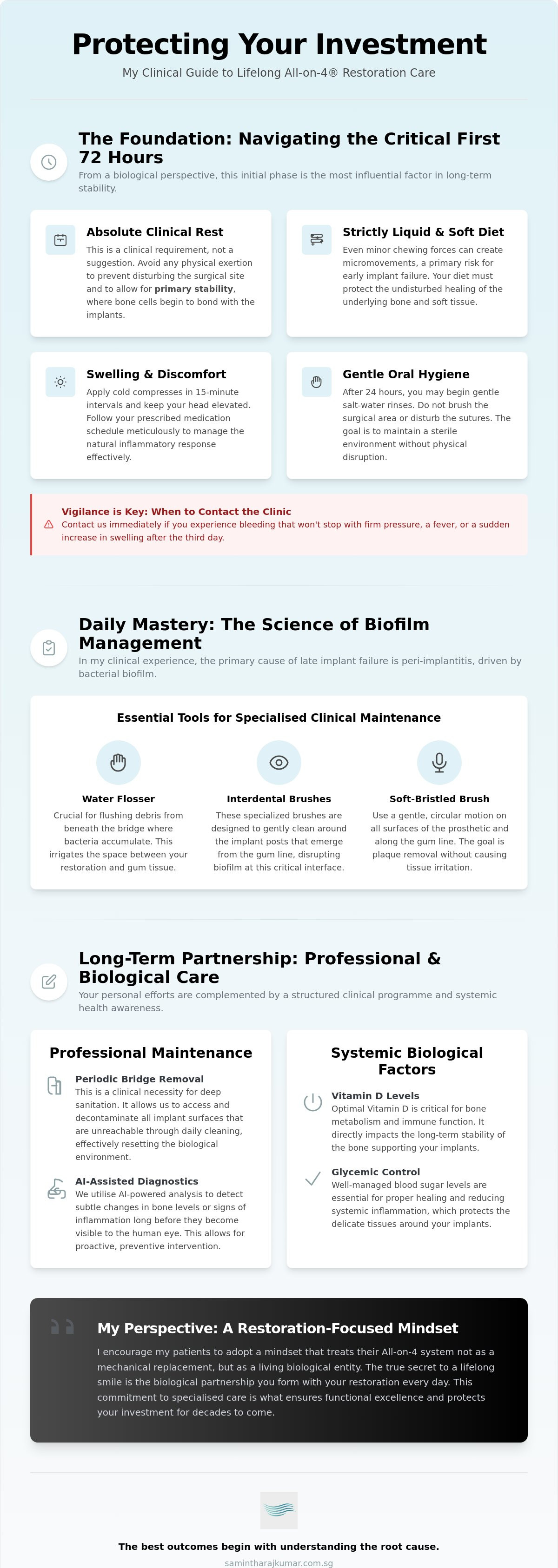
The first 72 hours after your procedure represent a delicate biological window. During this period, your body begins the complex process of forming a stable blood clot and initiating the soft tissue seal around the titanium abutments. In my clinical experience, this initial phase is the most influential factor in long-term stability. While the All-on-4 technique provides immediate functional benefits, the underlying bone is still in the early stages of understanding dental implants and their integration with your unique anatomy.
I often tell my patients that absolute rest is a clinical requirement, not a suggestion. Any excessive physical exertion can raise your blood pressure, which might disturb the surgical site or lead to secondary bleeding. From a biological perspective, we are aiming for a state of primary stability. This is where the implants remain perfectly still to allow bone cells to bridge the gap and begin the permanent bonding process. To better understand this concept, watch this helpful video:
Immediate Post-Operative Protocols
To properly manage the inflammatory response, I recommend applying cold compresses to the face in 15-minute intervals. This isn't just for comfort; it actively constricts blood vessels to limit swelling. Your diet must remain strictly liquid or ultra-soft during this window. Even minor chewing forces can cause micromovements of the implants, which is a primary risk factor for early failure. Learning how to care for all-on-4 implants starts with respecting these physical boundaries to ensure the foundation remains undisturbed.
The Science of Swelling and Discomfort
You should expect swelling to peak approximately 48 hours after surgery. This is a natural part of the healing cascade as your body directs resources to the jaw. To manage this effectively, keep your head elevated even while sleeping. I provide a specific schedule for antibiotics and analgesics. Please follow this meticulously to maintain a consistent therapeutic level of medication in your system. Gentle salt-water rinses can begin after the first 24 hours to maintain a sterile environment without disturbing the delicate sutures.
While some discomfort is expected, you must remain vigilant for specific red flag symptoms. If you experience bleeding that doesn't stop with firm pressure, a sudden increase in swelling after the third day, or a high fever, contact the clinic immediately. These can be early signs of complications that require professional intervention. Mastering how to care for all-on-4 implants involves knowing when your body needs a specialist's eye to ensure your recovery remains on track and your investment is protected.
Mastering Daily Hygiene: The Science of Biofilm Management
In my clinical experience, the most common misconception about dental implants is that they are "set and forget" devices. While it's true that your prosthetic bridge cannot develop cavities, the biological environment supporting it is very much alive and susceptible to infection. Biofilm, a complex community of bacteria, is the primary driver of peri-implantitis. This condition causes inflammation and bone loss around the implants, potentially leading to failure if left unchecked. I believe that total oral rehabilitation is a lifelong commitment to biofilm management rather than just a simple cleaning routine.
Understanding the Teeth in a Day procedure explained from a surgical standpoint helps you appreciate why initial hygiene is so critical. Because we often place the bridge immediately after surgery, the interface between the prosthetic and the healing gums is still maturing. It's about preserving the bone that anchors your new life. If you're still in the planning stages, reviewing what to expect during implant surgery can help you understand the surgical foundations we are protecting through these daily rituals.
Essential Tools for All-on-4 Care
Traditional flossing is often insufficient for All-on-4 systems because the bridge creates a physical barrier at the gum line. I recommend a water flosser as the gold standard for daily care. It uses a targeted stream of water to flush out debris from under the bridge where a manual brush cannot reach. You should also use Superfloss or interproximal brushes to clean around the abutments themselves. Always choose a non-abrasive toothpaste. Standard whitening pastes often contain grit that can scratch the finish of your bridge, creating tiny pockets where bacteria can hide. Learning how to care for all-on-4 implants means selecting tools that respect the materials of your restoration.
Techniques for Cleaning the "Hidden" Interface
The junction where the prosthesis meets your gum tissue is the most vulnerable area. When using an oral irrigator, always use a low-pressure setting. High pressure can inadvertently damage the soft tissue seal we worked so hard to establish during surgery. Angle your brush at 45 degrees toward the gum line to disrupt biofilm effectively. Don't forget to clean your tongue daily. Reducing the total bacterial load in your mouth is a simple but vital step in how to care for all-on-4 implants effectively.
Establishing these rituals creates a predictable environment for healing. From a biological perspective, the health of your implants is a reflection of the health of your entire mouth. I have found that the most successful patients are those who treat their hygiene routine as a non-negotiable part of their daily health. If you have concerns about your current maintenance routine, a specialist consultation can provide the clarity you need to protect your smile for the long term.
Professional Maintenance and AI-Assisted Diagnostics
While your daily rituals are the foundation of success, professional oversight is the ultimate safeguard for your investment. I believe that truly understanding how to care for all-on-4 implants requires a shift in perspective; you aren't just maintaining teeth, you're managing a sophisticated medical system. A standard dental cleaning, while useful for natural teeth, is insufficient for a full-arch restoration. As a clinician and founder, I've developed protocols that include the periodic removal of the prosthetic bridge. This allows my team to perform deep sanitation and a direct, 360-degree inspection of the abutments and soft tissue interfaces that are otherwise inaccessible.
During these specialised reviews, we meticulously verify the torque of the retaining screws to ensure structural integrity. The mechanical forces of mastication are significant. Over years of use, even the most precise components can experience microscopic shifts. By checking these levels, we prevent the risk of screw fatigue or prosthetic instability. It's helpful to consult FDA information on dental implants to understand the regulatory standards that govern these components and why such surgical precision is required for their upkeep.
In my clinical experience, the integration of technology is what separates adequate care from excellence. I use AI-assisted diagnostics to analyse radiographic data with a level of granularity that was previously impossible. These AI tools can identify minute changes in bone density around the implant neck, often detecting potential issues months before they would be visible to the naked eye. This allows us to intervene early, often with non-invasive treatments, rather than reacting to a clinical crisis later. This proactive philosophy is central to how I lead my practice.
The Importance of Annual Clinical Reviews
Adhering to a structured annual checkup for dental implants is non-negotiable for long-term success. We focus on the radiographic assessment of osseointegration, ensuring the bone-to-implant interface remains robust. My team also evaluates the wear patterns on your prosthesis. If I detect uneven wear, it signals a bite misalignment that could place undue stress on the underlying bone. Correcting these minor functional discrepancies is vital for the lifelong health of the system.
Advanced Monitoring for Long-Term Success
For complex cases involving Zygomatic or Pterygoid protocols, we utilise 3D CBCT scans to monitor the health of the implants within the deeper facial structures. This level of detail is essential for the early detection of peri-implant mucositis. By identifying inflammation at the soft tissue level, we can prevent the progression to bone loss. While your bridge is removed, it undergoes cleaning in a professional-grade ultrasonic bath to remove calcified deposits, ensuring your restoration remains as biocompatible as the day it was fitted. The best outcomes always begin with understanding the root cause of any biological change.
Biological and Lifestyle Factors in Implant Longevity
From a biological perspective, I view dental implants as sophisticated medical interfaces rather than mere mechanical components. They don't exist in isolation; they are integrated into a living, breathing ecosystem. Truly understanding how to care for all-on-4 implants requires looking beyond the surface of the prosthetic to the systemic health of the host. In my clinical experience, the most durable restorations are those supported by a body in a state of metabolic balance. Bone maintenance is an active, ongoing process that relies on your internal physiology just as much as it does on my surgical precision.
Specific biomarkers play a significant role in this process. For instance, Vitamin D levels are critical for bone density and the long-term stability of the bone-to-implant interface. Similarly, glycemic control is paramount. Patients with poorly managed blood sugar may experience slower healing or chronic low-grade inflammation around the abutments. Our goal at Nuffield Dental is total rejuvenation, which includes preventing facial collapse with dental implants. This structural preservation is only possible when the underlying bone remains healthy and dense through proper systemic support.
We must also address the mechanical threats to your restoration. Bruxism, or nocturnal teeth grinding, can exert forces that far exceed normal chewing. Over time, these repetitive stresses can lead to screw loosening or even prosthetic fractures. I often prescribe a custom-fitted night guard to shield the bridge from these forces. Protecting your investment means acknowledging these biological and mechanical realities as part of your daily routine.
Dietary Considerations for Structural Integrity
Systemic Health and Implant Stability
Smoking and vaping remain the most significant lifestyle risks to implant success. Nicotine constricts the blood vessels, significantly reducing the oxygen and nutrient flow required for bone maintenance. I also encourage my patients to be mindful of stress management. High stress often manifests as jaw clenching, which places the entire system under duress. Systemic inflammation, whether caused by diet or chronic conditions, can eventually manifest as localised implant complications. The health of your smile is inextricably linked to your overall well-being. If you are ready to take the next step in your health journey, I invite you to book a comprehensive biological assessment to ensure your foundation remains secure.
My Perspective: The Philosophy of Lasting Restoration
In my clinical experience, the most successful patients are those who view their total rehabilitation as a second chance at health. Surgery is merely the first chapter. The true story of your smile is written in the years that follow. As a clinician and founder, I believe the best outcomes begin with understanding the root cause of previous dental failure. If we don't address the biological or behavioural factors that led to tooth loss, we are simply treating symptoms rather than providing a cure. Mastery of how to care for all-on-4 implants is the bridge between a surgical procedure and a lifelong transformation.
I prioritise biological compatibility in every ceramic dental implants case because the body's immune response to materials dictates the legacy of the treatment. When we align the mechanical strength of the bridge with the body's natural physiology, we achieve a state of harmony. This stability does more than just restore function. It has a profound impact on social engagement and personal confidence. I've watched patients transition from hiding their smiles to leading conversations, reflecting the transformative power of a stable bite and a secure foundation.
Why Maintenance is a Partnership
I view the long-term success of your restoration as a shared clinical narrative. My commitment is to provide the latest international protocols and the most advanced diagnostic technology. Your role is one of accountability. This partnership is what ensures that your investment remains protected decades into the future. At Nuffield Dental, our teams in Orchard Road and Wheelock Place are dedicated to supporting this journey. We don't just provide a service; we act as stewards of your oral health, ensuring that every review is an opportunity to refine your care and prevent complications before they arise.
The Impact on Long-Term Quality of Life
From a biological perspective, oral rehabilitation is a fundamental component of anti-ageing aesthetics. By maintaining the structural integrity of the jaw, we support the soft tissues of the face, preserving a youthful profile. We are moving beyond the traditional concept of "fixing teeth" to a more holistic philosophy of "restoring the person." A healthy, functional smile is a legacy that affects your nutrition, your speech, and your self-esteem every single day. When you commit to how to care for all-on-4 implants, you aren't just cleaning a prosthetic; you are honouring the second chance you've been given at total health. The best outcomes begin with understanding the root cause.
Securing the Legacy of Your Restoration
Your journey toward total oral rehabilitation doesn't end when you leave the surgical suite; it's a continuous process of biological stewardship. In my clinical experience, the longevity of your restoration depends on the synergy between your daily biofilm management and my clinical oversight. We have explored why the first 72 hours are critical, the necessity of AI-assisted diagnostics, and why systemic health factors like Vitamin D levels are non-negotiable for bone maintenance.
Mastering how to care for all-on-4 implants is ultimately a commitment to your second chance at health. At Nuffield Dental, I've implemented international standards of clinical excellence to ensure that even the most complex Zygomatic and All-on-4 protocols are supported by meticulous long-term care. This founder-led approach ensures that your restoration remains a source of confidence and functional excellence for decades.
The best outcomes begin with understanding the root cause. Explore our approach to total rehabilitation to ensure your smile remains as robust as the day it was fitted. I look forward to partnering with you in this next chapter of your health journey.
Frequently Asked Questions
Can I use an electric toothbrush on All-on-4 implants?
You can absolutely use an electric toothbrush, provided it features soft bristles and is used on a low-intensity setting. In my clinical experience, high-frequency vibrations are effective at disrupting biofilm without damaging the prosthetic material. You must avoid applying excessive pressure, as this can irritate the delicate gum-to-implant seal. A gentle, circular motion is sufficient to maintain hygiene without causing mechanical stress.
Is it normal for my All-on-4 bridge to feel slightly different after surgery?
It's entirely normal for your new bridge to feel "foreign" or slightly bulky during the initial months. This occurs because your brain is recalibrating its proprioception, which is the sense of where your teeth are in relation to your tongue and lips. As the soft tissues heal and you adapt to the new bite, this sensation will diminish. Most patients report that the restoration feels like a natural part of their body within three to six months.
How often do I need to see a specialist for professional implant cleaning?
I recommend a specialist-led review every six to twelve months depending on your specific biological risk factors. These visits are far more comprehensive than standard dental cleanings; they involve structural inspections and AI-assisted diagnostics. Learning how to care for all-on-4 implants professionally ensures that we can detect microscopic changes in bone density before they threaten the stability of your restoration.
What happens if I don’t clean under my All-on-4 bridge?
Failing to clean under the bridge allows food debris and bacteria to form a pathogenic biofilm. From a biological perspective, this leads to peri-implantitis, a chronic inflammatory condition that causes the bone anchoring your implants to recede. If left untreated, this bone loss can eventually cause the entire system to fail. Consistent hygiene is the only way to prevent this irreversible damage to your jawbone.
Can I use regular mouthwash with my dental implants?
You should avoid mouthwashes containing alcohol, as they can dry out the oral mucosa and potentially irritate the surgical site. I suggest using a non-staining, alcohol-free antimicrobial rinse instead. This helps maintain a sterile environment without compromising the longevity of the acrylic or ceramic components of your bridge. Always choose a pH-balanced formula to support a healthy oral microbiome.
Do All-on-4 implants ever need to be replaced?
While the titanium or ceramic implants themselves are designed to be a lifelong solution, the prosthetic bridge may require replacement after 10 to 15 years due to natural wear. Long-term studies show that with proper maintenance, the cumulative survival rate for the implants remains exceptionally high, approximately 92% after 20 years. The longevity of the system is a direct reflection of your commitment to clinical follow-ups.
What should I do if I feel a "wiggle" or looseness in my prosthetic teeth?
If you detect any movement, contact your surgeon immediately for a clinical assessment. Usually, this "wiggle" indicates that a retaining screw has loosened rather than an implant failure. However, continuing to chew on a loose bridge can cause mechanical stress that damages the underlying abutments or the prosthetic itself. We can typically resolve this quickly by re-torquing the screws to their original specifications.
Are there specific foods I should avoid permanently with All-on-4?
There are no foods you must avoid permanently, but you should exercise caution with extremely hard items like unpopped popcorn kernels or ice. From a mechanical standpoint, these can chip the prosthetic finish or place sudden, excessive force on the bridge. Understanding how to care for all-on-4 implants involves using common sense to protect the aesthetic and structural integrity of your restoration while enjoying a full, varied diet.


Comments