
Is Sedation Dentistry Safe? Risks, Side Effects and Monitoring

For suitable patients, sedation dentistry can be safe when a trained clinician reviews their medical history, chooses an appropriate method and monitors them during treatment. It still carries risks, and side effects such as drowsiness or nausea can occur. Safety depends on the level of sedation, the patient’s health and the procedure.
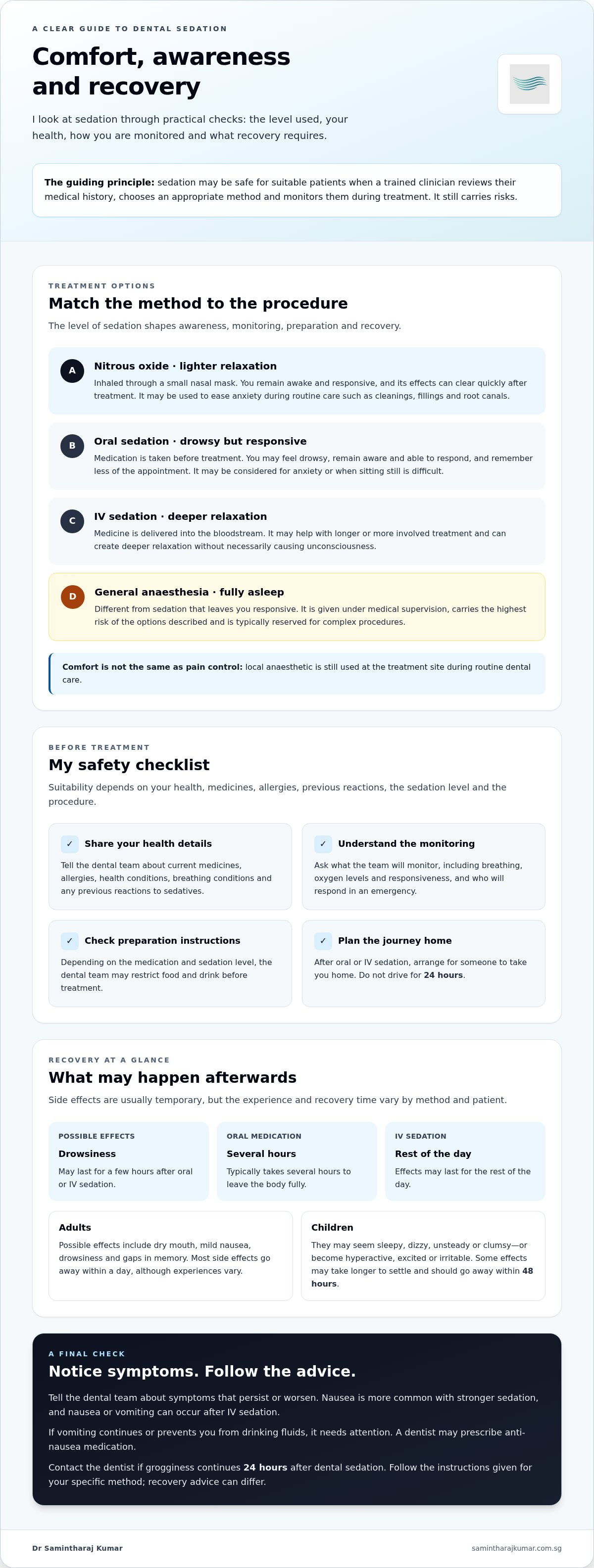
Oral sedation can leave you drowsy but responsive, so it differs from lighter options such as nitrous oxide. Inhaled through a small nasal mask, nitrous oxide can help patients feel calm while they remain awake and responsive. Its effects can also clear quickly after treatment.
This article explains how sedation may be used for routine and complex dental procedures, what side effects can occur, and how monitoring and medical history factor into safety. It also outlines how nitrous oxide differs from other options, so you can discuss treatment with a clearer understanding.
Table of Contents
Sedation for routine and complex dental procedures
Dental sedation ranges from mild relaxation to general anaesthesia, depending on the procedure and patient needs. The method affects awareness, monitoring and what you’ll need to arrange after treatment.
Here’s how sedation may fit different dental procedures and what to expect during recovery.
Sedation for routine dental care
For routine care such as cleanings, fillings and root canals, sedation may help ease anxiety. Nitrous oxide is a milder option, while oral conscious sedation can make a patient drowsy but responsive. Oral medication is taken before the procedure. Sedation supports comfort, but local anaesthetic is still used at the treatment site to control pain.
Sedation for complex procedures
For longer or more involved procedures, oral or IV sedation may help patients relax and allow treatment to proceed. IV sedation delivers medicine into the bloodstream and can create deeper relaxation without necessarily causing unconsciousness. General anaesthesia is different: the patient is fully asleep under medical supervision. Of the options discussed, it carries the highest risk and is typically reserved for complex procedures. The level chosen affects preparation and recovery.
Sedation for dental anxiety
When anxiety has led someone to delay dental care, sedation may make treatment more manageable. It may also be considered when a strong gag reflex, low pain threshold or difficulty sitting still makes dental work challenging. Oral sedation often leaves the patient aware and able to respond, although they may remember less of the appointment. The aim is to ease distress while maintaining an appropriate level of awareness.
What to expect after treatment
After oral or IV sedation, drowsiness may last for a few hours, and patients should not drive for 24 hours. Arrange for someone to take you home. The dental team’s instructions may also restrict food and drink before treatment, depending on the medication and sedation level.
In the United States, sedation fees vary according to the method, procedure and care setting. Insurance coverage depends on the plan and how the treatment is classified, so review your benefits for the specific procedure.
Common side effects and how long they last
Dental sedation can cause temporary effects such as nausea, dry mouth and drowsiness. The type of sedation affects how these feel and how long recovery takes.
Common effects after sedation
After a dental appointment, adults may experience dry mouth, mild nausea, drowsiness or gaps in their memory of the procedure. Nausea is more common with stronger sedation, and post-operative nausea or vomiting can occur after IV sedation. Knowing what to watch for can help you manage comfort during recovery.
For example, someone who feels queasy after IV sedation may find eating uncomfortable. A dentist may prescribe anti-nausea medication to help manage nausea or vomiting. Tell the dental team about symptoms after treatment, especially if they interfere with rest or recovery.
How long side effects last
Oral and IV sedation do not wear off at the same rate. Oral sedative medication typically takes several hours to leave the body fully, while the effects of IV sedation may last for the rest of the day. Most sedation side effects go away within a day, although experiences vary by method.
For children, some effects may take longer to settle and should go away within 48 hours. Note when symptoms begin and whether they are improving. Cleveland Clinic advises contacting the dentist if grogginess continues 24 hours after dental sedation.
Managing side effects and risks
Reducing risk starts before the procedure: share your current medicines, allergies, health conditions and any previous reactions to sedatives. This information helps the team assess how you may respond and choose an appropriate medication and dose. Severe side effects are rare and are usually associated with improper dosing, so providing accurate information matters.
During recovery, follow the dental team’s instructions and report persistent or worsening symptoms. For example, nausea after IV sedation needs attention if vomiting continues or prevents you from drinking fluids. The type and level of sedation shape recovery advice, so instructions for one method may not apply to another.
Effects in adults and children
Adults may experience nausea, dry mouth, drowsiness or reduced recall after sedation. Children can show a broader range of short-term changes after receiving sedation medicine. They may seem sleepy, dizzy, unsteady or clumsy; some may instead become hyperactive, excited or irritable.
These different reactions can surprise families, particularly when a child seems more energetic rather than tired. Keep track of changes and their timing, and share those details with the dental team if concerns persist. For complex dental treatment, thoughtful treatment planning helps keep patient comfort and recovery in view.
Dentist safety measures and monitoring
Sedation safety involves assessing the patient, monitoring their response and planning for recovery. The checks depend on the sedation level and procedure.
Is sedation dentistry safe for most patients? It can be safe for suitable patients when a trained clinician assesses them and monitors their response. As with any medication, sedation carries risks.
Is sedation dentistry safe for me? Suitability depends on your health, medicines, allergies and any previous reactions. Before choosing a method, ask what the team will monitor, who will respond in an emergency and what recovery arrangements you’ll need.
Patient screening before sedation
Safety planning begins with a review of your health and medicines. This helps assess suitability and plan care around your needs. Tell the dental team about allergies, current medication, breathing conditions and any previous reactions to sedation or anaesthesia.
For example, a medicine that interacts with a sedative may affect the choice or dose. A complete medical history is more useful than a general assumption about how someone will respond. It provides context for considering the patient and planned procedure together.
Vital sign monitoring
During sedation, the team considers how the patient is responding, not only whether they appear relaxed. Depending on the level used, monitoring may include oxygen saturation, breathing, heart rate, blood pressure and responsiveness.
During IV sedation, heart rate, blood pressure and oxygen levels should be monitored continuously. Because IV medication can slow breathing, the team also considers monitoring breathing and airway patency. With conscious sedation, the patient may remain responsive, and observing that responsiveness helps guide care during treatment.
Recovery monitoring
Recovery is part of the sedation process, not an afterthought once treatment ends. Before discharge, the team assesses responsiveness in keeping with recovery and discharge standards emphasised in the American Dental Association’s sedation and anaesthesia guidelines.
After IV sedation, patients should not drive or operate machinery while recovering. Arrange a lift home and follow the instructions provided for the sedation method. Clear discharge guidance helps patients understand what to expect after leaving the dental setting.
I also consider emergency preparedness essential. The American Dental Association guidelines emphasise patient evaluation, appropriate training, physiological monitoring and preparation for emergencies. In my view, monitoring must match the method, from laughing gas to deeper sedation.
For a child receiving deep sedation or general anaesthesia, the American Dental Association guidelines require at least 2 people trained in advanced life support in the room. A qualified independent observer monitors heart rate, heart rhythm, blood pressure and oxygen saturation through the procedure and until the child wakes.
Monitoring means assessing the patient, observing their response and adapting care when needed. During IV sedation, the provider checks vital signs and adjusts the medication dose as needed. This link between assessment and observation matters during dental treatment and surgery.
Medical history and sedation suitability
Assessing sedation suitability means weighing a person’s health against the planned treatment and the effects of the proposed sedative. The same option may not suit every patient.
Reviewing medical history
A medical history review can identify health factors that may change the sedation recommendation. For example, a condition affecting breathing may make one level of sedation less suitable than another. The question is not simply whether a patient wants to feel relaxed, but whether the proposed approach fits their health and procedure.
Medication matters too: some medicines can interact with sedatives and influence the choice or dose. Considering these factors together, rather than in isolation, helps clarify whether a particular method is appropriate or another plan deserves consideration.
Pre-sedation medical assessment
Before IV sedation, the assessment helps guide the sedative and dosage chosen for the patient. A pre-existing heart condition deserves particular consideration because IV sedation may affect blood pressure or heart rate. This can influence whether IV sedation is suitable and what approach the clinical team recommends.
The key question is how a person’s health affects the balance between the planned sedation and the need for treatment. Their circumstances may point to a different sedation level, or to postponing treatment when appropriate. The assessment brings these considerations into planning from the start.
Allergies and sedation medicine
An allergy or previous reaction to medication can affect whether a particular sedative is appropriate. Allergic reactions to IV sedatives can occur, so this information matters before treatment. Details of an earlier reaction can help distinguish a known concern from a general uncertainty.
Consider this alongside the intended medication and the patient’s overall health. A reaction to one medicine does not, by itself, show how someone will respond to every sedation option. The aim is to make a considered choice based on the specific history and proposed treatment, rather than assume all sedatives have the same implications.
Pregnancy and breastfeeding also affect sedation planning. Some sedatives may affect fetal development, so postponing a dental procedure involving sedation until after pregnancy may be recommended. Sedation is not recommended during pregnancy or breastfeeding unless it is medically necessary.
These factors can affect recommendations in different ways. A breathing condition may influence the sedation level; a heart condition may affect consideration of IV sedation; and pregnancy may make postponement more appropriate. The decision depends on how each factor relates to the proposed medicine and treatment.
A sound sedation decision considers the whole clinical picture: health, medication effects and the purpose of treatment. A carefully matched plan supports an informed discussion about comfort and suitability, without assuming one method is right for every patient.
Nitrous oxide sedation
Nitrous oxide is a milder sedation option than oral or IV sedation and general anaesthesia. It can help patients feel calm while remaining awake and responsive, making it a distinct option for dental care.
Nitrous oxide, often called laughing gas, is inhaled through a small nasal mask. It usually begins to help patients feel relaxed within three to five minutes. Patients remain awake and able to respond during treatment, which may suit someone with dental anxiety who wants to stay conscious.
Its effects also tend to clear quickly. Nitrous oxide can be flushed from the body within a few minutes after the procedure, while recovery usually takes 15 to 30 minutes. That shorter recovery distinguishes it from oral sedation, which can take several hours to leave the body fully.
How do nitrous oxide, oral sedation and IV sedation compare for safety? Each can be used safely when a trained clinician chooses an appropriate method and monitors the patient, but they differ in depth and recovery. Nitrous oxide is milder; oral sedation can cause drowsiness while the patient remains responsive; and IV sedation can produce deeper relaxation and requires close monitoring.
The choice depends on the procedure and the patient’s health, including medical conditions, current medicines and previous reactions. For a routine filling or cleaning, nitrous oxide may ease anxiety while allowing the patient to remain awake. A longer or more involved procedure may call for a different approach.
During IV sedation, the team continuously monitors heart rate, blood pressure and oxygen levels. IV medication can slow breathing, so breathing and airway patency also need close attention. This differs from the milder effects of nitrous oxide, but does not mean one method suits everyone.
Severe complications are uncommon with properly selected and monitored sedation, but no method is risk-free. The useful comparison is not simply “light” versus “strong”. It is how the sedation level, procedure, health history and monitoring plan fit together. Precision matters.
If you’re considering dental care and want to understand how treatment planning relates to your needs, discuss your dental treatment options.
Dr Samintharaj Kumar: Ceramic Dental Implants
Dr Samintharaj Kumar offers Ceramic Dental Implants for patients considering tooth replacement and restoration. Sedation suitability is one part of treatment planning; the wider decision also considers the condition of the teeth, jaw and overall oral health.
In my clinical experience, clear planning helps patients understand the procedure, available options and questions to raise about comfort. Depending on the clinical need, treatment may involve Dental Implants, All on 4/ Teeth in A Day or Zygomatic Dental Implants. The right approach begins with understanding the individual case, not choosing a procedure in isolation.
If you’re considering implant treatment and want to discuss your needs, contact Dr Samintharaj Kumar or visit samintharajkumar.com.sg.
Make your next dental decision with clarity
“Is sedation dentistry safe?” is best answered through a conversation about your health, concerns and treatment priorities. I see sedation as one part of a wider care decision, not a separate choice made without context. The next step is to discuss what matters to you, including comfort, awareness during treatment and recovery arrangements, so these considerations can inform a thoughtful plan.
Whether sedation is suitable for you depends on your circumstances and the procedure being considered. Bringing your questions and medical history to the discussion can help you understand the options and make a more informed decision. You don’t need to have every answer before starting the conversation.
If you’d like to discuss your dental care with me, you’re welcome to contact Dr Samintharaj Kumar. A clear conversation is a constructive first step towards care that feels considered and aligned with your needs.
Frequently Asked Questions
Is Oral Sedation Safe?
Oral sedation is generally safe for suitable patients when a clinician assesses their health and plans the medication appropriately. The tablet can make you drowsy while you remain conscious and responsive. Before treatment, discuss your medicines, allergies and any previous reactions to sedatives or anaesthesia. These details help the dental team consider whether oral sedation suits your circumstances and planned procedure.
Can I request sedation for cleanings?
Yes, sedation may be considered for a routine cleaning if dental anxiety makes care difficult. For example, someone who has postponed preventive visits because of fear can discuss ways to feel more comfortable. The appropriate method depends on the person’s health and needs, as well as the treatment. Mention what causes your anxiety, such as particular sounds or difficulty sitting through an appointment.
Do dentists ever use general anesthesia?
Yes. General anaesthesia is used for some complex dental procedures, with the patient fully asleep under medical supervision. It carries the highest risk among the options discussed here, so it is typically reserved for complex treatment rather than routine care. Recovery arrangements matter too: patients need someone to take them home and watch them for the recommended recovery period.
How soon can I return to normal after sedation?
Recovery depends on the method used. After nitrous oxide, recovery usually takes 15 to 30 minutes, and the gas can leave the body within a few minutes after treatment. Oral and IV sedation may cause drowsiness for a few hours. After either, don’t drive for 24 hours. Plan a lift home and allow time to rest instead of scheduling demanding activities.
What Types of Dental Sedation Are Available?
The main options are nitrous oxide, oral conscious sedation, IV sedation and general anaesthesia. Nitrous oxide is inhaled and provides a milder level of relaxation. Oral sedation uses a prescribed pill; IV sedation delivers medicine through a vein and can provide deeper relaxation. General anaesthesia means being fully asleep under medical supervision. Local anaesthetic is different: it numbs the treatment area to control pain.
What are the potential benefits and risks of this treatment?
Sedation can make dental care more manageable for people with anxiety, a strong gag reflex, a low pain threshold or difficulty sitting still. It may help someone proceed with treatment they have delayed. Possible temporary effects include nausea, dry mouth, drowsiness or reduced memory of the appointment. The method and your health profile shape the balance of benefits and risks.
What are the risks and side effects of dental sedation?
Possible effects include drowsiness, dry mouth, mild nausea and reduced recall of treatment. Nausea and vomiting are possible after IV sedation and may extend recovery. Severe side effects are rare and are usually associated with improper dosing. Follow the specific recovery instructions you receive, and contact the dentist if grogginess continues 24 hours after sedation.
Who should avoid dental sedation or needs extra precautions?
Some people need careful assessment before sedation, including those with conditions affecting breathing, heart conditions, allergies, previous reactions to sedatives or medicines that may interact. Pregnancy and breastfeeding also require discussion, since some sedatives may affect fetal development. Sedation is not recommended during pregnancy or breastfeeding unless medically necessary. Share your full medical history so the team can assess suitability and consider an appropriate approach.



Comments