
Maintaining a Smile Makeover: A Specialist Surgeon’s Guide to Lasting Functional Aesthetics (2026)
- Dr Samintharaj Kumar

- Jun 21
- 11 min read
Updated: Jul 2
What if the longevity of your new smile had less to do with your toothbrush and more to do with your bite's structural harmony? In my clinical experience, most patients view a smile makeover as a finished destination, but the day we complete your treatment is actually day one of a dynamic biological partnership. I understand the quiet anxiety that follows a significant clinical investment; you've likely spent months dreaming of this transformation, and the fear of structural failure or staining is a valid concern I hear often in my practice. Truly maintaining a smile makeover requires moving beyond basic hygiene to protect the structural integrity of your ceramics and the biological health of the surrounding tissue.
Table of Contents
Beyond Aesthetics: Why Maintaining a Smile Makeover is a Structural Commitment
The Biological Foundation: Understanding the Science of Long-Term Stability
My Perspective: Why I Prioritise Functional Integrity Over Surface Brilliance
The 2026 Maintenance Protocol: Precision Care for Your Restored Smile
The Legacy of a Smile: Investing in Long-Term Quality of Life
Beyond Aesthetics: Why Maintaining a Smile Makeover is a Structural Commitment
In my clinical experience, many patients view their transformation as a static event. They look in the mirror, see the brilliance of their new restorations, and assume the journey is over. However, maintaining a smile makeover is a lifelong structural commitment. I define these procedures as functional rehabilitations rather than surface enhancements. While a Cosmetic Dentistry Overview provides a look at the various procedures available, it often misses the biological reality: your restorations are part of a living, moving system.
The first year post-procedure is particularly critical. This is the period where material adaptation and tissue integration happen. If we're using ceramic crowns or veneers, the surrounding gingiva (gum tissue) must settle around the new margins. If we've integrated a dental implant singapore solution, the bone is still maturing around the restoration. Neglecting this phase can lead to early failure because patients often stop paying attention once the aesthetic "problem" is solved.
To better understand the journey and the timeline involved in these transformations, watch this helpful video:
The Investment Perspective: Protecting Your Clinical Outcome
Undergoing cosmetic dentistry singapore is both a financial and emotional investment. I see it as a partnership between the surgeon and the patient. Clinical maintenance goes far beyond simple cleaning; it involves monitoring how your bite interacts with the new materials. Occlusal forces, or the pressure of your bite, can be immense. If that pressure isn't distributed evenly, even the highest quality ceramic will eventually fail. As a clinician and founder, I focus on this partnership to ensure the longevity of your investment.
The Consequences of Neglect: Why Aesthetics Fade
When bite alignment isn't monitored, micro-fractures can develop in the ceramic. These aren't always visible to the naked eye but can compromise the restoration over time. For patients with implants, the risk of peri-implantitis is real. This is an inflammatory process that affects the soft and hard tissues surrounding the implant. Without professional monitoring, gum recession can also occur. This exposes the margins where the veneer meets the natural tooth, which ruins the aesthetic and creates a trap for harmful bacteria. From a biological perspective, these structural failures are often preventable with the right protocol.
The Biological Foundation: Understanding the Science of Long-Term Stability
From a biological perspective, a smile is only as stable as the environment it inhabits. While we focus on the precision of ceramic restorations, they exist within a delicate oral microbiome. If this bacterial ecosystem becomes imbalanced, the resulting inflammation can compromise the bond of your restorations and the health of the supporting structures. This is a crucial part of maintaining a smile makeover that often goes overlooked in general discussions. Restorations are not inert objects; they are integrated into a living system that responds to every change in your health.
Systemic health plays a silent but significant role in dental longevity. Factors such as uncontrolled diabetes or insufficient vitamin D levels can directly impact how your body maintains bone density and heals around surgical sites. I often tell my patients that their general wellness is the silent architect of their dental success. For those looking for a deeper dive into professional standards of care, I recommend reviewing the American College of Prosthodontists' guide to caring for restored teeth. This level of detail ensures you're equipped with specialist knowledge for your daily routine.
Bone Health and Structural Integrity
In my practice, I view bone as a dynamic tissue that requires constant stimulation to remain healthy. This is why preventing facial collapse with dental implants is not a one-time surgical event but a lifelong process of monitoring. For full-mouth rehabilitations like All-on-4, bone density is the primary determinant of long-term success. I frequently utilise ceramic dental implants for their superior biocompatibility, as they encourage healthier bone integration and reduce the risk of inflammatory responses. To ensure stability, I monitor bone levels through advanced 3D imaging during annual checkups, catching microscopic changes before they become clinical failures.
The Soft Tissue Shield
The gums are more than just a frame for your teeth; they act as a biological seal against bacterial ingress. I look for a healthy band of keratinised gingiva around every restoration. This tough, resilient tissue prevents food debris and bacteria from reaching the underlying bone. If the soft tissue begins to thin or recede, we might employ laser therapy to stimulate healing and maintain a tight seal. Inflammation at the gum line isn't just a surface issue. It triggers a cascade of biological responses that can lead to bone resorption and the eventual loss of the restoration. Ensuring these biological foundations remain strong is the only way to achieve lasting functional aesthetics. The best outcomes begin with understanding the root cause of stability.
My Perspective: Why I Prioritise Functional Integrity Over Surface Brilliance
In my clinical experience, the most striking transformations are those built on a foundation of mechanical stability. I often tell my patients that a beautiful smile that cannot chew is a clinical failure. As a clinician and founder, I've spent decades managing complex full-mouth cases where the goal isn't just to change the aesthetic, but to restore the patient's entire quality of life. This requires a shift from isolated cosmetic fixes to what I call "Total Rehabilitation." Truly maintaining a smile makeover effectively means prioritising this functional integrity over surface brilliance every single day.
When we design a new smile, we're essentially re-engineering your bite. If the restorations aren't in harmony with your jaw's natural movement, the body will eventually reject the work through fractures or bone loss. I use AI-assisted diagnostics to predict these potential failure points long before they manifest clinically. By analysing bone density and muscle activity through digital scans, we can ensure that every veneer or crown is positioned to withstand the test of time. While general resources like Cleveland Clinic's advice on veneer care offer excellent hygiene tips, my focus remains on the structural architecture beneath the surface.
The Visionary Approach to Smile Longevity
The dental industry is undergoing a significant shift toward biological-first protocols. My insight is that we cannot treat the mouth as a collection of porcelain; it's a living ecosystem. I've reflected on this throughout my career, and I've found that the most successful patients are those who understand the "Why" behind the "How." They recognise that structural harmony is the prerequisite for lasting beauty. This principle guides everything we do, ensuring that our work isn't just visually stunning but biologically sound for the next decade and beyond.
Innovation in Monitoring: The 2026 Standard
Precision is the hallmark of modern maintenance. We now use digital bite analysis, specifically T-Scan technology, to ensure even force distribution across every tooth. This eliminates the "heavy spots" that often cause ceramic failure. For our international patients, tele-dentistry allows us to provide continuous support and monitoring regardless of their location. Looking ahead, I see a future where AI provides real-time feedback on oral hygiene efficacy, alerting you to potential issues before they require clinical intervention. The best outcomes begin with understanding the root cause of stability.
The 2026 Maintenance Protocol: Precision Care for Your Restored Smile
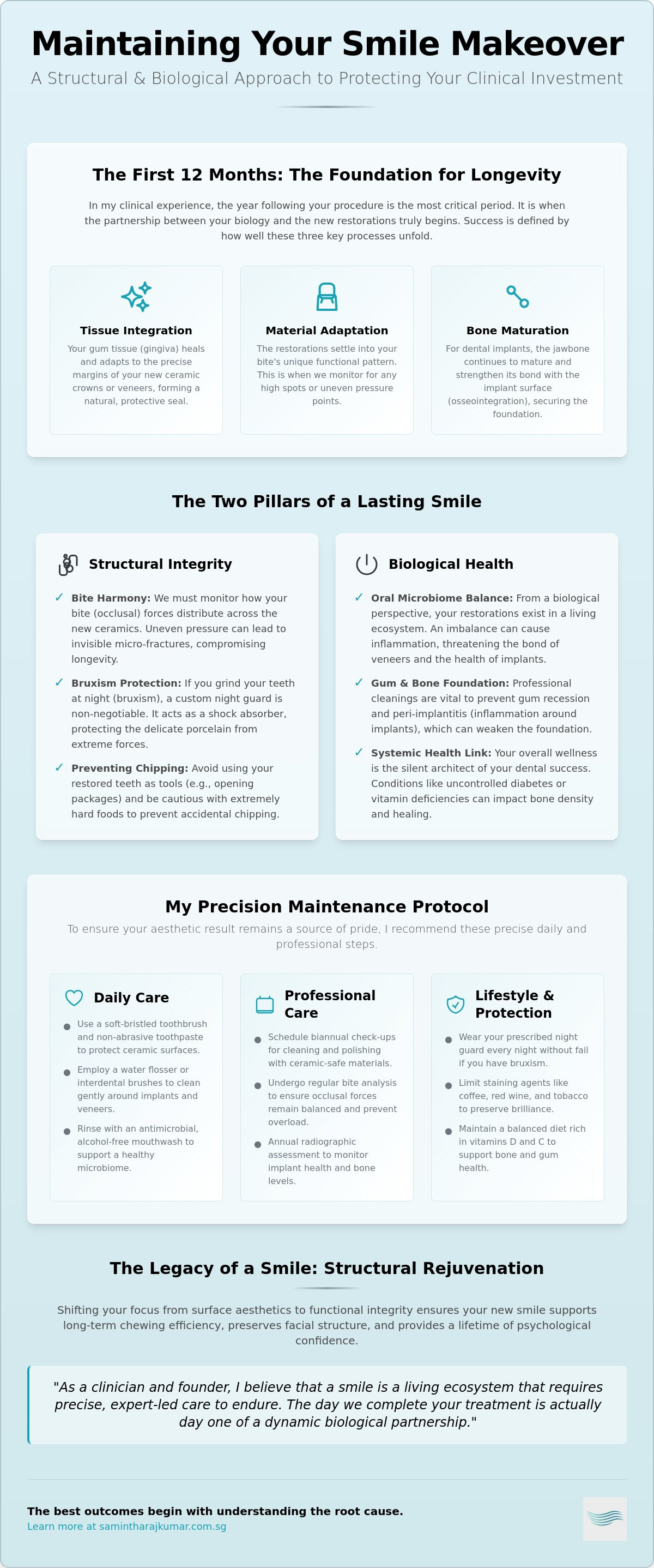
Generic hygiene tips often fail to address the nuances of high-end materials like zirconia or ceramic implants. In my clinical experience, the longevity of your result depends on a protocol that matches the sophistication of the surgery itself. Maintaining a smile makeover requires a shift in how you perceive daily care. It's not just about removing plaque; it's about preserving the structural integrity of the bond and the microscopic glaze of the porcelain. If this glaze is compromised, the restoration becomes susceptible to staining and bacterial adhesion.
Bruxism, or teeth grinding, remains a silent threat to any restoration. Even the strongest ceramics can succumb to the repetitive, high-intensity forces of nocturnal grinding. I consider a custom-fitted night guard an essential component of your maintenance kit. Similarly, minor dietary adjustments are necessary to protect the margins of your veneers and crowns. While your new teeth are exceptionally durable, biting directly into very hard objects like ice or certain seeds can create stress points at the interface between the tooth and the restoration. It's about being mindful of how you use your functional investment.
Daily Hygiene for the Modern Patient
For daily care, I recommend specific non-abrasive toothpastes. Many commercial whitening brands are far too abrasive for ceramic glazes, leading to a loss of lustre over time. Interproximal cleaning is equally vital. From a biological perspective, the space between restorations is where bacteria most easily gather to challenge the gum seal. The science of interproximal care involves disrupting the biofilm before it can calcify. For patients with complex restorations like All-on-4 or full-arch bridges, I recommend water flossers. These devices use pulsated water to clear debris from sub-gingival areas that traditional floss simply cannot reach effectively.
Professional Clinical Monitoring
Professional hygiene has also evolved significantly. The 2026 standard in my practice is Guided Biofilm Therapy (GBT). This method uses advanced airflow technology to remove biofilm with surgical precision, ensuring we don't damage the ceramic surface or the delicate soft tissue. During a specialist-led maintenance visit, we do more than just clean. We check the torque of implant abutments periodically to ensure they remain mechanically sound. We also perform professional polishing using specialised pastes that restore the porcelain's surface without thinning the material. If you are ready to experience this level of precision, discover our specialist-led maintenance protocols.
The Legacy of a Smile: Investing in Long-Term Quality of Life
In my clinical experience, the true success of a transformation is measured years after the final restoration is placed. I view the process of maintaining a smile makeover as an act of preserving your future self. It's a commitment to "Structural Rejuvenation," where we ensure that the dental foundation continues to support the entire facial architecture. When your dental health is secure, the psychological impact is profound. There's a quiet, enduring confidence that comes from knowing your smile is functionally sound and biologically stable. You aren't just wearing a cosmetic product; you're living with a restored biological system.
The relationship between your teeth and your facial profile is inseparable. As a clinician and founder, I've seen how a collapsed bite can lead to premature aging by reducing the vertical height of the lower face. By maintaining the precise alignment of your restorations, we preserve this facial height. This prevents the "sunken" appearance often associated with dental wear and bone loss. It's about more than just teeth. It's about the longevity of your entire aesthetic profile. From a biological perspective, keeping the bite stable is the most effective way to ensure your facial features remain vibrant and supported as the years pass.
The Relationship Between Dental Health and Facial Harmony
A stable bite does more than facilitate chewing; it supports the complex musculature of the lower face. When the teeth are at their correct physiological height, the muscles of mastication and expression function with optimal tone. This creates a natural synergy between dental restorations and facial aesthetic rejuvenation. If the bite drifts or the ceramic wears down due to neglect, the muscles must overcompensate, often leading to tension and a change in facial contour. Total Rehabilitation is a lifelong commitment to health and beauty that transcends the boundaries of traditional dentistry.
Your Journey with Nuffield Dental
At Nuffield Dental, my vision has always been to build an institution that mirrors global standards of excellence. We adhere to rigorous international protocols to ensure that every patient receives the same tier of specialist care, regardless of the complexity of their case. Our strategic regional expansion across Southeast Asia is designed to provide this continuity of support wherever our patients may travel. I believe that a patient's journey doesn't end when they leave the clinic; it evolves into a long-term partnership focused on health and innovation. The right diagnosis changes everything, but the right maintenance preserves that change. The best outcomes begin with understanding the root cause.
Securing Your Aesthetic Legacy
As a clinician and founder of Nuffield Dental Holdings, I've dedicated my career to the principle that excellence is not a one-time event but a continuous standard. We've explored how the longevity of your transformation rests on a structural and biological commitment. Protecting your investment involves more than just aesthetics; it requires a deep understanding of bite harmony and the preservation of bone and tissue health. Truly maintaining a smile makeover is a dynamic partnership between your daily care and our specialist monitoring.
In my clinical experience as a specialist in Zygomatic and Ceramic Implantology, adhering to international clinical protocols is the only way to ensure predictable, lifelong outcomes. We use advanced diagnostics to catch potential issues before they compromise your results. Your smile is a vital part of your personal legacy, and it deserves a strategy that looks decades into the future rather than just months.
The journey toward lasting functional aesthetics is one we take together, ensuring your confidence remains as enduring as the science behind it.
Frequently Asked Questions
How long does a smile makeover typically last with proper care?
Porcelain restorations such as veneers and crowns typically last between 10 and 20 years. However, dental implants are designed to be a lifelong solution when biological stability is maintained. In my clinical experience, the longevity of your makeover depends entirely on the health of the underlying bone and the precision of your daily hygiene. Regular monitoring ensures that we catch minor shifts in your bite before they cause material fatigue.
Can I still get cavities after a smile makeover?
Yes, you can still develop decay on the natural tooth structure supporting your veneers or crowns. While the ceramic material itself is immune to cavities, the margin where the restoration meets your tooth remains vulnerable to plaque accumulation. Maintaining a smile makeover requires diligent interproximal cleaning to protect these margins. If bacteria penetrate the seal, the underlying tooth can decay, potentially compromising the entire restoration.
What happens if a veneer or crown chips or comes loose?
You should contact your specialist immediately if a restoration chips or feels unstable. Do not attempt to reattach a loose crown or veneer yourself, as this can trap bacteria and damage the underlying tooth. In many cases, a minor chip can be smoothed or repaired, but a loose restoration often indicates a change in your bite or the cement integrity. We will assess the structural cause to prevent recurrence.
Do I need to change my diet after getting ceramic implants?
You don't need to follow a restrictive diet, but you should avoid biting directly into exceptionally hard objects like ice or unpopped popcorn kernels. While ceramic implants and zirconia crowns are incredibly strong, they lack the natural ligament cushion of real teeth. This means they don't absorb shock in the same way. Being mindful of these forces helps prevent micro-fractures in the porcelain and maintains the integrity of the implant-to-bone bond.
Is it necessary to wear a night guard if I don’t think I grind my teeth?
I strongly recommend a custom night guard as a protective insurance policy for your new smile. Many patients grind their teeth unconsciously during sleep, exerting forces that are far higher than during normal chewing. These nocturnal forces can lead to delamination of veneers or fractures in ceramic crowns. Even if you don't show obvious signs of bruxism, a guard provides an essential layer of protection for your clinical investment.
How often should I return for a specialist checkup after full mouth rehabilitation?
Most patients should return for a specialist-led checkup every six months. During these visits, we go beyond basic cleaning to evaluate the Total Rehabilitation ecosystem. We check the torque of implant abutments, assess bite distribution with digital analysis, and monitor bone levels through imaging. This cadence allows us to maintain the functional harmony required for long-term success and ensures your oral microbiome remains balanced.
Can I use an electric toothbrush on my new dental restorations?
You can certainly use an electric toothbrush, and I often recommend them for their superior plaque removal capabilities. However, it's vital to use a soft brush head and avoid applying excessive pressure. Pair your toothbrush with a non-abrasive toothpaste to ensure you don't scratch the microscopic glaze of your ceramic restorations. Preserving this smooth surface is key to preventing staining and keeping your smile looking brilliant.
What are the signs that my smile makeover might need professional attention?
You should seek professional attention if you notice persistent gum redness, localised sensitivity, or a change in how your teeth meet when you bite. A clicking sound or a feeling of unevenness when chewing often signals that your bite has shifted. These early indicators allow us to make minor adjustments before structural damage occurs. The best outcomes begin with understanding the root cause of any discomfort early on.


Comments