
Managing Dry Mouth with Dental Implants: A Surgeon’s Perspective on Biological Success (2026)
- Dr Samintharaj Kumar

- Jun 27
- 11 min read
What if the greatest threat to your new smile isn't the surgical procedure itself, but the invisible absence of your own saliva? Chronic xerostomia affects an estimated 10% to 30% of adults, and I've seen firsthand how the persistent burning sensations and difficulty speaking can turn a restorative journey into a source of deep anxiety. Managing dry mouth with dental implants requires us to move beyond simple mechanics. From a biological perspective, success depends on creating an environment where your new teeth can flourish despite a lack of natural lubrication.
I understand the fear that peri-implantitis might cut your journey short, but modern clinical protocols offer a clear path forward. In my clinical experience, the right combination of biocompatible material selection and proactive care can mitigate these risks entirely. This guide will detail how we use advanced diagnostics and materials like ceramic implants to ensure your comfort and long-term success. You'll discover a comprehensive management plan designed to restore your confidence, improve your ability to chew, and protect the longevity of your investment through the latest 2026 standards of care.
Table of Contents
The Impact of Xerostomia on Dental Implant Longevity
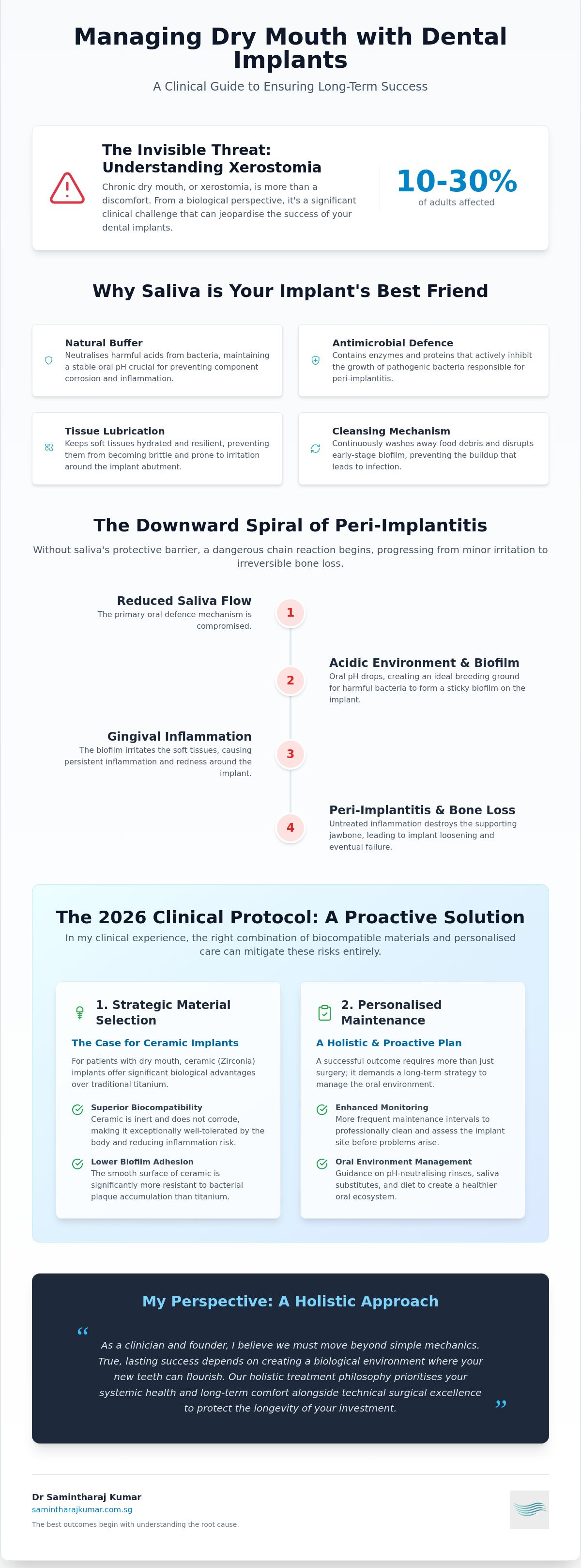
In my clinical experience, many patients view a dry mouth as a minor inconvenience, yet from a biological perspective, it's a significant clinical challenge. The medical term for this condition is Xerostomia. It's more than just a feeling of thirst; it's a fundamental shift in the oral ecosystem that can jeopardise the structural integrity of your restoration. Saliva isn't merely water. It's a complex fluid that acts as a natural buffer, neutralising the acids produced by bacteria and maintaining a stable pH level that protects both natural teeth and titanium components.
When we consider the root causes, they often stem from polypharmacy, where patients are taking multiple medications for blood pressure or allergies, or from systemic conditions like Sjögren’s syndrome. These factors reduce the flow of saliva, which in turn disrupts the early stages of osseointegration. Without the lubricating and protective qualities of saliva, the delicate healing process between the bone and the implant is placed under unnecessary stress.
To better understand this concept, watch this helpful video:
The Biological Importance of Saliva
Saliva serves as a sophisticated delivery system for essential minerals and antimicrobial enzymes that keep the oral microbiome in balance. Without this constant irrigation, the risk of soft tissue inflammation around the abutment increases significantly. The lack of moisture causes the gingiva to become brittle and prone to irritation. From a material science standpoint, the salivary pellicle forms a protective protein layer that behaves differently on titanium versus ceramic surfaces, influencing how well the body accepts the foreign object.
Why Dry Mouth is a Risk Factor for Implants
In the absence of natural irrigation, bacterial adhesion becomes a primary concern. Harmful biofilms accumulate more rapidly when they aren't being washed away by a steady salivary flow. This leads to a dangerous progression from simple gingival irritation to structural bone loss, a condition we call peri-implantitis. Managing dry mouth with dental implants is therefore a priority for anyone seeking a dental implant singapore, as chronic dryness directly affects the long-term comfort and functional excellence of the prosthetic. As a clinician and founder, I prioritise identifying these risks early to ensure the longevity of your smile.
Why Saliva is Critical for Preventing Peri-implantitis
In my clinical experience, the most significant hurdle in managing dry mouth with dental implants is the accelerated rate of biofilm maturation. Saliva is your mouth's primary defence mechanism; it continuously washes away debris and neutralises the acidic byproducts of bacteria. When this flow is compromised, the oral environment becomes chronically acidic, creating a sanctuary for pathogenic bacteria to thrive. This shift in pH levels directly facilitates the development of peri-implantitis, which is essentially the "gum disease" of the implant world. Unlike natural teeth, implants lack a periodontal ligament, meaning that once inflammation begins, it can reach the supporting bone with alarming speed.
From a biological perspective, patients with reduced salivary flow require a much higher level of clinical vigilance. The American Dental Association on Xerostomia notes that the lack of protective enzymes in saliva leaves the soft tissues around an implant vulnerable to persistent irritation. If this inflammation is left untreated, it leads to the irreversible destruction of the jawbone. This is why I often recommend more frequent maintenance intervals for my patients with dry mouth, ensuring we can intercept minor issues before they become structural failures.
Biofilm Accumulation in Low-Saliva Environments
When saliva is sparse, pathogenic bacteria colonise the implant neck more aggressively. We distinguish between peri-implant mucositis, which is a reversible inflammation of the soft tissue, and peri-implantitis, where bone loss has already occurred. In my practice, we focus on disrupting this biofilm through specialised clinical protocols. Since natural irrigation is lacking, we must rely on mechanical disruption and biocompatible antimicrobial rinses to maintain a healthy interface between the tissue and the restoration.
Full Mouth Rehabilitation Challenges
Managing the prosthetic-tissue interface is particularly complex when performing all-on-4 dental implants for patients with xerostomia. In these cases, design for cleansability is paramount. We must ensure a precise fit that eliminates "food traps" and allows the patient to clean under the bridge with ease. A meticulously designed prosthesis reduces the burden on the body's natural defences, which is vital when saliva is not there to help. Understanding these biological nuances is essential for anyone seeking long-term success, as the right diagnosis changes everything.
Strategic Material Selection: The Case for Ceramic Dental Implants
In my clinical experience, the choice of material is the most decisive factor when managing dry mouth with dental implants. For decades, titanium was the undisputed standard in implantology. However, from a biological perspective, we must acknowledge that a metallic surface interacts differently with a chronically dry, acidic oral environment. Ceramic (zirconia) implants have emerged as a superior alternative for patients with xerostomia, primarily because they offer a higher degree of biological neutrality and a significantly lower affinity for bacterial plaque.
When saliva is insufficient, the protective protein layer that usually coats oral surfaces is thin or non-existent. This makes the material of the implant itself the primary line of defence. Even for patients diligently following Mayo Clinic's tips for managing dry mouth, the physical properties of zirconia provide an added layer of security. Zirconia is non-conductive and non-corrosive, meaning it doesn't release metal ions into the surrounding tissue; a process that can be accelerated in the presence of acidic oral fluids.
Ceramic Implants and Plaque Resistance
The science behind zirconia is compelling. Its low surface energy makes it notoriously difficult for pathogenic bacteria to colonise. In a mouth lacking natural irrigation, this "non-stick" quality is invaluable. Clinical studies have shown that zirconia surfaces accumulate significantly less biofilm compared to titanium, which directly reduces the risk of peri-implantitis. Ceramic implants support healthier soft tissue attachment even with limited saliva because the gingiva forms a tighter, more stable hemidesmosomal bond with the zirconia surface. This stable biological seal is our best protection against the ingress of bacteria into the underlying bone.
Material Biocompatibility
As a clinician and founder, I've always prioritised the systemic health of my patients. Choosing ceramic dental implants aligns with our commitment to biological dentistry and global biocompatibility standards. By removing metal from the equation, we eliminate the risk of galvanic responses. These are micro-currents that can occur when different metals are present in the mouth, potentially causing oral discomfort or a metallic taste. Zirconia provides a metal-free foundation that is both aesthetically indistinguishable from natural teeth and functionally superior in compromised oral environments. The result is a restoration that feels as natural as it looks, providing long-term peace of mind for the patient.
Clinical Protocols for Managing Dry Mouth Post-Surgery
Surgery is only the beginning of the journey toward a restored smile. In my clinical experience, managing dry mouth with dental implants requires a shift from reactive treatment to a highly structured, proactive maintenance programme. The long-term biological success of your restoration is determined by the care that follows the procedure. This is especially true in the early stages of recovery, where the absence of saliva can lead to increased discomfort and slower tissue adaptation. We don't just ask patients to drink more water; we implement a multi-layered hydration strategy that includes lipid-based oral sprays and pH-balanced lubricants to mimic the mouth's natural defences.
Immediate Post-Operative Care
The first few weeks are vital for the healing process for immediate implants. During this phase, the surgical site is particularly sensitive to the friction caused by a dry oral environment. I advise my patients to strictly avoid alcohol-based mouthwashes, as these further dehydrate the mucosal tissues and can impede the formation of a healthy biological seal. Instead, we prescribe enzyme-based rinses that support the oral microbiome. Dietary adjustments are also essential. Avoiding highly acidic or spicy foods prevents the burning sensations often associated with xerostomia, allowing the soft tissues to settle around the new prosthesis without unnecessary irritation.
Long-Term Maintenance and Monitoring
For those with chronic dry mouth, the annual checkup for dental implants is not just a formality; it's a non-negotiable component of our clinical protocol. As a clinician and founder, I have integrated AI-assisted diagnostics into our workflow to detect even the most minute changes in bone density or soft tissue health. This technology allows us to see what the naked eye might miss, providing an early warning system for peri-implantitis.
We also tailor the choice between salivary stimulants and lubricants based on the patient's residual gland function. If some salivary function remains, we may use stimulants like xylitol-based products to encourage natural flow. For more severe cases, we focus on high-viscosity lubricants that provide prolonged relief and protection for the implant-tissue interface. By combining these advanced clinical treatments with regular professional cleanings, we ensure that your new teeth remain a life-long asset. The best outcomes begin with understanding the root cause, and our team is dedicated to providing the comprehensive restoration you deserve.
My Perspective: A Holistic Approach to Oral Rehabilitation
In my clinical experience, patients often arrive at our clinics with the misconception that chronic xerostomia is a definitive contraindication for advanced restorative care. I see it differently. Managing dry mouth with dental implants is a challenge of biological precision and meticulous planning, not an insurmountable obstacle. While the lack of saliva certainly complicates the oral environment, modern implantology has reached a level of sophistication where we can navigate these risks with predictable success. My role as a surgeon is to respect the biology of the mouth while leveraging technology to provide a life-changing restoration.
The philosophy of Nuffield Dental has always been to treat the patient, not just the tooth gap. We don't view an implant as a standalone mechanical screw; it's a living interface with your body. From a biological perspective, this is why I prioritise zirconia and metal-free foundations for complex rehabilitations. Zirconia’s inert nature and low bacterial affinity make it the most ethical choice for a compromised oral ecosystem. By choosing materials that align with the body’s natural chemistry, we reduce the systemic load and create a foundation for long-term health.
Founder Insights on Patient Care
As a clinician and founder, I've witnessed the profound transformative power of a successful full-mouth restoration. It's about more than just functional excellence; it’s about emotional renewal. I believe the right diagnosis of the oral environment changes everything. We adhere to rigorous international protocols to ensure our patients receive a tier of care that is globally benchmarked. My commitment to healthcare innovation and ethical scale across Southeast Asia is driven by a desire to bring these visionary standards to every patient we treat.
Long-Term Quality of Life
The transition from managing a chronic condition to enjoying a vibrant lifestyle is the ultimate goal of our work. When we restore a smile, we aren't just replacing teeth; we are preventing facial collapse with dental implants by maintaining the structural integrity of the jawbone. This preservation of facial architecture has a direct impact on self-esteem and how a person interacts with the world. In the future, I expect AI-assisted diagnostics to further refine our ability to predict and prevent complications before they occur, making dry mouth a minor variable in a very successful equation.
The future of implantology is bright, and it's being built on a foundation of biological dentistry and patient-centred innovation. Every complex case we solve contributes to a legacy of better care and more resilient outcomes. The best outcomes begin with understanding the root cause of your oral health challenges.
Securing Your Smile through Biological Mastery
Securing your smile shouldn't be compromised by the complexities of xerostomia. In my clinical experience, the strategic use of zirconia and tailored maintenance can protect your restoration from the risks of a dry oral environment. Managing dry mouth with dental implants is a predictable process when we prioritise the biological seal and material biocompatibility from the very beginning. My work in full mouth rehabilitation has taught me that true success is found in the minute details of the patient's unique oral ecosystem.
As the founder of Nuffield Dental Holdings, I've built an institution that combines global clinical standards with a deeply human approach to care. As a specialist in complex zygomatic and ceramic protocols, I'm committed to ensuring that every restoration is as biologically resilient as it is aesthetic. We are renowned for full mouth rehabilitation because we don't just replace teeth; we restore the fundamental confidence to speak, eat, and live without the constant worry of oral discomfort. This focus on long-term well-being is what defines our legacy in modern implantology.
The right diagnosis changes everything.Consult with Dr Samintharaj Kumar to discuss your biological implant options.
The best outcomes begin with understanding the root cause of your health challenges, and I look forward to helping you achieve a smile that truly lasts.
Frequently Asked Questions
Can I still get dental implants if I have severe dry mouth?
Yes, you can absolutely receive dental implants even if you suffer from severe dry mouth. In my clinical experience, success depends on a proactive management plan rather than the condition itself. We focus on choosing biocompatible materials and implementing a rigorous post-operative routine to compensate for the lack of saliva. By addressing the biological environment first, we ensure that your new teeth have the stable foundation they need to thrive long-term.
Will dry mouth cause my dental implants to fail over time?
Dry mouth is a known risk factor, but it doesn't guarantee failure if managed correctly. Without saliva to buffer acids and wash away bacteria, the risk of inflammation is higher. However, by managing dry mouth with dental implants through regular professional cleanings and the use of specialised oral lubricants, we can mitigate these risks. Our goal is to maintain a healthy interface between the implant and your soft tissues to prevent bone loss.
Are ceramic implants better than titanium for patients with low saliva?
From a biological perspective, ceramic implants are often the superior choice for patients with low saliva. Zirconia is naturally resistant to plaque accumulation, which is crucial when you don't have enough saliva to naturally irrigate your mouth. Bacteria find it much harder to "stick" to the smooth, non-conductive surface of ceramic. This reduces the systemic load on your body and provides a cleaner environment for the surrounding gums to stay healthy.
How often should I see my surgeon if I have implants and xerostomia?
I typically recommend that patients with xerostomia visit us every three to four months for professional monitoring. These frequent intervals allow us to use AI-assisted diagnostics to catch early signs of tissue irritation or biofilm buildup that you might not feel. Regular maintenance is the cornerstone of longevity. By being proactive, we can adjust your management plan and ensure that your restoration remains comfortable and structurally sound for years to come.
What are the best products to manage dry mouth after implant surgery?
The best products are those that mimic the natural protective properties of saliva without causing further irritation. I advise using alcohol-free, enzyme-based mouthwashes and pH-balanced oral gels. Xylitol-based stimulants can also be helpful if you have some residual gland function. For immediate post-operative care, lipid-based oral sprays provide a long-lasting lubricant that protects the surgical site from friction, ensuring your comfort during the critical early stages of the healing process.
Does dry mouth affect the healing process of All-on-4 implants?
Dry mouth can slow the adaptation of soft tissues around All-on-4 implants, but it doesn't prevent the bone from healing. The main challenge is the increased friction between the prosthesis and the gums. To manage this, we design the bridge for maximum cleansability and use specialised lubricants to keep the tissues supple. As a clinician and founder, I ensure that our All-on-4 protocols are specifically adjusted to protect the delicate biological seal during your recovery.
Can medications for other conditions cause my implants to feel uncomfortable?
Yes, many common medications for blood pressure, allergies, or depression can reduce salivary flow, leading to oral discomfort. This dryness can make the tissues around your implants feel tight, sore, or even produce a burning sensation. It's not the implant itself that is the problem, but the change in your oral environment. We work closely with you to identify these triggers and provide solutions that restore comfort while maintaining the health of your restoration.
What is the risk of peri-implantitis in patients with dry mouth?
The risk of peri-implantitis is statistically higher in patients with dry mouth because harmful biofilms mature more rapidly in acidic environments. Managing dry mouth with dental implants involves disrupting these biofilms before they can trigger bone loss. While the risk exists, it's entirely preventable through a combination of strategic material selection, like ceramic implants, and a dedicated clinical maintenance programme. The right diagnosis and a proactive approach remain the keys to preventing long-term complications.


Comments