
Pterygoid Implants vs Zygomatic Implants: A Surgeon’s Perspective on Advanced Maxillary Rehabilitation
- Dr Samintharaj Kumar

- Jul 16
- 12 min read
What if the "impossible" case isn't actually untreatable, but simply requires a more sophisticated architectural approach? I've often met patients who felt defeated after being told their jawbone had suffered too much atrophy for standard care. In my clinical experience, the complex discussion surrounding pterygoid implants vs zygomatic implants isn't just about hardware. It's about engineering a stable foundation in the dense bone of the facial structure to restore what was once thought lost forever.
I understand the confusion and the quiet anxiety that complex surgical terminology can trigger, particularly when it involves procedures near the cheekbones or skull. It's my responsibility to replace that uncertainty with a sense of security. In this guide, I'll share the surgical philosophies and clinical nuances that guide my decision-making for complex full-mouth restorations. You'll learn how these advanced protocols allow us to bypass lengthy bone grafting and provide a fixed set of teeth in a single day. We'll explore the science of remote anchorage and how the right choice can profoundly impact your facial structure, chewing function, and long-term quality of life.
Table of Contents
The Atrophic Maxilla: Why Standard Implants Often Fail the Patient
I often see patients who have been told their bone is insufficient for standard care. This condition, known as maxillary atrophy, occurs when the bone that once supported your teeth begins to dissolve. In my clinical experience, this is the "silent" problem of tooth loss. Without the stimulation of natural tooth roots, the body reabsorbs the minerals, leading to a bone structure that is too thin or porous for traditional dental implants. When we discuss pterygoid implants vs zygomatic implants, we are looking at advanced engineering solutions for this very problem. These aren't just alternatives; they're often the only predictable path for patients who have suffered significant bone loss.
To better understand how we utilize bone outside the traditional dental arch, watch this helpful video:
The Biological Consequence of Missing Teeth
From a biological perspective, bone loss is a progressive decline. In the posterior maxilla, the bone doesn't just thin from the bottom up; the maxillary sinus also expands from the top down. This process, called pneumatisation, often leaves only a few millimetres of viable bone. This loss of structure eventually affects the entire face. There is a direct link between preventing facial collapse with dental implants and maintaining a youthful appearance. Without this structural support, the lower face can appear sunken, which can lead to a premature ageing effect that no topical treatment can fix.
When Sinus Lifts Are Not Enough
Traditionally, surgeons suggested sinus lifts or extensive bone grafting to create volume. However, waiting for bone to heal can take six to nine months, and the success rate isn't always guaranteed. In my practice, I've seen many patients who lack the foundational bone for even a sinus lift to be viable. Repeated grafting failures are exhausting. This is why I advocate for a teeth in a day procedure explained through remote anchorage. By using this Zygomatic Implants Overview as a reference for anatomical stability, we can anchor implants into the dense bone of the zygoma or the pterygoid plate. These areas remain stable even when the jawbone wastes away, providing the immediate security needed for a fixed restoration. As a clinician and founder, I believe in providing solutions that respect the patient's time and biological integrity rather than forcing a traditional approach on a non-traditional case.
The Science of Remote Anchorage: How Zygomatic and Pterygoid Implants Work
Remote anchorage is a concept that fundamentally changes the possibilities for patients with severe bone atrophy. Instead of relying on the alveolar ridge, which is often porous and depleted, we look toward the stable "pillar" bones of the mid-face. These areas, specifically the zygoma and the pterygoid process of the sphenoid bone, are biologically programmed to remain dense throughout a person's life. From a biological perspective, these sites offer high-quality cortical bone that provides immediate primary stability, even when the jawbone itself has failed. When evaluating pterygoid implants vs zygomatic implants, the choice depends on where the most reliable "biostructure" remains for your specific anatomy.
Zygomatic Implants: The Anchor in the Cheekbone
A zygomatic implant is a marvel of dental engineering. These implants are significantly longer than traditional ones, ranging from 30mm to 55mm, and are placed at a precise 45-degree angulation to engage the cheekbone. The zygomatic bone is incredibly dense. It serves as a high-tier anchorage point that can support all on 4 dental implants even when there is zero ridge bone left in the upper jaw. This approach allows me to create a stable foundation for a full bridge without the need for invasive grafting. Understanding the Biomechanical Comparison of Implants is vital here; the way force is distributed across these long-axis fixtures ensures the prosthesis remains secure during chewing.
Pterygoid Implants: Engaging the Sphenoid Bone
Pterygoid implants are positioned at the very posterior limit of the upper jaw, engaging the pterygomaxillary suture and the sphenoid bone. This is a technically demanding area to reach, but the rewards for the patient are significant. By placing an implant so far back, I can often eliminate the need for distal cantilevers. In simpler terms, we don't have to "hang" the back teeth off the front implants; instead, we provide a direct support pillar at the very back of the mouth. This ensures that the bite force is balanced across the entire arch. If you are curious about how these anatomical foundations might support your own recovery, understanding the root cause of bone loss is always the first step toward a predictable outcome.
The engineering behind these procedures is meticulous. As a clinician and founder, I ensure we use 3D digital planning to map the exact trajectory of each implant. This ensures we avoid vital structures while maximising contact with dense bone. This precision is what allows for "immediate loading," where a patient can receive their new teeth on the same day as surgery. It is a sophisticated blend of anatomy and technology designed to restore not just a smile, but the structural integrity of the face.
Pterygoid Implants vs Zygomatic Implants: Navigating the Clinical Choice
The decision between pterygoid implants vs zygomatic implants is rarely a matter of preference. Instead, it's a calculated response to the specific geometry of a patient's skull. In my clinical experience, zygomatic implants serve as the gold standard for cases with total maxillary absence, where bone loss is severe in both the front and back of the jaw. Conversely, I often recommend pterygoid implants when a patient has some usable bone in the anterior region but lacks the posterior support necessary to avoid long, unstable cantilevers on their prosthesis.
Surgical complexity varies between these two protocols. Zygomatic procedures are more extensive, often requiring general anaesthesia and a longer surgical duration due to the trajectory through the mid-face. Pterygoid implants, while technically demanding because of the proximity to the greater palatine artery, are generally less invasive and offer a faster recovery profile. However, I frequently find that a hybrid approach, combining one or two zygomatic implants with pterygoid anchorage, creates the most robust biomechanical foundation for a full-arch restoration. This "tripod" effect ensures the load is distributed evenly across the most stable bones of the face.
Choosing the Right Protocol for Your Anatomy
Every patient presents a unique biological puzzle. When I evaluate a case, I look beyond the surface level of bone volume. I consider bone density, the health of the maxillary sinus, and the patient's overall facial profile. In my practice, we utilise AI-assisted diagnostics and 3D surgical planning to map these structures with sub-millimetre precision. This technology allows me to virtually "test" the stability of pterygoid implants vs zygomatic implants before the surgery even begins. A "one size fits all" approach in complex implantology is a clinical risk I'm never willing to take; the plan must be as unique as the patient's anatomy.
My Perspective: The Philosophy of Engineered Stability
As a clinician and founder, I view these implants as more than just dental fixtures. They are architectural pillars designed to restore the structural integrity of the human face. From a biological perspective, the goal is osseointegration, but from a human perspective, the goal is renewal. I prioritise immediate function because I've seen the psychological toll of "dental invalidism." When a patient leaves my clinic with a fixed set of teeth on the same day, the shift in their social confidence is immediate. Restoring the ability to eat, speak, and smile without fear is the most rewarding aspect of my work. The best outcomes begin with understanding the root cause and engineering a solution that lasts a lifetime.
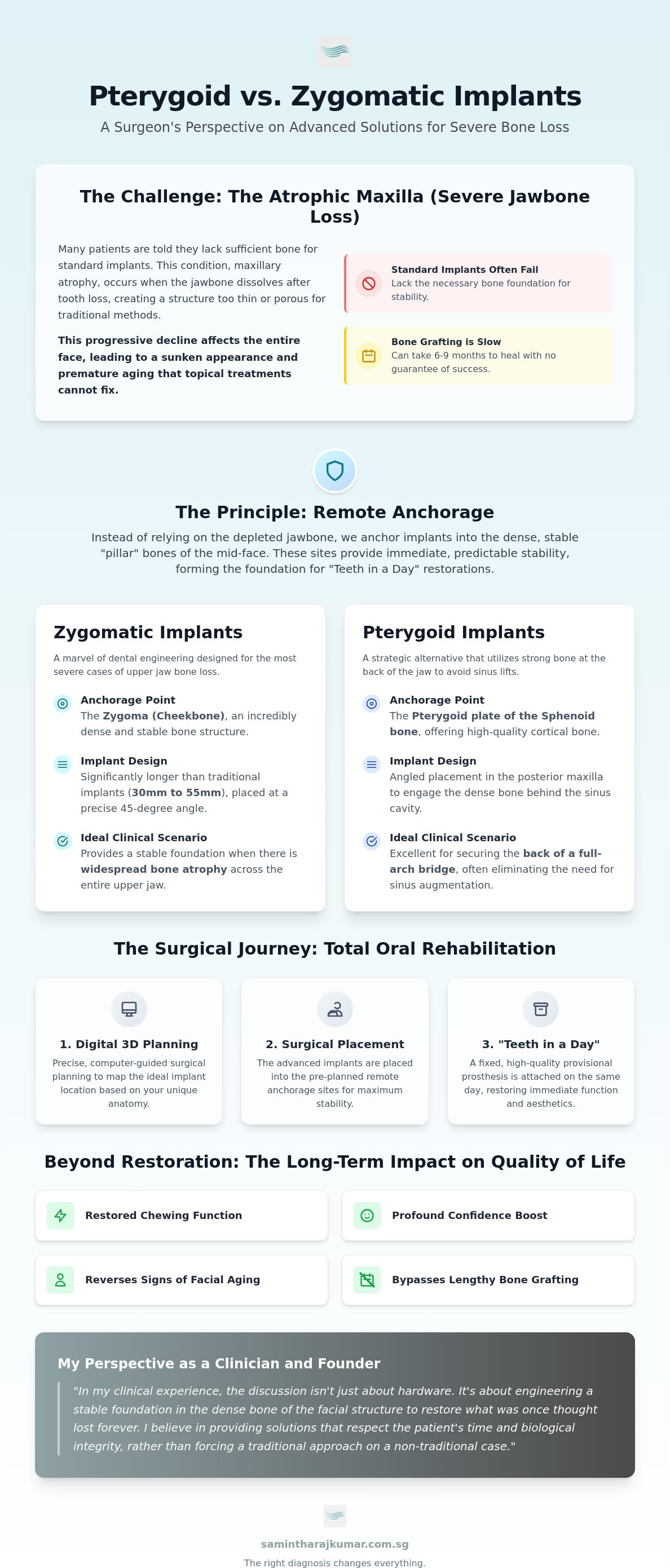
The Surgical Journey: Planning for Total Oral Rehabilitation
Choosing the right dental clinic is the foundational step in what is often a life-changing process. In my clinical experience, the planning phase for advanced maxillary rehabilitation is as critical as the surgical execution itself. When we evaluate the use of pterygoid implants vs zygomatic implants, we aren't simply looking at X-rays. We're designing a bespoke architectural solution that respects your unique facial geometry and biological constraints. This journey is a logical progression from diagnosis to restoration, ensuring every step prioritises your long-term well-being.
Pre-Surgical Precision and AI Planning
We begin by using high-resolution CT scans to create a 3D digital twin of your skull. This technology allows us to map the exact trajectory of each implant with sub-millimetre precision. By virtually placing the implants beforehand, we can reduce actual surgical time and minimise trauma to the surrounding tissues. As a clinician and founder, I believe your role in this phase is vital. We define your aesthetic goals together, ensuring the final prosthesis complements your natural facial structure and restores your "vertical dimension." This meticulous digital preparation is what makes the "Teeth in a Day" experience predictable and secure.
On the day of the procedure, our focus shifts to managing your comfort through advanced sedation options. Whether we're engaging the zygoma or the pterygoid plate, the process is designed to be as seamless as possible. While I am placing the implants, our laboratory team is simultaneously preparing your fixed bridge. Most patients arrive with failing teeth or uncomfortable dentures and leave the same afternoon with a secure, functional set of teeth that feel like a natural part of their body.
Recovery and Long-Term Maintenance
The first 72 hours after surgery are focused on initial healing. You might experience minor swelling or bruising around the cheekbones, which is a normal response to procedures involving remote anchorage. I typically recommend a soft-food diet during this window to allow the implants to begin the vital process of osseointegration without undue stress. It's a period of transition, but the immediate functional improvement usually provides a significant psychological boost. You're no longer "waiting for bone"; you're already living with your new smile.
Your restoration journey involves a transition from a high-quality temporary bridge to a final, high-tier ceramic prosthesis once the primary healing is complete. Regular specialist follow-ups are non-negotiable for these complex cases. Because we're engaging dense bone deep within the facial structure, professional monitoring ensures the continued health of the anchorage sites. If you're ready to move beyond the limitations of bone atrophy, consult with our specialist team to discover which protocol is right for your anatomy. The best outcomes always begin with a precise, expert-led diagnosis.
Beyond Restoration: The Long-Term Impact on Quality of Life
Total oral rehabilitation is about more than just the mechanics of titanium and ceramic; it's a restoration of the self. In my clinical experience, the most profound changes I witness aren't found in the post-operative scans, but in the way a patient carries themselves. When we discuss the nuances of pterygoid implants vs zygomatic implants, we are ultimately discussing the internal scaffolding of the human face. This structural support is what allows a patient to move from a state of "dental invalidism" back into a life of social confidence and functional excellence.
Facial Harmony and Structural Rejuvenation
Severe bone loss in the upper jaw does more than make chewing difficult; it causes the mid-face to lose its support. This leads to the nose and chin moving closer together, creating the sunken appearance often associated with premature ageing. By utilising remote anchorage sites, we provide the necessary framework to restore the "vertical dimension" of the face. This is where the intersection of advanced surgery and cosmetic dentistry singapore becomes most apparent. We aren't just placing teeth; we are rebuilding the foundation that supports your lips and cheeks. Structural rejuvenation is the comprehensive restoration of both anatomical form and physiological function.
From a biological perspective, the ability to return to a diet of choice is a cornerstone of longevity. Patients who have struggled with dentures for years often suffer from nutritional deficiencies because they're forced to avoid fibrous, healthy foods. With a fixed set of teeth anchored by zygomatic or pterygoid protocols, those restrictions disappear. You can eat with confidence, speak without fear of a prosthesis slipping, and smile with an authenticity that has perhaps been missing for decades.
A Vision for the Future of Care
As a clinician and founder, my vision has always been to build an institution where "hopeless" cases find predictable solutions. I believe in ethical scale, which means maintaining uncompromising global standards even as we expand our reach. The complexity of pterygoid implants vs zygomatic implants requires a level of clinical mastery that I am proud to champion within our surgical teams. We don't just follow protocols; we innovate them to ensure our patients receive the highest tier of specialised care available internationally.
The legacy of a healthy smile is measured in the years of social engagement and physical health it facilitates. It's an investment in your future self. My goal is to ensure that every patient who enters our clinic feels they're in the most capable hands, receiving a plan tailored to their exact biological needs. The best outcomes begin with understanding the root cause. The right diagnosis changes everything.
Restoring Your Foundation for a Life Without Limits
Navigating the complex choice of pterygoid implants vs zygomatic implants is the first step toward reclaiming a life once limited by severe bone atrophy. In my clinical experience, these advanced protocols are more than just surgical techniques; they represent a bridge to a future where you can eat, speak, and smile with absolute certainty. By utilising dense bone outside the dental arch, we can bypass the delays of traditional grafting and achieve profound structural rejuvenation.
As a clinician and founder, I've seen how advanced AI-assisted surgical planning and specialist expertise in zygomatic and pterygoid protocols turn "hopeless" cases into success stories. At Nuffield Dental, we don't just restore teeth; we rebuild the biological and aesthetic integrity of your face. You deserve a solution that respects your anatomy and prioritises your comfort throughout the entire journey.
Your journey toward a healthy, functional smile is a partnership based on trust and technical excellence. It's time to look forward to a future defined by confidence rather than compromise.
Frequently Asked Questions
Can I get pterygoid or zygomatic implants if I have osteoporosis?
Yes, osteoporosis does not automatically disqualify you from these procedures. From a biological perspective, the zygomatic bone and pterygoid process are composed of dense cortical bone that is typically less affected by systemic bone density loss than the alveolar ridge. In my clinical experience, these sites provide the primary stability needed for successful anchorage, though I will carefully review any medications you are taking, such as bisphosphonates, to ensure a safe surgical outcome.
How long do zygomatic and pterygoid implants typically last?
These advanced implants are designed to be a lifetime solution for total oral rehabilitation. Clinical studies have shown high survival rates, often exceeding 95 per cent over a ten-year period, when performed by a specialist surgeon. Their longevity depends heavily on meticulous surgical placement and your commitment to long-term maintenance and professional hygiene appointments to prevent peri-implant issues.
Is the surgery for pterygoid implants more painful than traditional implants?
The procedure is not necessarily more painful, as I perform these surgeries under advanced sedation or general anaesthesia to ensure your absolute comfort. While the surgical trajectory is deeper than that of traditional implants, the recovery is often comparable. You might experience some swelling or a sensation of pressure in the posterior maxilla, but this is typically well-managed with the personalised post-operative care plan we provide.
What is the success rate of zygomatic implants compared to pterygoid implants?
Both protocols offer exceptionally high and comparable success rates in the hands of an experienced clinician. Research generally places the survival rate of zygomatic implants at approximately 98 per cent, while pterygoid implants show success rates around 95 per cent. When discussing pterygoid implants vs zygomatic implants, the choice is less about success percentages and more about which anatomical site offers the most stable foundation for your specific bone structure.
Can these advanced implants be used for a single missing tooth?
No, zygomatic and pterygoid implants are specifically engineered for full-arch rehabilitation in cases of severe bone atrophy. They are utilised as part of a comprehensive "Teeth in a Day" or All-on-4 protocol to support a complete bridge. If you are missing only a single tooth, I would typically recommend a standard implant, perhaps combined with a localised bone graft or sinus lift if the bone volume is insufficient.
What happens if a zygomatic implant fails to osseointegrate?
While failure is rare, if an implant does not successfully bond with the bone, it is removed to allow the site to heal. Because these are remote anchorage procedures, we often have alternative sites available or can adjust the surgical plan to include a different trajectory. My practice uses AI-assisted diagnostics to minimise these risks, but if a failure occurs, we pivot to a secondary protocol to ensure your rehabilitation remains on track.
How much does the total rehabilitation process cost in Singapore?
The cost of full-mouth restoration varies significantly based on the complexity of the surgery, the number of implants required, and the type of final prosthesis selected. Because every case of maxillary atrophy is unique, I provide a bespoke quote only after a comprehensive consultation and 3D digital scan. This ensures the investment reflects a customised plan that prioritises your long-term functional excellence and aesthetic goals.
Are there any age limits for undergoing remote anchorage implant surgery?
There is no strict upper age limit for these procedures; instead, I focus on your overall systemic health and surgical fitness. Many of my patients are in their 70s or 80s and seek these treatments to regain the ability to eat and socialise with confidence. As long as your medical conditions are well-managed, advanced age is not a barrier to restoring your quality of life through remote anchorage.


Comments