
Recovering from dental sedation: How long does it take

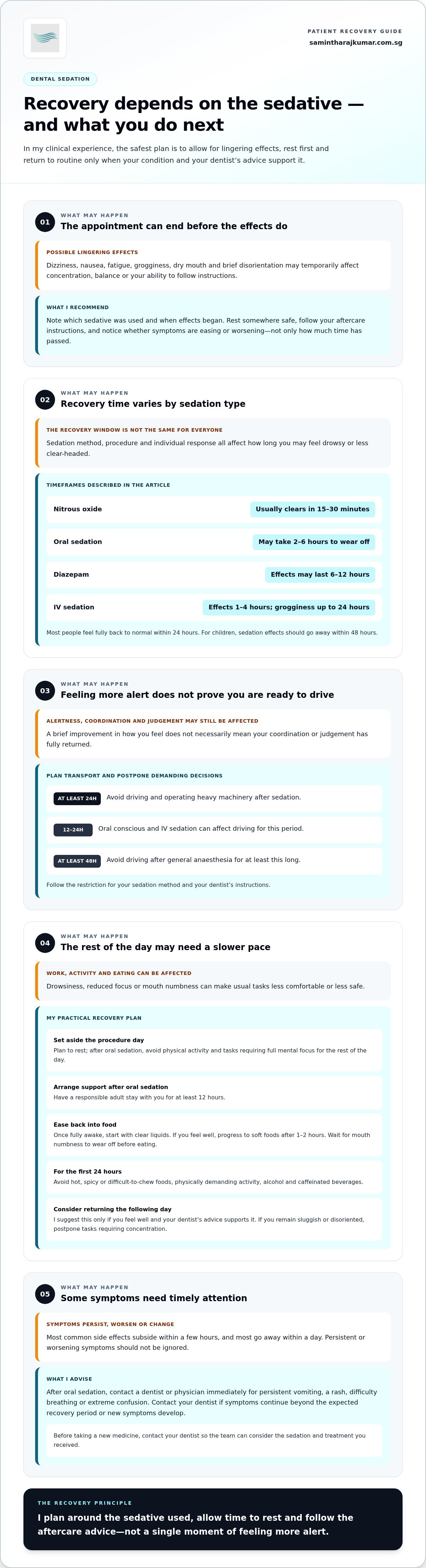
Recovery time depends on the type of dental sedation: nitrous oxide effects usually clear within 15 to 30 minutes, while oral sedation may take 2 to 6 hours to wear off. After IV sedation, drowsiness can last 12 to 24 hours, and most people feel fully recovered from oral sedation within 24 hours. Recovering from dental sedation can therefore mean anything from a brief pause to resting for the remainder of the day.
It’s understandable to wonder when you’ll feel clear-headed enough to return to your usual routine. Sedation can affect alertness, coordination and judgement after your appointment, even when you feel ready to get on with the day.
I’ll explain how recovery varies by sedation type, how lingering effects can affect driving and important decisions, and which symptoms warrant a conversation with your dentist. Plan around the sedative used and give your body time to recover, rather than judging readiness by how you feel in a single moment.
Table of Contents
Lingering sedative effects after the appointment
After a dental procedure, sedative effects can continue after you leave the clinic. In my clinical experience, understanding the medicine used helps patients make sense of that recovery period.
Common Sedation Side Effects
Common side effects include dizziness, nausea, fatigue, grogginess, dry mouth and brief disorientation. These effects can temporarily make it harder to concentrate, keep your balance or follow instructions.
Oral sedatives such as diazepam may have lingering effects for 6-12 hours. After IV sedation, memory haziness can continue for up to 24 hours. I encourage patients to distinguish memory changes from how alert they feel, since those effects may not resolve at the same pace.
Managing Sedation Side Effects
Follow your dentist’s instructions about medication, eating and activity after the procedure. If you feel nauseated, dizzy or tired, rest in a safe place and avoid placing unnecessary demands on yourself during recovery.
Wait until mouth numbness has worn off before eating, to reduce the chance of biting your cheek or tongue. Contact your dentist before taking a new medicine so the dental team can consider the sedation and treatment you received.
The timeline varies by sedation type. Nitrous oxide effects typically continue for 5 to 10 minutes after the mask is removed. Oral sedation effects can linger for a few hours, while diazepam may have effects lasting 6-12 hours. IV sedation effects generally last 1-4 hours, with grogginess potentially continuing for up to 24 hours.
Most common side effects subside within a few hours, and most side effects go away within a day. For children, sedation effects should go away within 48 hours. I recommend paying attention to whether symptoms are easing or worsening, rather than focusing only on the clock.
These timeframes describe immediate effects after treatment, not every possible long-term outcome. If symptoms continue beyond the expected recovery period or new symptoms develop, contact your dentist and explain what has changed.
Dental sedation costs vary by case and are provided after a quote request. Factors include the procedure and sedation involved. Insurance cover depends on your policy, so review the relevant benefits for your planned dental care.
For your comfort, note which sedative was used and when the effects began. After oral sedation, contact a dentist or physician immediately for persistent vomiting, a rash, difficulty breathing or extreme confusion. Discuss side effects with your dentist if they persist or worsen.
How long does it take to recover from dental sedation?
Recovery depends on the sedative, the procedure and how your body responds. Plan to rest first, then return to normal activities according to how you feel and the aftercare instructions you receive.
Recovery Timeline and Return to Activities
Most people feel fully back to normal within 24 hours after dental sedation, although the time varies by method. I recommend keeping the procedure day free from work, school and other obligations, then considering a return the following day if you feel well and your dentist’s advice supports it.
A longer or more complex treatment may mean you need more time to rest. If you remain sluggish or disoriented, postpone tasks that require concentration rather than trying to meet a fixed schedule. Aim for a steady return to your routine, not simply reaching the next day.
Rest During Recovery
Rest is a practical part of recovery, not lost time. After oral sedation, avoid physical activity and tasks that require full mental focus for the rest of the day.
Arrange for a responsible adult to stay with you for at least 12 hours. I suggest preparing your home before the appointment, with essentials nearby and commitments cleared. That simple planning can reduce avoidable stress while you feel tired or less steady.
Eating, Drinking, and Activity After the Procedure
Once fully awake, start with clear liquids. If you feel well, progress to soft foods after 1-2 hours. I suggest light, easy-to-digest choices such as soup, and cool, soft foods during the first day.
For the first 24 hours, avoid hot, spicy or difficult-to-chew foods. If dental treatment has left your mouth numb, wait for sensation to return before eating, so you’re less likely to bite your cheek or tongue. Follow the specific food and drink instructions given for your procedure.
I also advise avoiding physically demanding activity for at least 24 hours after the procedure. Alcohol and caffeinated beverages should be avoided for at least 24 hours after treatment involving sedation. These restrictions matter even if you feel ready to resume a busy routine.
Plan transport before the appointment. Avoid driving and operating heavy machinery for at least 24 hours after sedation. I ask patients to use the full recovery window, rather than treating a brief improvement in alertness as proof that coordination and judgement have returned.
Make recovery part of treatment planning from the start. Set aside time to rest, prepare suitable food and arrange help at home. If your condition or your dentist’s instructions call for a slower return, allow the time you need. Thoughtful preparation can help you return to normal activity with greater confidence.
Driving and decision-making after sedation
Plan transport and important decisions as part of your sedation care. The right precautions depend on the medication you receive and whether your appointment involves more than one sedative.
Driving Restrictions After Sedation
Oral conscious and IV sedation can affect driving for 12-24 hours, while general anaesthesia requires avoiding driving for at least 48 hours. I advise patients to follow the restriction that applies to their sedation method and their dentist’s instructions.
Nitrous oxide has a different recovery pattern. Patients may typically drive about 15 minutes after treatment if no other medication was used. If the appointment includes another sedative, don’t assume the nitrous oxide timeframe applies to the whole treatment.
Transportation and Getting Home Safely
Arrange for a trusted adult to escort you home when your sedation plan requires it. Dental offices generally require an accompanying adult for patients receiving oral sedation, and some sedatives mean someone else must drive you home.
Confirm the arrangement before your appointment. A trusted person can help you follow instructions if you feel drowsy, sluggish or disoriented after treatment. This support is particularly useful when your sedation method requires an escort or you’re unsure how alert you’ll feel afterwards.
Driving isn’t the only activity that depends on clear judgement. Avoid important decisions and signing legal documents for 24 hours after dental sedation. IV sedation can affect judgement, and memory haziness may continue for up to 24 hours. I encourage patients to postpone consequential choices until they can think clearly.
I also advise avoiding alcohol for at least 24 hours after treatment involving sedation. Alcohol can complicate a period when alertness and judgement may still be affected. Don’t use it to relax after the appointment or to judge whether you’re ready to resume normal activities.
Before treatment, ask which sedation method is planned and what transport arrangements apply. Clarify whether an adult must accompany you, and make sure that person understands the journey home. It’s easier to settle these practical details before medication is given.
If your treatment includes nitrous oxide alongside another medication, ask how the combination affects driving. The shorter nitrous oxide timeframe does not replace restrictions linked to other sedatives. Make sure your instructions reflect the treatment you actually received, rather than a general assumption about sedation.
Plan your journey home and any important decisions before treatment. Arrange support based on the specific sedation method, leave consequential tasks for later, and follow your appointment instructions. This can make the transition from dental treatment back to daily life clearer and safer.
When to contact a dentist
Contact your dentist if side effects persist, worsen or differ from the recovery guidance you received. Some symptoms need immediate attention, particularly after oral sedation.
Persistent vomiting, a rash, difficulty breathing or extreme confusion after oral sedation warrant immediate contact with a dentist or physician. Seek prompt advice for severe pain, swelling or bleeding after dental treatment. Difficulty swallowing and signs of infection also need attention, rather than being treated as routine sedation effects.
Call promptly for vomiting that continues or worsening nausea.
Seek immediate help for breathing difficulty, a rash or extreme confusion.
Contact the dental office about severe pain, swelling or excessive bleeding.
Report difficulty swallowing or signs of infection after treatment.
Nausea or dizziness that hasn’t improved after a full day is a reason to contact the dental office. Call your dentist if you remain groggy 24 hours after a procedure involving sedation. These time markers help distinguish lingering discomfort from symptoms that need professional review.
Before future sedation dentistry, give your dentist a clear account of your health and previous treatment experiences. Mention any medicines you take and past reactions to sedation. Respiratory conditions, pregnancy or sleep apnoea may affect the suitability of certain sedatives, so share these details before planning dental care.
Ask which sedation method is planned and what recovery instructions apply. Oral conscious sedation requires close monitoring, and patients may need to avoid food and drink for several hours beforehand. Knowing the plan can ease dental anxiety and help you arrange transport, support and time to rest.
Feeling relaxed during treatment and recovering safely are separate parts of the plan. Discuss how you responded to previous sedation, including nausea, dizziness or prolonged grogginess. This history helps the dental team consider the approach and explain what to watch for afterwards.
Contact your dentist before taking a new medicine after treatment, especially if side effects are continuing or worsening. Have the medicine’s name and a description of your symptoms ready, including when they began and whether they are changing.
Dental anxiety can make it harder to raise concerns, but clear information supports safer decisions. Before a future appointment, write down your questions about sedation, fasting and aftercare. If a serious symptom appears, such as difficulty breathing, contact a medical professional immediately rather than waiting for a routine review.
Recovery timeframes by sedation type
Recovery ranges from minutes after nitrous oxide to a day or longer after deeper sedation. After nitrous oxide, oral or IV dental sedation, effects can last from minutes to several hours, while full recovery varies by method.
Recovery After Nitrous Oxide Sedation
Nitrous oxide recovery usually begins within minutes of stopping the gas, with many people recovering in 15 to 30 minutes. The gas’s effects may continue for about 5 to 10 minutes after the mask is removed.
This shorter timeframe can make planning the rest of your appointment easier. If nitrous oxide was the only medication used, patients may typically drive about 15 minutes after treatment. Follow the dental team’s instructions, especially if the appointment included another sedative.
Recovery After Oral or IV Sedation
Oral conscious sedation typically has effects lasting 2-8 hours after treatment. Most people feel fully recovered from oral sedation within 24 hours, although drowsiness or sluggishness may last several hours.
IV sedation effects generally last 1-4 hours, while drowsiness may continue for 12-24 hours. These timeframes describe different stages: the main sedative effect can ease before a person feels entirely clear-headed. Plan recovery around the longer period, not just the appointment’s end.
The distinction matters because “recovered” can mean the strongest effects have eased or that you feel fully back to normal. With nitrous oxide, recovery can occur within minutes after the gas supply stops. Oral and IV sedation can take longer, particularly for alertness and memory to return.
General anaesthesia has a longer recovery window. Recovery after dental procedures involving general anaesthesia may take 24-48 hours or longer. Patients should plan for 2-3 days away from work. This is distinct from nitrous oxide, oral sedation and IV sedation, so don’t use one method’s timeline to plan for another.
Several factors can affect the timeline. Stronger sedatives generally take longer to wear off than milder ones, and a higher dose can extend recovery. Older adults and people with chronic conditions may need longer. How your body processes the medication and whether treatment is prolonged or complex also influence how quickly the effects resolve.
During your consultation, ask more than how long the appointment will last. Find out which sedation method is planned, what effects may continue afterwards and which instructions apply to your treatment. This helps you plan transport, work and support without confusing the procedure’s duration with recovery.
Dr Samintharaj Kumar: Ceramic Dental Implants
Ceramic Dental Implants are one option I discuss when patients are considering tooth replacement. If you’re exploring implant treatment, I can assess your oral health, explain suitable options and discuss a treatment plan that fits your needs.
My approach is guided by careful diagnosis and long-term function, not by choosing a procedure before understanding the underlying problem. Depending on your clinical needs, options may include standard Dental Implants, full-arch restorations like Teeth in A Day, or Zygomatic Dental Implants. A consultation can help clarify which treatment is appropriate and what to expect at each stage.
If you would like to discuss your dental needs, you’re welcome to contact me or visit samintharajkumar.com.sg.
Make your next dental decision with clarity
Recovering from dental sedation is one part of a wider care journey. Knowing what to expect can help you approach treatment with greater confidence, especially if anxiety makes dental visits difficult. My approach begins with careful listening and clear explanations of the clinical choices, supporting informed decisions and long-term wellbeing.
If you’re considering dental treatment, use your consultation to discuss your concerns, health history and priorities. A thoughtful conversation can help shape a plan around your needs, rather than asking you to fit a standard approach. The right next step starts with a clear understanding of your oral health and goals.
Contact Dr Samintharaj Kumar to discuss your dental care. With clear information and considered planning, you can move forward feeling more prepared and supported.
Frequently Asked Questions
How Do You Get Dental Anesthesia Out of Your System Faster?
There’s no recommended shortcut to clear sedative medication faster. Allow your body time to process it, rest and follow your instructions. Don’t use alcohol or extra medication to change how you feel. If you mean numbness from local anaesthetic, wait until sensation returns before eating to help prevent biting your cheek or tongue.
How Long After Sedation Can You Drive?
After oral or IV sedation, don’t drive until the restriction period has passed and you’re fully alert. General anaesthesia requires a longer pause. Nitrous oxide is different, but driving about 15 minutes after treatment applies only when no other medication was used. Arrange your transport before the appointment, and don’t drive if you still feel drowsy or disoriented.
How Long Until The Initial Effect Wears Off?
The first sedative effects usually ease at different rates depending on the method. Nitrous oxide effects typically continue for 5 to 10 minutes after the mask is removed. Oral sedation effects can last 2-8 hours, while IV sedation effects generally last 1-4 hours. Feeling fully clear-headed can take longer than the initial effects wearing off.
Is It Okay to Sleep After Sedation?
Resting or sleeping can be part of recovery, but follow the discharge instructions for your specific sedation. Arrange for a responsible adult to stay with you during the advised recovery period, especially if you’re still drowsy or confused. Before sleeping, make sure your support person knows how to reach your dental team and which symptoms need prompt medical attention.
What Other Factors Affect Your Recovery Time?
Recovery can take longer with stronger sedatives, higher doses or a prolonged, complex dental procedure. Age, chronic health conditions and differences in how your body processes medication can also affect the timeline. Before treatment, tell your dentist about your health conditions and medicines. For example, sleep apnoea or a respiratory condition may affect the suitability of certain sedatives.
What are the aftercare instructions following dental sedation?
Follow your dentist’s instructions about medication, food, drink and activity, as these depend on the sedation and treatment. Keep the rest of the day clear for recovery, and arrange support if required. Note how you feel and when symptoms begin. Contact your dental office if side effects worsen, persist, or include severe pain, swelling or bleeding.
When can I eat and drink after dental sedation?
Start with clear liquids once you’re fully awake, then try soft foods after 1-2 hours if you feel well. Choose easy-to-digest foods, such as soup, and avoid hot, spicy or difficult-to-chew options during the first 24 hours. If your mouth remains numb from dental treatment, wait for sensation to return before eating to avoid biting your cheek or tongue.
Can I drive or work after dental sedation, and for how long?
After oral or IV sedation, plan not to drive for 12-24 hours; after general anaesthesia, avoid driving for at least 48 hours. Work may be possible the following day, depending on your condition and your dentist’s advice. Don’t return to safety-sensitive duties while drowsy or mentally slowed. Arrange cover for the appointment day instead of relying on a quick return.



Comments