
Sensitivity From Exposed Tooth Roots: A Specialist Surgeon’s Guide to Restoration
- Dr Samintharaj Kumar

- 3 days ago
- 12 min read
What if that sharp, electric jolt you feel when sipping a cold drink isn't just a minor annoyance, but a structural warning from your body? In my clinical experience, many patients attempt to manage sensitivity from exposed tooth roots with desensitising toothpastes for years; however, they often find the underlying issue continues to progress. It's a frustrating cycle that typically leads to aesthetic concerns about "long teeth" and a genuine fear of invasive surgery.
I understand the anxiety that comes with persistent dental discomfort. You deserve a solution that addresses the biological root cause rather than just masking the symptoms. From a biological perspective, exposed dentin is a vulnerability that impacts your daily quality of life and your long-term oral health. In this guide, I'll share my clinical perspective on how we achieve permanent relief and restore your gum aesthetics through modern, specialist-led techniques. We will examine why this recession occurs, the clinical implications of delay, and the precise, minimally invasive pathways available to return your smile to its natural, healthy state.
Key Takeaways
Understand the anatomical difference between the enamel-protected crown and the vulnerable root surface, where microscopic tubules transmit pain directly to the nerve.
Identify how mechanical trauma or gum disease triggers sensitivity from exposed tooth roots by compromising the protective gum seal.
Learn why I view root exposure as a vital structural warning sign that indicates a potential threat to your underlying jawbone foundation.
Explore modern, minimally invasive clinical solutions like CHAO Pinhole Surgery that restore aesthetics and comfort without the need for traditional grafting.
Discover the essential steps for long-term oral rehabilitation through bespoke specialist maintenance protocols and regular clinical monitoring.
Table of Contents
The Biological Blueprint: Why Exposed Roots Cause Sensitivity
To understand why sensitivity from exposed tooth roots occurs, we must first look at the tooth's natural architecture. The visible portion of your tooth, the crown, is shielded by enamel, which is the hardest substance in the human body. However, the root is covered by a much thinner, softer layer called cementum. In a healthy mouth, this cementum is tucked safely beneath the gum line, protected from the oral environment.
To better understand this biological concept, watch this helpful video:
Cementum vs. Enamel: A Vulnerable Barrier
In my clinical experience, patients are often surprised to learn that cementum is only about 50% mineralised. This makes it significantly more susceptible to rapid erosion than the crown's enamel. Once the gum recedes, this thin barrier wears away under mechanical stress far more quickly than you might expect. When this barrier is lost, the underlying dentine is left entirely unprotected.
From a biological perspective, this exposure leads to Dentin hypersensitivity. This condition is often explained by the "hydrodynamic theory," which suggests that sensitivity is caused by fluid movement within the tooth. When the cementum is gone, the tooth loses its primary insulation, leaving the internal structures vulnerable to every temperature change in your diet.
The Mechanics of Nerve Stimulation
The dentine beneath the cementum contains thousands of microscopic channels known as dentinal tubules. These tubules act as direct pathways from the outside world to the dental pulp, where the tooth's nerve resides. When you consume something cold, hot, or acidic, it triggers a rapid shift of fluid within these tubules. This movement excites the nerve endings, resulting in that sharp, sudden pain that characterises sensitivity from exposed tooth roots.
It's important to distinguish between occasional minor sensitivity and the chronic discomfort caused by structural changes. Exposed tooth roots are defined as the loss of gingival and alveolar support. When this support system fails, external stimuli like thermal changes or even the tactile pressure of a toothbrush become aggressive triggers. Without the natural "seal" of the gums, your teeth are essentially functioning without their protective armour. Understanding these mechanics is vital because it shifts the conversation from merely "managing" pain to actively restoring the biological barrier.
Identifying the Root Cause: Why Recession Occurs
Recession isn't an overnight event; it's a gradual migration of the gingival margin. In my clinical experience, patients often feel blindsided by the sudden onset of sensitivity from exposed tooth roots, yet the biological groundwork was often laid months or years prior. We must view the gum tissue as a sophisticated, protective seal. When this seal is breached, the underlying foundation becomes vulnerable to the oral environment.
From a biological perspective, your genetic makeup plays a significant role. Some individuals possess a "thin gingival biotype," meaning their gum tissue is naturally delicate and less resilient to stress. In these cases, even minor irritants can trigger a retreat of the tissue. As a clinician and founder, I've observed that understanding your specific biological blueprint is the only way to build a sustainable plan for restoration.
Mechanical and Lifestyle Factors
The way you maintain your smile can ironically be the source of its decline. Many people adopt a "scrubbing" technique, believing that more pressure equals a cleaner tooth. This is a fallacy. Aggressive mechanical brushing, especially with hard-bristled brushes, physically abrades the thin gum tissue. I always advocate for soft-bristled care and a circular, gentle motion to preserve the attachment.
Lifestyle choices are equally impactful. Tobacco use is particularly destructive because it restricts blood flow to the gums. This lack of oxygenated blood prevents the tissue from repairing itself, which accelerates recession. We must also consider the impact of orthodontic movement. While braces align the teeth, moving a tooth too quickly or too far out of its bony housing can leave the root with insufficient soft tissue coverage.
Clinical Consequences of Untreated Exposure
Leaving sensitivity from exposed tooth roots unaddressed is a risk to your entire oral ecosystem. Unlike the crown, the root surface is porous and lacks the mineral density of enamel. This makes it a prime target for root caries. This type of decay moves with alarming speed, often reaching the nerve before a patient even notices a cavity.
Chronic exposure also leads to the destruction of the attachment apparatus. This includes the periodontal ligament and the surrounding alveolar bone. If the inflammation persists, it can lead to irreversible pulpitis, a condition where the nerve cannot recover. In complex cases where the recession affects the back of the mouth, it can even complicate the health of adjacent molars, sometimes necessitating wisdom tooth surgery or extractions to save the surrounding bone. Exploring modern treatments for sensitive teeth early is vital to avoid these surgical crossroads. I believe that proactive diagnostics are the cornerstone of long-term health.
We cannot ignore the role of bruxism and malocclusion. If your bite is misaligned, specific teeth bear excessive force. This causes the tooth to flex at its weakest point: the gumline. This repeated flexing creates "abfraction" lesions, which are wedge-shaped notches that further expose the root and trap plaque, creating a cycle of sensitivity and decay.
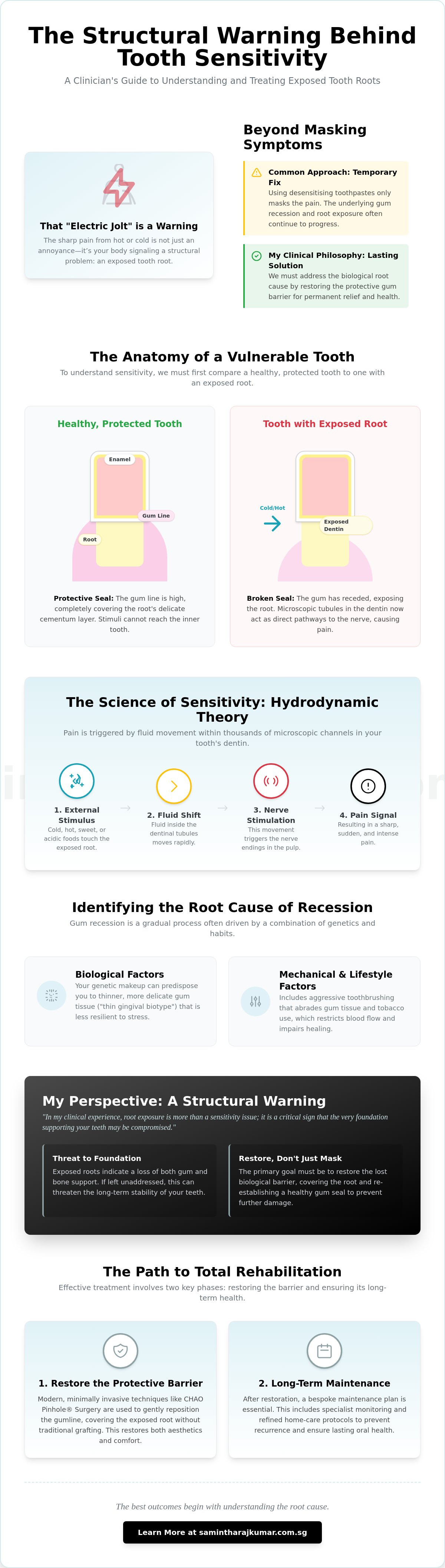
My Perspective: Why I View Root Exposure as a Structural Warning
In my clinical experience, patients often dismiss that sharp, electric twinge as a minor nuisance. Many treat it like a weather report they can simply ignore. But I see it differently. Sensitivity from exposed tooth roots is a physiological red flag. It is your body's way of signalling that the protective seal of your oral cavity has been compromised. When you feel that jolt, your tooth is telling you that its internal architecture is no longer shielded from the outside world.
From a biological perspective, the gum is the "seal" that protects the jawbone foundation. When this barrier fails, it isn't just about discomfort; it's about the slow, silent degradation of the underlying bone and attachment. As a clinician and founder, I view the mouth as an integrated system. We cannot treat one tooth in isolation without considering the health of the entire ecosystem. The right diagnosis at this stage is transformative because it allows us to pivot from reactive repair to proactive preservation.
The Philosophy of Gum Preservation
I believe preserving natural tissue is always superior to replacing it. While we offer world-class restorative options, my primary goal is always to salvage the biology you were born with. Before recommending a treatment path, I meticulously evaluate the biotype of your gum tissue. Is it thin and prone to further recession, or is it robust but currently under stress? We must address the "why" before we decide on the "how."
If we don't correct the underlying cause of the recession, any clinical intervention is merely a temporary patch. Understanding the causes and symptoms of exposed tooth roots is the first step in this diagnostic journey. By identifying whether the issue stems from bite alignment, lifestyle, or biology, we can create a plan that lasts a lifetime. This founder-led approach ensures that every decision prioritises your long-term well-being over immediate, short-term fixes.
Restoring Functional Aesthetics
Healthy gum levels contribute to a youthful, balanced smile. When roots are exposed, teeth appear "long," which can prematurely age the face and create an uneven smile line. Resolving chronic dental pain has a profound psychological impact as well. It restores confidence and allows for a lifestyle free from the fear of the next meal or a cold drink.
My vision for biological dentistry involves choosing materials and techniques for their compatibility with your unique physiology. By intervening early, we can often avoid the need for more complex rehabilitations, such as dental implants. The best outcomes begin with understanding the root cause, and my philosophy is rooted in restoring both the function and the profound personal impact of a healthy, comfortable smile.
Modern Clinical Solutions: Restoring the Protective Barrier
The era of accepting chronic discomfort as an inevitable part of ageing is over. In my clinical experience, the transition from managing symptoms with over-the-counter products to achieving a permanent clinical resolution is one of the most rewarding journeys for a patient. We are no longer limited to simply "masking" sensitivity from exposed tooth roots; we now possess the technology to physically restore the lost architecture of the gum and tooth.
For minor root abrasions or "notches" at the gumline, composite bonding offers an immediate and effective solution. By applying a biocompatible resin over the exposed dentine, we create an artificial shield that mimics the lost enamel. This not only halts the pain by sealing the tubules but also prevents further mechanical wear. However, when the issue is true gingival recession, we must look toward advanced surgical protocols to rebuild the "seal" I discussed previously.
Traditional Grafting vs. Pinhole Surgery
Historically, gum restoration required traditional "cut-and-stitch" grafting. This involved harvesting tissue from the roof of the mouth and suturing it over the recession site. While effective, the recovery can be uncomfortable due to the two surgical sites involved. As a clinician and founder, I have prioritised the adoption of the Chao Pinhole Surgical Technique as a visionary alternative.
This minimally invasive protocol allows us to reposition existing gum tissue through a tiny entry point, often the size of a pinhead. Because there are no large incisions or sutures, the surgical trauma is significantly reduced. In my practice, I recommend this technique for patients with adequate local tissue who seek a faster recovery and immediate aesthetic improvement. Traditional grafting remains a vital tool for cases where the tissue is exceptionally thin or absent, but the Pinhole method has transformed the patient experience by removing the fear of invasive surgery.
Laser Therapy and Desensitisation
Beyond surgical intervention, we utilise professional-grade desensitising agents and laser therapy to address the hydrodynamic fluid movement within the tooth. Modern dental lasers can be used to "vitrify" or seal the open dentinal tubules, providing a more durable barrier than chemical agents alone. This process is often paired with high-concentration calcium phosphates or nano-hydroxyapatite. Clinical data from 2026 suggests that targeted applications of 10% nano-hydroxyapatite can reduce cold-stimulus sensitivity by up to 65% over an eight-week period.
Patients should expect a combination of immediate relief from laser treatment and gradual, long-term improvement as the biological barrier matures. My philosophy is to use these technologies in tandem to ensure that your comfort is restored while we work toward a permanent structural fix. If you are ready to move beyond temporary relief, understanding your clinical options is the first step toward a pain-free life.
The Path to Total Rehabilitation: Long-term Maintenance
Restoration is not merely a clinical event; it is the beginning of a new chapter in your oral health journey. In my clinical experience, the longevity of any restorative procedure depends on a meticulous, bespoke maintenance protocol. We don't simply treat sensitivity from exposed tooth roots and part ways. Instead, we establish a specialist-led framework designed to preserve the integrity of the gum seal and the underlying attachment apparatus over the long term. This commitment to follow-up care is what distinguishes a temporary fix from a lifelong solution.
Preventative Protocols for 2026
As a clinician and founder, I have always viewed innovation as a tool for deeper personal care. In 2026, AI-assisted diagnostics play a pivotal role in tracking gum migration with microscopic accuracy. This technology allows us to monitor high-risk sites with a level of precision that was previously impossible. By identifying sub-millimetre changes in tissue levels, we can adjust your care plan proactively. This prevents minor issues from escalating into complex surgical requirements later in life.
From a biological perspective, total rehabilitation must address the root cause of the initial recession. If bite misalignment or nocturnal grinding continues, even the most perfect surgical result will eventually be compromised. We often integrate cosmetic dentistry as a functional tool to realign the bite and distribute mechanical forces evenly. Choosing biocompatible oral care products that respect the delicate biology of the gum tissue further supports this protective barrier, ensuring your smile remains both beautiful and resilient.
A Vision for Lifelong Oral Health
My final reflection is on the profound impact that oral health has on your daily life. Resolving sensitivity from exposed tooth roots is about more than just physical comfort. It is about systemic well-being and the freedom to live without the constant shadow of dental pain. I believe that a visionary approach to dentistry treats the mouth as an integrated system, where every restoration serves a lifelong purpose.
The link between oral health and your overall systemic health is undeniable. Chronic inflammation and tissue loss are signals that require expert attention. By restoring the protective seal of your gums, we are protecting your foundation. The best outcomes begin with understanding the root cause. When you choose a pathway led by specialist expertise and modern technology, you aren't just fixing a tooth; you're investing in your future. The right diagnosis changes everything.
A Vision for Restorative Excellence
Restoring your oral health is a journey that begins with moving beyond symptomatic relief. As a clinician and founder of Nuffield Dental, I've spent years refining my approach to complex oral surgery and implantology across London and Singapore. My philosophy remains clear; we must treat the mouth as an integrated biological system. Addressing sensitivity from exposed tooth roots is not just about comfort; it's about preserving your structural foundation for the decades ahead.
By leveraging modern protocols like the Pinhole technique and AI-assisted diagnostics, we can now achieve profound personal impact with minimal surgical trauma. You don't have to live with the fear of a cold drink or the aesthetic concerns of gum recession. The best outcomes begin with understanding the root cause. Explore our specialist perspective on oral rehabilitation. Your journey toward a permanent, comfortable solution starts with a single, expert consultation. Let's build a legacy of health together.
Frequently Asked Questions
Can exposed tooth roots heal themselves without surgery?
In my clinical experience, gum tissue does not regenerate on its own once it has receded. While desensitising toothpastes can help manage the discomfort of sensitivity from exposed tooth roots, they only mask the symptoms rather than repairing the structural defect. From a biological perspective, professional intervention is required to physically restore the protective seal and prevent further tissue loss.
How long does it take for sensitivity to go away after gum treatment?
The timeline for relief depends entirely on the restorative method we choose. Clinical solutions like composite bonding or professional desensitising agents often provide near-instant results by immediately sealing the dentinal tubules. For surgical procedures such as gum grafting or Pinhole surgery, you may experience a significant reduction in sensitivity within a few weeks as the new tissue matures and integrates.
Is the Chao Pinhole technique better than a traditional gum graft?
I view the Chao Pinhole technique as a visionary advancement because it is minimally invasive and requires no sutures or donor sites. This typically leads to a much faster recovery and less post-operative trauma compared to traditional "cut-and-stitch" methods. However, in cases where the gum tissue is exceptionally thin or entirely absent, a traditional graft may still be the biologically superior choice to ensure long-term stability.
Can I use an electric toothbrush if I have exposed roots?
You can certainly use an electric toothbrush, provided it is equipped with a pressure sensor and a soft-bristled head. In fact, many high-end models are better at preventing recession because they stop you from using the aggressive "scrubbing" motion that causes tissue wear. I always recommend using the lightest touch possible to protect the delicate cementum on your root surfaces.
What happens if I leave an exposed tooth root untreated?
Leaving a root exposed invites a cascade of clinical complications, including a significantly higher risk of root caries. Because the root surface is less mineralised than enamel, decay can reach the nerve with alarming speed. Over time, this chronic exposure can lead to localised bone loss or irreversible pulpitis, which may eventually require more complex interventions like extractions or dental implants.
Does insurance typically cover treatments for root sensitivity?
Most dental insurance plans classify gum surgery as a major procedure and may cover 40 to 80% of the cost if it is deemed medically necessary to prevent decay or further recession. It's important to remember that many plans have annual maximum benefits ranging from $1,000 to $2,000. My team can help you navigate these details to ensure your plan is utilised effectively for your rehabilitation.
Is root sensitivity a sign that I need a dental implant?
Root sensitivity is not usually a sign that you need an implant; rather, it's a signal that we need to save your natural tooth. Dental implants are the gold standard for replacing missing teeth, but our primary goal is always to restore your existing biology. By treating sensitivity from exposed tooth roots early, we can often avoid the tooth loss that would make an implant necessary.
How can I tell if my sensitivity is from a cavity or an exposed root?
Cavity pain often manifests as a dull, persistent ache or a sharp reaction specifically to sweet foods. Sensitivity from an exposed root is typically a sudden, electric jolt triggered by thermal changes or the physical touch of a toothbrush at the gumline. As a clinician, I use precise diagnostics to distinguish between the two, as the right diagnosis changes everything for your treatment plan.


Comments